





 Portuguese
  English
  Spanish
  5 min of reading
  0 comments


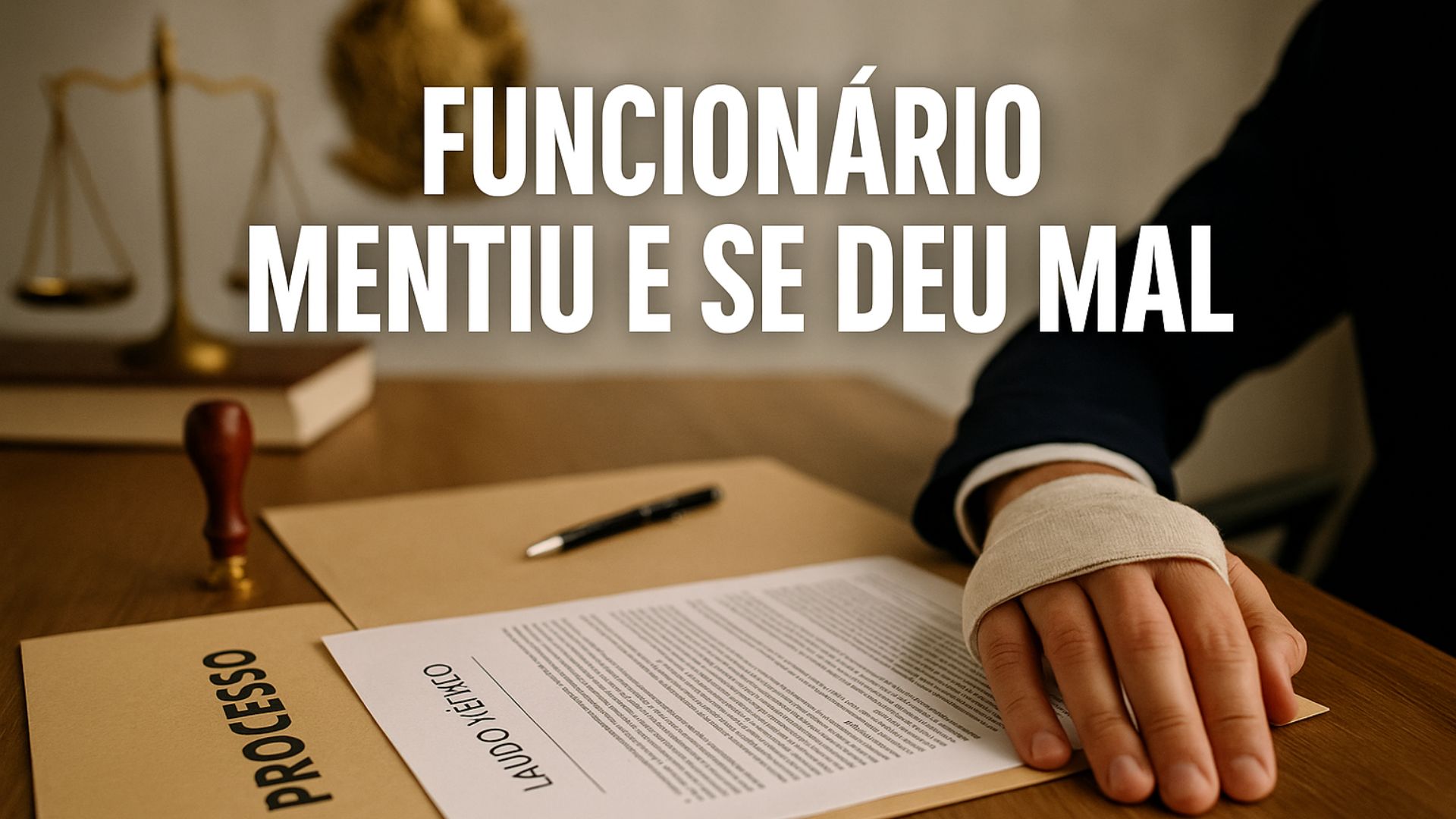
Worker Tried to Fake Workplace Accident to Obtain Compensation, but Medical Expert Revealed False Version. Court Confirmed Fine for Bad Faith Litigation and Upheld Decision Highlighting Contradictions in Employee Accounts.
The 2nd Panel of the Regional Labor Court of the 4th Region unanimously upheld the conviction of a sales advisor for bad faith litigation for attempting to link wrist problems to an alleged workplace accident.
The fine imposed was R$ 1.4 thousand, equivalent to 2% of the amount attributed to the case, and confirms the sentence from Judge Marinês Denkievicz Tedesco Fraga, from the Labor Court of Tramandaí.
TRT-RS Decision Confirms Conviction
In the judgment of the appeal from the employee, the judges understood that there was a deliberate omission of relevant facts.
-
With the arrival of Law 11.788, internships are now recognized as professional experience.

-
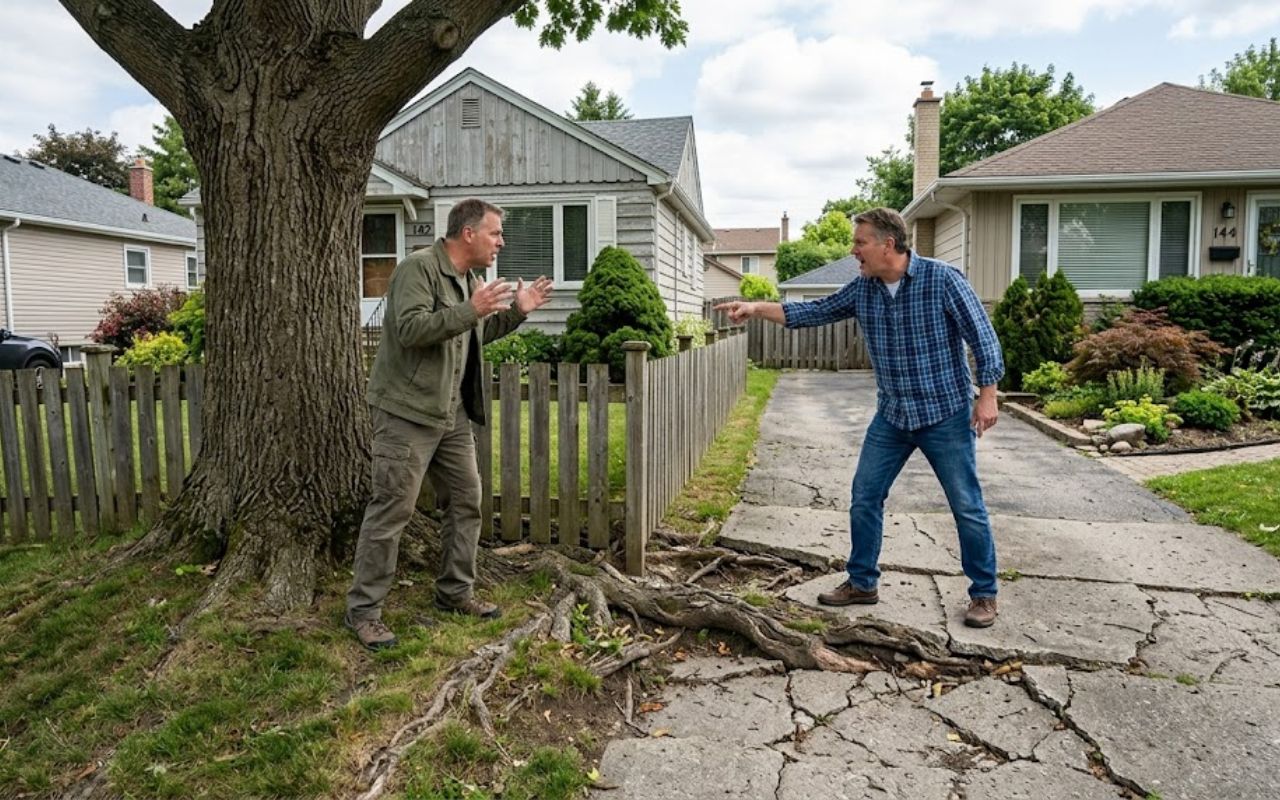
The Brazilian Civil Code states that a property owner has the right to cut the roots of a neighbor’s tree that invade their land, as long as it does not harm the tree itself. The owner must notify the neighbor before taking such action.
-
Engineer is sentenced to repay R$ 148 thousand after holding public positions in three municipalities in Rondônia with incompatible schedules, and the decision is upheld by the Court of Justice.

-
Chamber approves project that creates mandatory Life Insurance for police officers, firefighters, guards, and traffic agents.

The worker himself had reported to a colleague that he had punched a door at a clinic after a disagreement over alleged denial of service to his wife.
However, in court, he attempted to dismiss this episode and maintain that the injuries resulted from activities performed at the company.

Conflicting Versions and Lack of Causal Link to Work
When sent for medical attention after feeling unwell at work, the author stated at the health center that he had fallen on his wrist after carrying very heavy boxes.
Although this narrative suggested a typical accident, the judicial medical expert dismissed the link between the ailments — tendonitis and carpal tunnel syndrome in the right wrist — and the tasks performed.
The report noted that there were no repetitive efforts or excess weight in the usual performance of functions, which contradicts the characterization of occupational disease.
Sentence Highlighted Lack of Credibility
Initially, the judge considered that the worker’s accounts undermined the reliability of his own version.
In a highlighted excerpt of the decision, the judge stated:
“The claimant comes to the Judiciary requesting compensation for moral and material damages due to a punch he threw outside the work environment, attempting to impute to the defendant the responsibility for his lack of control.
Article 793-B of the CLT states that one is considered to act in bad faith who alters ‘the truth of the facts’ and uses ‘the process to achieve an illegal objective’.”
Furthermore, the sentence mentioned false claims made by the author in another case against the same company, reinforcing the necessity to observe objective good faith before, during, and after the termination of the contract.
Appeal Rejected and Fine Upheld
Dissatisfied, the employee appealed to the TRT-RS, arguing that imprecisions or omissions in the initial petition could not be interpreted as malice.
He argued that the injury resulted from an inadequate environment, not from the punching episode.
The Panel rejected the arguments and upheld the penalty for procedural bad faith.
The rapporteur, Judge Rosane Serafini Casa Nova, noted in the ruling:
“In this case, the claimant omitted in the initial petition a crucial fact for the resolution of the case, related to the trauma suffered in his hand outside the work environment (the same hand that suffers from the ailments currently in discussion). The omission of relevant facts and the alteration of the truth characterize bad faith litigation, warranting the application of a fine.”
Legal Basis and Cited Jurisprudence
The decision was based on constitutional and infraconstitutional provisions addressing civil liability and procedural good faith.
The articles 5, paragraphs V and X, of the Federal Constitution were mentioned, relating to indemnification for damages and protection of honor and image.
Also cited were the articles 186 and 927 of the Civil Code, concerning unlawful acts and obligation to repair.
In labor law, references were made to Law 8.213/1991, especially articles 19 and 20, defining workplace accidents and their equivalents.
Additionally, the articles 793-A, 793-B, and 793-C of the CLT expressly address bad faith litigation and its consequences.
In procedural matters, article 80 of the CPC was cited, which lists the conduct characterizing bad faith.
As a jurisprudential reinforcement, OJ 348 of the SDI-I of the TST and Súmula 37 of the TRT-RS were included.
These references indicate parameters regarding fees and calculation base, contributing to the normative set applied in the judgment.
The main focus of the case, however, was the incompatibility between the author’s versions and the expert conclusions, combined with the omission of an essential fact that occurred outside the work environment.
Contradictions and Absence of Proof of the Accident
The starting point was the justification for absence given to a colleague, where the employee acknowledged hitting the door of the health unit.
At a later moment, after feeling unwell at work, he described in medical attention a fall onto his wrist after handling heavy loads.
This conflict of narratives was decisive for the formation of judicial conviction.
Besides the report that dismissed repetitive effort and weight overload in the function, the body of evidence did not provide proof of the alleged workplace accident within the company’s premises.
Objective Good Faith and Duty of Procedural Loyalty
The analysis of the case reiterated the centrality of objective good faith in conducting labor lawsuits.
The duty of loyalty, according to the reasoning, projects before, during, and after the contract and also in the judicial forum.
This imposes on the parties a faithful exposition of facts and abstention from maneuvers that distort reality.
Thus, the concealment of the episode of the punch at the door and the attempt to shift the origin of the injuries to the corporate environment contradict the standard of conduct required by the legal system.
Consequences of the Decision
With the confirmation of the fine for bad faith litigation, the worker remains liable for the fixed amount of R$ 1.4 thousand.
The Panel determined that the lack of proof of the accident and the severing of the causal link, combined with the omission of a relevant fact, undermine the claims for compensation for moral and material damages.
The decision was unanimous and concludes by indicating the possibility of appeal through appropriate channels.
Judge Raul Zoratto Sanvicente and appointed judge Ary Faria Marimon Filho also participated in the judgment.
In a scenario where divergent versions and technical examinations go in opposite directions, what do you consider more effective to curb bad faith litigation: harsher fines, stricter evidentiary requirements, or educational measures on procedural good faith?








Seja o primeiro a reagir!