Portuguese
  Spanish


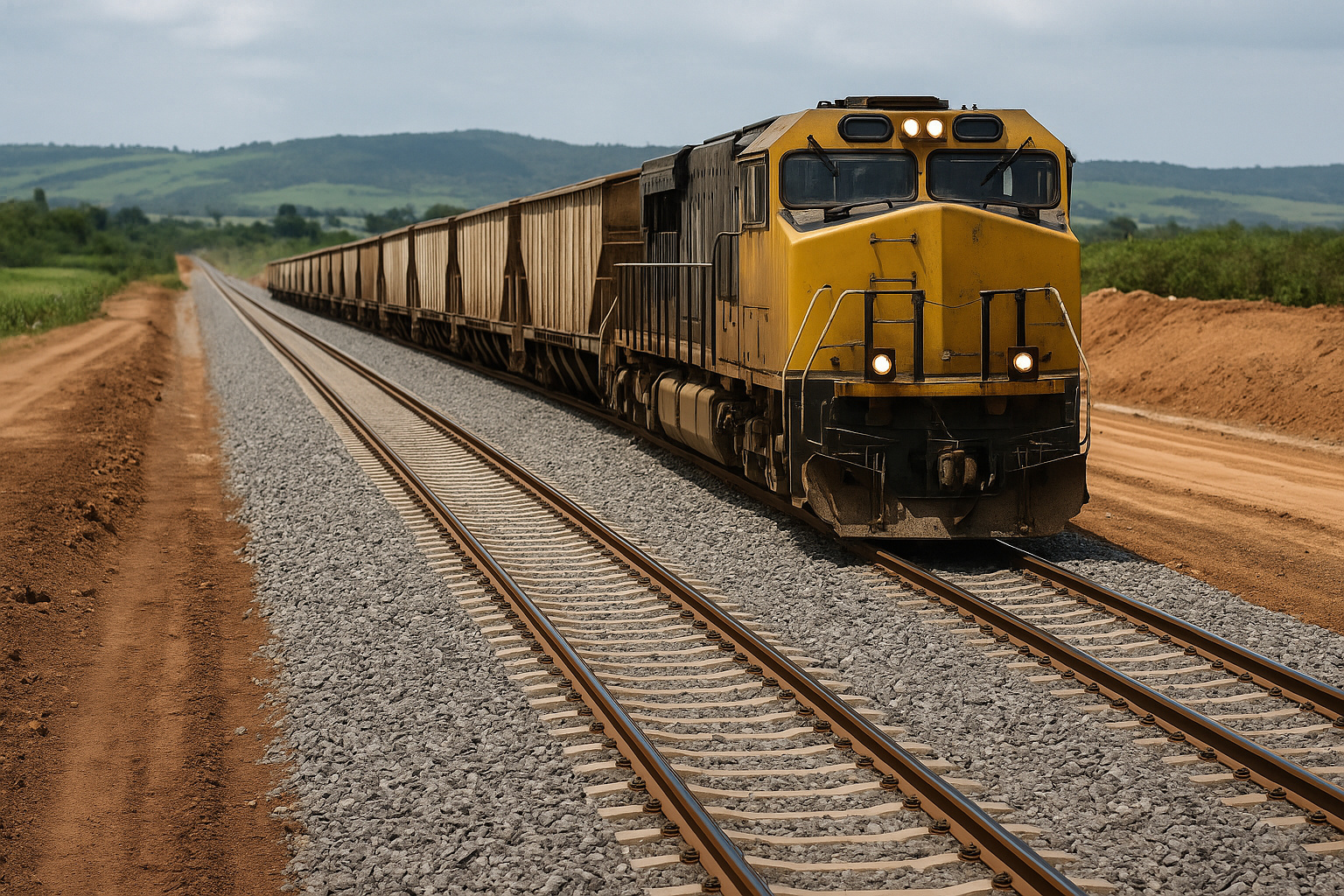


Billion-Dollar Auctions Promised to Unlock Eight Railway Projects by 2026, with New Funding Model and Focus on Reducing Logistical Costs.
The federal government is leading a railway plan with R$ 530 billion projected by 2026. Thus, the National Railway Secretariat outlines eight concessions with grant support and infrastructure debentures. According to Leonardo Ribeiro from the Ministry of Transport, the combination renegotiates contracts, funds works, and attracts private capital.
Furthermore, after more than 15 years without robust expansion, the strategy aims to regain efficiency and reduce costs. Therefore, the structure prioritizes active investor voice and regulatory predictability. According to official data, MRS and Rumo have already renegotiated amounts totaling R$ 30 billion.
Financial Model and Governance
According to Ribeiro, the funding does not require operational counterpart. In this way, the private sector takes on construction and operation, while the public contribution remains non-reimbursable. Thus, the format differs from traditional PPPs and increases predictability. In addition, the design is inspired by India, Indonesia, and China.
-
Brazil’s Defunct Railway Network Leaves Over 100,000 Properties Abandoned for Nearly 30 Years, Facing Neglect and Safety Risks as Government Struggles to Regulate Assets Amid Degraded Stations and Unlawful Use

-
Belo Horizonte’s Beltway Project Risks Losing $5 Billion to Metro Expansion if Court Doesn’t Act Soon; State Government Plans New Lines with IDB Support

-
Brazil to Auction 9,000 km of New Railways, Aiming to Attract $28 Billion by 2026

-
Brazil Plans $160 Billion Investment to Revitalize Railways and Reduce Reliance on Long-Distance Trucking


At the same time, infrastructure debentures mitigate interest and diversify investors. Consequently, the multi-year planning anchors schedules and reduces risks. According to the TCU, governance and control will be determining for efficient execution.
Works, Auctions, and Recent Timeline
On October 31, 2025, Renan Filho announced R$ 200 million for 73 km of the Transnordestina, between Custódia and Arcoverde (PE). According to TLSA, 180 km have already been completed in the state. Similarly, Fiol 2, managed by Infra S/A, advances towards concession.
Moreover, the pipeline includes the Fico–Fiol corridor connecting to the Bioceanic Route towards Chancay. Also planned are EF-188 (Nova Iguaçu–Santa Leopoldina), Açailândia–Barcarena, and the re-bid of the West Network. In addition, the unbundling of the South Network occurs before 2027, when the contract with Rumo expires.
However, Ferrogrão is still under analysis in the STF and the TCU. According to studies, the cost varies between R$ 25 billion and R$ 28 billion; licensing and jurisprudence guide the project’s sequence.
Historical Bottlenecks and Costs per Kilometer
Still, the sector faces high costs. According to technical reference, each new kilometer can cost R$ 25 million. Moreover, the national network totals 30,653 km, with 26% usage. According to the TCU, underutilization and bottlenecks require planned reactivation.
In this regard, Paulo Resende from the Dom Cabral Foundation sees a repressed demand until 2040. However, he calls for guarantees and realistic schedules. Similarly, Luiz Baldez from ANUT warns about environmental and bureaucratic obstacles.
Expected Impact on Matrix and Climate
According to the Ministry of Transport, the goal is to double the railway participation. Today, the rails account for about 20%, while highways total 62%. Thus, the modal shift reduces costs, emissions, and congestions.
Furthermore, the assets remain reversible to the granting power. Thus, railway assets return to the Union at the end of the contracts. According to Ribeiro, this preserves public value and stimulates productive investment.
In summary, 2026 could mark the railway turning point. Still, execution and legal security will define the results.
In light of this, will Brazil be able to implement the largest railway package and turn its rails into a competitive advantage?