





 Portuguese
  English
  Spanish
  3 min of reading
  0 comments


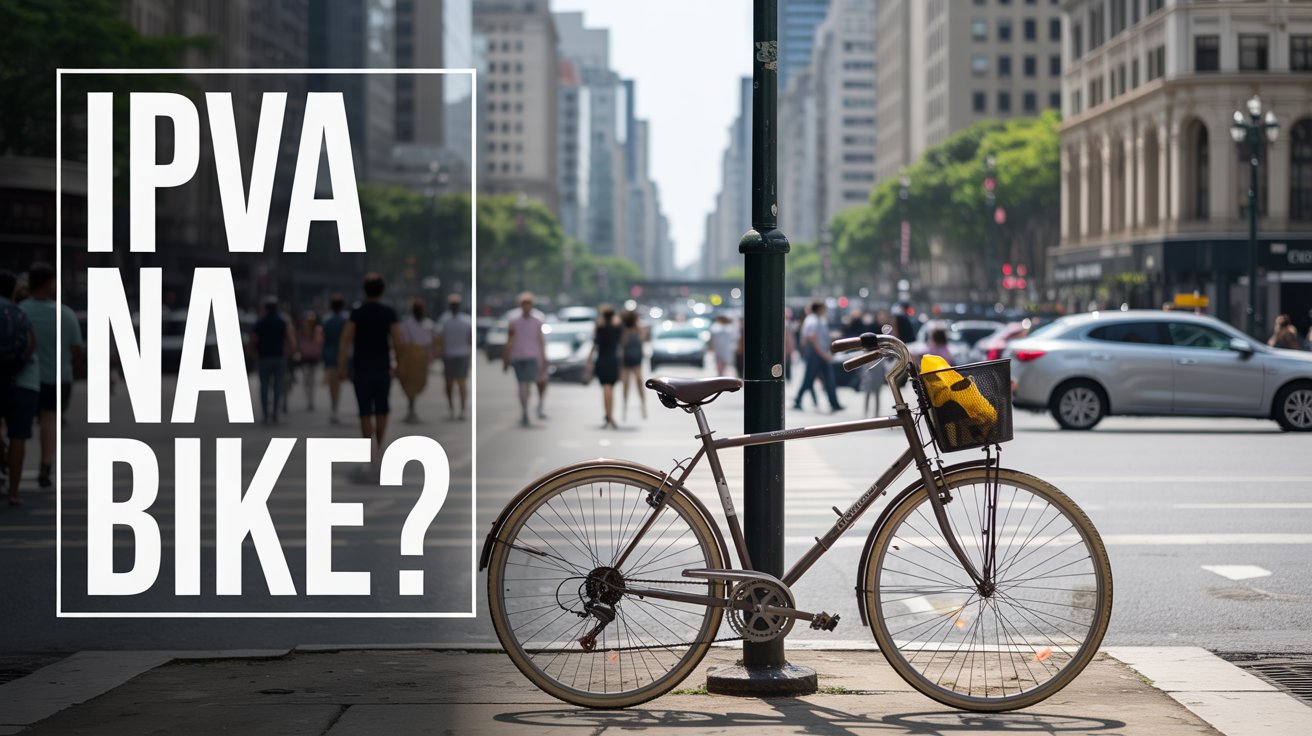
Controversy Over Possible Taxation of Bicycles Mobilizes Discussions on Social Media and Generates Doubt in Millions of Brazilians About Changes in Taxes, Despite There Being No Official Proposal Under Analysis in the Country.
The circulation of a supposed proposal for the implementation of the Tax on Motor Vehicle Property Tax (IPVA) for bicycles has mobilized debates on social media and messaging apps in recent weeks.
The claim, quickly propagated, suggests that the federal government would be discussing the creation of a new tax that would affect an estimated fleet of 70 million bicycles in Brazilian territory.
However, the information is false and has already been officially denied by competent bodies, highlighting the dissemination of yet another episode of misinformation that impacts millions of citizens.
-
China retires the J-7 fighter after years of military protection and can now transform military items into drones, following more than 60 years of operation of the J-7, derived from the MiG-21, with thousands of units produced and strategic use in the PLAAF and PLANAF.

-
Volunteers are sought to live in the mountains for a month: a study pays people to stay at 2,500 meters, with 24-hour monitoring of sleep, metabolism, and blood pressure.

-
Goodbye to kitchen cabinets: innovation retires the traditional furniture of Brazilian kitchens by introducing modern pantries with modules of up to 2.40 m, 40% more organization, ergonomic access, adjustable shelves, and smart lighting in 2026.

-
After the union of Brazil and China, BRICS plays a leading role in the merger between two powers: Egypt and India move forward with agreements exceeding US$ 4 billion, expanding industrial capacity in strategic sectors and accelerating the establishment of factories and global production chains.


Ministry of Finance Denies IPVA for Bicycles and Explains Tax Competence
Shortly after the news went viral, the Ministry of Finance issued a public note categorically denying any discussion or proposal related to the collection of IPVA for bicycles.
According to the ministry, there is no project, draft, or study underway, whether at the federal, state, or municipal level, aimed at taxing this mode of transport.
Additionally, the text clarifies that the IPVA, by constitutional definition, is a tax under the jurisdiction of the States and the Federal District, with only these spheres having the power to institute it.
Therefore, even if there was federal intent, the creation of this tax for bicycles would be legally unfeasible.


Why the Idea of IPVA for Bicycles Lacks Legal Basis?
Brazilian legislation clearly establishes the limits of the IPVA, a tax that applies to motor vehicles, as provided for in the Brazilian Traffic Code (CTB).
Motor vehicles are defined as those equipped with a self-propulsion mechanism, that is, powered by an engine, intended for the transportation of people, cargo, or towing other vehicles.
Bicycles, on the other hand, are classified as human-powered vehicles, with no type of motorization that qualifies them for taxation under the IPVA.
The distinction between motor vehicles and human-powered vehicles is detailed in Resolution No. 996, of 2023, from the National Traffic Council (Contran).
The official document characterizes the bicycle as a two-wheeled vehicle, powered exclusively by the force of the rider, not being equated with motorcycles, scooter or mopeds for legal purposes.
Consequently, bicycles are outside the scope of any IPVA collection.
Repercussions of the Fake News and Impact on the Bicycle Sector
The rumor quickly generated concern among users, retailers, and bicycle manufacturers.
According to data from the Brazilian Association of Motorcycle, Moped, Scooter, Bicycle and Similar Manufacturers (Abraciclo), Brazil currently has around 70 million bicycles in circulation, being one of the main markets for this mode worldwide.
Only in 2024, the manufacturers associated with Abraciclo produced 351,400 new units.
For this year, the forecast is for another 320,000 bicycles to be added to the national fleet.
The dissemination of false information not only undermines public debate but can also create insecurity among cyclists, especially in light of the growing use of bicycles as a sustainable alternative to motorized individual transport.
The sector, deemed strategic for urban mobility and for reducing pollutant emissions, has recently gained prominence in public policies and campaigns to encourage the use of non-polluting means of transport.
Why Did the Fake News Spread?
The viral spread of information without a basis in concrete facts is a phenomenon that frequently recurs, especially on topics related to taxes, mobility, and public policies.
The topic, which directly involves the lives of millions of Brazilians, ended up driving the dissemination of the false news, especially in a time of heightened debate over tax reform and tax collection.
Official agencies, media outlets, and sector associations emphasize the importance of verifying information before sharing any news.
The episode highlights the ongoing challenge of combating misinformation, especially on topics of great public interest, such as urban mobility, taxation, and cyclists’ rights.







Seja o primeiro a reagir!