





 Portuguese
  English
  Spanish
  4 min of reading
  0 comments


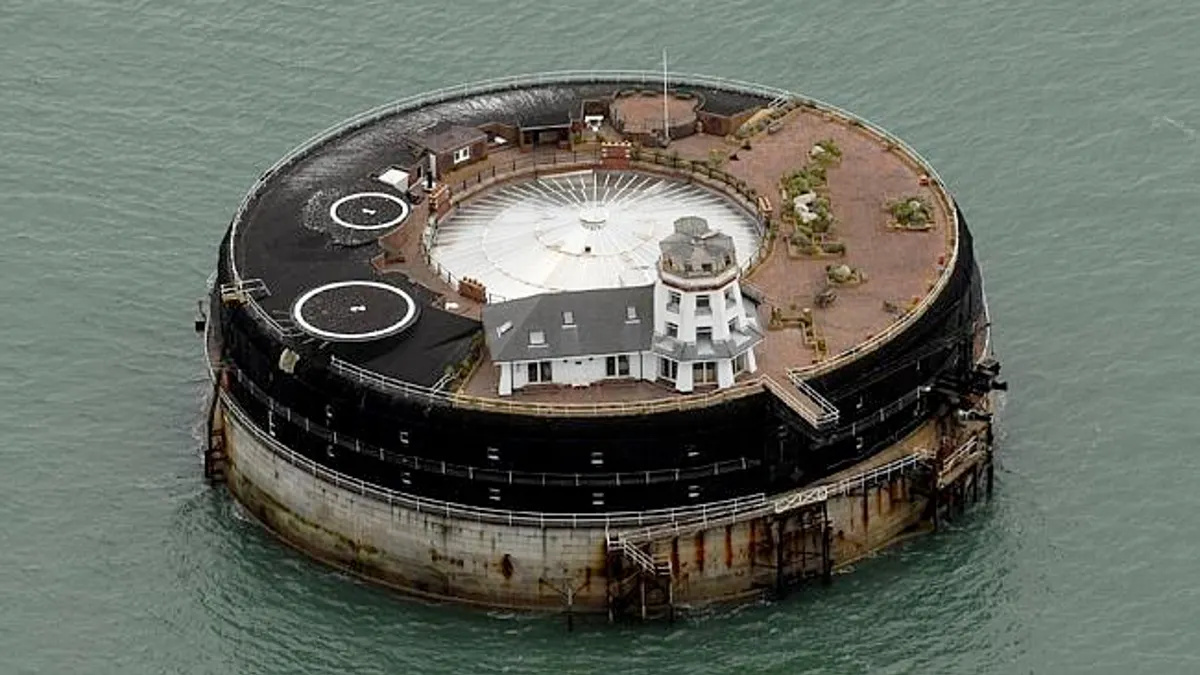
Victorian Maritime Fort Isolated in the Solent Turned Hotel with 22 Suites and Helipad, Showing How a War Fortress Can Become Extreme Lodging.
According to historical records from the UK Ministry of Defence, archives from English Heritage, and documentation from the decommissioning program of the so-called Palmerston Forts, No Man’s Fort was built between 1867 and 1880 as part of a maritime defensive system intended to protect the port of Portsmouth from a possible French invasion. Erected on an artificial foundation in the Solent strait, between the south coast of England and the Isle of Wight, the fort was designed to operate completely isolated, sustaining military garrisons, heavy armaments, and its own infrastructure amidst the sea.
The original structure was not conceived as a building but as a fixed war machine. The circular shape, thick masonry and concrete walls, and the absence of any connection to the mainland reflect a construction logic aimed exclusively at resistance, stability, and autonomy. Decades later, this same extreme logic would become the basis for one of the most radical conversions ever executed in the field of heavy military infrastructure reuse engineering.
A Maritime Colossus of Almost 9,200 m² Built for Naval Warfare
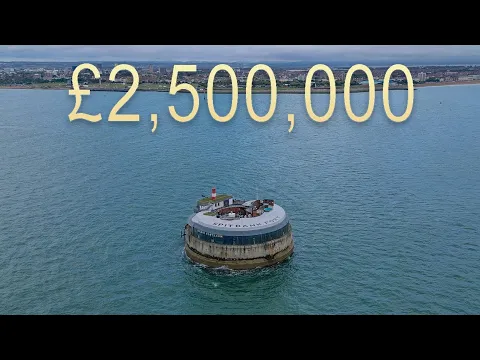
No Man’s Fort has approximately 99,000 square feet of internal area, equivalent to about 9,200 m², distributed across four main floors above sea level. The diameter of the structure approaches 60 meters, forming a continuous circular block set on an artificial base embedded in the seabed of the Solent.
-
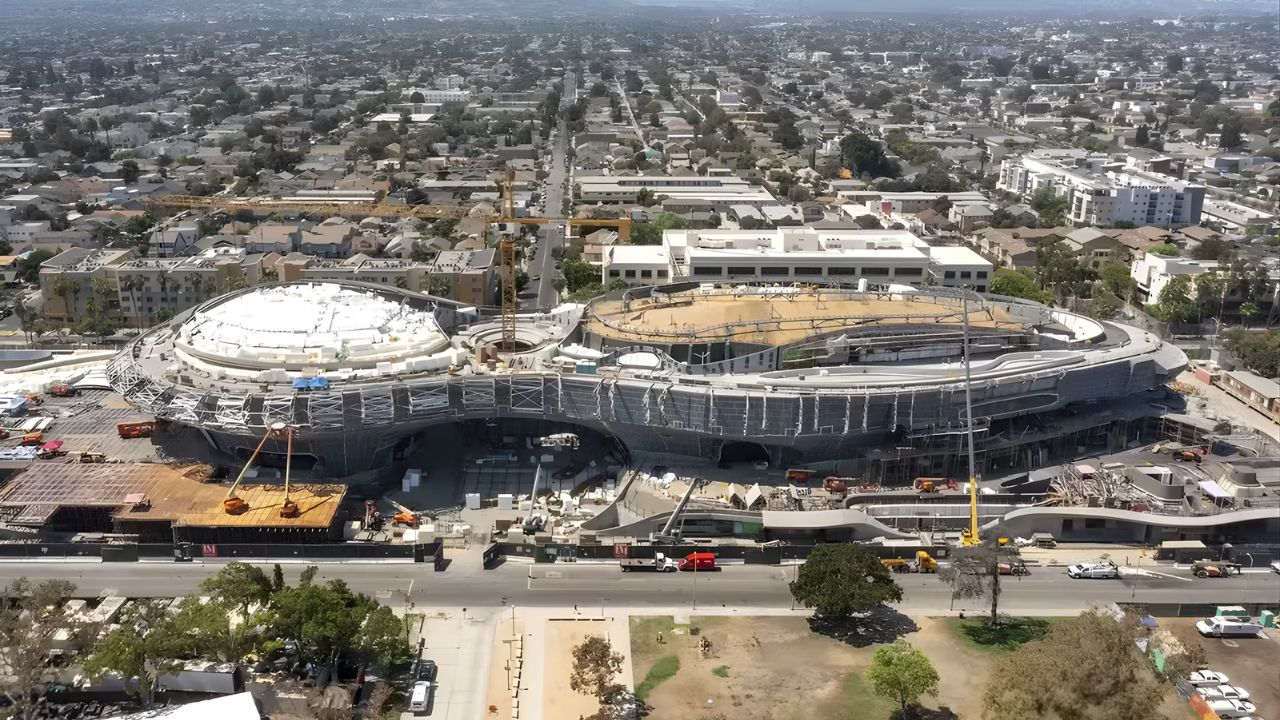
Created by George Lucas with over $1 billion, a futuristic museum in the shape of a spaceship with 1,500 curved panels is about to open in Los Angeles and will house one of the largest private collections of narrative art in the world.
-
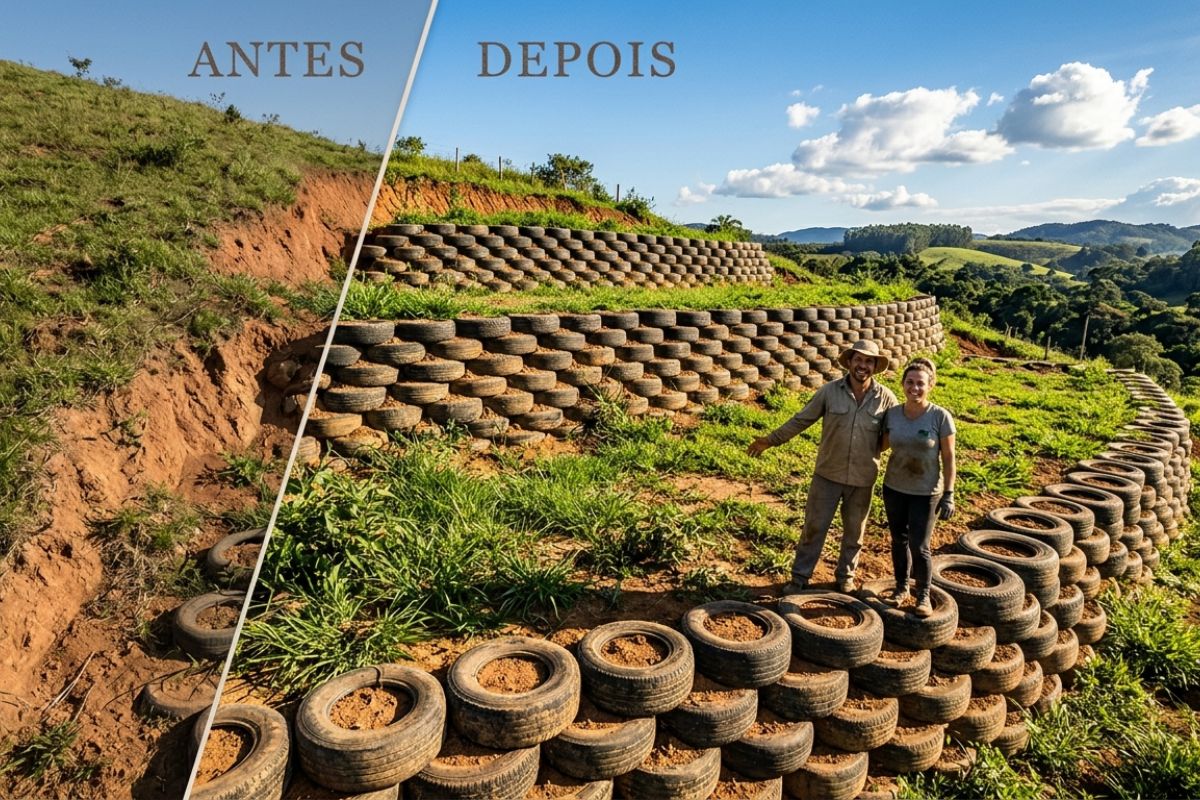
Couple shows how they built a retaining wall on their property using 400 old tires: sloped land turned into plateaus, tires are aligned, filled, and compacted with layers of soil, with grass helping in support and at almost zero cost.
-
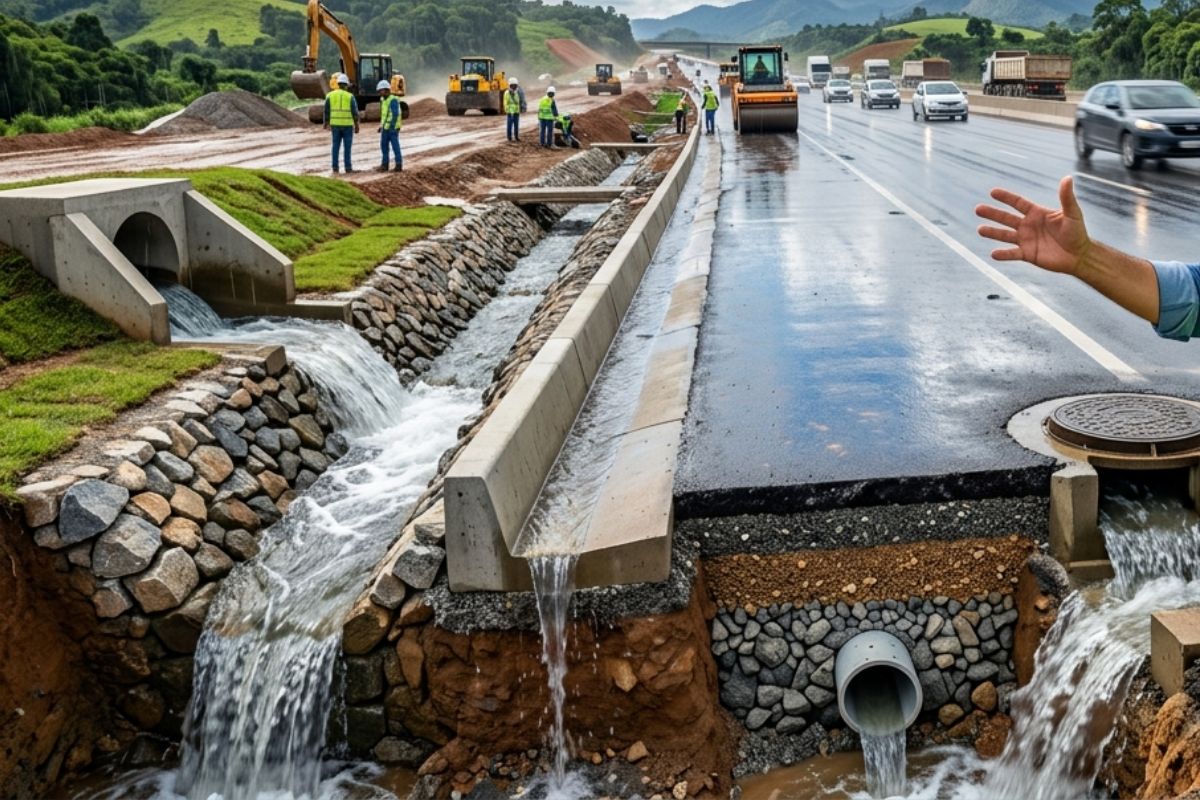
Engineer explains drainage during the rainy season: the difference between surface water and deep water, ditches, gutters, and water outlets on the road, as well as drains and drainage mattresses, to prevent erosion, aquaplaning, and flooding at the construction site today.
-
With 55 floors, 177 meters in height, a 15-meter walkway between the twin towers, ventilated facade, and 6,300 m² of leisure space, Ápice Towers already has one tower completed and another nearly at the top.



The external walls, built with thick masonry reinforced with concrete, were designed to withstand naval artillery impacts, constant erosion from saltwater, and severe storms.
Unlike conventional coastal buildings, the fort does not rely on slopes or natural protection: it directly receives the action of waves, currents, and winds, functioning as a rigid mass isolated in the middle of the channel.
The Extreme Logistics of a Building without Land Access
From its origin, No Man’s Fort has never had road, bridge, or fixed walkway access. All transport of materials, armaments, supplies, and military personnel has always occurred via boats — and, more recently, also by helicopter. This condition profoundly shaped both the original construction and the hotel conversion.
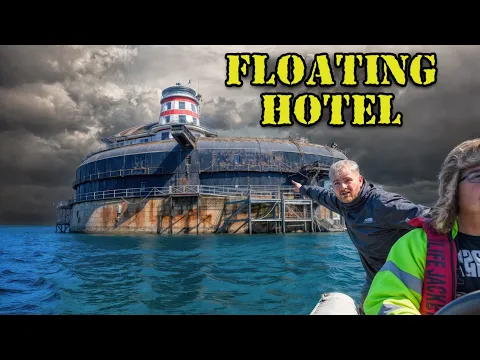
During the adaptation for hotel use, the entire construction process had to respect this logistical limitation. Equipment, finishing materials, electrical systems, plumbing, and air conditioning were brought by sea and hoisted directly to the top or to the side openings of the fort.
The helipad installed on the roof is not only a luxury element but an operational necessity in a building permanently isolated from the mainland.
From Gun Platform to Hotel with 22 Suites
Originally armed with large-caliber cannons and designed to house dozens of soldiers, the interior of the fort was compartmentalized into technical spaces, ammunition depots, military barracks, and operational areas.
The conversion to a hotel required a complete reorganization of these internal volumes, but without altering the original structural envelope.
The result was the creation of 22 suites, distributed within the thickness and volume of the building, utilizing existing rooms whenever possible. Unlike conventional hotels, the suites do not follow a regular grid of corridors and facades with large windows.
Many areas maintain reduced openings, a direct heritage of the fort’s defensive function, which required specific solutions for lighting, ventilation, and thermal comfort.
Adaptation Engineering Without Altering the Original Structure
One of the most extreme aspects of the No Man’s Fort conversion is that it occurred without the need for heavy structural reinforcement. The fortress already had a load-bearing capacity far exceeding the demands of a modern hotel. The challenge was not to make the structure more resistant, but to make it habitable.
Installing water, sewage, electricity, air conditioning, and security systems in extremely thick walls and slabs designed to support military loads required precise and limited interventions.
Structural cuts were minimized, and much of the modern infrastructure was accommodated in existing ducts or in new routes carefully planned to not compromise the integrity of the building.
A Self-Sufficient Building Surrounded Only by Water
Even after the conversion, No Man’s Fort continues to function as a practically autonomous unit. The physical isolation requires strict control of supply, waste, energy, and maintenance. Any logistical failure has an immediate impact, as there is no possibility of quick land access.
This condition transforms the hotel into a rare case of permanent habitable infrastructure in an extreme maritime environment.
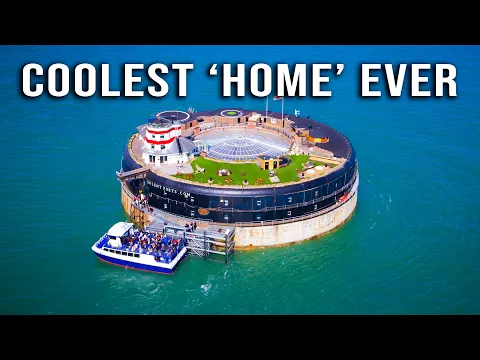
Unlike offshore platforms, the fort was not designed for dismantling or mobility. It remains fixed, continuously exposed to the natural conditions of the Solent, supported by 19th-century engineering that, due to its excess robustness, has endured more than a century practically intact.
From Imperial Fortress to Extreme Lodging
The transformation of No Man’s Fort into a hotel did not erase its military past. On the contrary: the building now serves as concrete proof of how infrastructures designed for total war scenarios can be repurposed without losing their structural identity.
What was once a naval defense platform has become a space for continuous human presence, sustained by the same walls, foundations, and volumes designed to withstand the worst.
In engineering terms, this is one of the most radical examples of heavy military reuse ever undertaken. A colossus built for destruction has ultimately found a new function in hospitality, without ever ceasing to be what it has always been: a fortress isolated in the middle of the sea.







-

-

-

-

-

-

66 pessoas reagiram a isso.