





 Portuguese
  English
  Spanish
  3 min of reading
  1 comment


The Japanese ‘Zeta Class’ Supercomputer Promises to Be 1,000 Times Faster and Revolutionize Global Computing by 2025
The Japan announced a new technological milestone by revealing plans to build the world’s first “Zeta Class” supercomputer, a machine that promises to be one thousand times more powerful than the fastest supercomputers today. The project aims to significantly outperform the capabilities of any current computer.
The Japanese supercomputer, set to launch in 2030, will be crucial for advancements in artificial intelligence (AI) and global scientific development. Construction of this project is expected to begin in 2025 and will have an estimated cost of over US$ 750 million, about R$ 4.2 billion. This reaffirms Japan’s leadership in the field of supercomputing.
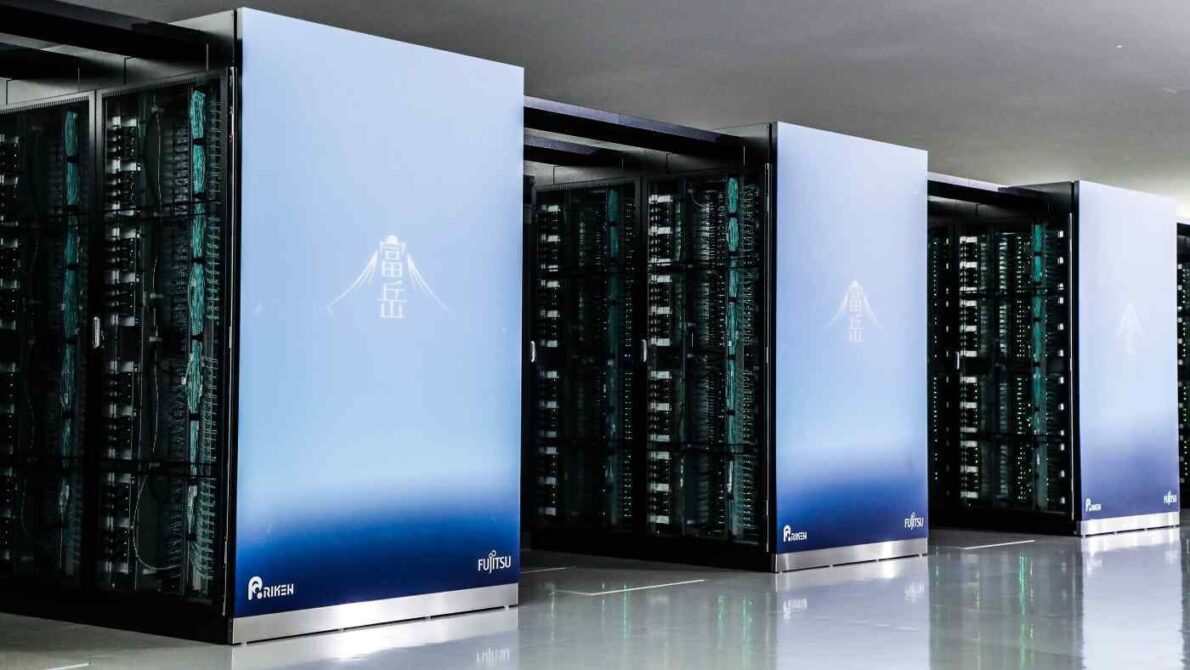
The Most Powerful Supercomputer in the World
The project, announced by the Ministry of Education, Culture, Sports, Science and Technology of Japan (MEXT) at the end of August 2024, highlights that the supercomputer will be able to operate at the impressive scale of zetaFLOPS.
-
They were brilliant! Scientists discover that our ancestors in China were already making super advanced tools 160,000 years ago, changing everything we knew.

-
Scientists unveil 3 million years of climate secrets hidden in the ice of Antarctica.

-
Ancient farmers created “aggressive plants” that changed nature forever.

-
Astronomers find a “backward” solar system that ignores all the rules of space and leaves scientists scratching their heads!


In practical terms, this means that the Japanese supercomputer will be able to perform a sextillion calculations per second. For comparison, the fastest supercomputers today operate in the range of exaFLOPS, meaning they can process about a quintillion operations per second, which is already a monumental achievement. The innovation represented by the Japanese zeta-class supercomputer places the country at the forefront of the high-tech sector.
Currently, the fastest supercomputer in Japan is Fugaku, which was once the most powerful in the world, with a processing capacity of 0.44 exaFLOPS. It was surpassed in 2022 by the Frontier supercomputer from the United States, which operates at 1.2 exaFLOPS.
However, Fugaku still ranks fourth among the most powerful supercomputers in the world. With the new zeta-class supercomputer, Japan hopes to regain leadership in this strategic and highly competitive field.
Fugaku Next – The Supercomputer of Japan
Temporarily named “Fugaku Next”, the new supercomputer will be developed by the Japanese companies RIKEN and Fujitsu, the same ones responsible for creating Fugaku.
The expectation is that Fugaku Next will maintain cross-compatibility with its predecessor, using components designed by Fujitsu. However, few additional details about the specific components of the new machine have been revealed so far.
Beyond the impressive processing capacity, one of the biggest challenges in building the new supercomputer will be energy efficiency. Experts claim that a zeta-class machine built with current technology would require the equivalent of 21 nuclear power plants to operate fully.
This concern raises questions about the project’s viability and encourages innovations in energy efficiency for supercomputers. Japan, however, is determined to overcome this challenge, as the machine will be a critical component for advancing research in AI and other cutting-edge scientific fields.
Project Investments and Timelines
MEXT has already allocated about US$ 29 million for the first year of the project, with the total budget potentially reaching around US$ 761 million over the course of development, which is expected to extend until 2030.
The construction of this supercomputer represents a milestone not just for Japan, but for the entire global scientific community. Zeta-class supercomputers have the potential to revolutionize areas such as artificial intelligence, climate modeling, nuclear fusion simulations, among others.
With the ability to perform calculations at speeds unimaginable just a few years ago, these supercomputers will be able to solve extremely complex problems much faster and more efficiently.
Japan, with its long tradition of technological excellence, has already demonstrated its capacity to innovate in the field of supercomputing. Fugaku, which was one of the fastest supercomputers in the world for a period, exemplifies the country’s commitment to scientific and technological advancement. Now, with the development of Fugaku Next, Japan seeks not only to keep pace with the evolution of science and technology but also to lead it.









GRATIDÃO YHARRION DOS UNIVERSOS SIDERAL CÓSMICAS DE MUNDOS HUMANIDADES DOS UNIVERSOS LINDAS DE MUNDOS HUMANIDADES DOS UNIVERSOS LINDAS E LIVRES VISÍVEIS E INVISÍVEIS ASSIM JÁ É AGORA GRATIDÃO YHARRION DOS JÁ ESTÁ FEITO AGORA EM VIBRAÇÃO DE DEUS ASSIM JÁ É EU SOU NÓS UNÍSSONO TUDO UM SÓ AMOR LUZ PAZ DA 5A.SUPERIOR DO ASTRAL SUPERIOR FINÍSSIMA SALVE O ALVORECER DOS NOVOS TEMPOS DA HERA DOURADA DO GRÃ MESTRE SAINT GERMAIN GOVERNADOR DA NOVA HERA DOURADA DE AQUÁRIO DO GRÃ MESTRE SAINT