





 Portuguese
  English
  Spanish
  3 min of reading
  1 comment


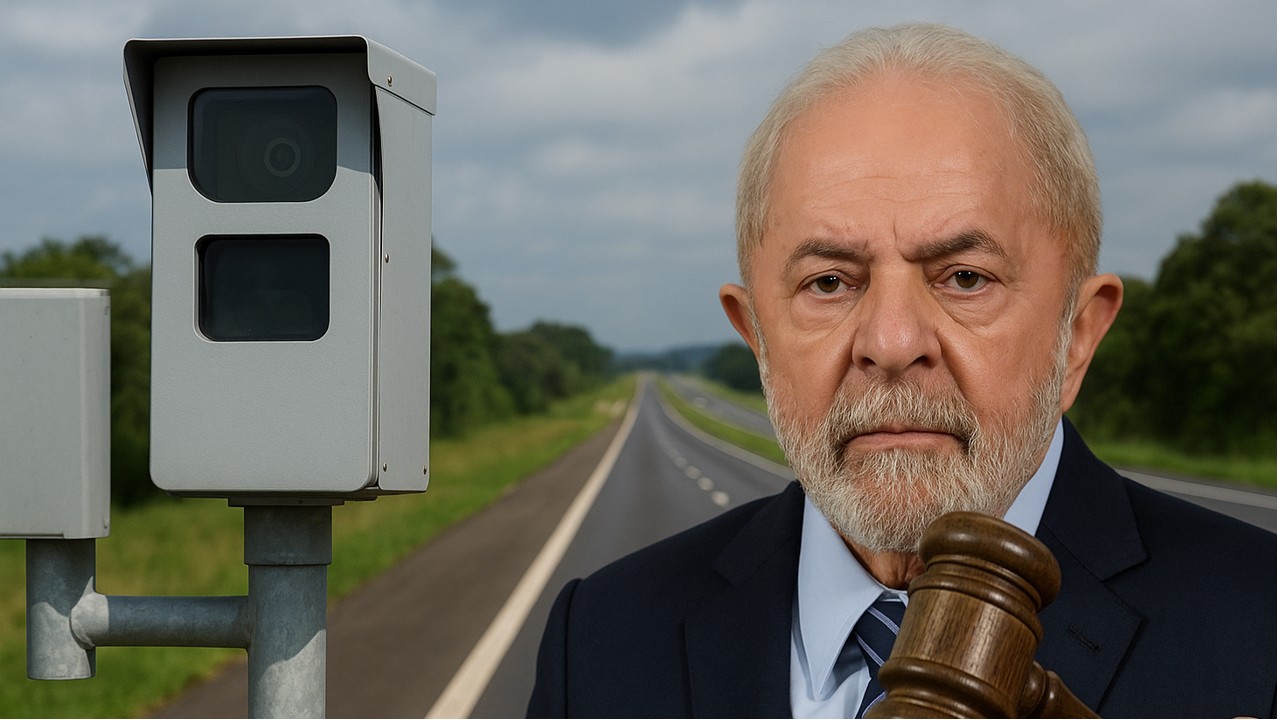


Federal Court Orders Lula Government to Reconnect Radars on Federal Highways After Suspension Due to Budget Shortage. Decision Reinforces Traffic Safety and Provides for a Fine of R$ 50,000 for Each Turned Off Radar.
The Federal Court has ordered the Lula government to immediately reconnect the electronic monitoring radars that had stopped functioning on federal highways due to lack of budget resources. The order was issued by Judge Diana Wanderlei of the 5th Federal Court in Brasília, in a public action filed in 2019, when then-President Jair Bolsonaro (PL) attempted to remove the operational equipment.
According to the judge, the blackout of the radars compromises road safety, encourages speeding, and may increase the number of fatalities on federal roads. The decision provides for a daily fine of R$ 50,000 for each radar turned off, applicable to both DNIT and the responsible concessionaires.
Insufficient Budget and Impact on Highways
The National Department of Infrastructure for Transportation (DNIT) reported that R$ 364 million would be needed in 2025 to keep all radars active. However, the budget law allocated only R$ 43.3 million, which led to the suspension of operations at around 4,000 monitoring points along 45,000 kilometers of federal highways.
-
IPTU exemption for seniors in 2026: see how to secure the benefit.

-
The institute that trained the greatest aerospace engineers in Brazil has just opened its first campus outside São Paulo after 75 years: ITA Ceará will have R$ 445 million, new courses in energy and systems, and classes are expected to start in 2027.

-
Luciano Hang, owner of Havan, goes to Juiz de Fora after the tragedy in February, brings R$ 1 million, hands out R$ 2,000 cards, and donates up to R$ 15,000 to victims in the region.

-
The Brazilian passport allows legal residence in dozens of countries without the need for a prior visa, and most Brazilians are unaware that they can apply for residency directly upon arriving in nations in South America, Africa, and even Europe.


With the stoppage, data from DNIT itself indicates that the average number of infractions surged. In a sample of 201 monitored sections, the number of irregularities increased by 802.55%, reaching 17,000 infractions by August 12 – all without fines being applied.
The History of the Judicial Action
The current decision is based on the same public action filed in 2019 by Senator Fabiano Contarato (PT-ES), when Jair Bolsonaro announced he would turn off the equipment. At that time, a court agreement forced the government to keep active the radars installed in critical sections of the highways – areas with high rates of accidents and fatalities.
The judge emphasized that the process remained open precisely to prevent future setbacks. In her decision, Wanderlei recalled that the current government was one of the main critics of the removal of the radars during the Bolsonaro administration, but is now reproducing the same practice.
The Destination of the Fine Money
Judge Diana Wanderlei also emphasized that the money collected from fines does not go to DNIT or the concessionaires, but to the Union’s single treasury. According to official data, the revenue obtained from traffic penalties is three times greater than the maintenance costs of the equipment.
That is, in addition to compromising road safety, the shutdown also represents a loss of revenue for the government.
Additional Determinations from the Court
In addition to the order to reconnect the radars within 24 hours, under penalty of a fine, the judge established new requirements:
- DNIT must inform within 72 hours the consequences of the outage on the highways and the exact amount needed to fully maintain the operation of the equipment.
- The Union will have 5 days to present a budget reallocation plan that ensures the maintenance of the National Radar Agreement signed in 2019.
Repercussions and Next Steps
The decision reignites the debate about safety on the roads and the role of the state in accident prevention. The blackout of the radars exposed drivers to risk and weakened enforcement, especially in historically critical sections.
Now, the Lula government will have to reassess budget priorities to ensure full implementation of the court agreement. If it fails to comply, in addition to fines, it may face other judicial sanctions.
- 1. Why were the radars turned off? Because the 2025 budget allocated only R$ 43.3 million, while DNIT needed R$ 364 million to maintain the contracts.
- 2. How many monitoring points were affected? About 4,000 points on 45,000 km of federal highways.
- 3. What is the fine for concessionaires and DNIT if they do not comply with the order? R$ 50,000 for each radar turned off, applied daily.
- 4. Where does the money from the fines go? It goes to the Union’s treasury, not to the concessionaires or DNIT.
- 5. Have accidents increased after the blackout? DNIT reported that infractions have grown by more than 800% since the radars were shut down, indicating a higher risk of accidents.









A indústria das multas está de volta coitado do povo B
rasileiro