






 Portuguese
  Spanish


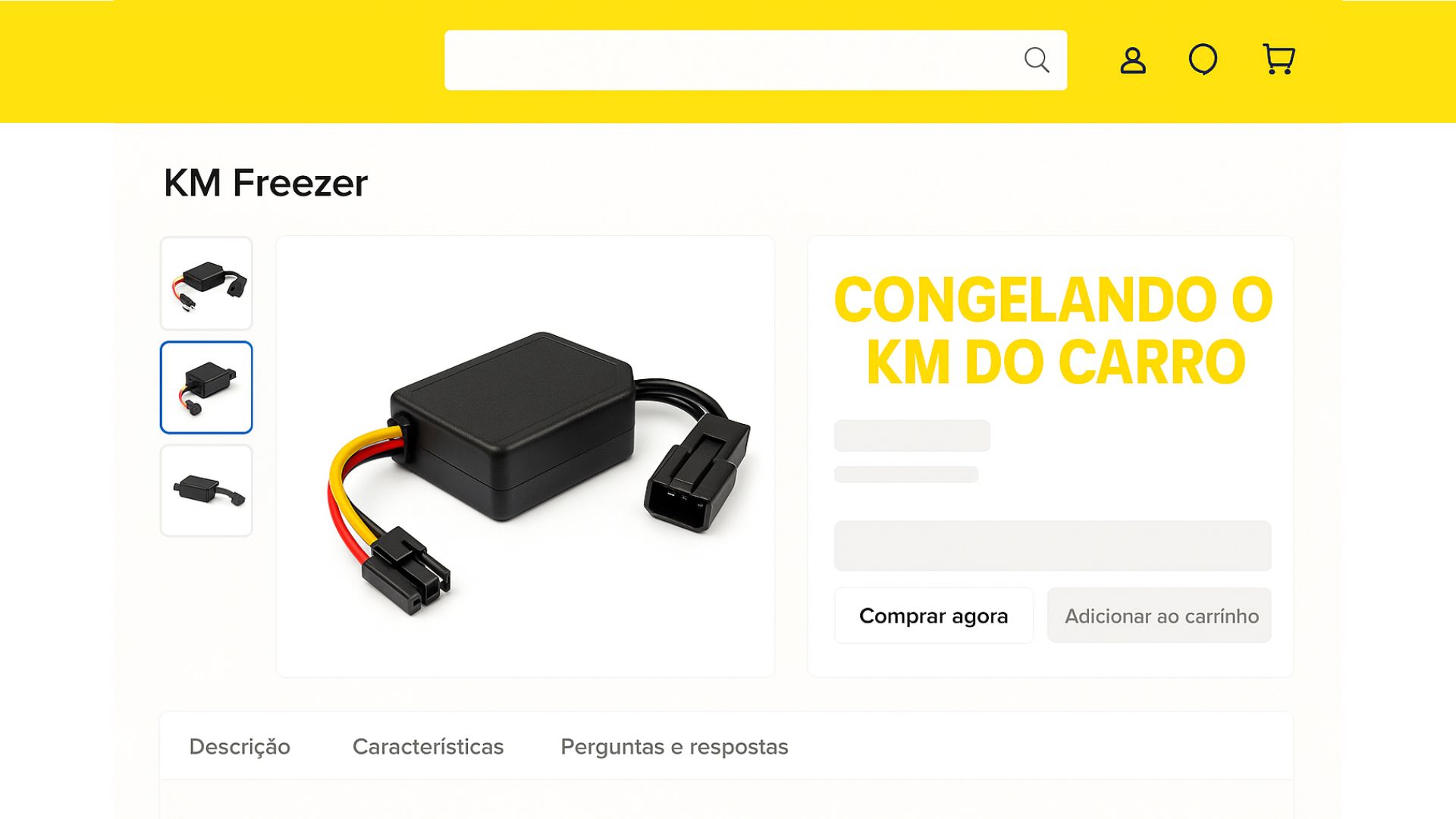


Device Known as “Km Freezer” Promises to Freeze the Mileage Displayed on Vehicle Dashboards, But Technical Limitations and Legal Implications Show That the Practice Involves Significant Risks and Complex Layers of Electronic Protection.
Devices known as “km freezer” have gained popularity in internet ads by promising to “freeze” the mileage of cars, even while the vehicle is in use.
The proposal is simple in speech: stop or reduce the odometer count so that the dashboard displays a lower number of kilometers traveled.
In practice, however, the reach of this trick is limited, tampering is subject to criminal punishment, and modern cars have extra layers of protection that hinder more sophisticated frauds.
-
Brazilian Steel Giant Partners with USP to Develop 40% Stronger Rebar for World’s Tallest Residential Building in Brazil’s Senna Tower

-
Oil Prices Drop to $72 as 20 Million Barrels Pass Through Strait of Hormuz in 24 Hours, Easing Supply Fears but Regional Tensions Keep Market on Edge

-
Brazil’s Ministry of Justice Investigates CazéTV for Betting Ads During World Cup Broadcasts

-
Brazilian Retail Giant Americanas Faces $10 Billion Asset Freeze Amid Investigation into Hidden Debts


Operation of the Device and CAN Network
According to descriptions released by specialized stores and ads in marketplaces, the “km freezer” is a small electronic module installed in the harness that connects the instrument panel to the vehicle’s network, usually at the back of the instrument cluster.
This module exploits communication via the CAN network, used by the car’s electronic systems, to filter or alter the pulse signals responsible for counting distance.
The commercial promise is to offer different modes of operation, ranging from a complete stoppage of the odometer to a percentage reduction in the recorded mileage, such as a drop of around 30% compared to the real value, depending on the car and the calibration informed by the accessory manufacturer.
The offer typically includes a wide list of models, from national and imported brands, with prices hovering around R$ 5 thousand for specific modules, depending on the vehicle.

It is therefore not a technology restricted to luxury cars: the same concept is replicated for various manufacturers, with variations only in the type of connector and the protocol used.
Legal Warnings and Limitations on Use
Although the most evident practical application is to reduce the mileage displayed on the dashboard to enhance the value of a used vehicle, manufacturers of this type of module typically include legal warnings in their product descriptions.
In one of the ads consulted, the company states that it does not assume “any responsibility for incorrect use or legal violations” related to the use of the equipment.
The same supplier highlights, in a note, that “the module is intended solely for testing purposes on closed tracks or test benches, and is not approved for use on public roads”.
In practice, however, authorities and consumer protection agencies consider mileage tampering a recurring problem in the used market, with a direct impact on vehicle valuation, pricing, and the safety of buyers.
Criminal and Civil Consequences of Tampering
From a legal perspective, manipulating the odometer to deceive a buyer is not a simple “technical adjustment”: the conduct can constitute fraud, as provided in Article 171 of the Penal Code, whenever there is an intent to obtain illicit advantage to the detriment of another person.
The Court of Justice of the Federal District and Territories explains in a publication on the subject that the owner who alters the odometer and sells the vehicle directly can be held accountable for this crime, subject to imprisonment and fines.
When the tampering is carried out by dealerships or stores, the situation worsens.
In addition to the criminal sphere, the responsible party may face violations of consumer relations, as mileage alteration is considered a hidden defect and a breach of the duty to inform the customer.
In recent years, decisions by the TJDFT have condemned companies for selling cars with tampered mileage, ordering refunds, contract termination, and payment of moral and material damages.
In one case, the court recognized that tampering with the odometer reading caused devaluation of the asset and extra maintenance costs, determining indemnification for material and moral damages to the injured consumer.
Real Limits of the “Km Freezer”
At the most superficial level, the module can interfere with the information that reaches the instrument cluster.
A cybersecurity specialist consulted for this report, under conditions of anonymity, explains that it is technically possible to interrupt or distort the pulses that feed the digital odometer, causing the number displayed on the screen not to match the actual kilometers traveled.
This effect, however, is restricted to what the driver sees on the dashboard. In increasingly electronic vehicles, the number of kilometers traveled is not stored in a single point of the system.
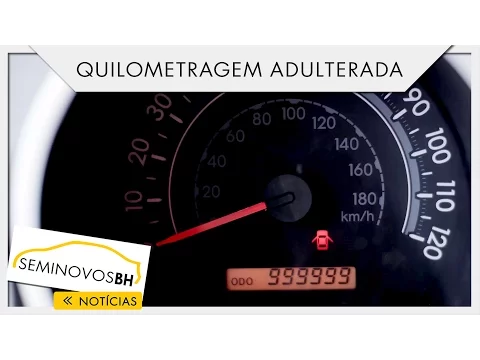

The information is recorded in non-volatile memories, such as EEPROMs, present in internal electronic modules that store data even without electrical power.
These memories often register parameters considered sensitive for the vehicle’s history, such as accumulated mileage, failure codes, and identification data.
In many projects, there are multiple modules recording distance, allowing cross-checking between the engine’s electronic control unit, the dashboard, and other systems.
Thus, even if the dashboard shows a reduced number, a diagnostic scanner connected by a mechanic or expert can access the data stored in internal modules and detect discrepancies between what appears on the display and what has been recorded in the ECU’s memory.
The discrepancy may indicate suspicion of tampering, especially when combined with history of revisions, precautionary reports, and inspection records.
Cryptography, Telemetry, and Fraud Protection
In newer models, manufacturers have begun to reinforce control over the recorded mileage.
The specialist reports that, in a large portion of current vehicles, direct access to mileage data in EEPROMs is protected by layers of encryption, which only authorized technicians or teams linked to the manufacturer can access.
This design hinders unauthorized edits of the recorded mileage.
In various cases, it is not enough to alter the dashboard or reprogram a single module: it would be necessary to synchronize several internal records for all to display the same number.
Some manufacturers still periodically send vehicle usage data, including mileage, to cloud-connected services, through telemetry modules.
In these scenarios, the manufacturer maintains a mirror of the car’s history on external servers, which allows for cross-referencing the vehicle’s information with remotely stored records.
According to the specialist, for someone to maintain a completely invisible fraud in this type of architecture, it would be necessary to invade both the internal systems of the car and the manufacturer’s servers, a task of high complexity and technical risk.
Essential Care for Those Buying Used Cars
For those intending to buy a used car, the existence of devices like the “km freezer” reinforces the importance of not relying solely on the dashboard reading when evaluating the vehicle’s condition.
Differences between the displayed mileage and the wear on the steering wheel, pedals, seats, and suspension may raise suspicions, as well as inconsistencies with service records, reports, and precautionary inspections.
In addition to visual and mechanical analysis, it is advisable to request maintenance history, check for potential accidents, verify documentation, and, whenever possible, use scanners or specialized services that cross-check data from different electronic modules.


