





 Portuguese
  English
  Spanish
  4 min of reading
  1 comment


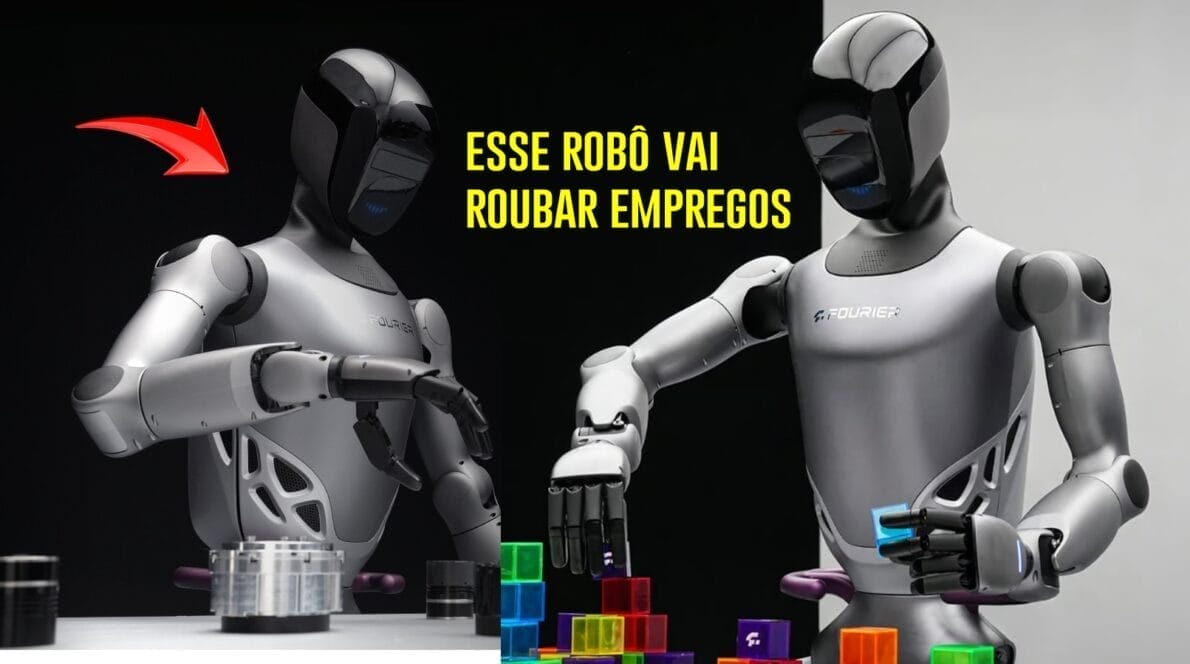

A Futuristic Robot, Equipped With AI and Cutting-Edge Technology, Has Been Revealed by China
Recent studies indicate that automation is about to drastically transform the global labor market. According to research, by 2030, between 400 million and 800 million jobs could be automated. An impressive example of this evolution is the new Chinese futuristic robot, designed to perform a wide range of tasks that were previously exclusive to humans, from industrial activities to customer service.
The Chinese company Fourier Intelligence has just launched the futuristic robot GR-2, a new humanoid robot that promises to redefine the concept of advanced robotics.
This launch is part of the GRx series of humanoid robots, and the company, founded in 2015 and headquartered in Shanghai, is widely known for its work with robotics focused on medical and rehabilitation environments. With the futuristic robot GR-1 already in the field, the GR-2 brings updates that further consolidate Fourier Intelligence’s presence in the sector.
-
They seemed like common bones, but scientists were surprised to find a relic over 12,000 years old that dates back to before the Bronze Age.

-
With an almost perfect ring of 70 km visible from space, known as the “Eye of Quebec” and over 100 km in length, the Manicouagan Crater in Canada reveals the colossal mark left by a giant asteroid and has become one of the most impressive formations ever identified on the Earth’s surface.

-
Scientists have found in China dinosaur embryos dating back 190 million years in various stages of development, and the discovery still preserves traces of extremely rare proteins in the bones, something that could change what is known about life before hatching.

-
The CEO of Honor in Spain says that smartphones will change with AI, foldables, and even robot phones; the component crisis is making cheap models more expensive in 2026 and shifting the focus to premium.

Evolution of GR-1 to the Futuristic Robot GR-2
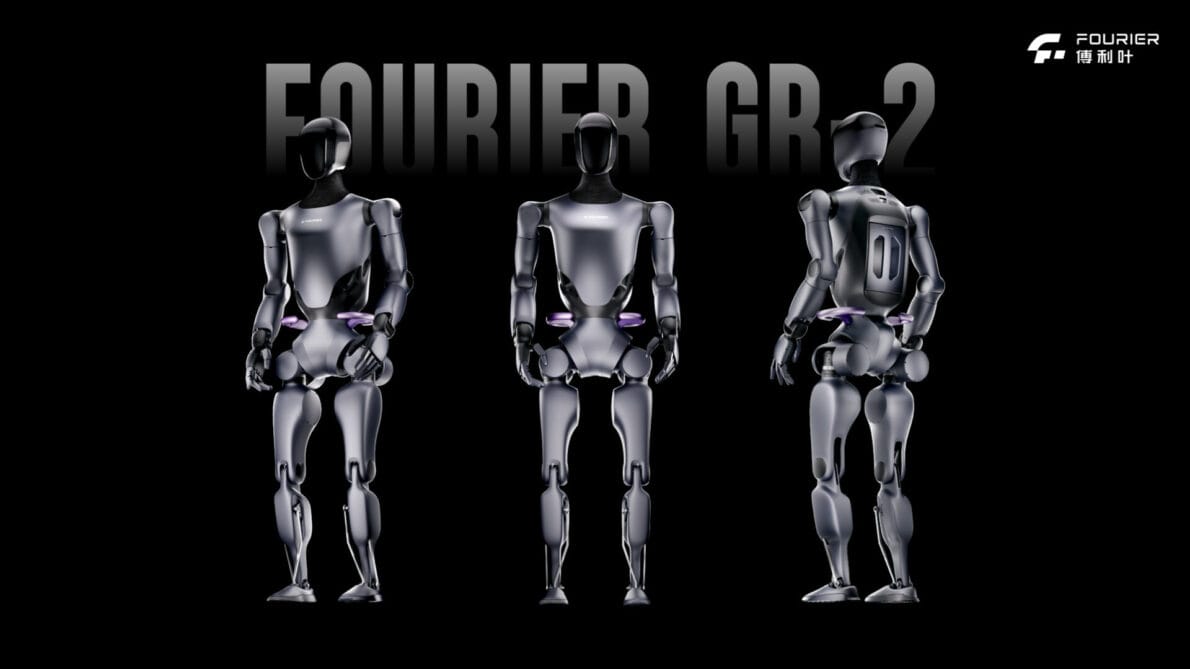
The GR-1 was introduced by Fourier in mid-2023 and stood out as the company’s first bipedal general-purpose robot.
It was created to assist the elderly with daily tasks, and its development was driven by direct customer feedback. Now, with the futuristic robot GR-2, the company goes further, offering a more flexible, robust robot with cutting-edge technology in various aspects.
Fourier’s CEO, Alex Gu, emphasized the importance of this new launch, stating: “GR-2 is a significant step for the future of humanoid robotics. We are passionate about building the most intuitive embodied agent for AI, allowing it to engage with the physical world in ways never seen before.”
And indeed, the GR-2 was designed with this mission in mind, offering a range of improvements that make it an extremely advanced tool for handling complex and precise tasks.
Performance and Specifications of GR-2
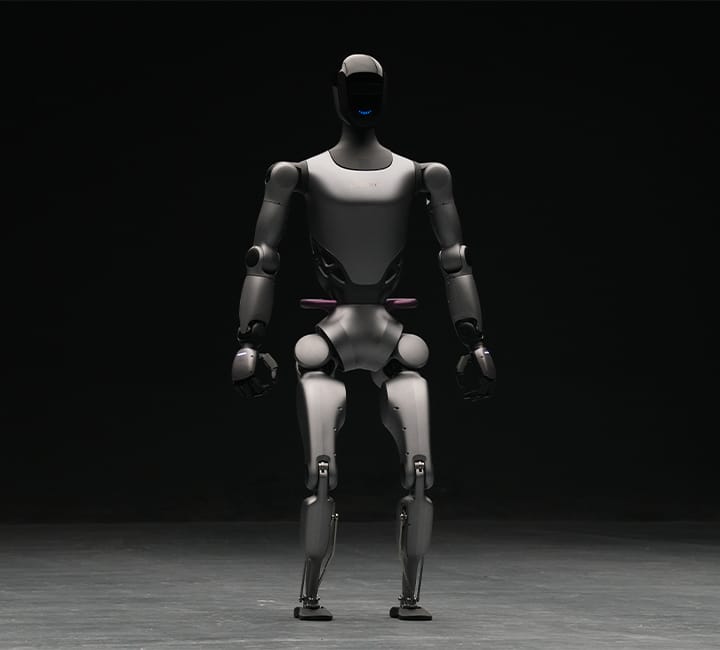
At 175 cm tall and weighing 63 kg, the GR-2 has 53 degrees of freedom, increasing its capacity to perform movements with greater flexibility and precision.
It also has a load capacity of 3 kg in a single arm, allowing it to execute tasks that require greater strength.
The robot also received a significant update to its battery, which is now removable and has double the capacity compared to the previous model, increasing its autonomy by an hour and making it ideal for prolonged tasks, such as long-distance walks.
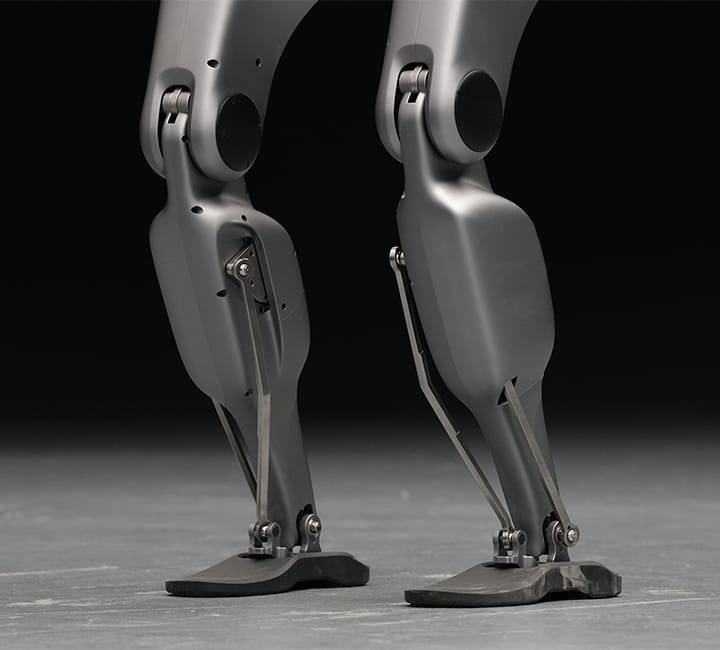
Additionally, the GR-2 features an updated joint structure, shifting from a parallel configuration to a serial one.
This simplifies the control of the futuristic robot, reducing maintenance costs and increasing efficiency in transitioning from AI simulations to practical applications. The modular and compact design also facilitates customization to meet the specific needs of different applications.
The hands of the GR-2 are another highlight: with 12 degrees of freedom (12-DoF), these hands are incredibly agile and capable of replicating human flexibility.
Furthermore, the robot is equipped with six tactile sensors that help identify materials, shapes, and even the force required to manipulate objects, ensuring precise performance in dynamic environments.
Integration of AI and Advancements in Control
Fourier Intelligence focused not only on the physical performance of the GR-2 but also on its integration with artificial intelligence systems.
With seven custom FSA actuators, the robot can replicate human movements with high precision and agility, thanks to peak torques exceeding 380 Nm. This allows the GR-2 to perform a variety of tasks with increased flexibility, even in environments that require fast and precise movements.
Another significant advancement lies in the control system of the GR-2. Equipped with dual encoders, it offers greater precision in its movements, which is essential for applications where error is not an option. The FSA 2.0, the new version of the actuators, further enhances the robot’s ability to handle complex tasks.
Focus on Developer Experience
To facilitate the creation of new applications, Fourier also enhanced the software development kit (SDK) of the GR-2. The SDK is compatible with popular programming languages, such as ROS, and offers pre-configured APIs for machine vision, force feedback control, and path planning.
This gives developers the opportunity to optimize their workflows and focus on innovation, with support for platforms like NVIDIA Isaac Lab and Mujoco.
This advanced development environment provides a range of tools for developers, who can use the platform to create smarter and more functional humanoid robots.
Prospects for the Future of Robotics
According to Fourier, the GR-2 is just the beginning of a new era for humanoid robotics. The company is focused on six key areas for future development: locomotion, manipulation, cognition, bionic design, user experience, and economic viability.
These areas form the foundation for the innovations that Fourier expects to bring in the coming years, and the GR-2 is a clear example of this progress.
With the launch of the GR-2, Fourier Intelligence continues to lead the way in advanced robotics, bringing innovative solutions that not only optimize the interaction between humans and robots but also expand the potential of artificial intelligence to transform various industries.





Quanto a China está te pagando para falar dela até que convençam **** que o PCCh seja um partido liberal e uma país democrático?