






 Portuguese


Land Rover Delays Next-Generation Defender by Two Years, Pushing Electric Version to Early 2030s While Maintaining Projects Like Range Rover Sport Electric and Range Rover GT, Expanding EMA Platform Hybrid Flexibility and Executing Cost-Cutting Program.
Land Rover has entered a new phase of revising its electrification plans by postponing the next-generation Defender, a model expected to pave the way for a fully electric variant. The redesign was anticipated between 2028 and 2029 but is now projected for the early 2030s.
According to Electrive, information attributed to the British newspaper The Times indicates that the redesign has been pushed back approximately two years. However, JLR has not publicly announced an official date for the electric Defender’s premiere.
Current Defender Creates Obstacles for Fully Electric Version
The main challenge lies in the architecture used by the current Defender. The model is built on the D7x platform, designed to provide high structural rigidity and support combustion and hybrid engines but not configured to accommodate large battery packs.
-
Mitsubishi Eclipse Cross GLS 2027 Arrives with 1.5 Turbo Engine, 165 HP, Priced at R$ 155,990; Retains Seven Airbags and 18-Inch Wheels, Forgoes Multimedia and Backup Camera

-
New Volkswagen Nivus 2027 to Feature 1.5 Turbo Hybrid Engine with Up to 170 HP, Larger Size, and Design Inspired by the New T-Roc to Compete with Fastback, Sonic, and Kardian SUVs

-
5 Used Japanese Hybrids That Don’t Require Charging, Achieve Up to 27 km/l, and Start at R$ 75,990, Featuring Options from Toyota, Honda, and Lexus Below R$ 200,000
-
A Tesla Owner Spent Two Years Building His Own Solar Roof That Adds 20 Miles a Day, and at Today’s Power Prices It Takes About 9 Years to Pay Off


This means that an electric version equivalent to the Defender 90, 110, and 130 cannot be created merely by replacing the current engine. The solution hinges on a new generation capable of housing the necessary batteries without compromising the vehicle’s fundamental characteristics, which complicates the timeline further.
New Generation Moves Beyond 2028 and 2029 Window into the 2030s
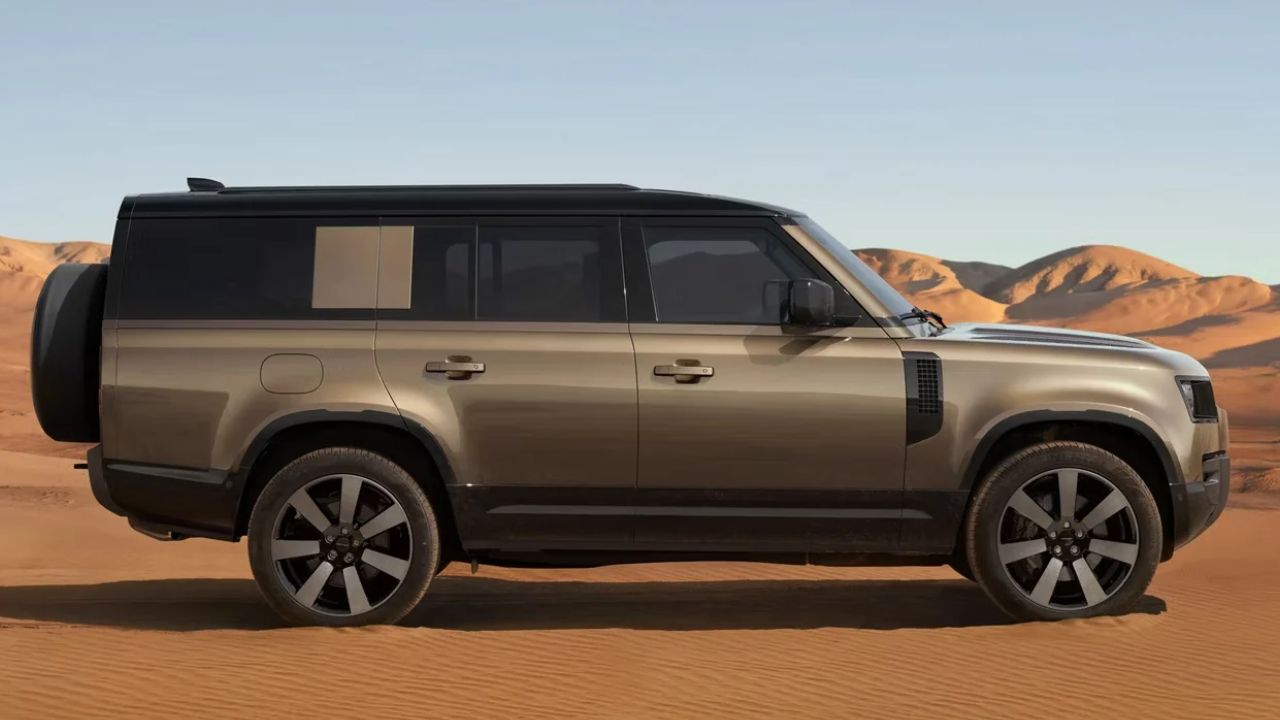
Reports initially indicated a complete renewal of the Defender between 2028 and 2029. With the project revision, this window has likely shifted by about two years, pushing the arrival of its successor to the beginning of the following decade.
As the electric variant relies on this new base, the delay directly impacts the future battery-powered Defender. Land Rover will, therefore, continue to explore the current generation with combustion and electrified options for a longer period before making a complete transition.
Land Rover Maintains Flexibility Between Electric and Hybrid Options
The Defender revision occurs as JLR adopts a more flexible strategy for its propulsion systems. In June 2026, the company confirmed that the Range Rover, Defender, and Discovery models will offer, depending on the model and market, mild hybrid, conventional hybrid, plug-in hybrid, and fully electric alternatives.
This change reduces reliance on a transition exclusively based on battery electric vehicles. The company argues that different markets are adopting electrification at different speeds, requiring architectures capable of accommodating more than one technology.
EMA Platform Will Also Be Prepared to Accommodate Hybrid System
One of the key examples of this shift is the Electrified Modular Architecture, known as EMA. Initially associated with the group’s new electric models, the platform will have the flexibility to also accommodate a conventional HEV hybrid system in future vehicles produced in Halewood, UK.
This allows Land Rover and other brands in the group to share a modern base without relying solely on demand for pure electric vehicles. This measure gives JLR leeway to adjust volumes and powertrains based on consumer behavior in different markets.
Range Rover GT Marks New Phase of EMA Platform
The Range Rover GT will be the first fully electric model in the Range Rover family developed on the EMA. The company officially unveiled the vehicle in July 2026 and confirmed that it will be produced in Halewood.
JLR announced that the GT will start as a battery electric vehicle, while the architecture has been designed to gain greater flexibility later, including the possibility of hybrid propulsion in future vehicles. This model becomes a crucial part of the strategy as the larger electric Defender remains further down the line.
Range Rover Sport Electric Among Short-Term Launches
Another project that continues to advance is the Range Rover Sport Electric. The electric version was publicly presented in 2026 and is part of the new product cycle that the company intends to bring to market before the complete renewal of the Defender.
Unlike the future GT, the Range Rover Sport remains on the MLA architecture, which has been prepared to work with different propulsion systems. This strategy allows the company to put new electric vehicles on the roads without waiting for the next generation of the Defender.
Cost Reduction Accompanies Project Review
The schedule shift also occurs during a broad financial efficiency program. In June 2026, JLR announced that its so-called Enterprise Missions aim to generate £1.7 billion in cost reductions over two years, involving expenses related to materials, warranties, and fixed costs.
The company aims to reduce the volume necessary to reach the breakeven point to about 300,000 vehicles. In August, JLR reiterated that these initiatives would begin contributing to the planned savings while continuing to invest in new products.
Defender Remains One of the Most Important Products in JLR’s Portfolio
Despite the delay of the next generation, the Defender remains central to the portfolio. In the first quarter of the fiscal year 2027, Range Rover, Range Rover Sport, and Defender together represented 80.8% of JLR’s global wholesale volumes, up from 77.2% recorded a year earlier.
This commercial weight helps explain why a structural change in the Defender requires caution. Quickly replacing a relevant product with a generation based on a completely new architecture involves industrial costs, technical risks, and decisions about which powertrains will continue to be available.
Smaller Defender Takes Different Path from Traditional Model
The reported delay of the larger new generation does not necessarily alter all projects associated with the Defender name. JLR itself confirmed in June that a new addition to the family will be the second vehicle from the brand to utilize the EMA platform.
This future model will have access to the architecture prepared for both BEV and a hybrid option. Thus, the expansion of the Defender family may continue ahead of the arrival of the electric successor to the larger models that currently occupy the center of the lineup.
Land Rover Recalibrates Electrification Without Abandoning Battery Vehicles
The scenario shows a transition less linear than the initial electrification plans suggested. Land Rover remains committed to the development of fully electric models, but JLR’s strategy has begun to simultaneously emphasize batteries, plug-in hybrids, conventional hybrids, and combustion engines based on the product and the market.
As the large electric Defender moves towards the early 2030s, the Range Rover Electric, Range Rover Sport Electric, Range Rover GT, and new models on the EMA keep electrification in motion. The difference now lies in the pace and flexibility chosen to get there.
In your opinion, does it make sense for Land Rover to maintain hybrids longer and delay the fully electric Defender, or should the brand accelerate the shift to battery-only vehicles? Share your thoughts in the comments.


