






 Portuguese


Scotty, the largest T. rex ever recorded, lived 66 million years ago, measured more than 43 feet, and weighed up to 19,500 pounds; scientists analyzed a broken rib containing mineralized blood vessels and found healing signs that reinforce the hypothesis of possible fatal injuries after a confrontation with other dinosaurs.
The T. rex known as Scotty, considered the largest specimen of the species ever recorded, returned to the center of scientific research in September 2026 for a reason that goes far beyond its size. Measuring over 43 feet long, about 13 feet tall at the hips, and weighing an estimated 19,500 pounds, the animal preserved microscopic signals in a broken rib capable of revealing details about its final moments.
According to information released by Popular Science on September 3, 2026, researchers from the Oak Ridge National Laboratory in the United States and the University of Regina in Canada studied the fossil using advanced imaging techniques. Inside the rib, mineralized blood vessels and structures associated with healing were identified, evidence supporting the hypothesis that Scotty suffered severe injuries shortly before dying.
T. rex Scotty was a giant even among the great tyrannosaurs

Scotty already held a special place in paleontology before the new analyses. Its fossils represent the largest T. rex known, a predator that lived during the Late Cretaceous, approximately 66 million years ago.
-
Halcon Prospect Estimate in the Philippines Triples to 8 Trillion Cubic Feet of Gas and Geological Chance of Success Rises from 18% to 24%

-
Man Buys Small Dog for Just £1 at Flea Market, Discovers It’s Over 600 Years Old and Worth Up to £10,000

-
Researchers Relocate Beavers in Utah to Aid Ecosystem Recovery, Project Expands Statewide
-
Physicists May Have Just Found the Most Promising Signal of Dark Matter Yet – But It Was Just a Particle


The estimates presented by researchers place the animal at over 43 feet long and up to 19,500 pounds. The height at the hips reached approximately 13 feet, dimensions that help explain why the specimen has become a reference for studies on the maximum size attained by Tyrannosaurus rex.
The broken rib held something much rarer than the bone itself
The size of Scotty is impressive, but it was one of its ribs that brought the most recent surprise. The bone had suffered a fracture and preserved extremely unusual structures within the fossilized material.
Researchers identified a vast network of mineralized blood vessels, something exceptional because soft tissues typically degrade quickly after an animal dies. Finding traces of this kind tens of millions of years later offers a rare opportunity to investigate biological processes that occurred while the dinosaur was still alive.
Blood vessels were preserved for about 66 million years
Preservation does not mean that liquid blood remained intact within the fossil. What scientists found were mineralized structures related to the ancient blood vessels present in the rib.
These remnants survived the fossilization process for about 66 million years. For researchers, this discovery offers an unusual window to observe how the body of the T. rex responded to a severe injury before death.
Signs Indicate the Organism Tried to Repair the Fracture
The rib preserved not only evidence of a break. The images showed signs associated with a healing process that had already begun.
According to the interpretation presented by scientists, iron-rich blood reached the injured area and a network of small vessels developed around the wound, part of the biological response used to repair damaged tissue.
Healing Indicates Scotty Initially Survived the Injury

The presence of healing signs means that the fracture did not kill the animal instantly. The organism had time to initiate a response to the injury.
This detail is important because it allows for reconstructing a likely sequence of events. Scotty suffered a fracture, remained alive for some time, and began to heal, although the process was apparently not enough to ensure its recovery.
Researchers Suspect of a Fight with Other Dinosaurs
The exact origin of the fracture cannot be observed directly millions of years later. Still, researchers consider it likely that Scotty injured itself during some kind of confrontation with other dinosaurs.
The interpretation presented is that the large T. rex sustained injuries during a fight and subsequently succumbed to the consequences of those injuries. The hypothesis is supported by the condition of the rib and the healing signs, but it remains a probable scientific reconstruction, rather than a directly proven scene.
Rib May Help Explain How the Largest T. rex Died
The preserved tissues offer information that a common fossilized bone would hardly reveal on its own. Instead of just indicating that there was a fracture, they show how the body biologically responded to the trauma.
With this, researchers were able to narrow down the analysis of the period immediately prior to death. The rib suggests that the injury remained biologically relevant when Scotty died, strengthening the hypothesis that the injuries contributed to the outcome.
Saline Swamp May Have Been Decisive for Exceptional Preservation
After dying, Scotty likely remained in a saline swamp environment. The conditions around the body would have significantly slowed the decomposition process.
This unusual preservation helped delicate structures remain protected long enough to be mineralized. The environment in which the T. rex died may have been as important to the current discovery as the injury itself, because without those conditions, the vessels would likely have disappeared.
Scientists Used Neutrons to See Inside the Fossil

Examining such a valuable fossil required techniques capable of revealing its interior without destroying the specimen. One of the solutions employed was neutron imaging.
Neutrons allow for the identification of lighter elements present in the material. In this way, researchers were able to visualize internal details of the rib of the T. rex that would be difficult to observe from the surface alone.
X-rays Showed a Different Part of the Structure
The team combined neutron analysis with X-ray imaging. While neutrons helped identify lighter elements, X-rays provided complementary information about heavier elements.
The combination increased the number of details available to researchers. Instead of relying on a single technique, the study brought together different methods to reconstruct the internal structure of the bone and mineralized tissues.
Synchrotron Radiation Took Investigation to the Cellular Level
Another tool employed was synchrotron radiation, used alongside microscopy methods to examine the tissues involved in healing.
This set of techniques allowed for the analysis of details at an extremely small scale. The goal was to understand not only the overall appearance of the fracture but also how the preserved structures were organized within the injured area.
Fossil Can Be Studied Without Being Destroyed
One of the greatest advantages of the techniques used was the ability to investigate the rib without cutting or permanently damaging the fossil.
This is especially important for rare specimens like Scotty. The same structures can remain available for future analyses, potentially using technologies that may still be developed in the coming years.
Discovery Expands Search for Preserved Tissues in Dinosaurs
Fossilized soft tissues are much rarer than bones and teeth. Therefore, the identification of mineralized blood vessels within the rib represents a significant finding for future research.
Scientists believe that similar methods could help find other cases of exceptional preservation. Fossils that have been studied primarily for their external anatomy for decades may be hiding microscopic structures still unknown.
Size of Scotty Is No Longer the Only Reason for Scientific Interest
For a long time, the attention given to the specimen was related to its extraordinary size. Over 13 meters long and nearly 9 tons placed Scotty at the top of known estimates for the species.
Now, however, the largest T. rex has also become significant for preserving extremely delicate biological evidence. A single rib allows investigation into injury, blood circulation, healing, and possible circumstances surrounding the animal’s death.
Injury Reveals Even A Giant Predator Faced Risks
The Tyrannosaurus rex held a dominant position in Late Cretaceous ecosystems, but that did not mean an absence of dangers.
Scotty’s fracture shows that even a gigantic individual could suffer severe trauma. Conflicts with other animals, accidents, or disputes could produce injuries capable of jeopardizing the survival of a top predator.
8.85-Ton T. rex Left Microscopic Clues of Its Last Days
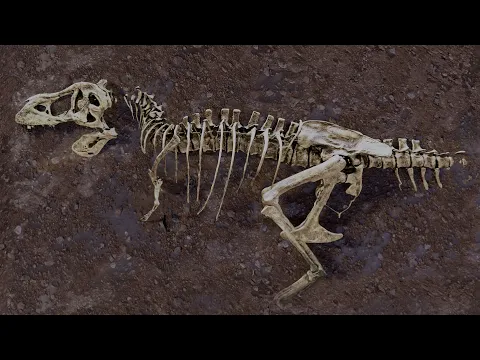

Scotty’s story brings together two completely opposite scales. On one side is a T. rex measuring over 13 meters in length and weighing up to 8,850 kilograms; on the other, microscopic structures preserved within a single broken rib.
It was precisely these small remnants that allowed researchers to see something the gigantic skeleton alone did not reveal: the organism attempted to heal a serious injury before death.
Scotty Preserved in a Rib a Possible Clue About Its Death
After approximately 66 million years, the broken rib of the largest T. rex known continues to provide information about an episode that occurred while the animal was still alive. Mineralized blood vessels, signs of repair, and modern imaging techniques allowed scientists to reconstruct part of the organism’s response to the fracture and raise the hypothesis that injuries sustained during a fight may have contributed to its death.
The discovery shows how an apparently small detail can change what we know about a gigantic fossil. What impresses you the most: Scotty’s size, the potential to reconstruct its final moments, or the fact that blood vessels left recognizable traces after about 66 million years? Let us know in the comments.


