Portuguese
  Spanish


Scientists confirm that a meteor impact in Australia 790,000 years ago generated a “golden rain” and formed a unique crater with green rocks in Ora Banda.
The confirmation of a 4-kilometer diameter impact crater in Ora Banda, Australia, ended years of geological speculation about the region. The study, published on June 9 in the journal Meteoritics and Planetary Science, details how the collision of an asteroid, which occurred 790,000 years ago, was responsible for modifying the local soil structure.
More than just creating a hole in the surface, the catastrophic event triggered a chain reaction that resulted in the formation of precious metal deposits.
According to the researchers, the impact energy was so intense that it transformed the area’s geology, creating the perfect conditions for the gold, originally vaporized, to return to the earth in a kind of metallic rain.
-
Construction Begins on First U.S. Modular Nuclear Reactor, Smaller Than a Sports Court

-
Dutch Innovator Develops Dual Battery and Electrolyzer Machine for Solar and Wind Energy Storage, Raises €30 Million Following 1 MW Pilot

-
Scott Nolan Secures $900 Million from U.S. Government to Produce Enriched Uranium for Next-Gen Reactors, Reducing Reliance on Russia and China for Nuclear Fuel
-
Hiker in Norway Discovers Rare 1,500-Year-Old Gold Sword Ornament, One of Only 17 Worldwide


Understanding the formation of breccias and glasses
The complexity of the crater becomes clear in the analysis of breccias, which are rocks formed by smaller fragments bonded by a fine matrix.
In impact sites like those found in Australia, these rocks are abundant because the shock wave shatters the soil instantly.
Geologists classified these materials into different groups:
- Monomict breccias: Formed by a single type of rock that was crushed and glued back together.
- Polymict breccias: Resulting from the mixture of different types of rocks, as if they had been blended in a mixer.
- Suevite: A special type of breccia that contains glassy particles (glasses).
The presence of these “little glasses” in suevite is definitive proof of the energy involved in the event.
The rocky debris was thrown into the air, melted due to the heat of the impact, and solidified quickly while still in aerial trajectory.
This rapid fusion process sealed part of the impact’s history within the rock itself, allowing science, 790,000 years later, to reconstruct every detail of the day the asteroid changed the local landscape.
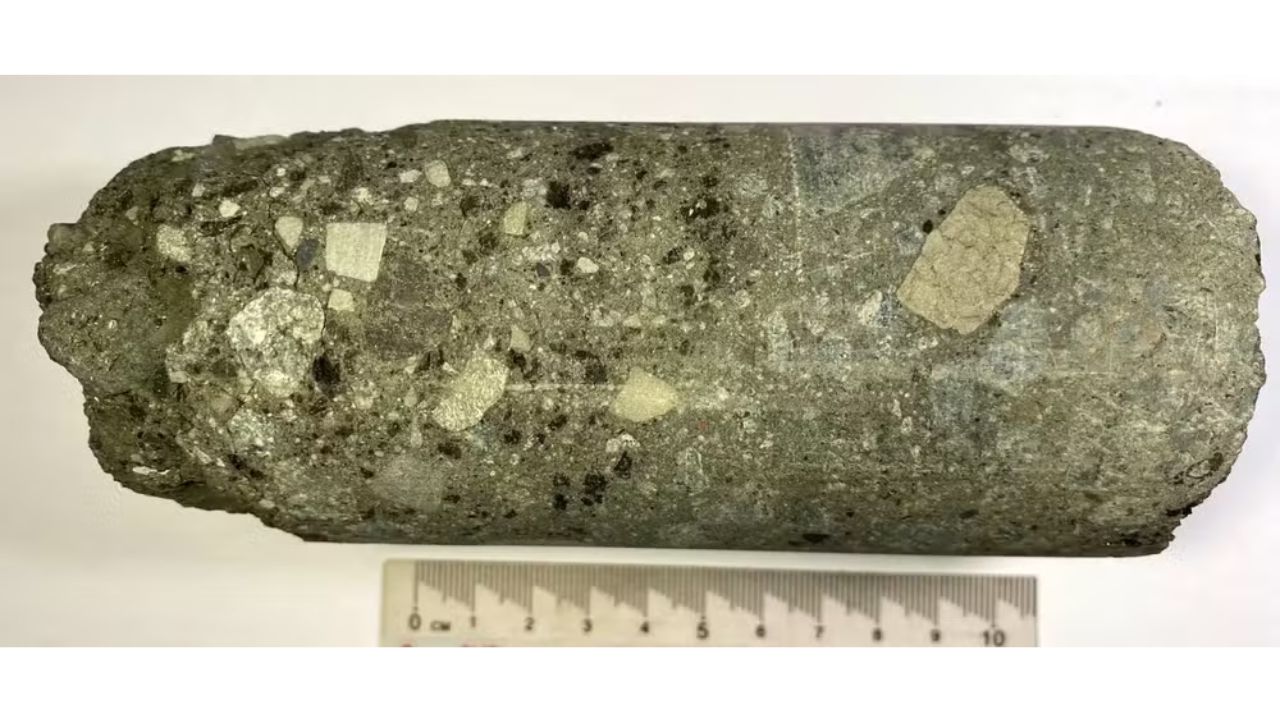
Geological Identification of the Impact in Australia
To validate that Ora Banda was indeed the site of an ancient impact, the team of scientists needed to gather what they call “diagnostic evidence.” This rigorous process ruled out other natural formations in Australia and proved the extraterrestrial origin of the crater.
The first sign was the shatter cones — conical formations engraved in the rocks by the shock wave of the explosion.
In addition to these cones visible on the surface, the investigation advanced underground through “drill cores.” By extracting cylinders of earth and rock, geologists were able to map the distribution of materials:
- Surface layer: Clay-rich sediments accumulated over millennia.
- Impact base: A dense zone composed of broken and fragmented rocks.
- Microscopic marks: Deformed quartz grains and chemical residues of the vaporized meteor found in the impact glass.
These findings were crucial for the district, whose name in Spanish means “gold belt,” to have its geological history rewritten as a landmark of cosmic events.
The Rare Phenomenon of Gold Rain
The most impressive point of the discovery is the scientific explanation for the presence of the metal in the region. The study suggests that during the asteroid’s impact, the rocky material — and the gold itself present in it — was violently ejected into the atmosphere. Due to the extreme heat, the gold was vaporized.
As the material rose and later began to cool, the gold condensed again. The research team theorizes that before permanently settling in the rock crevices, small drops of liquid gold literally fell from the sky.
This “golden precipitation” explains why certain areas present metal nuggets, while other sections of the same crater contain only common minerals and impact glasses. The phenomenon suggests that the gold did not come solely from traditional underground deposits but was redistributed by the explosive dynamics of the asteroid.
Why is Australia’s green rock a treasure?
Ora Banda is a unique district. The region has one of the few craters on Earth where the rocks affected by the collision are the so-called “green rocks,” a type of metamorphosed volcanic material, like basalt.
For Australia’s economy, this feature is crucial, as these green rocks ended up serving as the ideal receptacle for the gold that fell from the atmosphere.
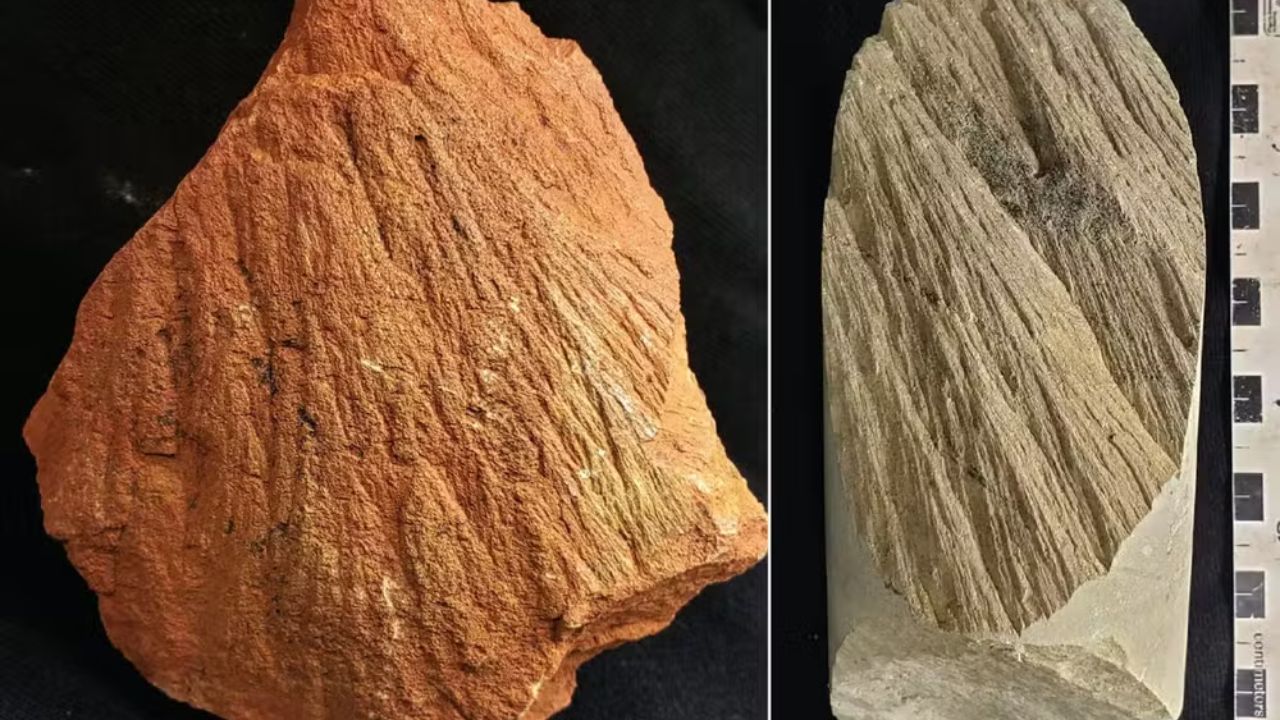
The differentiation between the rocks is visible to this day. While parts of the terrain maintained their original composition, nearby areas were transformed by heat.
The presence of different types of mineral deposits in these volcanic rocks proves the violence of the mixture caused by the meteor, transforming a common mining area into a world-class geological laboratory.
With information from Revista Galileu