Portuguese
  Spanish


Researchers at the University of Texas at Austin have developed a jacket capable of collecting moisture from the atmosphere and producing between 400 and 900 ml of potable water per day. The team also tested a separate solar system that achieved 1.3 liters daily in arid and semi-arid environments.
The jacket capable of transforming air moisture into potable water emerged from the laboratories of the University of Texas at Austin with a straightforward proposal: to provide personal and portable collection for those who spend hours or days away from safe sources.
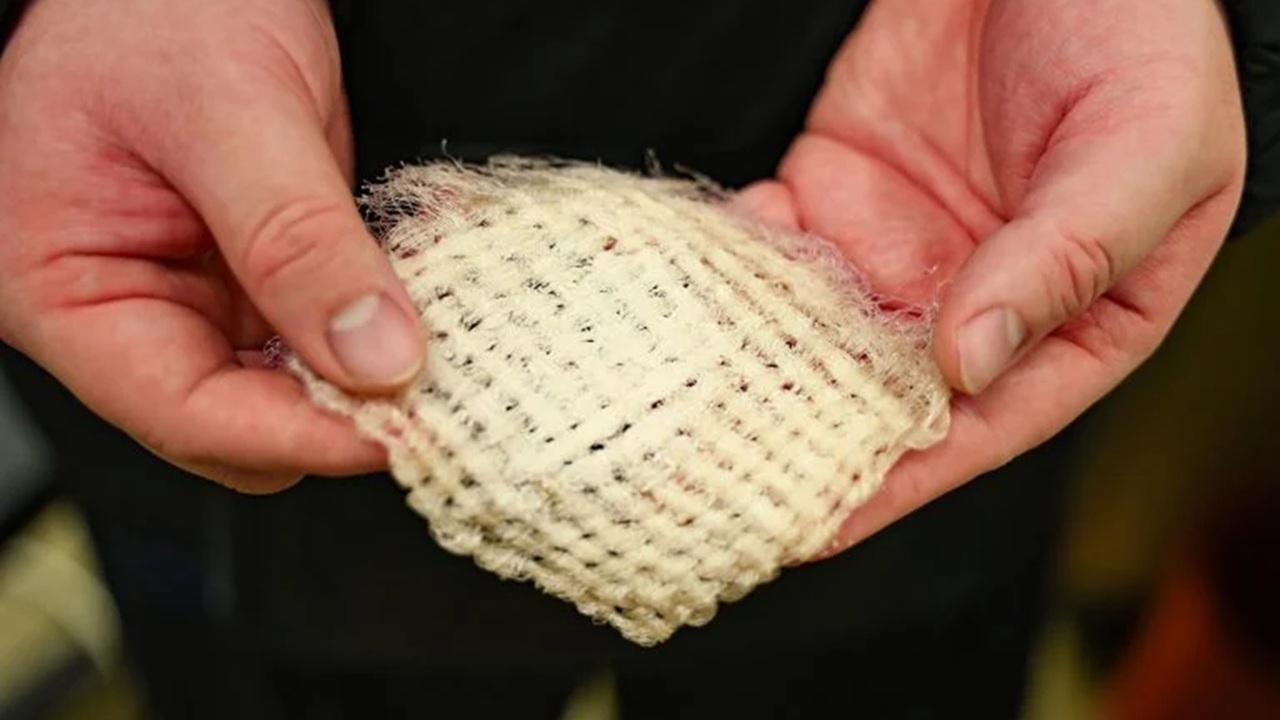
The project uses a special fabric that captures vapor from the air and directs this moisture to removable units, without relying on the traditional format of large panels or stationary boxes.
How the jacket transforms air into potable water
The structure of the jacket does not function like a common reservoir. The fabric retains moisture from the environment and channels the water to detachable modules, which are then placed in a foldable collector.
-
NASA Plans to Repurpose Mars Rover for Lunar Mission, Sending a 1-Ton Nuclear-Powered Vehicle to Explore the Moon’s South Pole Without Solar Dependence

-
Early Humans Made Beds Nearly 200,000 Years Ago in African Caves, Study Reveals

-
Japanese Smart Bike Detects Cyclist’s Intent to Turn and Potential Falls
-
METTL3 Protein Found to Play Crucial Role in Breast Cancer Metastasis, Surprising Scientists


When these units are heated, the water is released and can be collected. In tests, the garment produced between 400 and 900 milliliters of potable water per day, depending on humidity conditions.
The idea targets uses in hiking, camping, long-distance running, rural work, relief operations, and military activities. In all these cases, carrying less water or relying on a complementary source can make a practical difference.
Fabric improves moisture transport through fibers
The advancement is not just in absorbing water. The team worked to improve the path taken by moisture, from vapor in the air to liquid on the fiber’s surface and then into the fabric.
This internal transport was identified as essential for functioning on a wearable scale. Compared to existing materials for water collection, the fabric showed performance three to ten times superior on a large scale.
Guihua Yu stated that atmospheric collection is usually imagined as boxes, panels, or large absorbent beds. The jacket’s proposal changes this format by transforming the fabric into an active part of the system.
Solar system also broke record in the field
The same group developed a separate atmospheric water harvesting device powered by solar heating. It was tested in the Chihuahua Desert, New Mexico, and also in the more humid climate of Austin.
During the tests, the equipment collected 1.3 liters of clean water per day in arid and semi-humid environments. The result is equivalent to 4.3 liters per kilogram of absorbent material per day.
The performance exceeded previous results reported by other research groups. The system uses a hydrogel fabric made from biomass, capable of absorbing vapor and releasing water when heated by sunlight.
Technology can go beyond clothing
The researchers see applications in backpacks, tents, emergency shelters, and outdoor equipment. They also project uses in disaster response, remote operations, and areas with limited water infrastructure.
Northern Africa, the Middle East, South Asia, and Sub-Saharan Africa appear among locations where such systems may have greater relevance, combining potential use with water scarcity.
What do you think of this jacket that collects water from the air: a practical solution for adventures and emergencies, or a technology that still needs to mature before becoming common use? Comment on which situations it would make more sense.
Click here to access the study.