





 Portuguese
  English
  Spanish
  3 min of reading
  0 comments


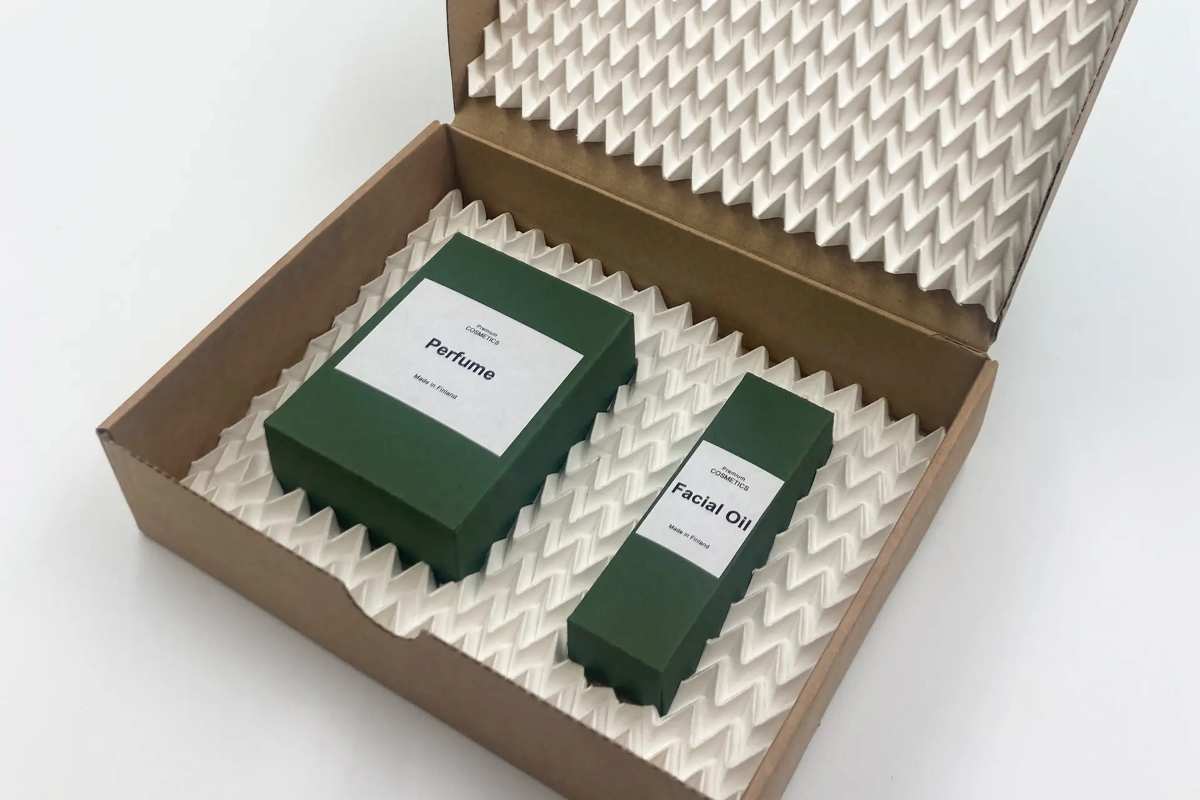
Origami Technology Transforms Cardboard into Eco-Friendly Sheets and Durable Solutions to Replace Plastic and Expanded Polystyrene, with a Focus on Luxury Products and E-Commerce
Packaging technology inspired by origami is gaining prominence as a sustainable alternative to conventional materials.
Developed by the VTT Technical Research Centre of Finland in partnership with Aalto University and various local companies, this innovation transforms cardboard into continuously folded structures, resulting in lightweight, durable, and aesthetically pleasing packaging.
Transformation of Cardboard into Origami
The innovation is based on the origami technique, the Japanese art of paper folding, adapted to create packaging materials. Using a “coil-to-coil” technology, the process allows cardboard to be precisely shaped without the need for large amounts of material.
-
Giant structures 14 meters beneath Egypt are revealed by satellites and expose a millennia-old secret buried in Buto.

-
Children have been making clay pieces for 15,000 years in Southwest Asia, and fingerprints preserved on 142 ornaments helped archaeologists prove this.
-
New semi-autonomous legged robot technology challenges the limitations of space exploration by operating almost without human intervention on the Moon.

-
Super toxic red mineral found in the double burial of two women aged 1,900 years near the banks of the Dnieper River in Ukraine.


The result is a lighter, yet stronger material that can replace more polluting options like plastic and expanded polystyrene.
The aesthetics of the packaging also draws attention, especially in the luxury sector, such as the cosmetics market, where the appearance of packaging plays a fundamental role in the customer experience.
Advantages of the Origami Model Over Conventional Materials
The advantages of origami-folded cardboard are clear. It offers the perfect balance between lightness and strength, making it ideal for replacing plastic and other synthetic materials often used for product protection during transportation.
Additionally, the ease with which it can be folded into different shapes allows for unique customization, attracting the interest of designers and brands seeking innovative and sustainable solutions.
The material is also eco-friendly, as it is made from natural fibers and can be recycled, aligning with the growing demands for more sustainable packaging.
Response to Demand for Sustainability
With the growth of e-commerce and the need to reduce the environmental impact of packaging, research into more sustainable solutions has gained relevance.
The increasing concern over pollution caused by microplastics and the waste of natural resources drives the search for eco-friendly alternatives.
In this context, origami technology offers a promising response, combining functionality and design with a reduced carbon footprint, essential for the future of packaging in the global market.
Projects FOLD and FOLD2: Innovation in Partnership
The projects FOLD and FOLD2 are initiatives involving 13 companies, universities, and organizations, aimed at expanding the use of origami-folded cardboard.
The first phase of the project resulted in the creation of a machine capable of making precise folds in cardboard, and the next stage aims to test new materials, further expanding the possibilities for application.
The success of the project so far promises to revolutionize the packaging industry, bringing flexible and sustainable solutions.
Promising Future in the Market
The packaging industry already shows great interest in origami technology, and close collaboration among stakeholders accelerates the transition from development to mass production.
If the plans proceed as expected, origami cardboard could be seen on shelves within three to five years, transforming how sustainable packaging is perceived in the global market.
Impact on Design and Luxury Products
In addition to the ecological advantages, the aesthetics of origami packaging is also a factor that attracts designers.
Displays at the 2023 Design Weeks in Finland and the Netherlands showcased how the material can be used to create sophisticated packaging for luxury products, such as cosmetics.
The origami cardboard offers consumers a more premium and environmentally responsible unboxing experience, replacing traditional packaging such as bubble wrap and expanded polystyrene.
The innovation in origami packaging is one of the most promising in the field of sustainability. With a combination of lightness, durability, and aesthetic appeal, folded cardboard offers an ecological and functional solution for the future of packaging.







-

Uma pessoa reagiu a isso.