






 Portuguese


LG CLOiD Uses Two Arms, 10 Fingers, and Artificial Intelligence to Handle Clothes, Cooking, and Appliances, Reducing Housework.
According to LG Electronics, the robot approached the washing machine, moved one of its arms, grabbed clothing with its fingers, and placed the item inside the appliance. In another scenario, it navigated the kitchen, retrieved milk from the refrigerator, and placed a croissant in the oven. The device is the LG CLOiD, publicly introduced at CES 2026 in Las Vegas as a machine designed specifically for performing tasks within homes. It features two arms that mimic human-like movement, five independent fingers on each hand, cameras, sensors, artificial intelligence, and a mobile base capable of moving through rooms.
The manufacturer’s stated goal is much greater than simply creating another smart appliance. LG aims to develop a home where an increasing portion of laundry, cooking, and daily organization is delegated to machines.
CLOiD Puts Arms Where Smart Appliances Can’t Reach
For years, home automation has primarily advanced within the appliances themselves. The washing machine cleans the clothes, the oven controls the temperature, and the refrigerator can monitor food, but a person still needs to transport items between them.
-
Scientists Analyze Tyrannosaurus Rex Tooth Enamel, Estimate Body Temperature at 36.3°C, Close to Humans, Indicating Warm-Bloodedness and Ability to Live in Freezing North American Temperatures

-
Excavation in Switzerland Unveils 1,800-Year-Old Roman Complex with 6 Rooms, Metallurgy Evidence, and Fire Damage

-
Satellites Reveal Greenland and Antarctica Lost 11.3 Trillion Metric Tons of Ice, Raising Global Sea Levels by Over 3 Centimeters; 84% of Loss From Faster Glacial Advance
-
Xiaomi’s Breakthrough: 16-Liter Gas Water Heater with 32 dB Noise and 99.9% Antibacterial Treatment for Just R$ 2,218 in China


It’s precisely in this space that CLOiD aims to enter. The proposal is to give arms and hands to the smart home system so it can also grab, carry, place, and remove objects.
In practice, the robot attempts to assume small actions that still require human presence even when almost the entire process is automated.
Taking clothes to the washing machine, placing an item in the drum, retrieving something from the refrigerator, or transporting food are examples of this gap.
Two Arms Have Seven Main Movements Each
The most striking part of CLOiD is located above its base. The robot has two articulated arms, with each working with seven degrees of freedom.
“Degree of freedom” is a term used in robotics to indicate the various ways a joint can move. The shoulder, elbow, and wrist can rotate and change position in multiple directions.
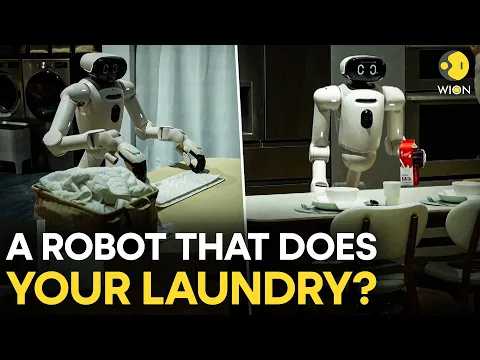

LG claims this configuration aims to approximate the mobility of a human arm.
This enables reaching out, rotating the wrist, lifting objects, and adjusting the arm during tasks in spaces like the kitchen, laundry, and living room.
Ten independent fingers allow for holding small objects
At the ends of the arms are two hands. Each has five individually moving fingers, totaling ten fingers.
This detail is important because a household presents a very different challenge than a factory. An industrial machine typically repeats the same action thousands of times with standardized objects.
Within a home, there are soft clothes, glasses, plates, packaging, food, doors, and objects of various shapes.
LG developed the fingers to allow for more delicate movements and a greater variety of ways to grasp items.
The robot has been shown placing clothing in the washer
During its presentation at CES 2026, CLOiD was not limited to computer-generated images.
The robot physically appeared in front of the audience and performed simple actions. One of the demonstrations involved placing a piece of clothing inside a washing machine.
However, the process is still far from the speed of a person. The Verge reported that the robot took approximately 30 seconds to place a single towel in the machine during a presentation.
This data helps illustrate the current phase of the technology. The machine can perform the action, but speed, autonomy, and the ability to handle a large amount of laundry still need to advance before large-scale domestic use.
Folding and stacking clothes are also among the planned tasks
LG’s ambition goes beyond just loading the machine. In the scenarios presented by the company, CLOiD initiates washing cycles and, after drying, folds and stacks the clothes.
The company also demonstrated the robot manipulating items in the laundry area during CES. Reports from attending journalists indicated that the movements were still slow and cautious.

This happens because fabric is one of the most difficult materials for a robot to manipulate. A T-shirt changes shape every time it is grasped, falls unpredictably, and can get stuck between other items.
Solving this problem means teaching the machine to interpret objects that do not maintain a rigid shape.
In the kitchen, CLOiD retrieves milk from the fridge and places food in the oven
The second major focus is the kitchen.
In one of the official scenarios, CLOiD is tasked with helping prepare breakfast. It retrieves a container of milk from the fridge and places a croissant inside an oven.
TechCrunch covered a similar demonstration at CES. The robot carefully picked up a croissant and placed it in the oven. In another presentation, it brought a bottle of water to a person.
This is still far from a robot capable of preparing any dish on its own.
The path outlined by LG is to divide the tasks between CLOiD and connected appliances. The robot moves the objects, while the oven, fridge, and other devices perform their functions automatically.
The head functions as the mobile brain of the home
The face of CLOiD is not just there to make it resemble a character.
Inside its head is a set of processors that functions like a brain. This area also houses a screen, speakers, cameras, and various sensors.
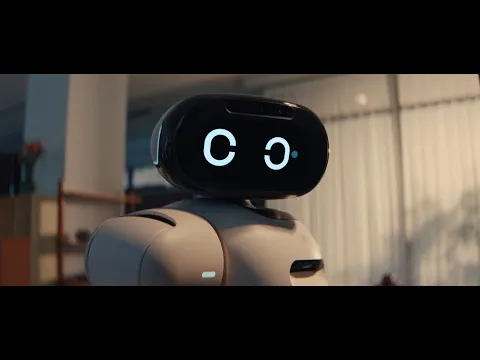
These devices help the robot observe its environment, locate objects, hear commands, and respond to people.
The screen can produce expressions, while the voice system allows it to hold conversations and receive instructions.
The idea is to turn CLOiD into a mobile control center for the home, rather than leaving it dependent on a fixed wall panel.
Artificial intelligence transforms images into physical movements
To pick up a piece of clothing, it is not enough to see it. The robot needs to identify the object, understand the request, and transform that information into a sequence of movements.
LG states that it utilizes two main AI models. One interprets images and videos, converting what the camera sees into information that the machine can understand.
The second converts visual information and voice commands into physical actions, such as moving an arm, opening a door, or transferring an object.
According to the manufacturer, these systems have been trained on tens of thousands of hours of data on household tasks.
It is this combination of vision, language, and movement that the industry calls “physical AI.”
CLOiD communicates directly with home appliances
Another difference appears when the robot approaches an LG appliance.
Through the ThinQ and ThinQ ON platforms, CLOiD can communicate electronically with connected devices.

This means it does not always need to physically press a button. The system can, for example, send commands directly to a washing machine or an oven.
The proposal is for the robot and appliances to work as a team.
While the arms handle what needs to be physically moved, the home’s network controls temperature, cycles, schedules, and other digital functions.
Wheels were chosen over legs for safety
Despite its arms and hands, CLOiD is not a complete humanoid robot.
It does not have legs. The lower part uses a platform with wheels and autonomous navigation, a technology developed from LG’s experience with other domestic robots.
The choice was intentional. According to the manufacturer, wheels provide greater stability, lower cost, and reduced risk of tipping within a home.
The base has a low center of gravity. The company claims that this helps prevent tipping if a child or pet leans against or pulls on the equipment.
The torso can also tilt and adjust its position so that hands can reach objects from knee height.
LG has also developed new motors for the robot’s joints
Another important technology is behind the movement of the arms.
LG introduced a family of actuators called AXIUM. An actuator functions like a robotic joint, integrating a motor, electronic control, and components responsible for managing speed and force.
These components are among the most expensive and complex in a robot.
The company aims to leverage decades of experience producing motors and components for home appliances to develop smaller, lighter actuators with enough power for various machines.
This indicates that the strategy goes beyond selling a single CLOiD. LG is building components that could be used in future generations of robots.
The technology still needs to overcome the speed issue
The demonstrations also made the current limitations clear.
The CLOiD executes simple tasks much more slowly than a person. TechCrunch observed slow movements when removing a piece of clothing from a basket and when placing a croissant in the oven.
This slowness does not negate the idea of functionality. If the robot works while residents are occupied or away from home, completing a task quickly may be less crucial.
The issue arises when a sequence requires dozens of movements.
Folding an entire basket of clothes, putting away dishes, or preparing a complete meal requires much more autonomy than executing a single carefully prepared action at a technology fair.
Price and sale date have not yet been announced
This is a key point for understanding the current stage of the CLOiD.
LG presented the equipment as a demonstration of its vision for the home of the future, but did not announce a price or an official date for consumer sale.
During CES, materials displayed by the company indicated that the products and solutions showcased were still under development and had not yet been commercially released. TechCrunch also reported that employees did not have a specific arrival date in stores.
Therefore, it is still impossible to say whether families will be able to purchase the CLOiD in 2026 or at any specific date.
What exists today is a functional platform used to demonstrate how far home automation can advance.
If a robot could indeed wash, fold, and put away clothes while preparing part of breakfast, which household task would you assign to it first?


