





 Portuguese
  English
  Spanish
  4 min of reading
  0 comments


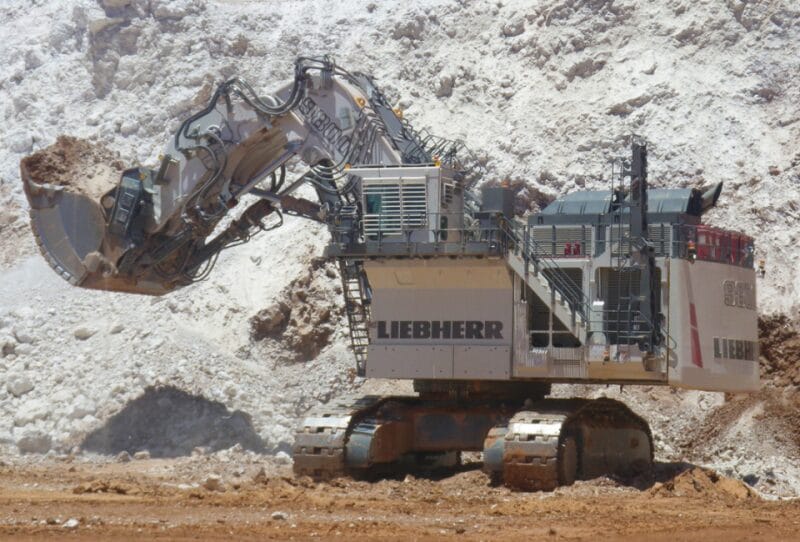
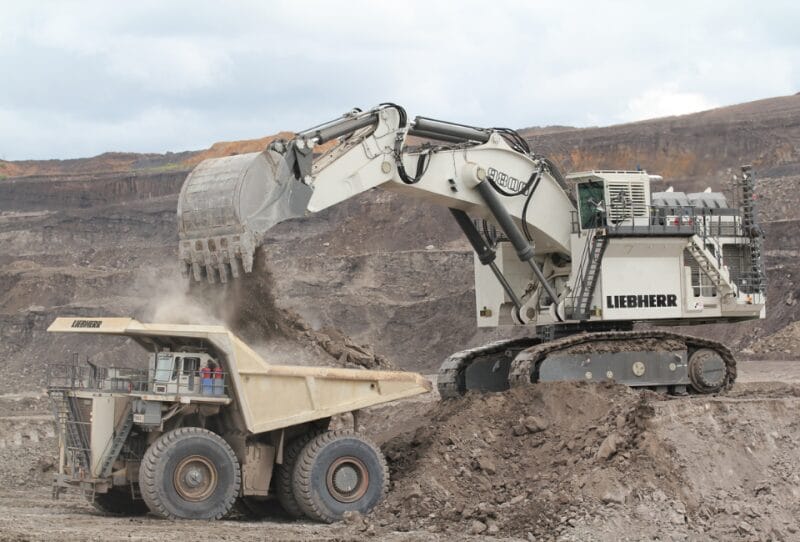
The Liebherr R 9800 is the largest hydraulic excavator ever produced by the German brand. Weighing 800 tons, the giant operates in coal, copper, and iron ore mines across all five continents. Its mission is simple: to remove the maximum amount of material in the shortest time possible, without pause.
To achieve this goal, the model combines two engines that together deliver nearly 4000 hp, buckets of up to 42 m³, and a chassis designed to withstand 80,000 hours of continuous effort. Even so, Liebherr ensures efficiency gains that can save 120,000 liters of diesel per year.
In this article, you will learn about the numbers that make the R 9800 so impressive, discover how the hydraulic system cuts consumption, understand the logic of modular maintenance, and see why it sets trends throughout the global mining chain.
-
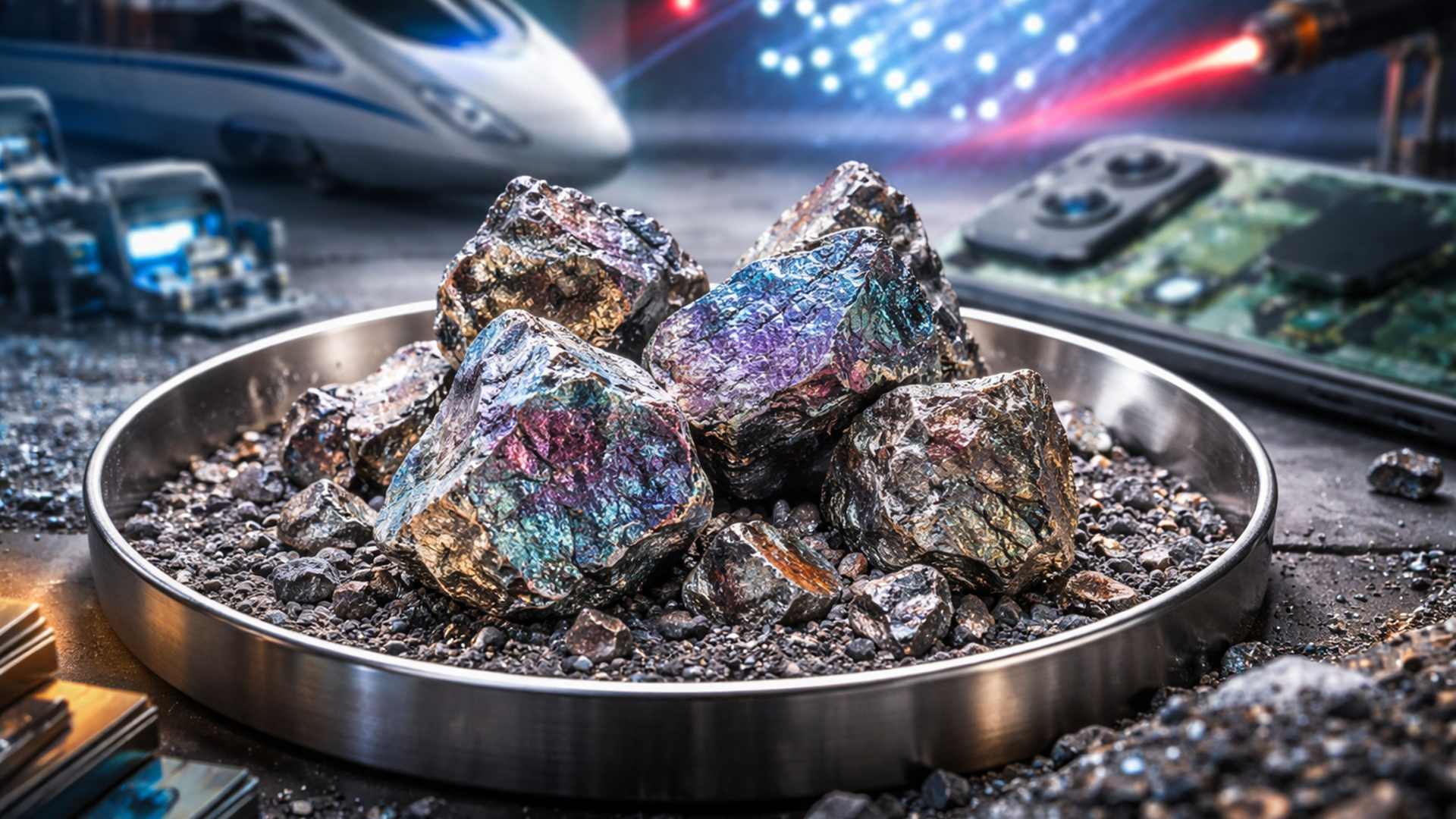
Rare earths are in everything, from cell phones to bullet trains, and what almost no one realizes is why they have become the target of such a delicate global war.
-
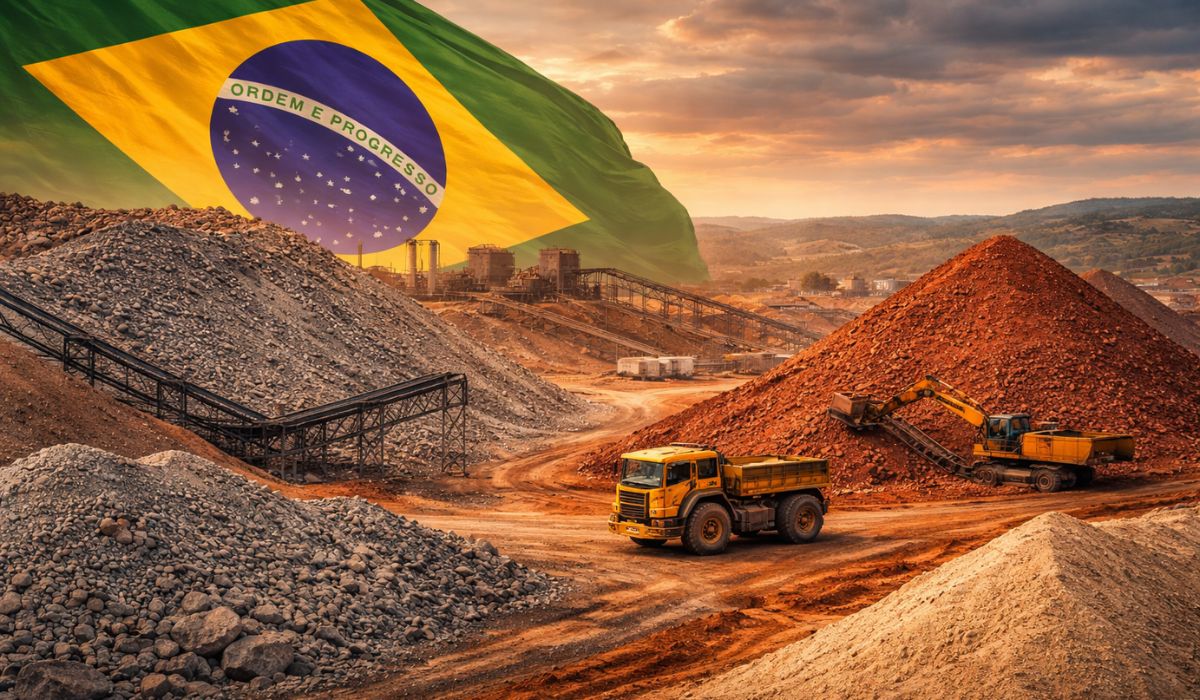
Brazil extracts 26.3 million tons of ore from what was previously treated as waste, transforming residues into wealth, producing over 3 million tons of sand, and demonstrating how national mining is relearning to generate value.
-
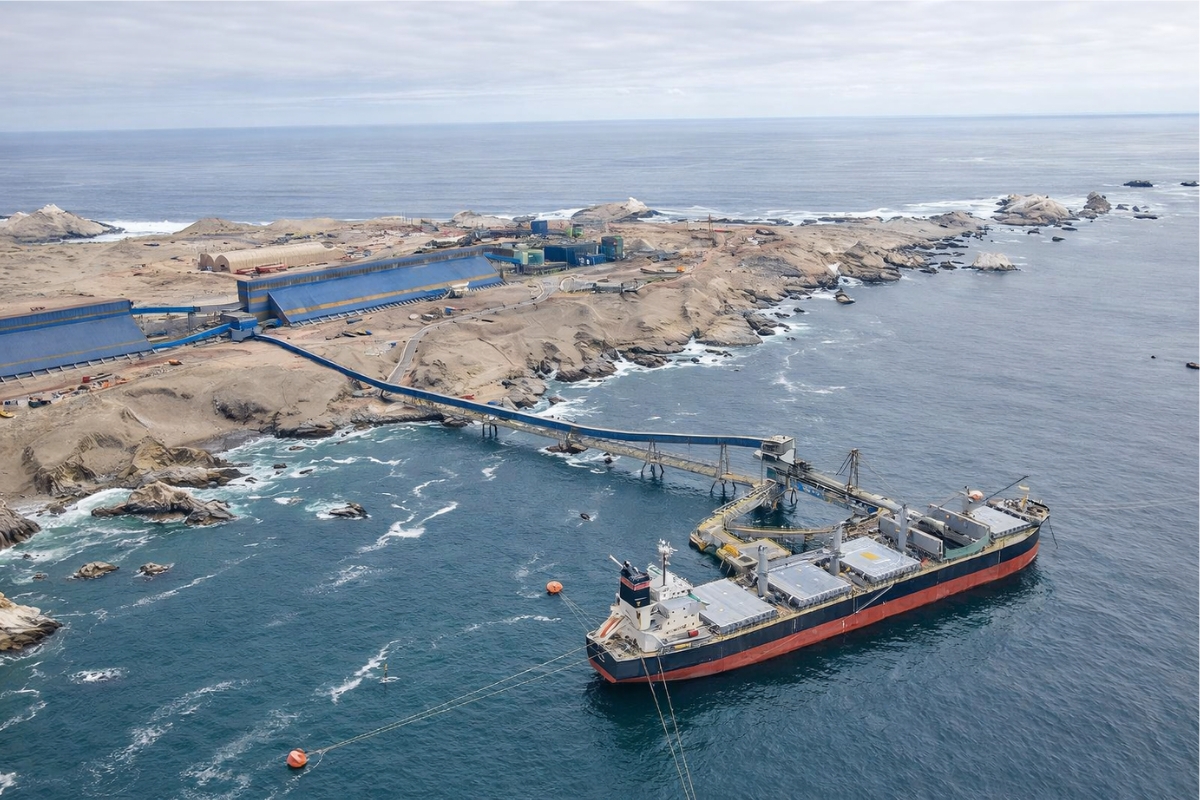
A $3.5 billion megaproject in Latin America pumps desalinated seawater at 1,050 liters per second over 194 km to keep a copper supermine in the Andes operational for another 20 years.
-
A hidden mine in the Andes valued at nearly R$ 1 trillion is starting to attract global attention, containing copper, gold, and silver, and raises an intriguing question: why do Argentina and Chile need to act together to exploit this gigantic wealth?
Giant in Numbers: The Dimensions That Impress
The R 9800 weighs 800 t in backhoe configuration and reaches 810 t with a front shovel.
The maximum reach is 20.1 m, while the digging depth reaches 9 m, values that allow for attacking high benches without frequently repositioning the machine.
The standard bucket offers 42 m³ but can reach up to 47.5 m³ with materials of 1.8 t/m³, surpassing the capacity of any competitor in the same class.
The track width is 1630 mm, which better distributes the load and reduces soil pressure, essential in muddy mining fronts.
The breakout force reaches 1760 kN, sufficient to cut through hard benches without pre-explosion, speeding up cycles.
Each pass can carry up to 86 t of ore in backhoe mode or 76 t in front shovel mode, balancing volume and density of the material.
2984 kW Under the Hood: Cummins Power to Move Mountains

Two Cummins QSK60 engines produce 2,984 kW, about 4023 hp, running at only 1,800 rpm to prioritize torque and lifespan.
Liebherr also offers an electric version of 2,400 kW, ideal for mines with high-voltage infrastructure and stricter emission targets.
All this thrust feeds high-displacement hydraulic pumps that maintain arm and bucket speed even at great depths.
In practice, the R 9800 fills 240 t trucks in four passes and loads a 375 t off-road truck in just six, reducing queues on the loading floor.
The electronic management maintains constant rotation and adjusts oil flow according to the material’s resistance, saving fuel during light cycles.
For extreme climates, the factory includes oversized radiators, low-temperature start heaters, and high-capacity air filters.
450 Liters Per Hour? Understand How Liebherr Cuts 120,000 L/Year
At maximum load, the excavator can consume about 450 L of diesel per hour; however, the Liebherr Power Efficiency package adjusts the pump, valves, and engine control in real time.
The software anticipates the next cycle and limits rotation when full force is not necessary, something common during the arm’s return movements.
This logic reduces average consumption by up to 10%, which represents 120,000 L of diesel per year for a machine operating 6,000 h.
Less fuel also means 320 t of CO₂ less in the atmosphere, a value close to the annual emissions of 70 passenger cars.
The system provides daily reports to the supervisor, showing liters per ton moved and alerting for deviations in driving.
When combined with the Truck Loading Assistant strategy, the R 9800 avoids overload in trucks, another point that drains diesel without adding production.
80,000 h of Lifespan and Modular Design: Maintenance That’s Worth Gold
Experience with the R 996B and the R 9800 itself led Liebherr to design structures for 80,000 h before the first chassis change, almost ten years in continuous shifts.
Hydraulic components, engines, and electronic control are mounted in modules that can be removed in full for servicing, reducing downtime in the pit.
Large side access points allow the replacement of cylinders or pumps without disassembling the arm, an advantage in remote mines where special cranes are rare.
Wide walkways, tubular handrails, and a 45° hydraulic ladder ensure the safety of the maintenance team, meeting global standards.
Refueling and drainage points are at ground level, with quick couplings that prevent contamination and accelerate oil changes.
At the end of each 20,000 h cycle, the machine receives upgrade kits that may include new electronics or engine improvements, extending resale value.
Revolution in the Pit: Impact on Productivity and the Future of Mining
With 12% more load per pass than direct competitors, the R 9800 allows for reducing the number of excavators on the project or increasing production without expanding the fleet.
The 42 m³ bucket fits perfectly in 220 t off-road trucks, creating cycles of three to four passes that minimize downtime.
Sensors in the bushings count loads, cycle times, and applied force, sending data via 4G to the dispatch center, where algorithms adjust the mining plan in real time.
The Bucket Filling Assistant module, in semi-autonomous mode, stabilizes the arm, detects hard walls, and suggests penetration angles, reducing operator fatigue during 12 h shifts.
Miners that have adopted the complete package report a 10% increase in tons per hour and a 15% reduction in bucket maintenance costs, thanks to more uniform filling.
The future perspective includes a 100% electric version powered by the mine’s trolley line or green hydrogen, aligned with the sector’s zero carbon goals for 2050.






-

Uma pessoa reagiu a isso.