





 Português
  Inglês
  Espanhol
  5 min de leitura
  0 comentários


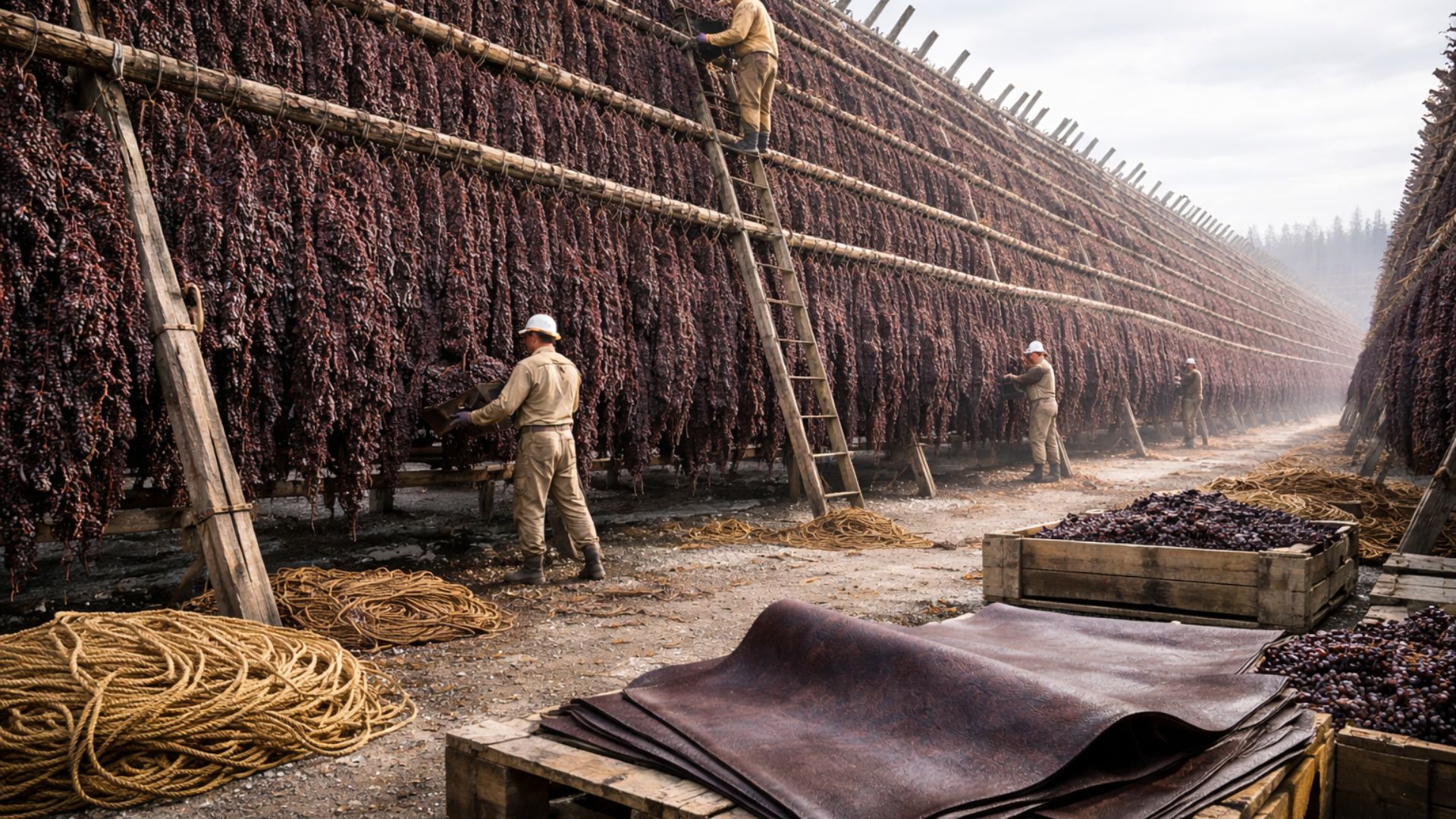
Winemaking Waste Gains Industrial Value and Supplies Biomaterial Chains Used by Sectors Such as Fashion, Packaging, and Automobiles. Annual Volume Estimated in Millions of Tons Transforms Skins, Seeds, and Pomace into Strategic Input Within the Bioeconomy and Circular Economy.
What for decades left wineries as press leftovers has now found a place in a more sophisticated industrial chain focused on biomaterials, technical coatings, and higher value inputs.
A public report from the VegeaTextile project, linked to CORDIS, the official platform of the European Commission for research and innovation, states that grape pomace is generated at around 7 million tons per year worldwide, a scale that helps explain the growing interest in its use in sectors such as fashion, packaging, furniture, and automobiles.
This waste has a precise technical definition.
-
With an unusual prize, Japan transforms office chairs into a resistance race on the streets, ISU-1 Grand Prix grows, fills stages, and pays 90 kilograms of rice.

-
House in England with a 7.6-meter shark embedded in the roof attracts attention worldwide and becomes a curious attraction in Oxford.

-
Masterpiece in Spain, under construction since 1882, receives 4.8 million visits in a year and impresses with its gigantism and architecture.

-
Attracting around 250,000 people a year, a lighthouse 200 meters from the sea, on a 60-meter high cliff, on the North Sea coast in Denmark, becomes one of the most impressive examples of how nature can threaten historical buildings.


The International Organization of Vine and Wine, OIV, describes the so-called grape marc or grape pomace as the solid fraction that remains after the crushing, draining, and pressing stages of grapes, mainly composed of skins, seeds, and pomace.
In practice, it is not an indefinite leftover but a recurring and voluminous byproduct that accompanies the logic of winemaking itself.
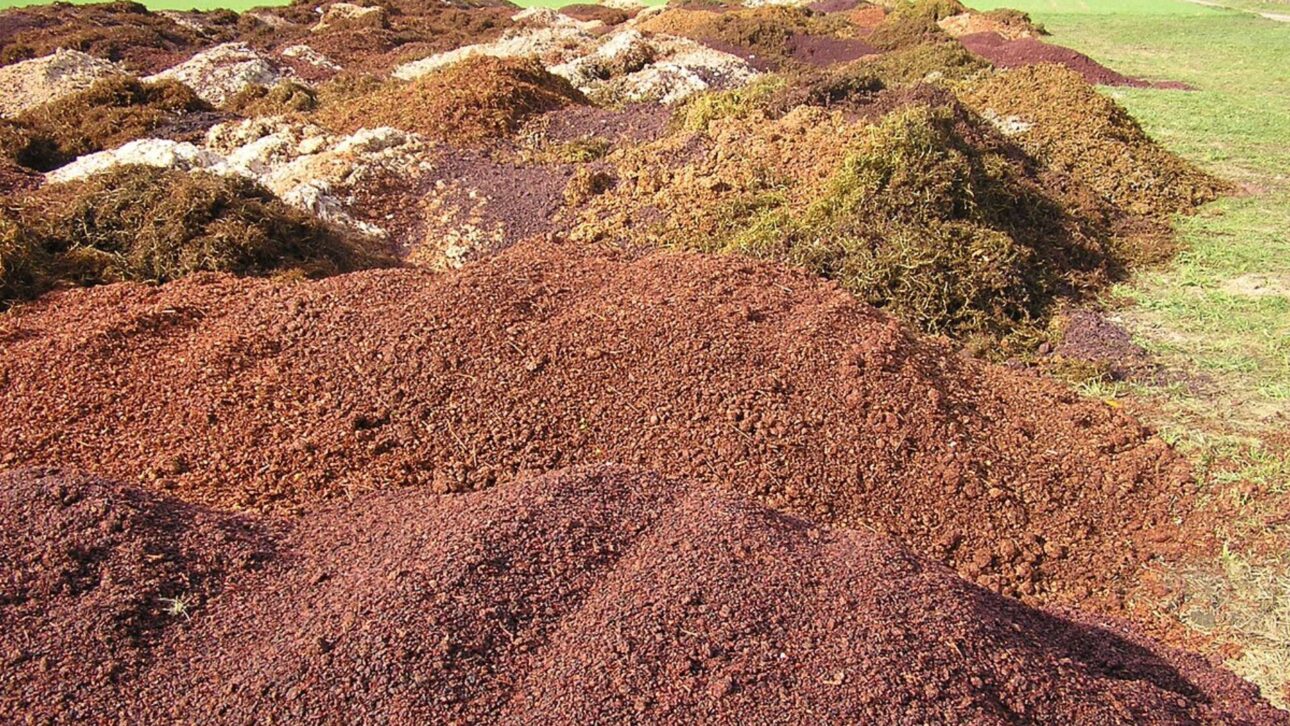
How Much Residue Does Wine Production Really Generate
The extent of this residual mass becomes clearer when observing its participation in the total processing.
On the EU CAP Network page about enhancing the wine chain, the European network notes that pomace usually represents between 20% and 30% of the weight of the grapes used, a proportion that turns the issue into both an environmental challenge and a concrete economic opportunity for the bioeconomy.
From Winery to Industry
For a long time, the dominant destination of this material was concentrated on known outlets, such as distillation, energy generation, soil amendments, and composting.
These routes are still present, but European reuse projects have begun to treat pomace less as organic waste and more as raw material for an industrial chain capable of delivering technical performance and market appeal.
The change gained international visibility with the Italian Vegea, one of the most cited companies when discussing bio-based materials derived from wine production.
In a public report from CORDIS, the VegeaTextile project describes the transformation of grape pomace into a material intended for applications in fashion, furniture, automobiles, and packaging, adding that the central stages of the process had already been tested and reproduced on an industrial scale.
On its corporate website, the company states that it manufactures and sells coated technical fabrics and biomaterials for fashion, furniture, packaging, automotive, and transportation sectors.
The company also claims that its production base combines waste from winemaking with other vegetable, renewable, and recycled raw materials, which helps to explain why grape pomace has come to be seen as an industrial resource with defined specifications, supply standards, and commercial destinations.
Grape-Derived Material is Not Composed Solely of Waste

The advancement of this market also demands accuracy, as communication around the topic tends to simplify the final product.
On its sustainability page, Stella McCartney states that the VEGEA used in its collections is produced on a base of certified recycled polyester, contains water-based polyurethane, and is made with over 70% renewable products, in addition to incorporating grape waste from wineries in northern Italy.
The brand itself details that the process involves pomace, seeds, skins, and stems, which are then mixed with plant resins and water-based polyurethane.
This point dispels the notion that the sector has already found a “pure” and universal substitute for animal leather or conventional synthetics.
What exists, based on official descriptions, is a hybrid formulation, with a relevant share of renewable inputs, recycled materials, and support components.
Circular Economy Drives a New Industrial Chain
Still, the movement has economic and environmental weight because it transforms a stage historically associated with disposal costs into a source of value.
The OIV establishes, in its principles of sustainable viticulture, that systems in the sector should prioritize reducing the amount of byproducts and, whenever possible, promote their reuse and recycling, preferably on-site, to reduce environmental impacts.
In the case of wine, this logic becomes especially attractive because the flow of waste is large, recurrent, and concentrated in regions with winemaking traditions.
When the leftover stops being treated merely as operational cost and enters a supply chain for biomaterials, the winery not only reduces liabilities but also connects to markets pressured for decarbonization, traceability, and reduced dependence on fossil raw materials.
Beyond Fashion: New Industrial Uses of Grape Pomace
However, the potential is not limited to the premium coatings segment.
In initiatives linked to the EU CAP Network, pomace is associated with the extraction of grape seed oil, the production of wines and higher value extracts, energy generation from biogas, and returning the final waste to the soil through composting.
This cascading reuse logic expands the economic possibilities of the byproduct.
Recent scientific reviews reinforce that this interest is not based solely on marketing narratives.
Studies published in recent years indicate that grape pomace concentrates fibers, phenolic compounds, lipids, proteins, and other bioactive fractions, which supports research for use in food, cosmetics, smart packaging, and integrated biorefinery processes.
On another front, academic analyses observe that pomace accounts for about 20% to 25% of processed mass and remains among the main environmental concerns of the industry when disposal is inadequate.
Agricultural Waste Becomes Strategic Raw Material
This background helps explain why the sector has gained momentum just now.
As fashion, design, transport, and packaging manufacturers have begun to seek materials with a lower fossil footprint and greater renewable content, abundant agricultural residues organized in regional chains have started to be treated as strategic assets, no longer as inevitable byproducts of low value.
There is also a symbolic component that strengthens industrial interest. Wine has always been associated with tradition, terroir, gastronomy, and cultural value.
When its residues start to supply factories of technical materials for bags, footwear, packaging, and automotive applications, the perception of what constitutes waste shifts to a new level, bringing the bioeconomy closer to consumers’ daily lives.
In this scenario, skins, seeds, and pomace cease to end their trajectory at the end of pressing and enter a new phase, connected to the materials industry and the circular economy.
The case of grape pomace has solidified as an example of a broader competition for renewable inputs, where the scale of waste, processing capacity, and technical consistency of the final product define who will succeed in transforming agricultural leftovers into strategic raw material.









Seja o primeiro a reagir!