





 Portuguese
  English
  Spanish
  3 min of reading
  0 comments


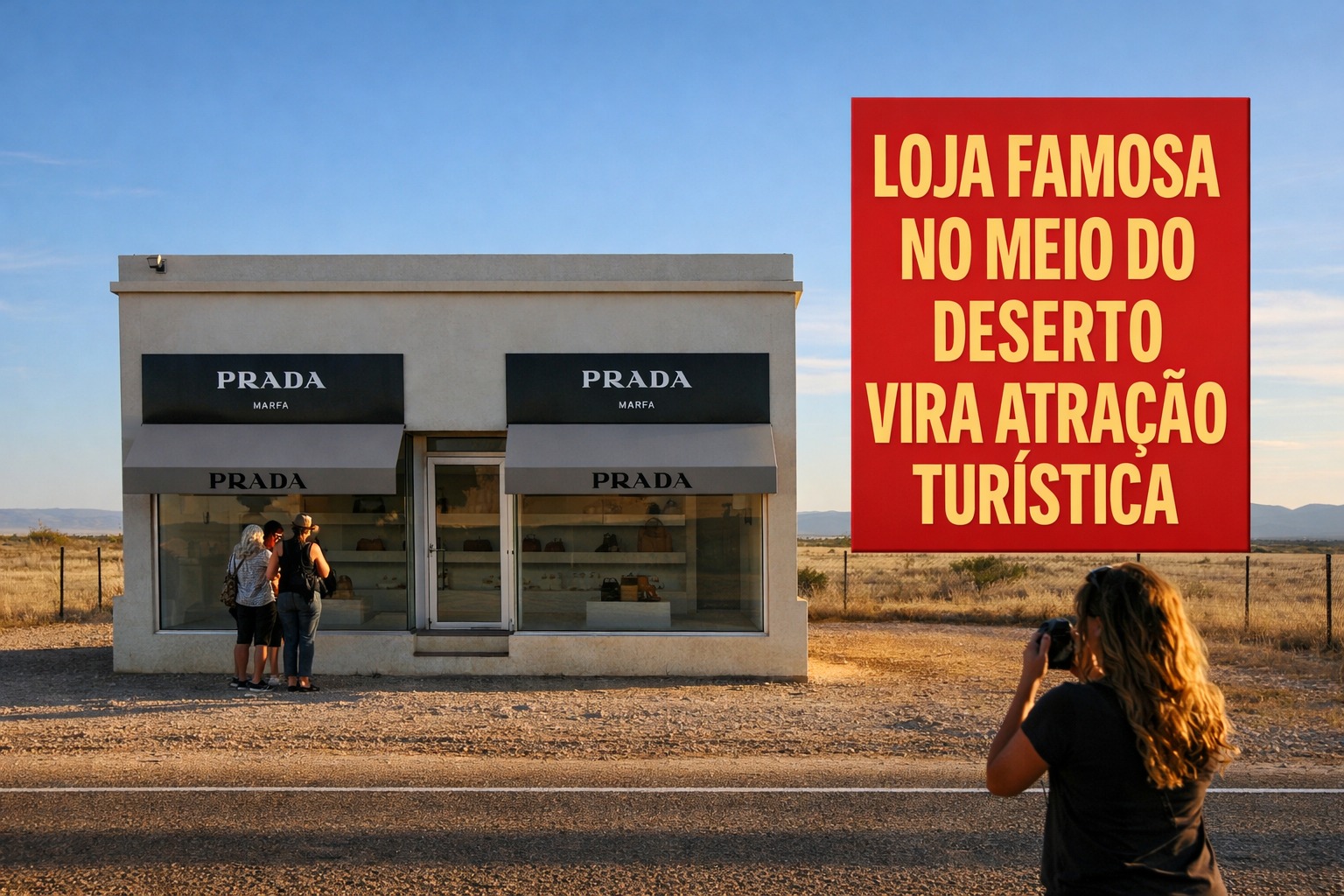
Created to Disappear, the Replica Prada Store in Texas Challenges Consumption, Time, and Permanence, Becoming a Global Attraction, Withstood Vandalism, and Remains Preserved More Than Two Decades Later Until Today
The store that sells nothing, doesn’t open its doors, and was conceived to disappear over time remains, in 2025, one of the most enduring symbols of contemporary art in the desert of the United States, attracting global attention for the paradox it represents.
Origin and Concept of the Installation in the Desert
Created in 2005 by Scandinavian artists Michael Elmgreen and Ingar Dragset, Prada Marfa replicates a boutique of the Italian brand Prada without any commercial function, set in an isolated stretch of US Route 90, in West Texas.
The choice of location, near the small town of Marfa, far from urban centers and commercial routes, integrated the concept by exploring the contrast between luxury, geographical isolation, and total absence of real consumption.
-
Few people know this, but Neil Armstrong, one of the most famous NASA astronauts in history, survived the Korean War after jumping from the plane during his seventh combat mission aboard the USS Essex aircraft carrier of the United States.

-
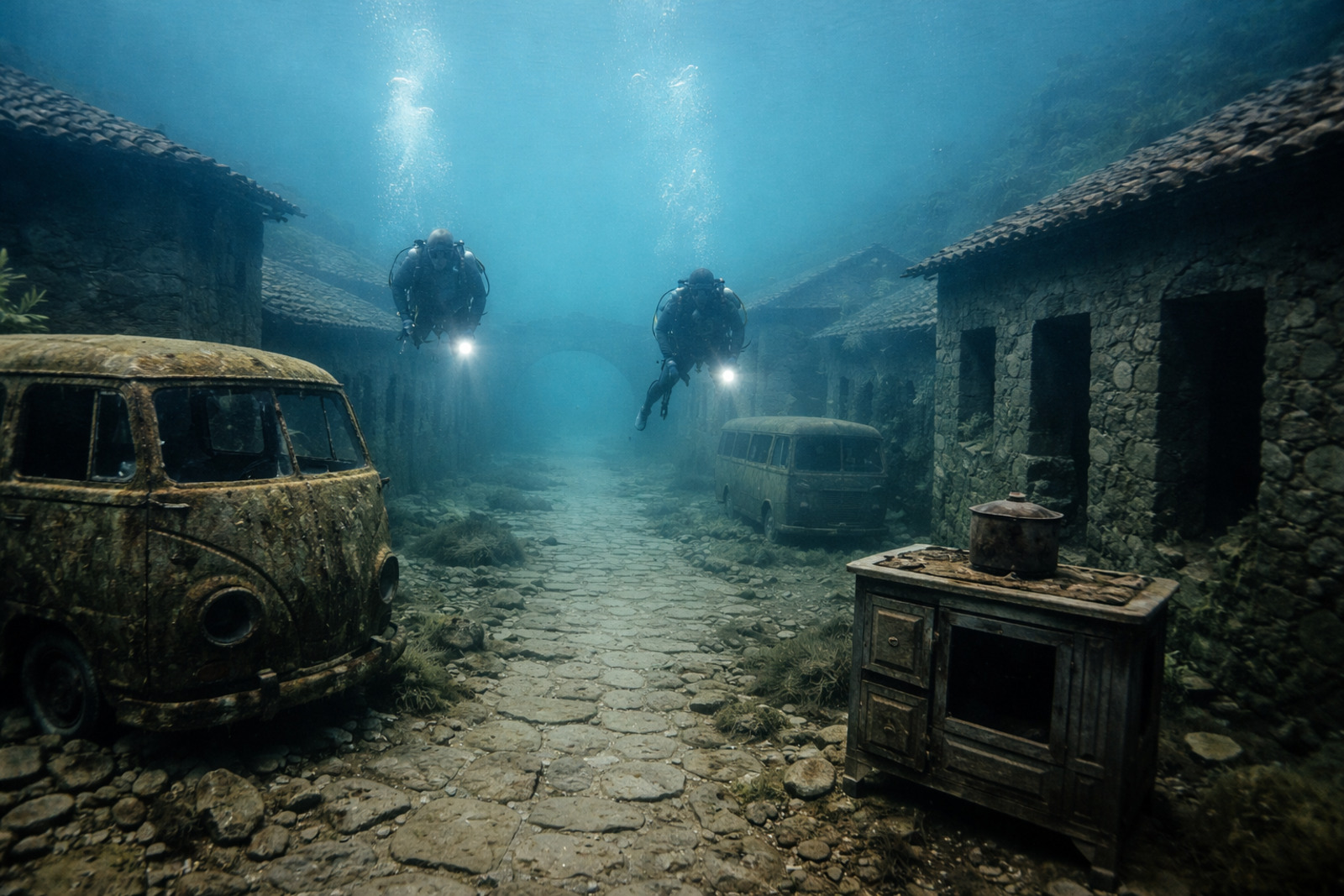
Diving with a camera in Lake Furnas reveals a submerged city with an entire street, almost intact houses, a preserved bridge, a wood stove, a Kombi, and even a bus at the bottom of the largest lake in the Southeast.
-
Iceland accidentally drilled into a magma pocket at 2,100 meters and revealed that the extreme heat beneath the crust could pave the way for a new source of continuous energy.

-
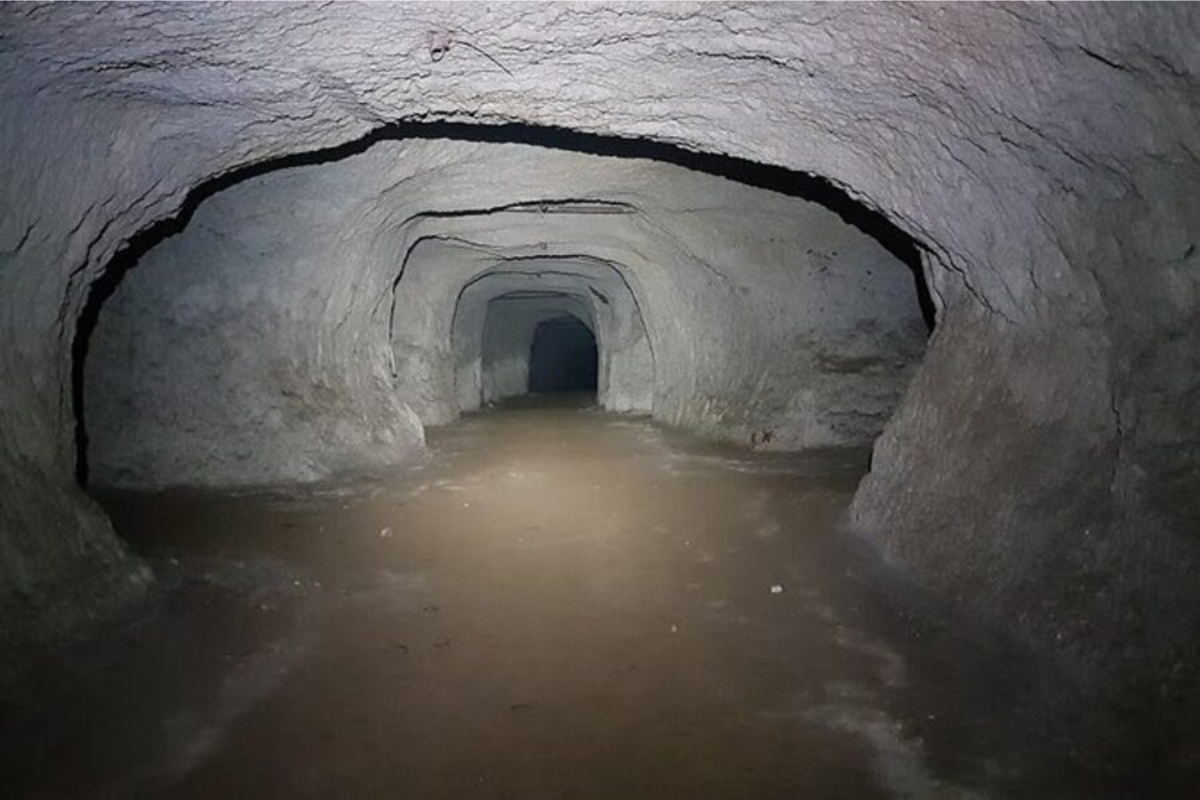
Discovery of a 15-kilometer labyrinth beneath the buildings of Rome raises alarm for collapses and reveals the largest underground network ever found in the Italian capital.

From the beginning, the artists defined that the work should naturally degrade, without maintenance, until it disappears, reinforcing the ephemeral nature and direct criticism of the symbolic permanence of brands.
The construction used materials such as biodegradable adobe, plaster, glass, and MDF, aligning with the tradition of land art and artistic interventions carried out in desert regions during the 1970s.
Internal Content and Relationship with the Brand
Inside the installation were placed shoes, bags, and original accessories from Prada, personally selected by Miuccia Prada from the autumn-winter 2005 collection.
The Italian brand did not fund the project but authorized the use of the logo and collaborated in the curation of the pieces, chosen in earthy tones to visually interact with the arid landscape.
Despite the appearance of a functional store, the door has never been opened to the public, reinforcing the practical uselessness of the space and the idea of a permanent showcase without access or commercial transaction.
Vandalism, Protection, and Change of Trajectory
The inauguration occurred discreetly, with little public presence and no expectation of wide repercussions from the creators, who returned to New York shortly after completion.
Less than 24 hours later, the installation was vandalized, with bags and shoes stolen, forcing the responsible parties to install security systems to preserve the work.
In the following years, incidents of graffiti and illegal interventions occurred again, some resulting in legal proceedings, which partially altered the initially intended fate of the installation.
This course eventually prevented the complete natural degradation envisioned in the original project, transforming the work into an object of continuous conservation, even if without aesthetic restoration.
Consolidation as a Cultural Icon in the Desert
Starting in the 2010s, with the expansion of social media, Prada Marfa began attracting tourists, artists, and influencers from various parts of the world, significantly increasing its visibility.
A milestone occurred in 2014, when Beyoncé posted a photo in front of the installation, an episode that decisively boosted the international reach of the work.
The installation also crossed into pop culture, being mentioned in series such as Gossip Girl and appearing in an episode of The Simpsons, where it serves as a satire of out-of-context luxury.
In 2025, it continues to be one of the most photographed artistic spots in the American Southwest, maintaining its original appearance intact, despite the passage of time.
Today, Prada Marfa remains with the same display, the same objects, and the same landscape around it, still provoking debate, ambiguity, and contradiction, even among critics and frequent visitors.
With information from NIT.






-

-

3 pessoas reagiram a isso.