





 Portuguese
  English
  Spanish
  5 min of reading
  0 comments


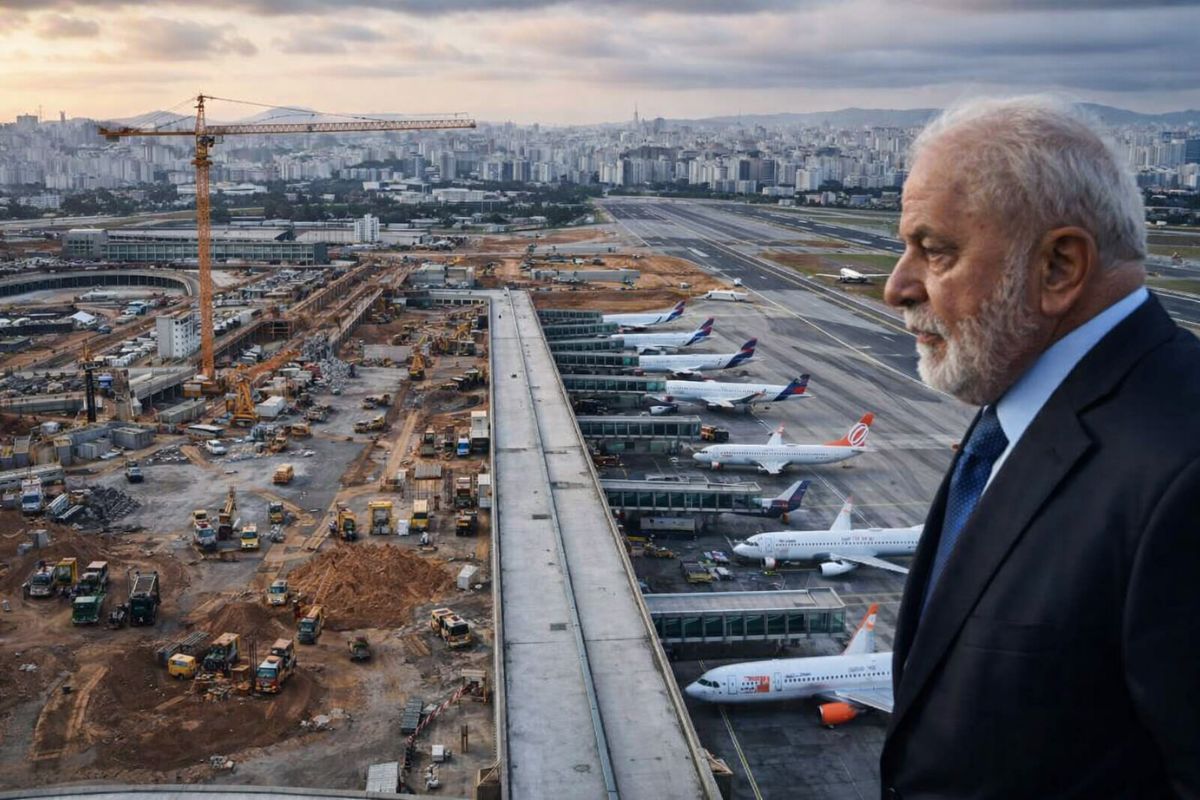
Focusing on Airports Under Aena Management, the Federal Plan Provides R$ 4.64 Billion for Expansion, Modernization, and Maintenance of 11 Terminals, Promising More Than 2,000 Jobs in Construction and 700 Subsequent Positions, While Congonhas Concentrates the Largest Investment and Extended Deadline Until June 2028.
The package for airports announced by Luiz Inácio Lula da Silva on Wednesday (11) places R$ 4.64 billion at the center of a strategy that combines physical expansion, operational updates, and infrastructure maintenance in 11 terminals managed by Aena, distributed across São Paulo, Mato Grosso do Sul, Minas Gerais, and Pará.
Funded by BNDES, the initiative starts from an explicit goal: to increase capacity, modernize structures, and incorporate sustainability criteria into the construction cycle. The government projects more than 2,000 direct and indirect jobs during execution and another 700 positions after completion, with the majority of the schedule by June 2026, with an exception for Congonhas, scheduled for June 2028.
Where the Investment in Airports Will be Applied and How the Schedule Was Designed
The program design concentrates resources in 11 airports operated by a single concessionaire, which tends to facilitate the standardization of processes, purchases, and technical execution. According to the schedule disclosed, most deliveries should occur by June 2026, signaling a short window for simultaneous interventions on different fronts of engineering and airport operations.
-
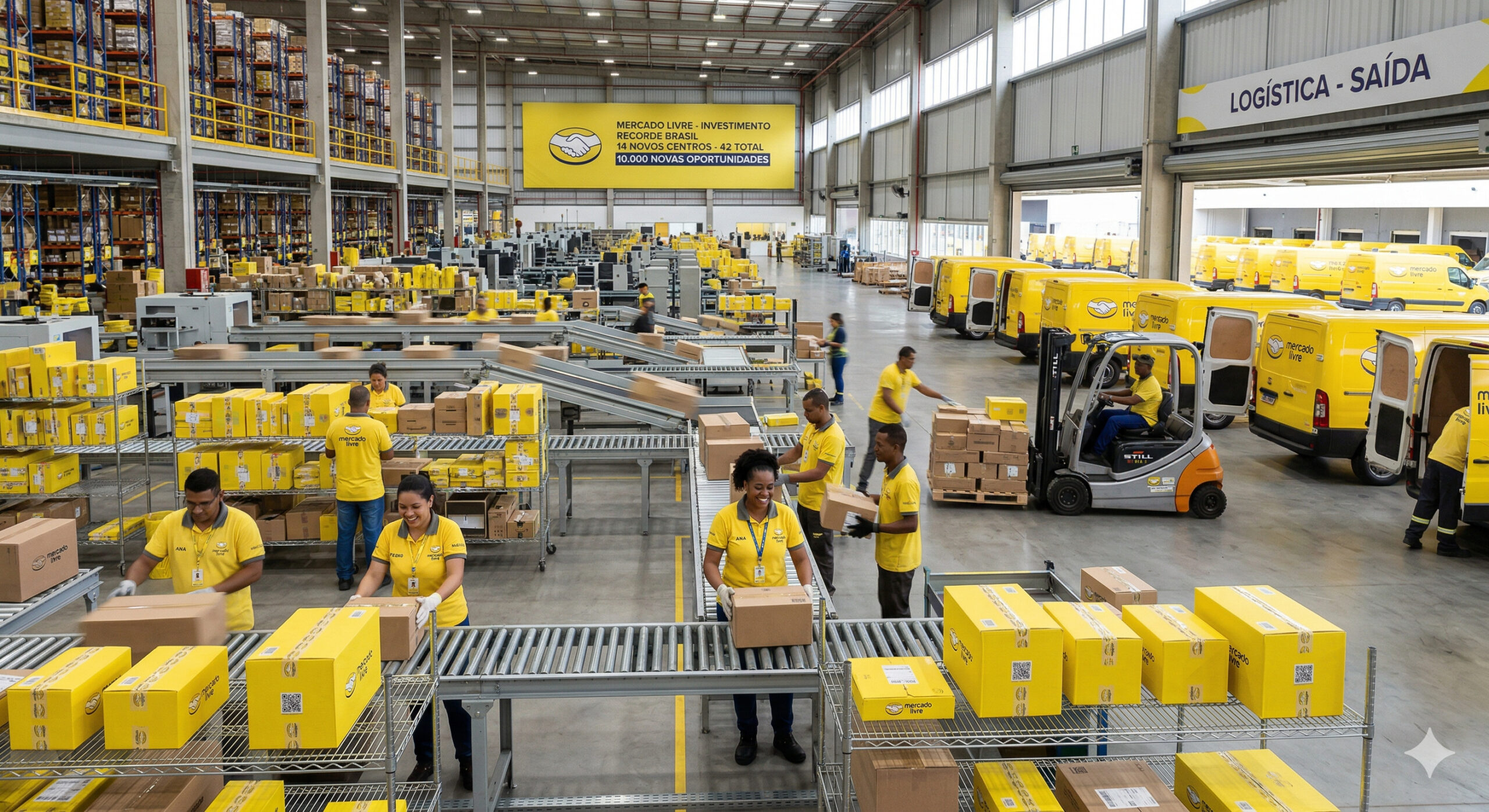
Mercado Livre “opens the vault” and announces a record investment of R$ 57 billion in Brazil in 2026, a value 50% higher than the previous year, with an expansion plan that includes 14 new logistics centers, totaling 42 units in the country and hiring an additional 10,000 employees.
-
How investment in technology can revolutionize the national economy and enhance industrial gains, according to a study that highlights the direct impact on productivity, innovation, and wealth retention within Brazil.

-
The largest food company on the planet, JBS, has just opened a 4,000 square meter laboratory in Florianópolis to develop customized proteins that modulate muscle mass gain, immune response, and metabolic performance.

-
After nearly 30 bids and competition among industry giants, a Spanish company purchases one of the largest airports in Brazil for almost R$ 3 billion and takes over the management of Galeão in a concession that will last until 2039.


In terms of territorial distribution, the airports included are: Congonhas (SP), Campo Grande (MS), Ponta Porã (MS), Corumbá (MS), Santarém (PA), Marabá (PA), Carajás (PA), Altamira (PA), Uberlândia (MG), Uberaba (MG), and Montes Claros (MG). In terms of public policy, this choice reinforces a network logic: strengthening hubs while simultaneously giving a boost to regional terminals to reduce pressure on a few high-demand points.
When the government speaks of expansion, modernization, and maintenance of airports in the same package, there is an important technical message: it is not just about building new areas, but about combining expansion with operational continuity, avoiding the annulment of capacity gains by bottlenecks in apron, passenger flow, access, and support services.
Congonhas at the Center of the Billion-Dollar Package for Airports

Congonhas appears as the main axis of the program, with R$ 2 billion, the largest amount among the included airports. The weight of this value is explained by the profile of the terminal: intense traffic, high relevance in domestic aviation, and the need for structural repositioning to accommodate growth in demand without compromising operational performance.
The planned intervention includes a new passenger terminal of 105,000 m², more than double the current size of 40,000 m². The aircraft apron will be expanded, and the boarding bridges will increase from 12 to 19, directly altering the capacity for processing flights, boarding, and deboarding during peak times.
Another key point is the expansion of the commercial area to over 20,000 m². This change is not peripheral: in high-traffic airports, the commercial configuration influences internal circulation, average time spent, and comfort perceived by passengers. According to the Ministry of Ports and Airports, the operational capacity of Congonhas could increase from 29 million to over 40 million passengers, a leap that repositions the terminal in the national scenario by 2028.
Jobs, Operational Efficiency, and Sustainability: The Promised Trifecta
In terms of work and income, the government projects more than 2,000 direct and indirect jobs during construction and another 700 positions in the following period. In airport infrastructure projects, this effect generally spreads across construction, assembly, maintenance, logistics, security, terminal operation, and passenger service.
From an operational perspective, expanding airports without reviewing internal flows tends to generate limited gains. Therefore, the announced combination of physical expansion and structural modernization is crucial: when the apron, terminal, and boarding bridges advance in an integrated manner, the expected result is a reduction in bottlenecks, improved predictability, and greater resilience during peak movement.
The presence of sustainability as a formal goal also indicates a change in approach. Instead of treating the subject as a final step, the package incorporates environmental concerns into the investment design. This is relevant because airports concentrate energy consumption, intense mobility, and pressure for continuous efficiency; thus, sustainable solutions cease to be ancillary and begin to influence cost, operation, and institutional image in the long term.
The Role of Aena and the Regional Impact of Airport Expansion
The program reaches airports managed by Aena, identified as the largest airport operator in the world by passenger numbers. This international scale can favor the transfer of operational practices, technical governance, and performance standardization, especially in contracts that require simultaneous execution in different states and regional realities.
In São Paulo, Mato Grosso do Sul, Pará, and Minas Gerais, the expected effects are not limited to the terminal itself. Better-prepared airports influence connectivity, business logistics, work commutes, service delivery, and local economic dynamics. In cities with a regional profile, airport improvements can shorten practical distances and enhance predictability for supply chains that depend on rapid mobility.
At the same time, the success of the package will depend on rigorous execution: meeting deadlines, coordination between construction and operation, quality of deliveries, and the ability to transform investment into real experiences for passengers. In airport infrastructure, a robust announcement is the starting point; concrete results are the final measure.
The R$ 4.64 billion airports package combines financial scale, a focus on capacity, and a regional strategy, with Congonhas at the center of the transformation until 2028. If the targets are met, the project could redefine passenger flow, operational standards, and service quality at key terminals in the country.
In practice, what change in airports would make the most difference for you today: faster boarding, better connections between flights, or more efficient internal structure? And looking at your state, which terminal should be an immediate priority and why?








Seja o primeiro a reagir!