





 Portuguese
  English
  Spanish
  5 min of reading
  0 comments


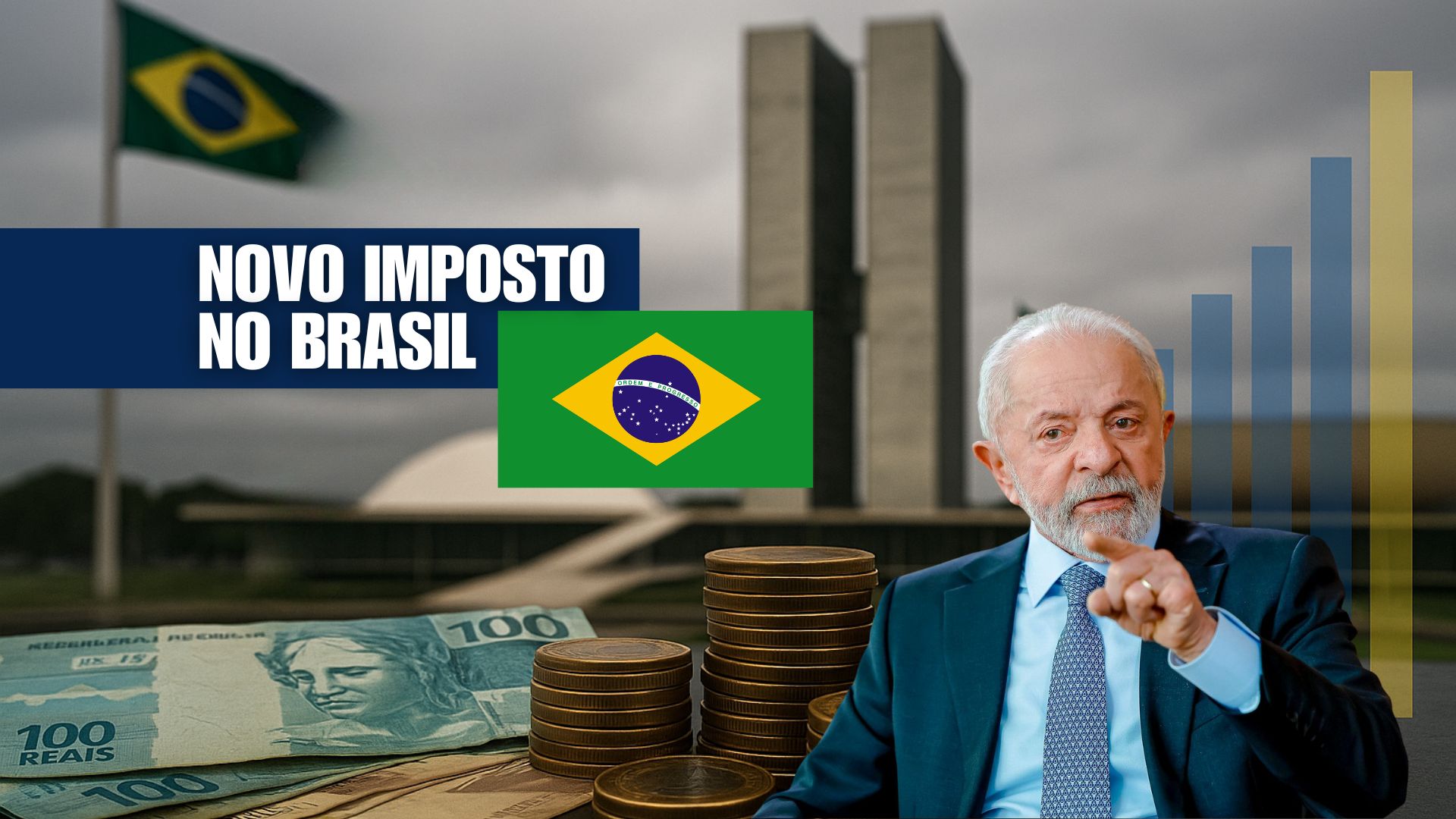
Government Passes Law Establishing Minimum Tax of 15% on Profits of Large Multinationals, With Expected Fiscal Impact in 2026 and Possible International Strain Involving the United States and the New G7 Arrangement.
The federal government has enacted Law 15.079/2024, which creates an additional CSLL to ensure a minimum effective rate of 15% on the profits of large multinational groups operating in the country.
The measure, aligned with pillar 2 of the OECD, will already impact the results of 2025, with payment in 2026, and has an official revenue estimate of R$ 3.44 billion in 2026.
The adoption comes amid pressure from the United States, which under Donald Trump politically abandoned the global minimum taxation agreement and is pushing for exceptions for its companies.
-
Inflation in March reaches 0.88% according to IBGE and pressures the Brazilian economy, impacting family budgets and requiring more strategic decisions to maintain financial control.
-
In Paraná, distributor Pacto connects 100% of the load in Coronel Vivida to batteries: a BES of 10 MW and 20 MWh costs just over R$ 30 million and lowers the local tariff now.

-
With a dependence of up to 80% on gas imported from the United States, Mexico is responding with a robust energy strategy, betting on shale gas, creating a scientific committee, and preparing to expand natural gas production to reduce vulnerability and strengthen its energy security in the coming years.

-
The United States proposes to Brazil a critical minerals agreement with a minimum price to combat Chinese dumping and priority for investment, but the Planalto is blocking the signing out of fear of upsetting China and due to electoral calculations in a year of competition.


How the Additional 15% for Multinationals Works
The Brazilian regulation implements the so-called QDMTT (Qualified Domestic Minimum Tax).
When the effective rate paid in Brazil (IRPJ + CSLL) is below 15%, the company collects the difference until it reaches the minimum.
The rule applies to groups with global revenue of 750 million euros or more in at least two of the last four years and applies to profits calculated in Brazil.
In August 2025, the OECD recognized the Brazilian additional as QDMTT “safe harbour” in its central record, reinforcing the technical compliance of the model.
According to the government, the measure adapts national legislation to the GloBE Rules without altering the total burden of groups that already exceed the minimum.
The Federal Revenue has been updating regulatory norms to detail the calculation and collection, with new instructions published in early October.
Who Will Be Affected
The official estimate indicates around 290 groups potentially impacted, approximately 20 Brazilian and the rest foreign.
In a recent meeting, the economic team also mentioned a sample of 273 foreign groups and 21 Brazilian identified based on data up to 2022.
The cut only considers conglomerates above the threshold of 750 million euros in global revenue.
Calendar, Projections, and Mentions in the 2026 Budget
The official projections attached to the measure indicate R$ 3.44 billion in 2026, R$ 7.28 billion in 2027, and R$ 7.69 billion in 2028.
Although PLOA 2026 does not detail a specific item for this revenue, the estimate is included in documents that accompanied the law’s passage.
Pressure from the U.S. and the Risk of Strain
On January 20, 2025, on the first day of the new term, Donald Trump signed a memorandum declaring that the “Global Tax Deal” has no force or effect in the United States.
He also ordered the U.S. Treasury to assess response measures to foreign rules considered extraterritorial or discriminatory.
At the end of June 2025, the G7, under the presidency of Canada, issued a statement advocating a “side-by-side” solution.
In this arrangement, groups with U.S. parent companies would remain outside the IIR and UTPR (two mechanisms of Pillar 2), recognizing the internal U.S. minimum rules.
The goal, according to the official statement, was to reduce trade tensions.
The Ministry of Finance states that there is no formal instrument for a U.S. “withdrawal” from Pillar 2, as the agreement was negotiated within the Inclusive Framework with optional implementation by each country, given common standards once adopted.
It further emphasizes that Brazil only implemented the QDMTT, without the IIR and UTPR.
Internal Effects: Tax Burden, IOF, and MP 1.303
Even with the implementation of the CSLL additional, the domestic debate on tax burden has gained momentum.
In 2024, the gross tax burden of the general government reached 32.32% of GDP, with the central government accounting for 21.4%.
Another area of revenue came from the IOF.
After regulatory adjustments in 2025, revenue from the tax totaled R$ 51.9 billion from January to August, a record for the period.
In August, there was R$ 8.4 billion, a real increase of 35.6% over August 2024.
The Finance Ministry reported that the results reflect legal changes and currency and credit operations facing higher taxation.
Meanwhile, MP 1.303/2025 reorganizes the taxation of financial investments and virtual assets starting in 2026.
It raises the burden on fixed-odds bets to 18% of net revenue and alters CSLL parameters for fintechs.
The text also discusses the taxation of previously exempt products, such as LCA and LCI, a topic that is still under negotiation in Congress.
Income Tax: Exemption Up to R$ 5,000 Advances
In the field of IRPF, the Chamber of Deputies approved on October 1 the project that eliminates the tax for those earning up to R$ 5,000 per month.
It also grants partial reduction up to R$ 7,350, with offsets focused on high incomes.
The proposal goes to the Senate and, if approved still in 2025, will take effect on the January 2026 payroll.

Legal Debate and Next Steps
Tax experts assess that the application of the Brazilian additional in 2026 will require attention to the external scenario.
As Brazil has not yet adopted the IIR/UTPR, some situations of top-up may depend on how other countries will treat profits of groups with parent companies in the U.S. under the “side-by-side” arrangement.
There is also the challenge of standardizing reports and ensuring legal certainty in proving effective rates, a point that the Revenue seeks to detail in complementary rules.
The CSLL Additional represents Brazil’s main form of adherence to the global floor of 15%.
However, effective revenue will depend on the consolidation of domestic rules, coordination with partners in the Inclusive Framework, and the repercussions of the new G7 understanding regarding American groups.
In this scenario, the question is whether the exclusion of the U.S. will limit the international reach of the measure and to what extent it will affect projected revenue for 2026.









-

-

2 pessoas reagiram a isso.