





 Portuguese
  English
  Spanish
 4 min of reading
  1 comment


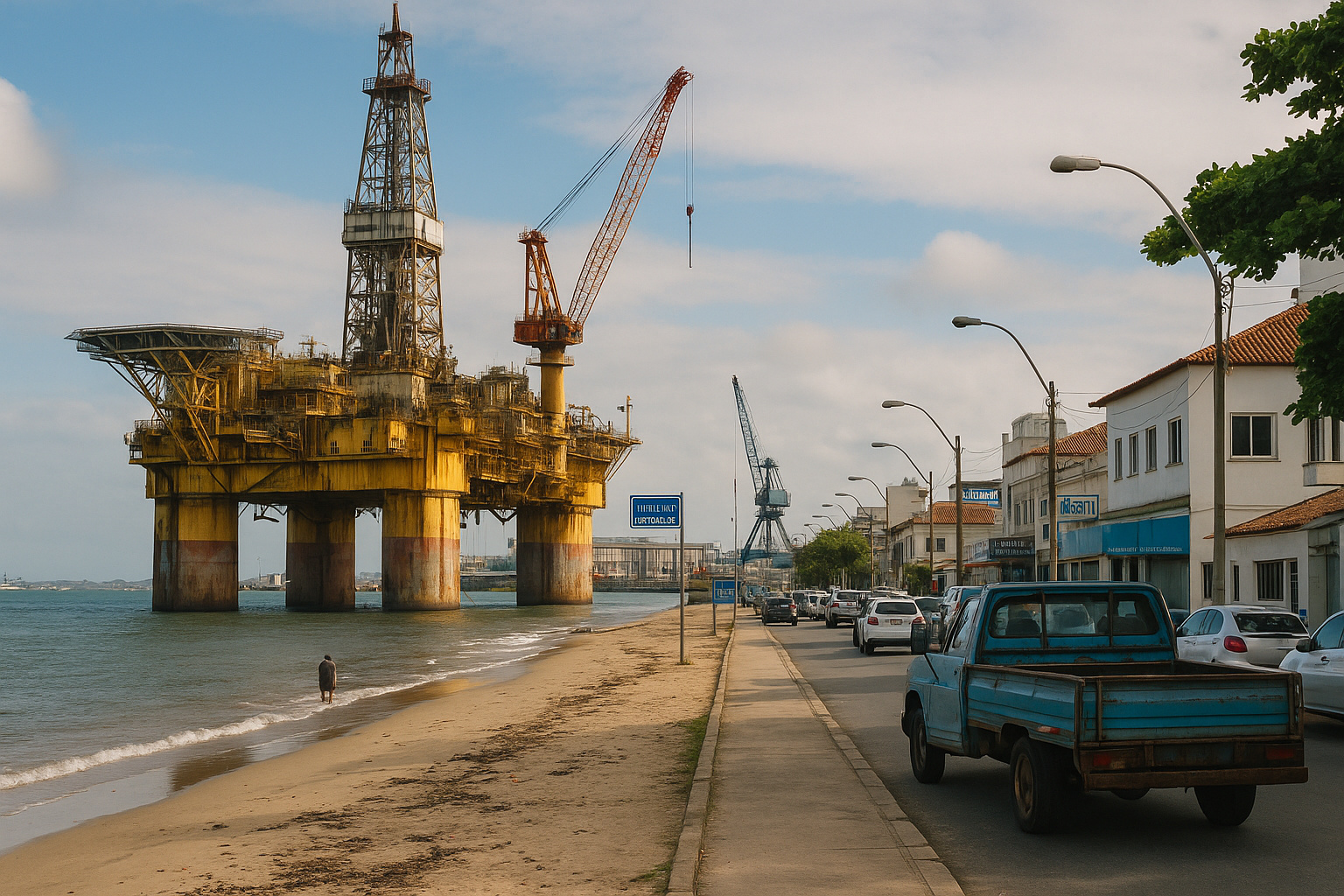


The Former “Pre-Salt Capital” Faces the Dilemma Between the Wealth Brought by Oil and the Social, Environmental, and Economic Crises Left by the Sector
For decades, Macaé, on the northern coast of Rio de Janeiro, symbolized the prosperity of the oil industry in Brazil. Known as the “national pre-salt capital” and also the “capital of thermoelectric plants”, the city grew rapidly. According to IBGE, its population increased from 65 thousand inhabitants in 1970 to 246 thousand in 2022, driven by jobs, investments, and the arrival of workers from all over the country.
However, even with R$ 1.4 billion collected in royalties in 2022, according to the Federation of Industries of the State of Rio de Janeiro (FIRJAN), prosperity was not evenly distributed. In 2021, Macaé recorded one of the highest average salaries in Brazil, with 5.8 minimum wages, but inequality persisted. While engineers and executives received high salaries, thousands of families lived on less than half a minimum wage per capita. Moreover, many residents faced a lack of sanitation, precarious housing, and difficulties accessing basic services.
The Fall of the Barrel and the Crisis That Shook the Oil Capital
Shortly after its peak, the sector collapsed. Between 2014 and 2019, according to the General Register of Employed and Unemployed (Caged), more than 60 thousand workers lost their jobs. The crisis was exacerbated by Operation Lava Jato, which halted works and contracts from Petrobras. As a result, houses were abandoned, schools became empty, and restaurants closed. The city, which once had the second largest hotel hub in the state, saw hotels shut down.
-
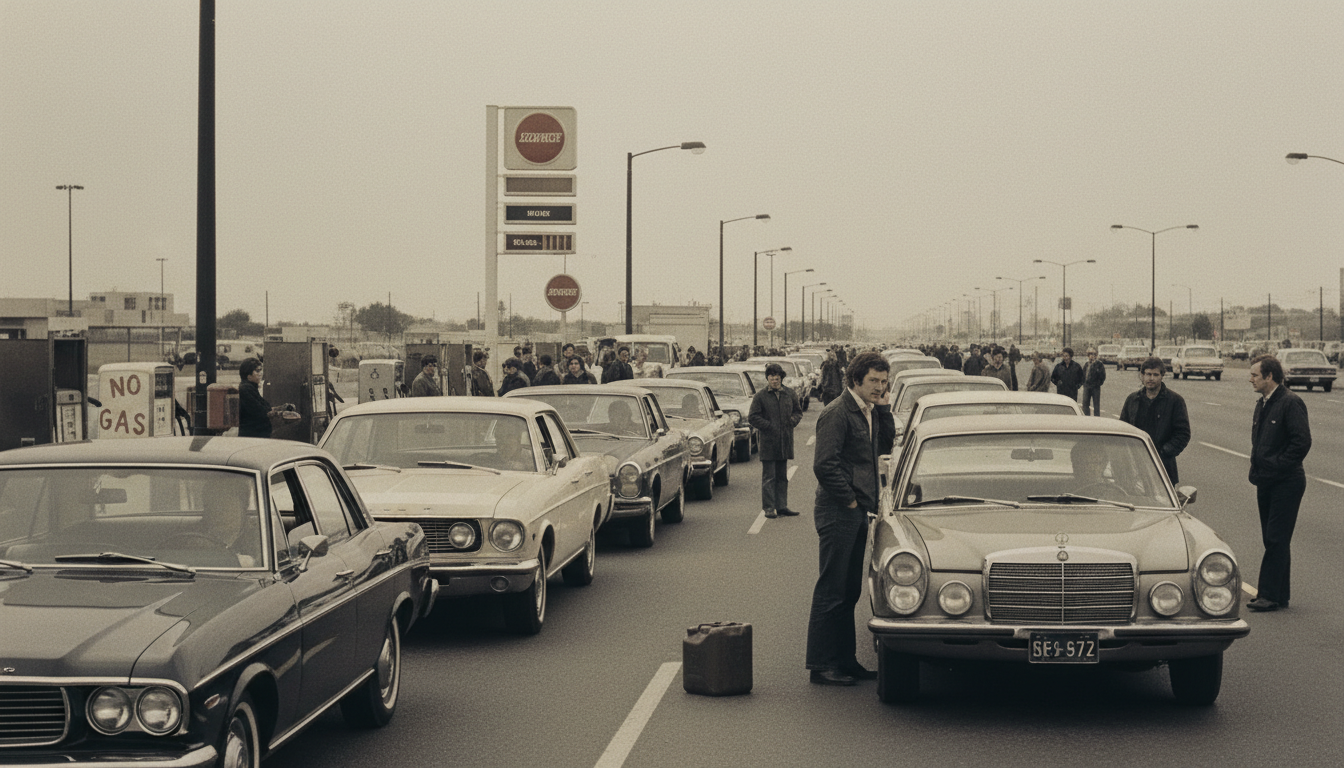
In the 1970s, oil became a weapon of war and paralyzed the entire world, and now the same thing is happening again with Iran closing off the route for 20% of the planet’s fuel.
-
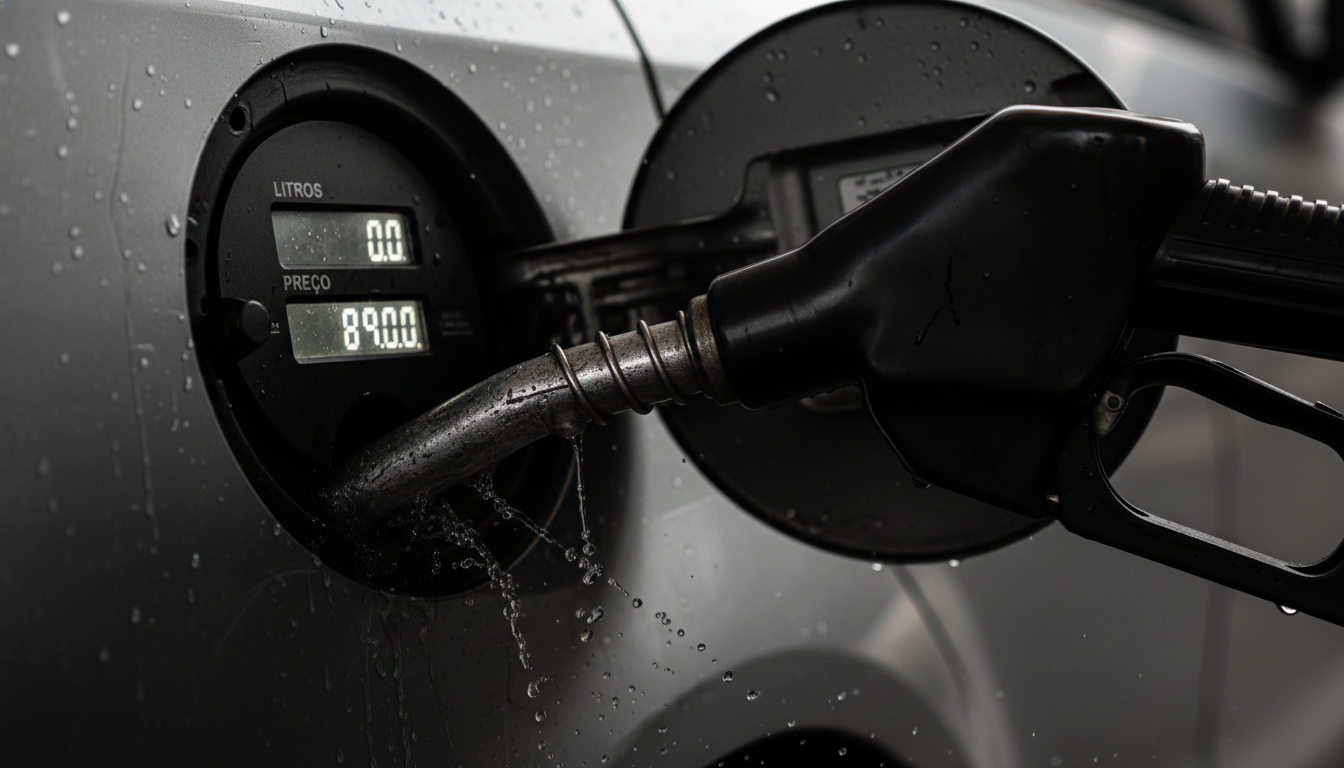
When oil prices rise, the gas station increases prices the next day, but when it drops by 13% at once, no one explains why gasoline remains at the same price for months.
-
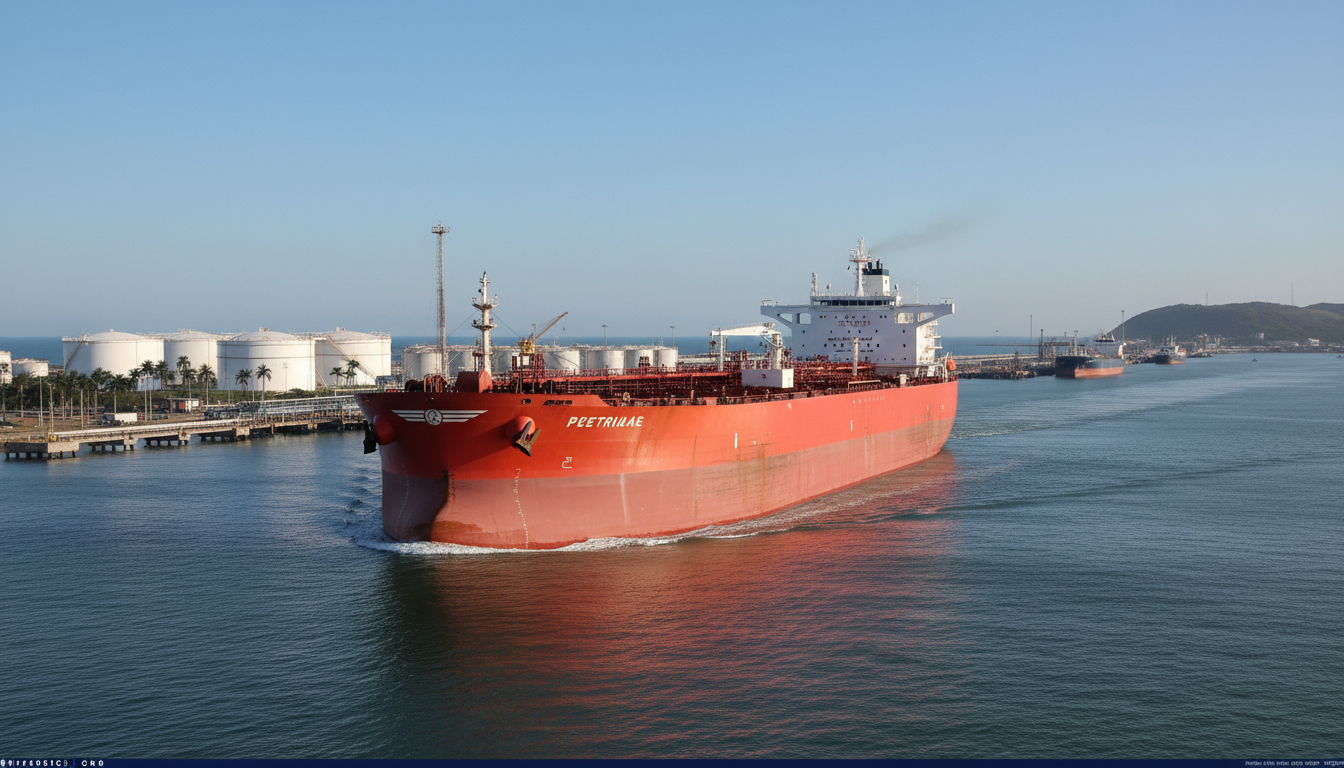
The largest fuel distributor in Brazil has just been forced to import diesel and gasoline on its own after Petrobras reduced its monthly deliveries.
-
After Trump gave Iran 48 hours to reopen the route for 20% of the world’s oil, the barrel skyrocketed to $117, dropped 13% with a truce, and the Central Bank had to inject $2 billion to stabilize the dollar.
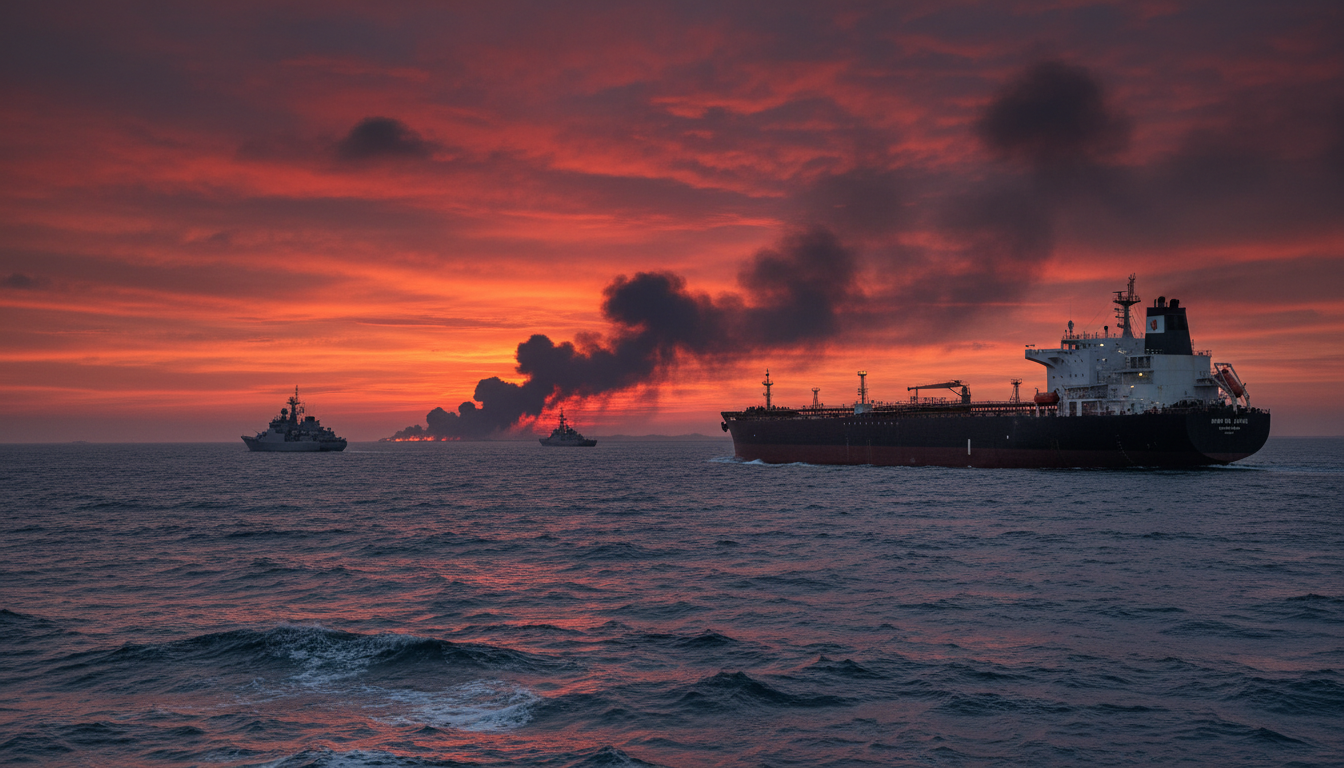
With falling barrel prices and a slowdown in production, the economy collapsed. Thus, the cycle of prosperity gave way to inequality and unemployment. According to the National Agency of Petroleum (ANP), between 2010 and 2019, the revenue from special participation fell by more than 95%. In 2020, for the first time, Macaé did not receive this compensation. Consequently, public services weakened, and the gap between the rich and the poor widened.
The Environment Lost Ground and Tourism Disappeared
While the economy faced crises, the environment was also affected. Praia de Imbetiba, previously frequented by families and fishermen, was overtaken by Petrobras’ construction works and port expansion. Thus, oil on the sands and polluted sea drove away tourists, increasing the city’s dependence on the oil sector.
With tourism declining and the economy fragile, Macaé began to live a paradox. On one side, luxury condominiums and corporate towers emerged. On the other, entire neighborhoods were left without basic infrastructure. In this way, the city that grew thanks to black gold now faces the cost of economic and environmental dependence.
New Fossil Bets Reinforce Sector Dependence
Despite so many crises, investment in fossil fuels remains strong. According to the report “The Money Trail Behind Fossil Fuel Expansion in Latin America and the Caribbean”, prepared by the International ARAYARA Institute and Urgewald, four new exploratory fields are being opened in the pre-salt areas near Macaé: Marlim Azul (Petrobras), Raia Pintada and Raia Manta (Equinor), and Maromba (BW).
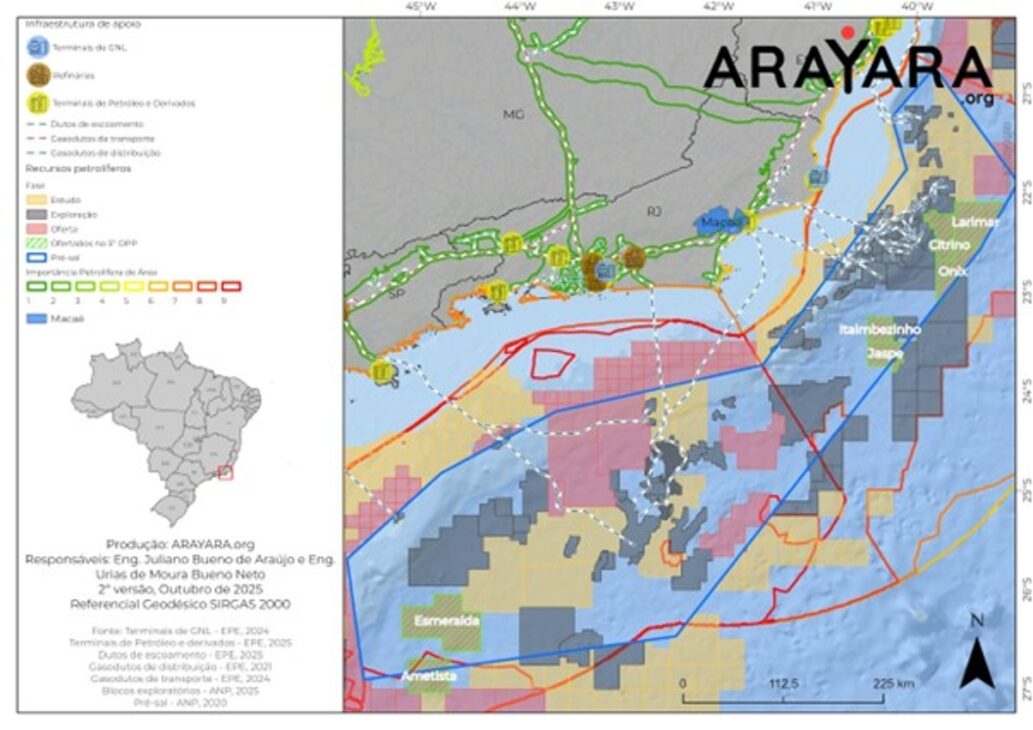
In addition, the two largest LNG terminals in Latin America are being constructed in Brazil. The Northern Fluminense Port and Tepor Macaé will have regasification capacity of 5.63 million tons per year. The former, estimated at US$ 1.4 billion, is expected to supply two thermoelectric plants of 1.7 GW in São Francisco de Itabapoana. Tepor Macaé, developed by Eneva and Grupo Vale Azul Participações, was designed to feed a complex of large thermoelectric plants still under construction.
Finally, the 3rd Permanent Offering Auction of Sharing (OPP), held in 2025, is expected to offer seven new exploration fields in the pre-salt polygon. Four of them are located in the Campos Basin, near Macaé, representing 55% of the offered areas. This movement reinforces the fossil model that still dominates the Brazilian energy matrix.
The Energy Transition That Has Yet to Arrive
The case of Macaé clearly shows that dependence on oil creates cycles of wealth and crisis. Even with billions in royalties, the city could not shield itself from the fluctuations of the global market. The extractive model brought rapid growth but also deepened inequalities and destroyed ecosystems.
On the other hand, experts affirm that true progress does not lie in the oil barrel, but in the country’s ability to plan a just and sustainable energy transition. This change requires economic diversification, generation of decent jobs, and respect for the environment. Thus, Brazil could reduce its dependence on fossil fuels and invest in safe and accessible renewable energies, capable of ensuring stability and social justice.
The story of Macaé serves as a national alert. Without planning and structural changes, the oil capital will remain trapped in a model that concentrates wealth and perpetuates inequality.
What do you think: should Brazil continue to bet on oil to sustain the economy or accelerate the transition to clean sources, building a fairer and more sustainable future?






Que foto horrível! Pessoas que não conhecem tem uma imagem errada da cidade e da atividade.