





 Portuguese
 Spanish


Maersk confirmed on Wednesday, November 18, 2026, that the ASAS2 service with CMA CGM between Asia and the east coast of South America will end after its last sailing from Shanghai on December 8, while Itapoá, in Santa Catarina state, will retain a direct call to Europe
Maersk is ending its partnership with CMA CGM on the ASAS2 service between Asia and the east coast of South America. The last jointly operated voyage will depart Shanghai on December 8, 2026.
The Chilean website MundoMarítimo published the update on Wednesday, November 18, 2026. Maersk had also announced the end of the cooperation in a customer notice on October 1.
For Brazil, the change affects two routes. On the Asia route, Maersk will serve the east coast only through the ASAS service, which it operates on its own.
-
Hapag-Lloyd and CMA CGM increase Asia-to-South America’s East Coast freight rates by $1,000 per container from Dec. 1, affecting Santos, Paranaguá, and Itajaí

-
Truck drivers at Rio Grande do Norte freight carriers to strike indefinitely starting Monday (23): approved in Mossoró and Parnamirim, the walkout seeks restoration of health plan terms under the 2026–2028 agreement, after Hapvida was replaced by Unimed without negotiations
-
Workers in Três Lagoas, Brazil, could vie for about 200 jobs as Bracell breaks ground Dec. 1 on a R$100 million river port to ship eucalyptus to Lençóis Paulista
-
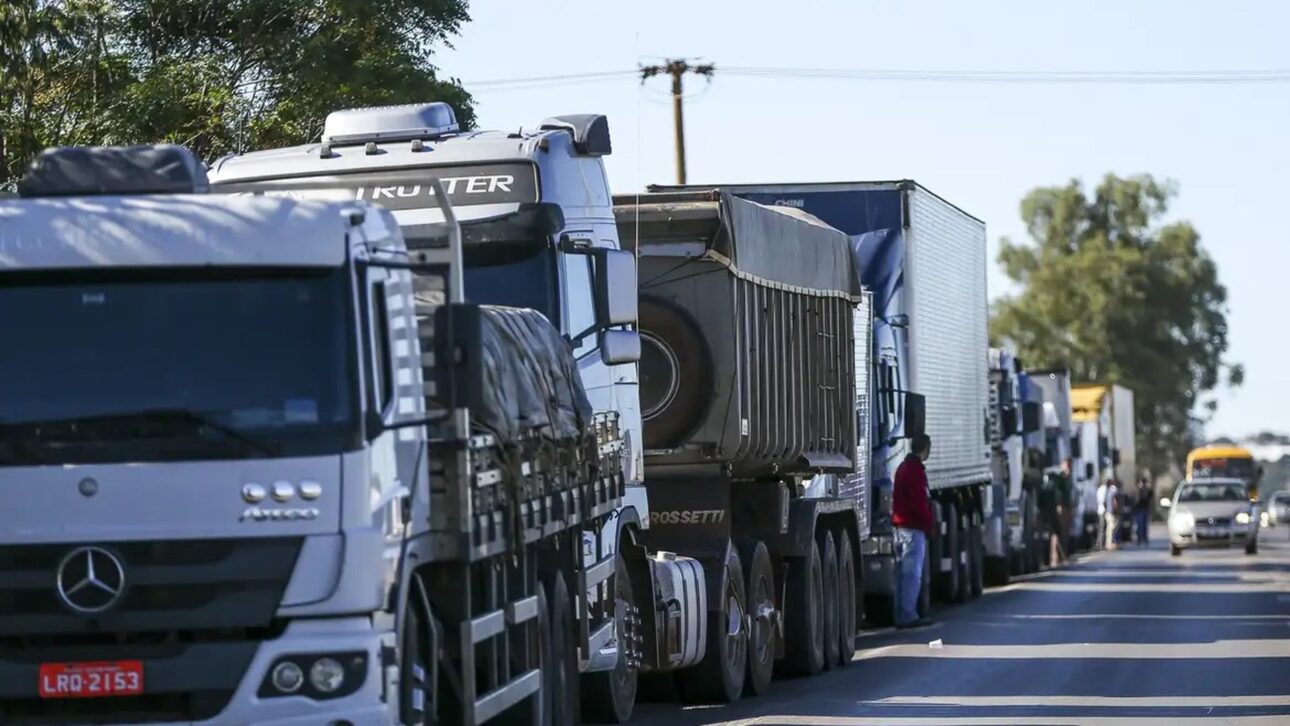
Truckers and Bus Operators in Southern Rio de Janeiro May Face Over Double Toll Costs on BR-393 Under New ‘Rota Vale do Café’ Concession



On the Europe route, Itapoá, in Santa Catarina state, will retain a direct connection to Northern Europe, while Rio Grande, in Rio Grande do Sul state, will continue to be served via transshipment.
How the Asia-to-east coast of South America route will change
Maersk and CMA CGM made the decision jointly. The last voyage under the agreement is 650W, departing Shanghai on December 8, 2026. After that, ASAS2 will cease to operate.
Maersk says the ASAS service will continue to provide coverage between Asia and the east coast of South America. The Danish company operates and controls the service on its own.
Customers can continue booking cargo without interruption.
In its October notice, Maersk said the change strengthens its ability to manage and develop ASAS independently in line with customer demand.
What the end of ASAS2 means for Brazilian ports
A Maersk notice from January 2026 lists a CMA CGM vessel on ASAS2, the Berlioz, on voyage 609W. The same notice shows Santos as the first port on the return trip to Asia.
With the agreement ending, shippers sending cargo from China to Brazil through Maersk will rely on ASAS. The company says the service will maintain its current commercial coverage.
Brazilian channel COMEX BREAKING NEWS covered the issue on October 14, 2026.
The video brings together announcements by shipping companies affecting Brazilian imports and exports, including Maersk’s revision of cargo handling rates at 15 locations in Brazil and the end of cooperation on ASAS2.


Itapoá retains direct service to Northern Europe
On the other side of the network, Maersk has kept the route configuration between Northern Europe and the east coast of South America.

Porto Itapoá, in Santa Catarina, continues to receive direct calls. Rio Grande remains available via transshipment.
In the opposite direction, the service connects Santos, Paranaguá, Buenos Aires, Montevideo and Itapoá with European ports. Maersk’s Mediterranean service continues to make a direct call at Itajaí, Santa Catarina.
The direct call at Itapoá is not new. Maersk added the port in Santa Catarina to its NEOSAMBA service in a May 19, 2026, notice.
At the time, the company described the change as a direct service from Northern Europe to Santa Catarina.
The rotation announced in May calls at Southampton, Rotterdam, Hamburg, Bremerhaven, Antwerp and Tangier, Morocco. In South America, the port calls are Santos, Paranaguá, Buenos Aires, Montevideo, Itapoá, Paranaguá again and Santos.
The first ship on the new rotation was the San Raphael Maersk, voyage 619S, which arrived in Santos on June 5, 2026.
MundoMarítimo posted on X in Spanish on August 29, 2025, about another Maersk adjustment on the same route.
The post says the company changed its Europe–East Coast of South America service and suspended its call at Paranaguá because of weather conditions.
How long cargo takes to travel from Itapoá to Europe
Maersk’s May schedule lists transit times from Itapoá: 17 days to Tangier, 22 to Southampton and 23 to Rotterdam.
The trip to Hamburg takes 26 days. It takes 28 days to reach Bremerhaven and 31 to Antwerp.
For shipments from Europe to Santa Catarina, cargo leaves Antwerp and reaches Itapoá in 30 days. The trip takes 38 days from Rotterdam and 40 from Southampton.
Porto Itapoá published a corporate video on October 30, 2026.
In the description, the terminal says it has invested more than R$3 billion over its history and has an office in Shanghai, China.

$200 surcharge for heavy containers from China to Brazil
Maersk’s network between China and Brazil also saw a price change this week. In an announcement on November 19, the company introduced a surcharge for heavy containers.
The charge is $200 per 40-foot refrigerated container traveling without its refrigeration unit running, when its verified gross mass exceeds 23 metric tons.
It applies to cargo from Shanghai, Qingdao, Xingang and Dalian bound for Santos, Itapoá, Itajaí and Paranaguá.
The price calculation date is December 5, 2026. The same rate applies to Montevideo and Buenos Aires.
Since July 17, 2026, Maersk has already charged $200 per 20-foot dry container weighing more than 20 metric tons on the same route.
The fee applies to all of the company’s ocean products, including contracts and spot bookings.
ASAS sailing canceled in December
Another November 19 notice concerns ASAS itself. Maersk will cancel sailing 652W, scheduled to leave Shanghai on December 20, 2026, for the east coast of South America.
The return leg will also lose a sailing: 705E, scheduled to depart Buenos Aires on February 4, 2027. The company cites seasonal cargo patterns and fluctuating demand as the reasons for the cancellation.
Bookings will be rolled over to the next vessel, San Antonio Maersk, sailing 653W.
Maersk loses both partners on the route in three months
British shipping news site The Loadstar published an analysis of the route by Nils Roche on October 2, 2026.
The article says Maersk lost both of its partners on the Asia-East Coast route within three months.
In September, Israel’s Zim left ASAS to launch the AS3/ZFS service with Hapag-Lloyd. The end of ASAS2 with CMA CGM followed.
Roche says Maersk is left as the sole operator of ASAS, with Hapag-Lloyd buying space on its vessels. He estimates nominal weekly capacity departing Asia will fall by about 4%.
The analyst recommends that shippers check December routings and split contracts among at least two carriers operating their own vessels.
In Roche’s view, CMA CGM is relaunching its two remaining services on the route, SEAS 2 and SEAS A, just days after ASAS2 ends.
He expects those services to be operated only by CMA CGM, Cosco, OOCL and Evergreen.
In a post on X on April 2, 2024, Porto Itapoá recorded the arrival of the CMA CGM Búzios.
The 336-meter-long, 51-meter-wide vessel was the widest to dock at the terminal, in a test maneuver for approval by the Brazilian Navy.
Itapoá expands terminal and deepens channel
The terminal in Brazil’s Santa Catarina state is preparing to receive larger ships.
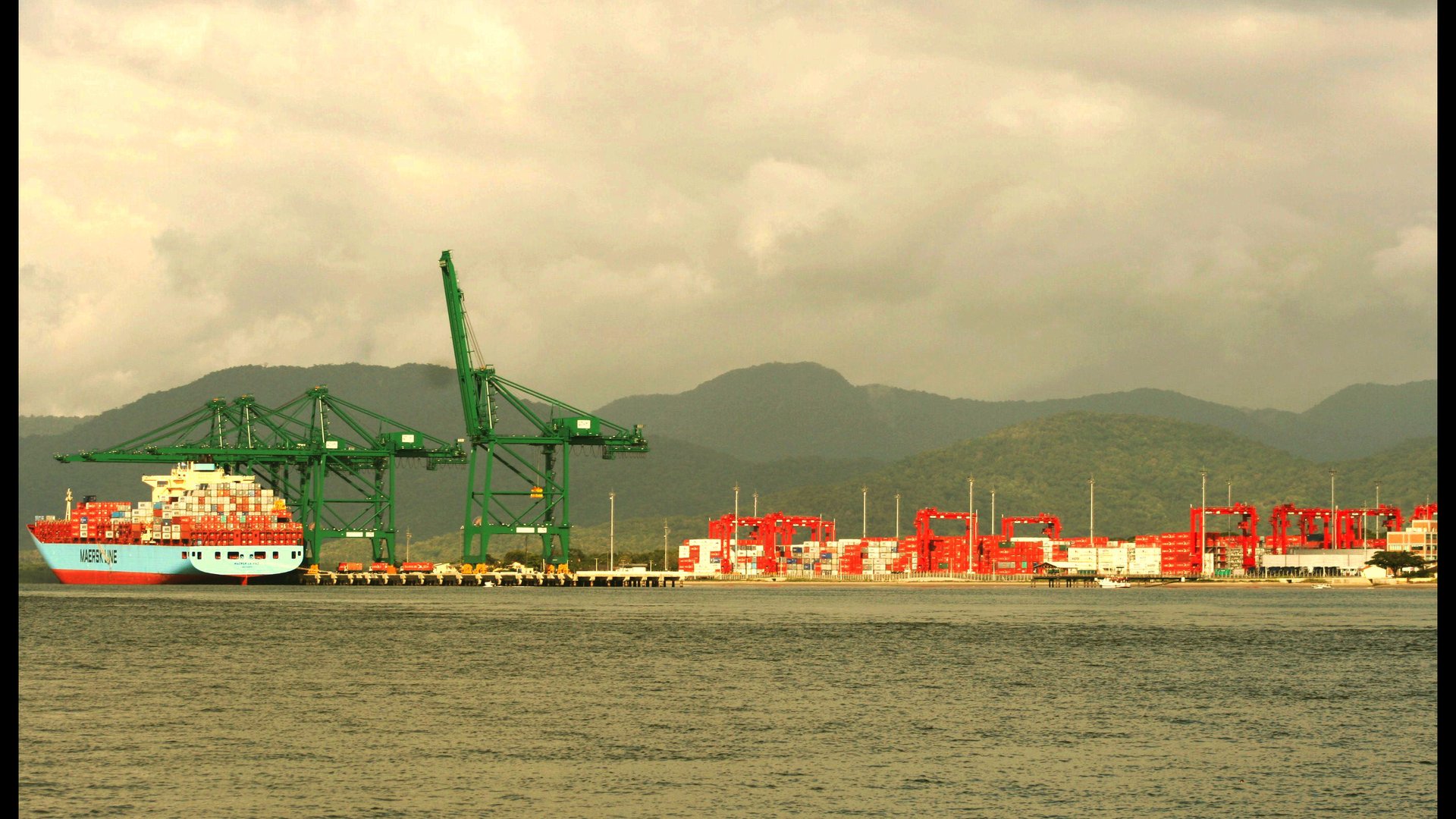
In an interview with the Porto & Negócios channel published on November 12, 2026, Porto Itapoá CEO Ricardo Arten discussed dredging in Babitonga Bay.
The video description says the fourth expansion phase will increase capacity from 1.6 million to 2.1 million TEUs. The expectation is that the port will be able to receive fully loaded 366-meter ships after safety procedures are completed.
Arten also cited a fifth phase, with a target capacity of 4 million TEUs, and new automated gates to manage truck traffic.

Other Maersk changes in Latin America
The update summarized by MundoMarítimo also covers the west coast.
The weekly AC1 service, changed in August 2026, connects Shanghai and Yokohama with Manzanillo and Lázaro Cárdenas in Mexico, Buenaventura in Colombia, and Balboa in Panama.
In the Gulf of Mexico, the Gulf Ocean Express began calling at Freeport, Texas, on October 21. The service connects Houston, New Orleans, and Freeport with Guatemala, Honduras, and Panama.
Maersk also cites customs modernization initiatives in the region. These include the modernization of Brazil’s Single Window for Foreign Trade, a system used by Brazilian importers and exporters.
What remains unresolved
Maersk says port operations are generally running normally along the east and west coasts of South America, in Central America and in the Caribbean.
The company is monitoring weather conditions at ports.
The capacity withdrawn from the route with the end of ASAS2 still depends on the reorganization of CMA CGM’s and other carriers’ services along the east coast starting in December.


