





 Portuguese
 Spanish


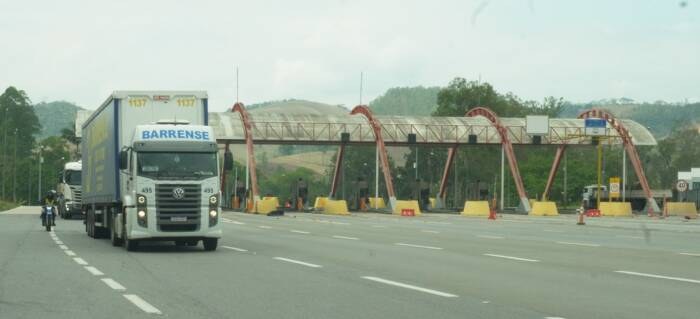
Fecomércio RJ estimates that trucks and buses could spend more than 120% more on tolls on BR-393 if the new Rota Vale do Café concession goes ahead as proposed. The project doubles the number of toll collection points, from 3 to 6, while cutting planned highway widening from 31.8 km to 15 km.
Truck and bus operators traveling along the Lúcio Meira Highway in southern Rio de Janeiro state have a new cost to consider. The highway has been toll-free since June 2025, but that is expected to change with the next concession.
The warning came Thursday (19) from Fecomércio RJ, alongside trade associations in Barra do Piraí, Volta Redonda, Valença and Três Rios.
What the project calls for heavy vehicles
The federal government’s proposal adds 50% to the toll rate per axle for trucks and buses. It also calls for a general toll increase after construction is complete, in the concession’s 10th year.
-
Three port projects worth R$2.35 billion advance in Amazonas and Paraná, featuring a grain terminal and upgrades for larger ships in Paranaguá

-
Multilog invests R$290 million to open a terminal three times larger in Santos, with 72,000 sq m and capacity for 6,000 vehicles a month
-
Truckers face 20-hour wait crossing the Tocantins River on BR-235 as bridge closure and limited ferry service affect corn shipment
-
BNDES releases R$2.74 billion to upgrade the BR-262 in Minas Gerais, including 44 km of expansion and nearly 169 km of new lanes for trucks and other vehicles


The number of toll collection points would rise from three to six gantries. Taken together, the federation’s estimate points to an increase of more than 120% in toll costs for heavy vehicles compared with the previous arrangement.
Diário do Vale published a simulation with specific figures. A six-axle truck traveling the entire highway would see its toll cost rise from about R$140 to R$320, based on studies by Fecomércio RJ and the Southern Fluminense Regional Development Agency.
Why trucks pay more than cars
Since 1994, the first five phases of Brazil’s federal highway concession program have charged the same toll rate per axle for light and heavy vehicles. The rule changed with the sixth phase, launched in 2026.
Under that phase, the per-axle rate for trucks and buses is 50% higher. Fecomércio RJ says the government’s aim is to make less-traveled highways more attractive to investors.
The federation does not oppose private investment. It questions who pays for it and what the highway gets in return.
What about passenger car drivers
The 50% per-axle surcharge applies only to trucks and buses. Even so, people who drive cars on BR-393 are also likely to feel the impact of the new arrangement.
Under the proposal, tolls for all vehicle categories would increase once construction is complete, in the contract’s 10th year. Fecomércio RJ has not disclosed the size of that increase.
Toll rates at each gantry have also not been published. So it is not yet possible to say how much a car would pay to travel from Volta Redonda to Três Rios, for example.
Less highway widening than in the 2008 contract
For people who use the highway every day, the most pressing issue is construction. The new concession calls for 15.02 km of highway widening. The previous contract, signed in 2008, called for 31.8 km, according to Fecomércio RJ.
The stretch between Barra do Piraí and Volta Redonda was left out of the plan. It is the highway’s busiest and most congested segment, the federation says.
In practice, drivers on the busiest stretch would pay more in tolls and continue using a two-lane road. That is the combination regional business leaders want changed before the bidding documents are issued.
The scale of the Rota Vale do Café concession
A project portfolio released by Brazil’s Ministry of Transportation in October calls for 204.7 km of highway to be placed under concession, according to the Estradas website. Planned infrastructure investment totals R$3.22 billion.
Operating costs add another R$2.98 billion over the life of the contract. The BR-393 runs through seven municipalities in Rio de Janeiro state and connects corridors such as the Via Dutra, BR-040 and BR-116.
The ministry’s preliminary schedule calls for the tender notice to be issued in June 2027, with the auction in September 2027. Toll rates and obligations could still change before then.
How the highway lost its tolls
The first concession began in 2008 with Acciona and was transferred to K-Infra in 2018. In June 2025, the federal government declared the K-Infra Rodovia do Aço concession contract terminated.
ANTT, Brazil’s land transportation regulator, cited structural deficiencies, construction delays and maintenance problems. Since June 10, 2025, DNIT, the federal highway department, has managed the section, and toll collection has been suspended.
DNIT announced maintenance work on 80 km in October 2025, in Sapucaia, Três Rios and Paraíba do Sul. In January 2026, it authorized work on 103.3 km, with about R$17 million in federal funding.
Potholes persist as new concession remains pending
The federation, however, says DNIT faces budget constraints that limit its ability to maintain the highway. Drivers complain about potholes and maintenance failures that affect safety and traffic.
Users of the BR-393 are now facing two problems at once, and they compound each other. The highway urgently needs repairs, while the proposed solution charges more and delivers less construction work than the previous contract.
How the cost affects prices in stores
Business owners’ concerns, however, extend beyond trucking companies. Higher tolls for trucks raise freight costs, which feed into the prices of goods and services.
Fecomércio RJ consultant Delmo Pinho told Diário do Vale that the increase could drive up costs across several sectors, since transportation is part of both the production and distribution of goods.
What business groups are asking the federal government to do
The federation wants the toll rates and the volume of construction work reviewed. It also argues that the federal government should use Treasury funds for investment, reducing the burden of construction costs on tolls.
Fecomércio RJ says the BR-393 cannot be treated as a routine concession because the previous experience was problematic and the region depends on the highway.
Debate in Volta Redonda on Thursday (26)
The Chamber of Deputies’ Transportation and Traffic Committee will hold a roundtable on the new concession on Thursday (26) at 2:30 p.m. The event was proposed by federal deputy Bebeto (PP-RJ).
The debate will take place in the auditorium at UGB-FERP, at 81 Rua Deputado Geraldo Di Biase, in the Aterrado neighborhood of Volta Redonda. Sicomércio-VR invited business owners and transport operators to bring forward their concerns.
The agenda includes toll rates, expanding the highway’s capacity and road safety. It is an opportunity for the region to seek changes before the final tender notice.
I see the final cost as depending on the toll rates at each toll gantry. I will follow the outcome of the roundtable and whether the Ministry of Transport changes the design of the Rota Vale do Café after the debate.
Would higher tolls be acceptable in exchange for highway widening between Barra do Piraí and Volta Redonda? Responses can be shared in the comments.


