





 Portuguese
 Spanish


Companies could raise R$1.93 billion to fund improvements to Paranaguá’s shipping channel and recoup investments in a grain terminal.
The Port of Paranaguá is preparing to accommodate larger ships, while a terminal on the banks of the Amazon River is already handling soybeans and corn with expanded facilities. The two logistics corridors have entered a new financing phase after the federal government approved three port projects totaling R$2.35 billion, including investments and concession fees. The decision will allow the companies involved to seek up to R$1.93 billion in the market to fund construction and recoup some of the money already invested.
Brazil’s Ministry of Ports and Airports said in an announcement published on November 19, 2026, that the approval covers two projects by AGEO Novo Remanso, in Itacoatiara, Amazonas, and one by Paranaguá Port Channel Company, in Paraná. The package includes expanded grain storage and loading facilities, as well as dredging, rock removal and navigation improvements at the Port of Paranaguá. The authorization allows the companies to raise funds through debentures, but does not mean they have already received the money.
Government clears way for R$1.93 billion in port-sector financing
The Ministry of Ports and Airports approved the projects to issue debentures, debt securities sold to investors. Under this arrangement, companies receive funds and agree to repay them under the terms of the contract.
-
Multilog invests R$290 million to open a terminal three times larger in Santos, with 72,000 sq m and capacity for 6,000 vehicles a month

-
Truckers face 20-hour wait crossing the Tocantins River on BR-235 as bridge closure and limited ferry service affect corn shipment
-
BNDES releases R$2.74 billion to upgrade the BR-262 in Minas Gerais, including 44 km of expansion and nearly 169 km of new lanes for trucks and other vehicles
-
Brazil set for 733-kilometer Minas Gerais–Rio de Janeiro railway auction, with CSN, MRS, and other groups eager to restore tracks and revive freight services


The authorization covers up to R$1.93 billion in financing for projects in northern and southern Brazil. The funds may be raised through different transactions, depending on investor interest and the companies’ needs.
The R$2.35 billion figure represents the combined investments and concession fees associated with the three projects.
Itacoatiara terminal accounts for R$563.7 million in investments
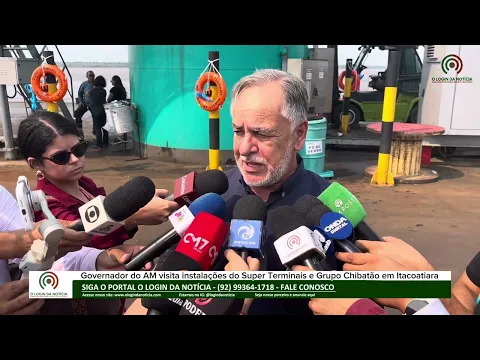
In Amazonas, AGEO Novo Remanso had two projects approved related to the construction and expansion of the Novo Remanso Agricultural Solid Bulk Terminal. The facility is in Itacoatiara, on the banks of the Amazon River, in a region important for river freight transport.

Investments in the two phases total R$563.7 million. The company may raise up to R$140 million through tax-incentivized debentures, a financing instrument used for infrastructure projects.
The main difference is the stage of construction. Paranaguá has planned work, while both phases presented by AGEO have already been completed. In this case, the funds raised could be used to reimburse some of the earlier investments.
First project built a warehouse with capacity for 90,000 metric tons
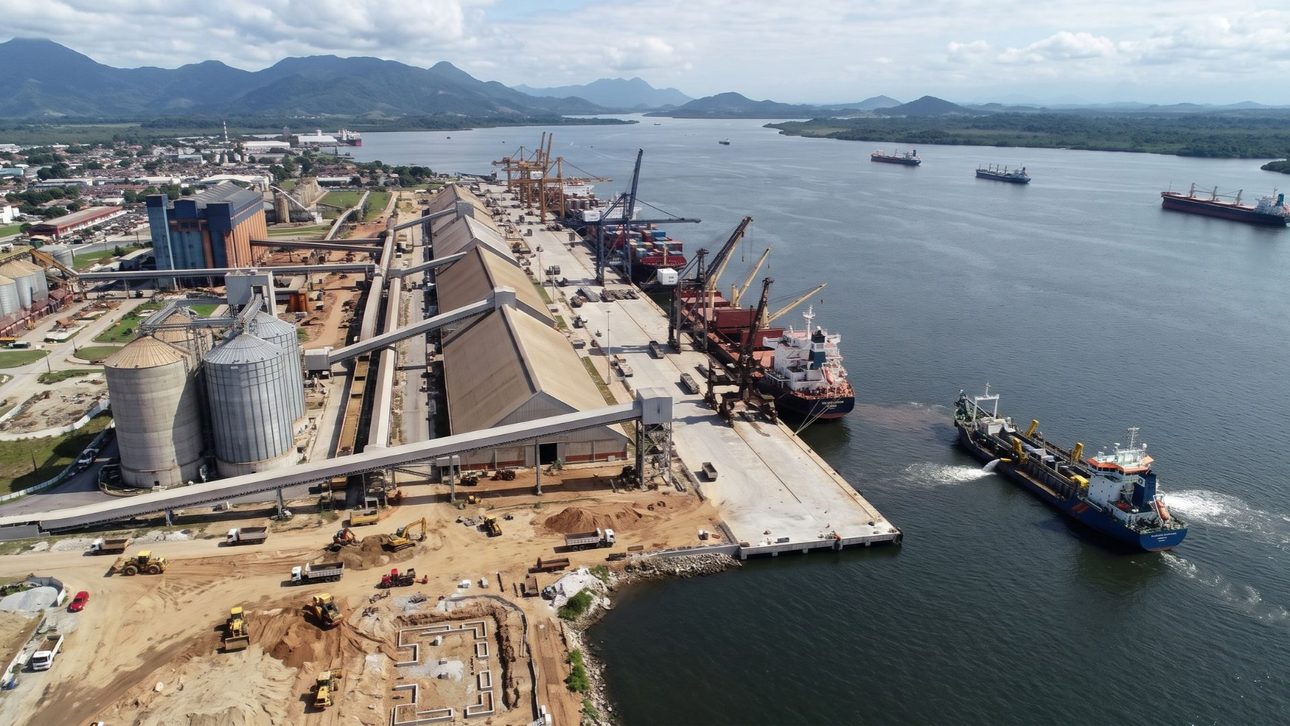
The first phase of the terminal was completed between 2019 and 2023, with an investment of R$420.4 million. The project added equipment to unload barges, store agricultural products and transfer grain to ships.
The facilities include a warehouse with capacity for 90,000 metric tons. The site also has conveyor belts, a grain elevator and a scale to track cargo movements.
This equipment helps organize the flow of soybeans and corn arriving by river. After unloading, the products can be stored until they are ready to be shipped on vessels bound for international markets.
Second phase received R$143.4 million to expand ship loading
From 2024 to 2025, AGEO carried out a second expansion phase, investing approximately R$143.4 million. The project added a barge-mounted crane and a second piece of equipment for loading ships.
The expansion makes it possible to distribute grain-handling activities more effectively. With more equipment available, the terminal is better able to organize unloading and loading operations based on when vessels arrive.
Amazon River links soy and corn exports through the North Arc corridor
The Novo Remanso terminal is part of the logistics network known as the North Arc, made up of transportation routes that use rivers and ports in northern and northeastern Brazil to move cargo.
In this system, soybeans and corn can be transported by barges to facilities near major rivers. The products are then transferred to ships capable of making international voyages.
Using these routes expands transportation options for grain producers and traders. Efficiency depends on river conditions, vessel availability and the terminals’ capacity to receive and dispatch cargo.
In Itacoatiara, facilities completed between 2019 and 2025 are already part of this system. The decision announced in November deals primarily with financing the investments that have been carried out.
Paranaguá plans R$1.51 billion in shipping channel upgrades
In Paraná state, Paranaguá Port Channel Company, controlled by Belgian group DEME, plans to invest R$1.51 billion to modernize the shipping channel leading to the Port of Paranaguá. The project also includes R$276 million for the concession fee, a payment associated with the right to operate the infrastructure.
The company may raise up to R$1.786 billion through debentures. The 25-year concession covers administration and maintenance of the channel, the areas where ships maneuver and the locations where vessels wait.
The project had already advanced with the signing of the concession contract in March 2026. The financial qualification announced in November marks a new phase, intended to facilitate access to the funds needed for the upgrades.
Shipping channel could accommodate ships with drafts of up to 15.5 meters
One of the goals is to gradually increase the Port of Paranaguá’s operating draft to 15.5 meters in the project’s second phase. Draft is the depth of a ship’s hull below the water’s surface.
The greater the permitted draft, the more cargo certain vessels may be able to carry. That capacity, however, also depends on each ship’s characteristics and navigation conditions.
To reach that goal, the concessionaire will have to deepen the channel and widen the turning basins, where vessels maneuver. The work could improve access to the port terminals.
Palangana Rock to be removed to improve navigation safety
One obstacle identified in the shipping channel is Palangana Rock, a rock formation that requires caution during maritime operations. Its removal is part of the work planned by the concessionaire.
The work involves removing rock material from an area used by vessels. Dredging is also planned. The process removes sediment from the bottom to maintain the depth needed for navigation.
The modernization includes improvements to nautical signage and ship traffic monitoring systems. The contract also covers maintenance dredging at the Port of Antonina, part of Paraná state’s port complex.
Merchant Marine Fund also approved financing priority
The Paranaguá project has another potential source of financial support. Brazil’s Merchant Marine Fund approved priority status for approximately R$1.26 billion in investments in shipping channel infrastructure.
That priority allows the financing review to move forward, but it does not mean a loan has been automatically secured. Disbursement depends on conditions set by the financial institutions.
Debentures may complement the project’s financing structure, under the terms of the agreements. The fund’s amounts and the proceeds from the bond issue should not be added together as if they were separate, additional investments.
Next phase will depend on raising funds and carrying out the work
The decision announced on November 19 moves the three projects into a new financing phase. In Amazonas state, both phases of the Novo Remanso terminal have been completed, and the company may seek reimbursement for part of the investments already made.
In Paranaguá, the concessionaire still has to complete work such as deepening the channel, widening maneuvering areas and removing obstacles. The 25-year contract also includes maintenance of this infrastructure.
The projects total R$2.35 billion in investments and concession fees, while authorization to raise up to R$1.93 billion will depend on the completion of the financial transactions. Their operating results will also differ: infrastructure in Itacoatiara has already been expanded, while the planned improvements in Paraná have yet to be delivered.


