





 Portuguese
  English
  Spanish
  4 min of reading
  0 comments


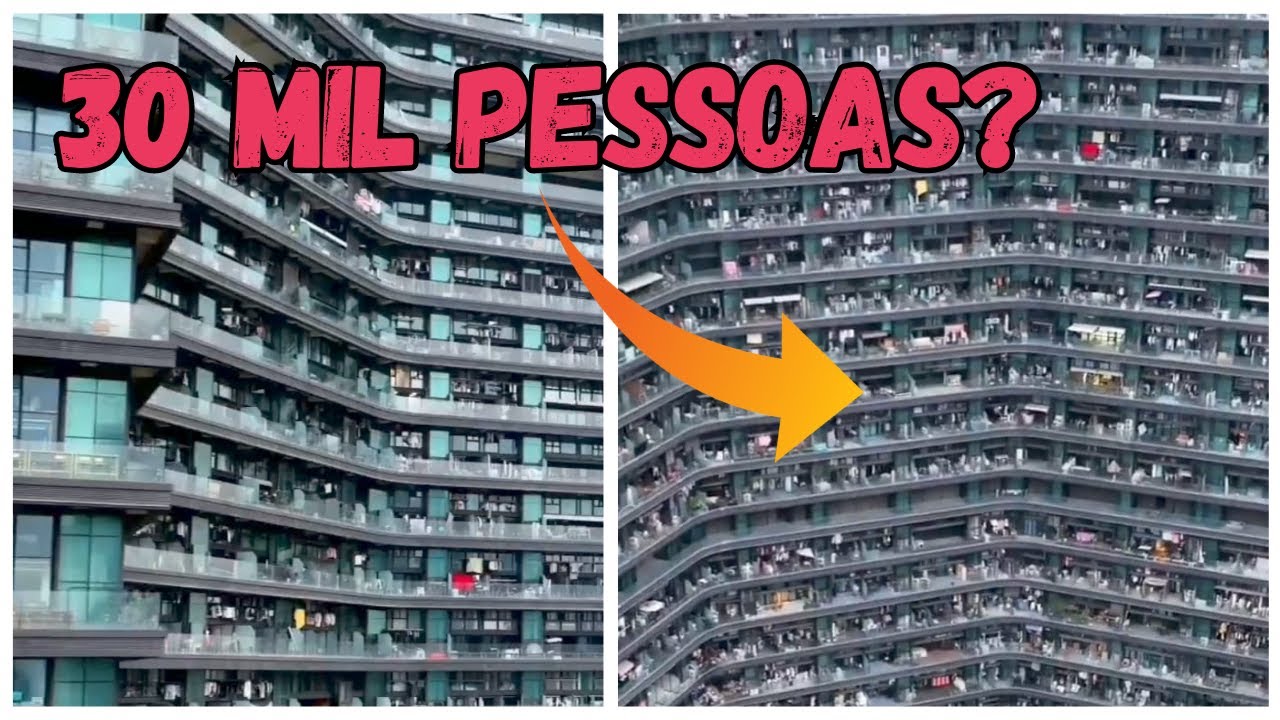
Largest Condominium in the World Houses 30,000 Residents in Hangzhou, China. With 67 Floors and 1.6 Million Square Meters, the Regent International Operates as a Vertical City.
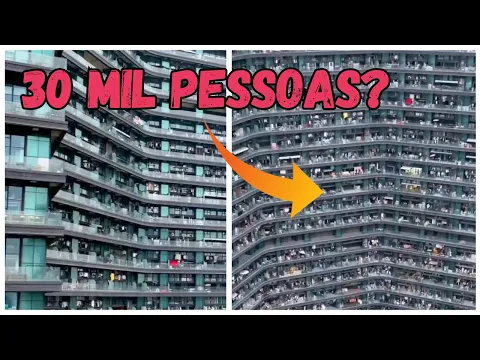
In Hangzhou, China, one of the most ambitious projects of modern urbanism stands: the Regent International Center, considered the largest residential condominium in the world. With 67 floors and impressive 1.6 million square meters of built area, the mega-complex houses about 30,000 residents, a number that exceeds the population of thousands of Brazilian cities.
More than just a building, the Regent was designed to function as a self-sufficient vertical city, bringing together schools, restaurants, gyms, shops, markets, leisure areas, and even administrative spaces in one place. It is a reflection of China’s housing challenge, a country that has some of the highest urban densities on the planet.
Regent International Center – Dimensions That Impress
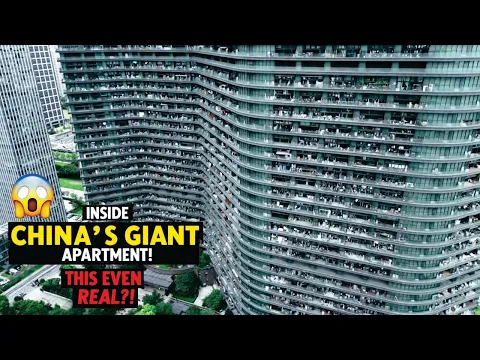

To understand the grandeur of the Regent International Center, just look at some numbers:
-
Congonhas receives the monorail promised for the 2014 World Cup after more than a decade of delays and becomes the first airport in Brazil with integrated subway.
-
Goodbye, concrete: a new trend in civil construction reduces the weight of the structure by up to 30%, accelerates projects by up to 40%, cuts costs on steel and labor, and improves thermal insulation with EPS.
-
Russian engineers create an innovative propeller blade for aircraft that could completely change the way airplanes and helicopters operate.

-
Couple finishes building PVC chalet on the beach on the last day, with air conditioning and curtains, but discovers the bathroom drain is inverted: water escapes from the drain, risking breaking the floor, and the rush continues before the trip.
- 67 floors high, a true residential skyscraper.
- 1.6 million square meters of built area, equivalent to over 220 soccer fields.
- 30,000 residents, a population larger than Brazilian cities like Canela (RS) or Trancoso (BA).
- Capacity to accommodate up to 7,000 families, considering the division of apartments.
- Internal urban structure, with schools, restaurants, pharmacies, supermarkets, gyms, beauty salons, and even administrative areas.
With these proportions, the Regent is not just the largest condominium in the world: it is a compressed urban microcosm in a single building.
On September 7th of this year, one of our writers even produced content reporting, according to their research, what it is like to live in the largest residential building in the world
The Chinese Housing Challenge of Living in the Largest Residential Condominium in the World
China faces an unprecedented challenge in modern history: how to house over 1.4 billion inhabitants in large urban centers without expanding the city’s limits indefinitely.
In megacities like Hangzhou, Beijing, and Shanghai, land prices are extremely high, and the only viable solution is to grow upwards. The Regent International Center is an extreme example of this logic: instead of building horizontal neighborhoods, Chinese engineers erected a whole city inside a building.
According to Chinese urban planners, the project reduces travel time, concentrates essential services, and allows thousands of people to live, work, and study without needing to leave the complex.
Comparisons with Brazil
For the Brazilian audience, the dimensions of the Regent can be better understood through direct comparisons:
- The condominium houses more people than 5 times the population of Fernando de Noronha (PE).
- Its built area is almost double that of the Tietê Terminal (SP), the largest bus station in Latin America.
- If it were an independent city, it would have more residents than municipalities like Gramado (RS), Lençóis (BA), or Bonito (MS), well-known national tourist destinations.
While in Brazil the largest residential condominium is located in the West Zone of São Paulo, with about 22,000 apartments, the Regent concentrates fewer units, but with an even more monumental urban scale.
Life Inside the Regent
Living in the largest condominium in the world is like living in a city that never sleeps. The 30,000 residents have access to practically everything without needing to leave the building:
- Education: there are primary schools for the children living in the complex.
- Commerce: supermarkets, clothing stores, pharmacies, and even fast-food chains operate within the structure.
- Health: basic care clinics and pharmacies ensure quick access to medical care.
- Leisure: gyms, swimming pools, internal squares, and community areas provide quality of life amidst vertical living.
- Security: the condominium has modern monitoring systems, automated gates, and 24-hour surveillance.
This infrastructure reinforces the idea of urban self-sufficiency, reducing residents’ dependence on external services.
Social and Urban Impacts
Projects like the Regent International Center raise important debates about the future of cities. For advocates, it is an intelligent solution in the face of population explosion and rising land prices.
However, critics argue that living in such a densely verticalized environment can create social, psychological, and even logistical problems.
Nonetheless, the model is becoming increasingly common in Asian metropolises. In cities where space is scarce and expensive, the future may lie in vertical cities similar to the Regent.
The Future of Vertical Housing
The Regent International Center is more than just a building – it is an urban laboratory that shows where the world might head. As cities grow and the global population exceeds 8 billion people, solutions like this may become inevitable.
If Brazil is currently impressed by giant condominiums in São Paulo and Goiânia, China is already testing the limits of urban verticalization, transforming skyscrapers into true encapsulated metropolises.
The Regent International Center is not just the largest residential condominium in the world – it is a symbol of the contradictions of modern life. A space where 30,000 people live, study, consume, and work without ever leaving a 67-floor skyscraper.
With 1.6 million square meters of built area, it is not just a building: it is a vertical city, an urban experiment that showcases both the ingenuity and the challenges of the future of global metropolises.









-

Uma pessoa reagiu a isso.