





 English
  Francês
  Alemão
  Italiano
  Japonês
  Norueguês
  Portuguese
  Spanish
  3 min of reading
  4 comments



Brazil Prepares for One of the Largest Investments in Railway Infrastructure in Its History. But Will These Billions Really Make a Difference?
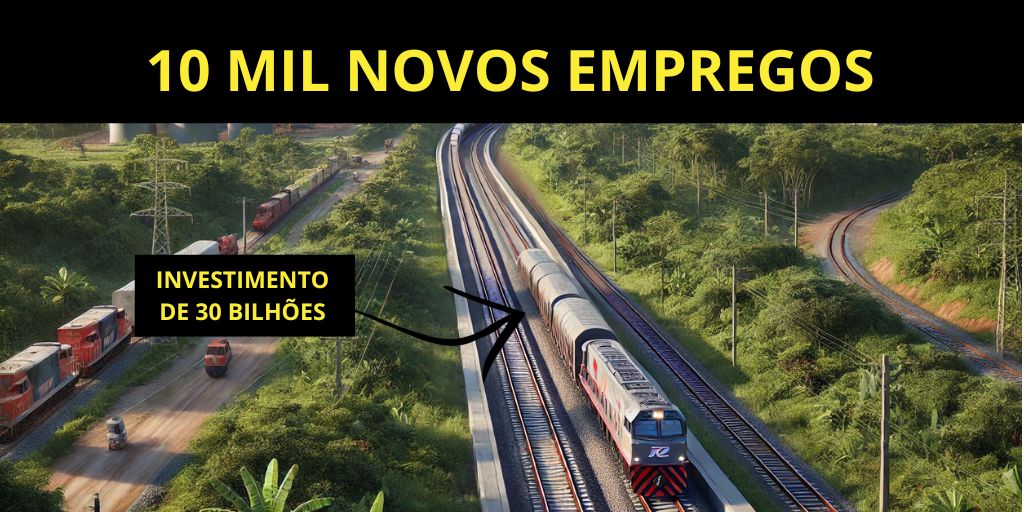
The Central Atlantic Railway (FCA), which already holds the title of the largest railway line in the country, is about to undergo a transformation that promises to elevate rail transport to a new level.
The early renewal of the concession, which involves an impressive amount of R$ 30 billion, is not just a financial commitment; it is a bet on the modernization of a vital sector for the national economy.
Billion-Dollar Investment in Infrastructure
According to information from VLI Multimodal, the controller of the FCA, 80% of this amount, or approximately R$ 24 billion, will be allocated to the railway’s infrastructure, including the acquisition of new wagons and locomotives.
-
Historic bankruptcy of Centauro shocks the market, and the century-old company puts more than 500,000 products, machines, and complete infrastructure up for online auction.
-
Unemployment rises again to 5.8% at the beginning of 2026, raising alarms about the end of temporary positions and its impact on the Brazilian job market.

-
Document organization can cut invisible costs in small businesses, a simple step that prevents waste, rework, and losses in daily operations.

-
Abandoned house for 15 years disappears in the woods, shocks owner with unrecognizable scenery and is reborn in an intense transformation after almost 90 hours of work in just 10 days.

The promise is that these resources will generate significant impacts on transport capacity, with a 46% increase in cargo volume, which could directly benefit industries such as agribusiness, steelmaking, and construction.
Renewal of the Concession: What’s at Stake?
With the signing of the new contract, scheduled to occur after public consultations that will extend from September 30 to October 7, Brazil’s railway landscape is expected to enter a new era.
This renewal, which guarantees the concession for another 30 years, includes fundamental improvements in 7,800 kilometers of tracks that cross eight states, from Minas Gerais to São Paulo, to the Federal District.
Public Participation and Project Update
According to ANTT (National Land Transport Agency), there are no significant obstacles that could block this process, and the reopening of the public participation process is seen as a crucial step to update the project according to local needs.
In addition, VLI highlights that another R$ 5 billion will be allocated for grants and compensations, with part of the resources directed to resolve urban conflicts in 35 cities and improve railway access to the Port of Aratu in Bahia.
Modernization of the Tracks and Expansion of Railway Capacity
This modernization doesn’t stop there. Investments are planned in new tracks in the Minas-Bahia and Minas-Rio corridors, which should strengthen the connection between strategic regions of the country.
The construction of new railway yards is another measure that promises to increase operational efficiency, avoiding delays due to trains waiting for oncoming traffic, ensuring greater safety and agility in transportation.
Economic Impact and Job Creation
According to information released by the controller VLI, in addition to the direct benefits for cargo transport, these investments are expected to generate around 10,000 direct jobs, boosting socioeconomic development in the regions served by the railway.
The impact of these billions of reais will still be felt in the coming years as construction progresses and new systems come into operation. The question remains: will the modernization of this railway be sufficient to meet the growing demands of the Brazilian economy over the next 30 years?





Demorou!
O certo era passar o trem do norte do país até o sul,e chegando nos portos do país,para serem transportados de navio 🛳️ até outros países.
Sim. Ferrovia é a solução logística de qualquer país.