





 Portuguese
  English
  Spanish
  3 min of reading
  0 comments


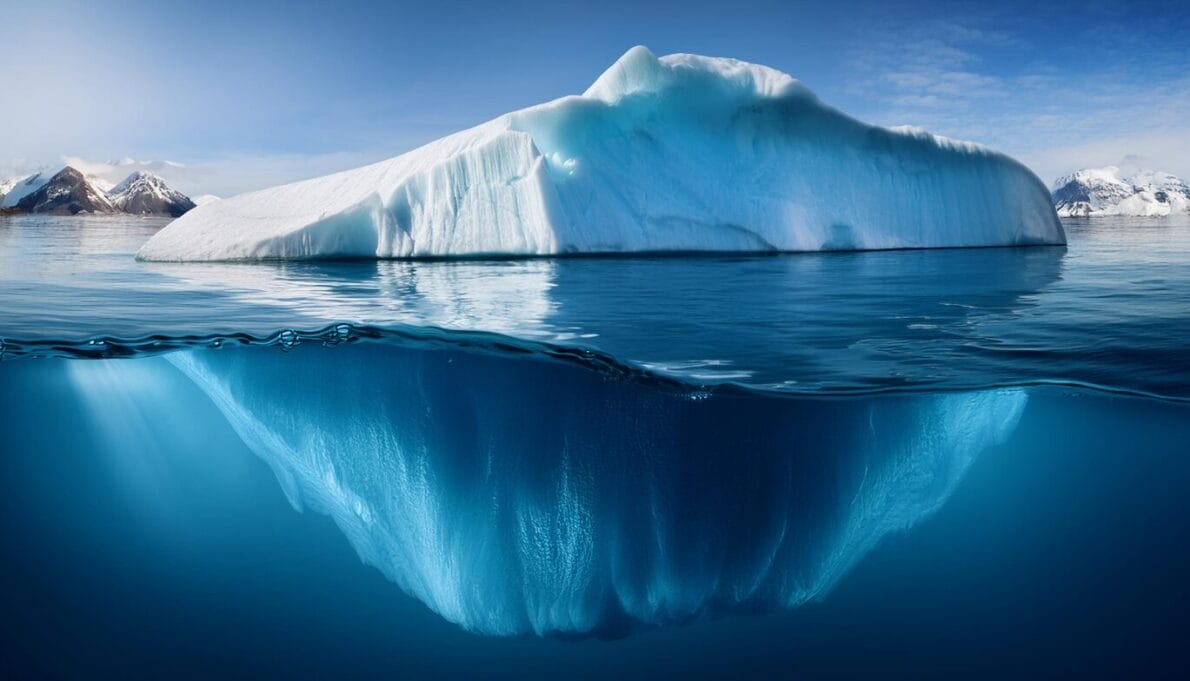
The A23a Iceberg, the Largest in the World, Fell into a “Maritime Trap” Known as Taylor Column. Trapped in a Rotating Motion Since April 2024, It Faces an Uncertain Future as Scientists and Curious Onlookers Monitor Its Struggle Against Time and the Forces of Nature. What Will Happen to This Ice Giant?
In a spectacle that seems more like a science fiction movie, the largest iceberg in the world, known as A23a, has found its fate in a “maritime trap” that keeps it spinning in endless circles.
Having broken away in the 1980s and drifted through the waters of the Southern Ocean for over three decades, this colossal ice block now faces an unexpected dilemma: it is trapped in a slow and mysterious dance, hindered from following its natural path toward destruction in warmer waters.
The Ice Giant That Challenges Time
The A23a is truly a giant. With an area of about 4,000 square kilometers, it is larger than many cities.
-
They were brilliant! Scientists discover that our ancestors in China were already making super advanced tools 160,000 years ago, changing everything we knew.

-
Scientists unveil 3 million years of climate secrets hidden in the ice of Antarctica.

-
Ancient farmers created “aggressive plants” that changed nature forever.

-
Astronomers find a “backward” solar system that ignores all the rules of space and leaves scientists scratching their heads!


This iceberg formed off the coast of Antarctica in 1986, and since then, it has remained remarkably intact, resisting the melting that would typically threaten an ice mass of this size.
Experts consider this an extraordinary feat, given the impact of climate change that has accelerated the melting of many other icebergs in the region.
However, the A23a has not remained static forever. In 2020, it began to move again, drifting through the Southern Ocean northward toward potentially warmer waters.
Many believed that the iceberg would finally melt upon reaching these waters, but instead, it fell into the so-called “maritime trap”: the Taylor Column.
The Taylor Column: The Enigma Behind the Circular Motion
What exactly is the Taylor Column, this invisible force that keeps the A23a imprisoned? Named after the British physicist Sir Geoffrey Ingram Taylor, who identified it, this phenomenon occurs when a current of water encounters an obstruction, such as the iceberg, and splits into two distinct flows.
This separation creates a rotating cylinder, an underwater column, that traps the iceberg in a continuous circular motion.
Since April 2024, the A23a has been to the north of the South Orkney Islands, rotating counterclockwise.
The water cannot pass over the iceberg, so it continues to move around it, keeping the A23a firmly trapped in its maritime dance.
The Uncertain Future of A23a: How Long Can It Withstand?
According to experts, the iceberg’s imprisonment in the Taylor Column could last for years, potentially delaying its complete melting.
This natural trap prevents the A23a from moving toward the warmer ocean waters, where it could finally succumb to the melting that many predict.
However, science still does not have a definitive answer on how long the iceberg can remain trapped in this rotation, or if the Taylor Column will eventually release it to continue its journey.

Environmental Consequences: The Impact of a Stationary Iceberg
The continued presence of the A23a in its current location also raises questions about environmental impact.
An iceberg of this size not only poses a potential threat to navigation but may also influence ocean currents and local marine life.
The ice that makes up the iceberg, as it breaks off and melts, can release nutrients into the ocean, impacting the biodiversity nearby.
On the other hand, the iceberg’s immobility may also provide opportunities for scientists to better understand the effects of climate change on iceberg behavior.
The situation of the A23a offers a unique window to observe how large ice masses interact with complex oceanic phenomena, such as the Taylor Column.
The Ongoing Fascination with A23a
The fate of the A23a continues to capture the imagination of both scientists and the general public. Its impressive size and remarkable resilience make it a symbol of the powerful and unpredictable forces shaping our planet. As the world looks on, questions about the future of this ice giant remain unanswered.







Seja o primeiro a reagir!