





 Portuguese
  English
  Spanish
  5 min of reading
  0 comments


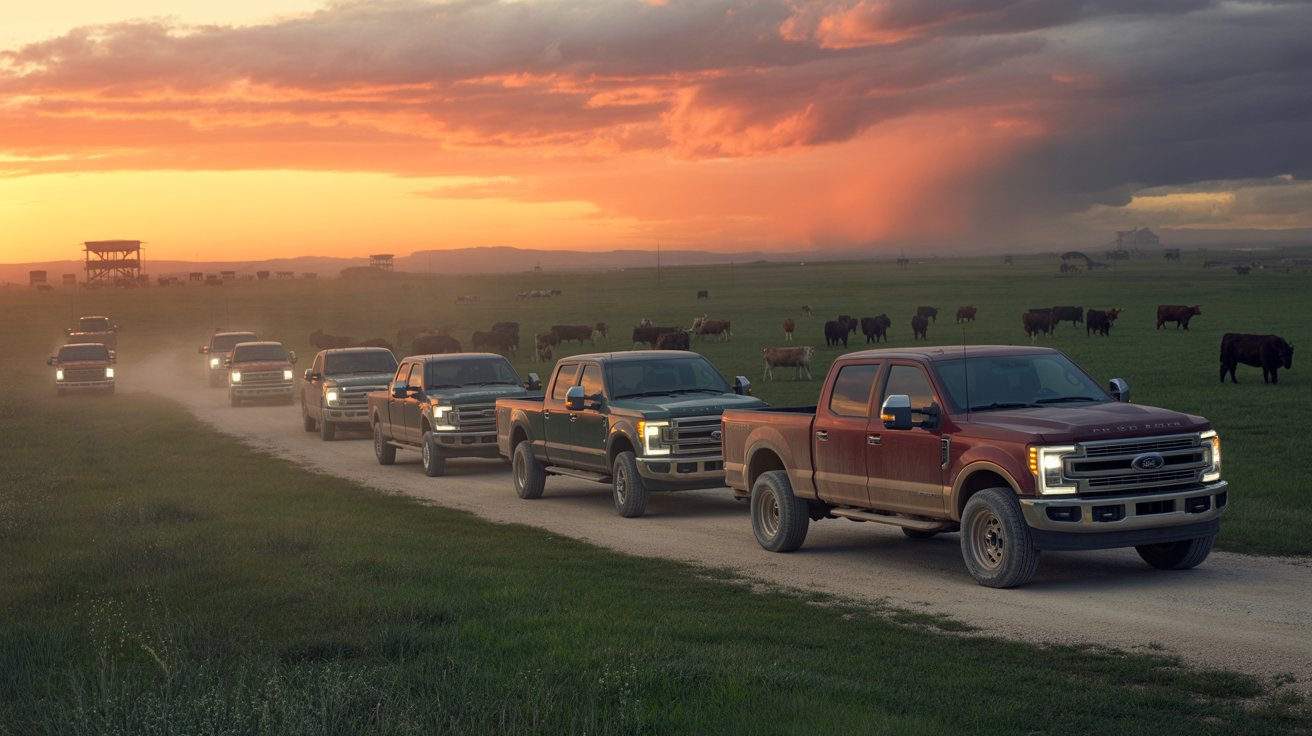
A simple message in an environment filled with vehicles, technology, and tradition reveals a curious detail that moves a giant of livestock and calls attention for its impact on the daily routines of highly organized logistical operations.
The King Ranch, one of the largest references in the global livestock sector, surprised everyone by releasing a video that shows its impressive fleet with over 250 Ford pickups operating simultaneously on its vast premises in Texas.
This is yet another example of how automotive technology has become essential for optimizing operations in the modern agribusiness, directly impacting the efficiency and performance of one of the largest rural properties on the planet.
The historical partnership between King Ranch and Ford exemplifies how innovation and tradition can join forces to transform the realities of the field, a sector that, traditionally, relies on established practices, but is increasingly turning to technology to modernize and become more competitive.
-
With around 6,000 residents on a single 9 km street, a village in Poland maintains a strong sense of community, cultivates strawberries and potatoes, and becomes the target of a false image created by artificial intelligence.

-
Sleeping at different times each day can be a bomb for your heart and even double your risk of having a heart attack.

-
Without help and without heavy machinery, a woman builds a house from scratch with stone, wood, and cement, erects a chimney, creates a complete leisure area, and transforms an empty lot into her dream home.
-
Couple transforms abandoned house after years of being closed; residence was overgrown with weeds, had a green pool, and a deteriorated structure in the interior of Rio de Janeiro.


King Ranch: More Than a Symbol of Livestock
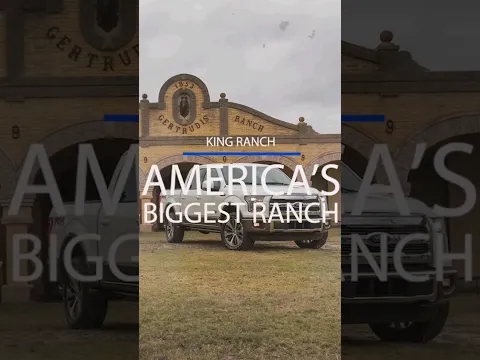
Founded in 1853, the King Ranch spans an impressive area of 825,000 acres, a larger area than the state of Rhode Island.
Located in the South Texas, the ranch crosses six counties, including Brooks, Jim Wells, Kenedy, Kleberg, Nueces, and Willacy.
Over the years, it has expanded its operations, crossing borders and becoming a strong name in livestock in various countries such as Cuba, Australia, Brazil, Argentina, Venezuela, and Morocco, in addition to having managed up to 8 million acres in Australia.
The ranch has been, throughout its history, an example of innovation in the agricultural sector, whether through the introduction of environmental conservation practices or pioneering in beef genetics.
Innovation in Livestock and Environmental Preservation
Since 1945, King Ranch has been dedicated to environmental preservation, creating areas for natural reserves that protect local wildlife and aid in the conservation of various species, including deer and Nilgai antelopes.
The property maintains over 1,500 breeding cows and around 20,000 commercial cows, with a pen that can accommodate up to 35,000 head of cattle.
In the field of beef genetics, King Ranch stands out for creating the Santa Gertrudis breed, considered the first breed of genuinely American beef cattle.
The crossbreed between Brahman and British Shorthorn resulted in an animal highly adaptable to hot climates and resistant to diseases, which ensured its popularity, especially in Brazil.

The Impact of King Ranch on Equine Culture
Aside from livestock, King Ranch also excels in raising Quarter Horses, one of the most well-known and sought-after breeds in the world.
Its Quarter Horse program has produced legendary animals such as WIMPY and MR SAN PEPPY, as well as the stallion ASSAULT, winner of the Triple Crown in 1946.
This legacy in equine culture continues to strongly influence Brazil, where the breed remains one of the most important.
Historical Partnership Between King Ranch and Ford
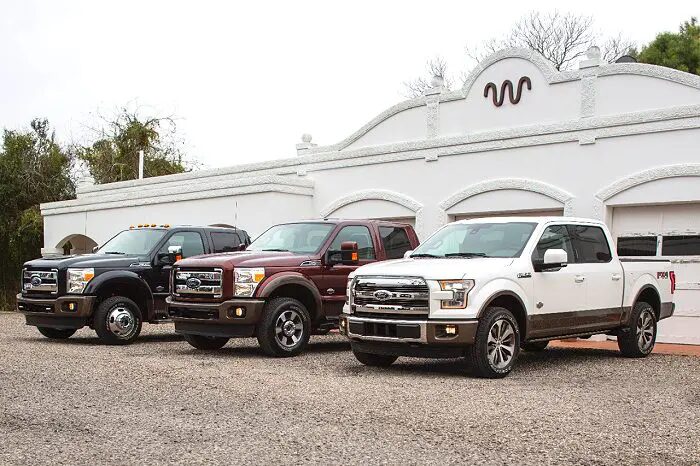
The partnership between King Ranch and Ford began in 1999, when the ranch licensed its name and “Running W” logo for a special line of F-Series pickups.
The first model released was the F-150 King Ranch, in 2001, which quickly stood out for its luxurious interior, featuring premium leather finishes and details inspired by saddles.
Subsequently, the partnership extended to the F-250 and F-350 models, which became icons of performance and sophistication.
These pickups, equipped with powerful engines such as the V8 and the Power Stroke diesel, captured the market, especially in rural environments, where robustness and comfort are essential for daily life.
The King Ranch line of Ford pickups is recognized for its cutting-edge technology, which combines comfort, performance, and durability, reflecting the ranch’s lifestyle.
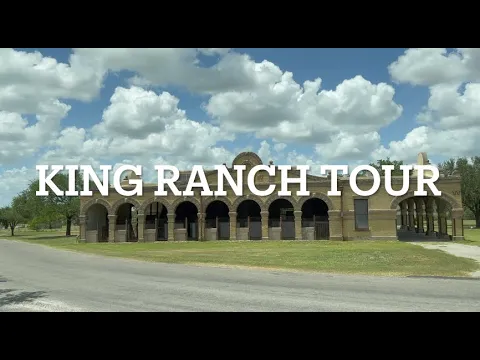
The Fleet of Ford Pickups at King Ranch
Currently, the King Ranch fleet exceeds 250 Ford pickups, which are used for a wide range of tasks essential for the functioning of the property.
From herd management, transporting supplies, supervising pastures to agropecuary logistics, these pickups play a crucial role in the operational efficiency of the ranch.
This extensive use of utility vehicles reinforces the importance of technology in agribusiness, especially on large properties like King Ranch, where the need for agility and performance is fundamental.
Each Ford pickup on the ranch is equipped to meet the challenge of traversing vast areas, ensuring that operations occur swiftly and efficiently.

The Role of Pickups in Modern Agribusiness
Automotive technology plays a vital role in modern agribusiness, especially regarding large rural properties like King Ranch.
The use of powerful, high-performance pickups such as the Ford F-150, F-250, and F-350 improves logistics and facilitates daily work in the field, allowing for greater productivity and efficiency in agropecuary management.
Additionally, these pickups also contribute to sustainability, as they are designed to be more fuel-efficient and reduce pollutant emissions, an important aspect for farms looking to align with modern environmental requirements.
The Legacy of King Ranch in Brazil
The impact of King Ranch is not limited to the United States. The history of the ranch and its innovations reached Brazil, where the breeding of Santa Gertrudis cattle and Quarter Horses has become benchmarks for many livestock producers and horse breeders.
The Santa Gertrudis breed, for example, has adapted perfectly to Brazil’s tropical climate, making it one of the most important for the Brazilian agribusiness.
The partnership with Ford has also made its mark in the country, where the King Ranch line of pickups has been utilized on various farms, highlighting the robustness and comfort that the pickups offer, facilitating work in the fields and contributing to the modernization of the rural sector.
Conclusion: A Union of Tradition and Innovation
The King Ranch represents the best of tradition and innovation in agribusiness, combining century-old practices with the most advanced technologies available on the market.
The partnership with Ford exemplifies how companies in the automotive sector can collaborate with large rural properties to enhance efficiency and productivity in the field.
The use of over 250 Ford pickups by the ranch is just one example of how automotive technology can be a crucial ally in the modernization of agribusiness, showing how strategic partnerships can boost success in the field.
What do you think about the use of technologies like these in Brazilian agribusiness? Do you believe that this kind of innovation could be the key to the future of the sector in Brazil?








Seja o primeiro a reagir!