






 Portuguese


Joseph Dituri lived 100 days at 6.7 meters underwater, lost nearly four kilograms, reduced cholesterol, and reported a sevenfold increase in testosterone, but researchers warn that this isolated case does not prove longevity or rejuvenation
In 2023, an impressive 100-day experiment in a habitat set 6.7 meters underwater near Key Largo, Florida, placed biomedical engineer Joseph Dituri under constant pressure and produced results that he now hopes to carry into larger studies. At 60 years old, the researcher reported changes in cholesterol, weight, sleep, inflammation, and testosterone; however, experts caution that a single case does not allow for conclusions about the anti-aging effects of prolonged exposure.
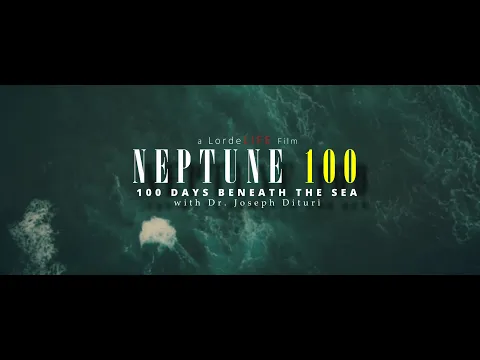

Dituri remained in the underwater habitat in 2023, subjected to a pressure of 1.6 atmospheres, equivalent to about 25 pounds per square inch.
-
Rare Deep-Sea Creature Surprises Scientists in the Pacific: Magnapinna Squid Spotted at 3,277 Meters, Measuring About 1.25 Meters with Long Arms Folding Like “Elbows”

-
Former Brazilian Chip Factory That Received Nearly R$ 1 Billion but Never Fully Operated Auctions 262 Machines with Initial Bids of R$ 83.1 Million and ASML Equipment

-
NASA accidentally punched 5 craters into Mars with its own spacecraft parts in 2021, and the size of the holes just proved a decades old formula for Mars landings wrong

-
In an old gold mine 4,850 feet under South Dakota, one dark matter candidate event has just 1 in 200 odds of being a fluke


The mission broke a world record, although, according to him, the primary intention was to observe how the body would respond to months in a pressurized environment.
The idea aligns with a question studied by hyperbaric medicine. Hyperbaric oxygen therapy, known as HBOT, is used for certain conditions such as decompression sickness and carbon monoxide poisoning.
However, Dituri’s experiment involved exposure for a much longer duration and had only the researcher himself as a participant.

Cholesterol Dropped 72 Points and Researcher Lost Almost 4 Kilograms
Among the changes reported after the 100 days were a 72-point reduction in cholesterol and a weight loss of nearly four kilograms, even without a change in diet.
Dituri also stated that he experienced a reduction in inflammatory markers, including cortisol, along with a significant increase in testosterone. Popular Mechanics described the result as a rise to seven times the previous level.
Not all changes were positive. The pressure during the submerged period compressed his spine and reduced his height by nearly two centimeters.
Before the mission, Dituri attempted to create a baseline comparison at home. He covered the windows and reduced the temperature of his residence in Tampa to approximate the conditions he would encounter in the habitat.
During the stay in the ocean, he reported spending twice as much time in REM sleep compared to the period on land.
Later, an electroencephalogram indicated greater brain coherence, described in the material as more efficient communication between neural networks.
Isolated case on the ocean floor does not prove increased longevity
The results drew attention, but are far from forming a scientific consensus. Neal Pollock, a diving physiology researcher at Laval University, notes that thousands of patients undergo daily sessions of hyperbaric oxygen therapy for a month or more under FDA-approved protocols.
According to him, however, the pressure conditions faced by Dituri on the ocean floor did not demonstrate a systematic relationship with increased life expectancy.
Israeli researchers whose studies on telomeres are cited in discussions about aging also stated that their findings were exaggerated and do not prove greater longevity.
Kinjal Sethuraman, medical director of the Hyperbaric and Diving Medicine Center at the University of Maryland Medical Center, advocates caution regarding these promises.
“This money would be better spent on healthier eating, regular exercise, stress reduction, restorative sleep, and community engagement. These are the pillars of healthy aging.”
Dituri himself acknowledges that his experiment has a central limitation: he was the only participant. The engineer defines the result as “an isolated case.”
Now, the attempt is to move from individual experience to a more robust study. Dituri has joined a project at Arizona State University linked to a candidacy for the XPRIZE Healthspan, a $101 million prize.
The proposal aims to test a similar hyperbaric protocol on 200 participants under more controlled conditions.
Sources used: Daily Galaxy, with information attributed to Joseph Dituri, Popular Mechanics, Neal Pollock, cited Israeli researchers, and Kinjal Sethuraman.


