





 Portuguese
  English
  Spanish
  6 min of reading
  0 comments


ASTROS-FOGOS System gains AI, 300 km missile, and R$ 3.4 billion air defense, redefining Brazil’s artillery
In March 2026, the Brazilian Army officially announced one of the largest transformations of its military structure with the publication of Ordinance EME/C Ex No. 1,703, restructuring the traditional ASTROS system into the new ASTROS-FOGOS program. According to reports from DefesaNet and CNN Brasil, the change consolidates offensive and defensive capabilities that previously operated separately under a single system, including rocket artillery, cruise missiles, and an unprecedented layer of air defense.
The modernization is driven by a cycle of investments enabled by legislation allowing up to R$ 30 billion outside the fiscal framework between 2026 and 2031. The result is the transformation of a system created in the 1980s into a multi-domain platform with advanced technological integration, positioning Brazil at an unprecedented strategic level in Latin America.
Original ASTROS System: history, exports, and Brazil’s rocket artillery concept
The ASTROS, which stands for Artillery Saturation Rocket System, is a multiple rocket launcher system developed by Avibras Aerospace Industry, based in Jacareí, São Paulo. Created in the 1980s, it became one of Brazil’s most exported defense products, being acquired by countries such as Saudi Arabia and Malaysia.
-
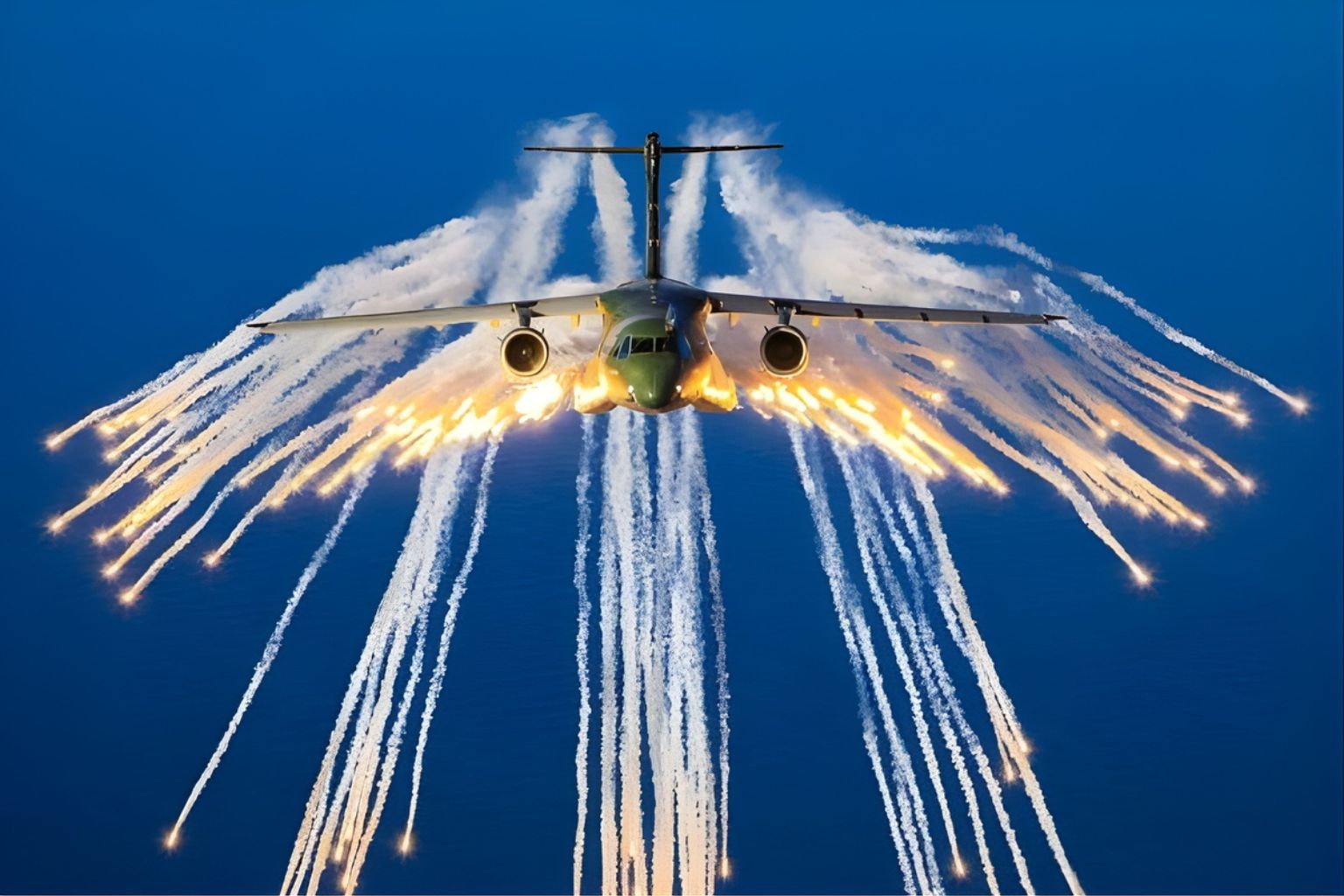
The largest military aircraft ever produced in Brazil, the KC-390 Millennium can carry up to 26 tons, refuel fighter jets in flight, and has already been exported to Europe and Asia, placing the country in the select group that designs and sells large military aircraft worldwide.
-
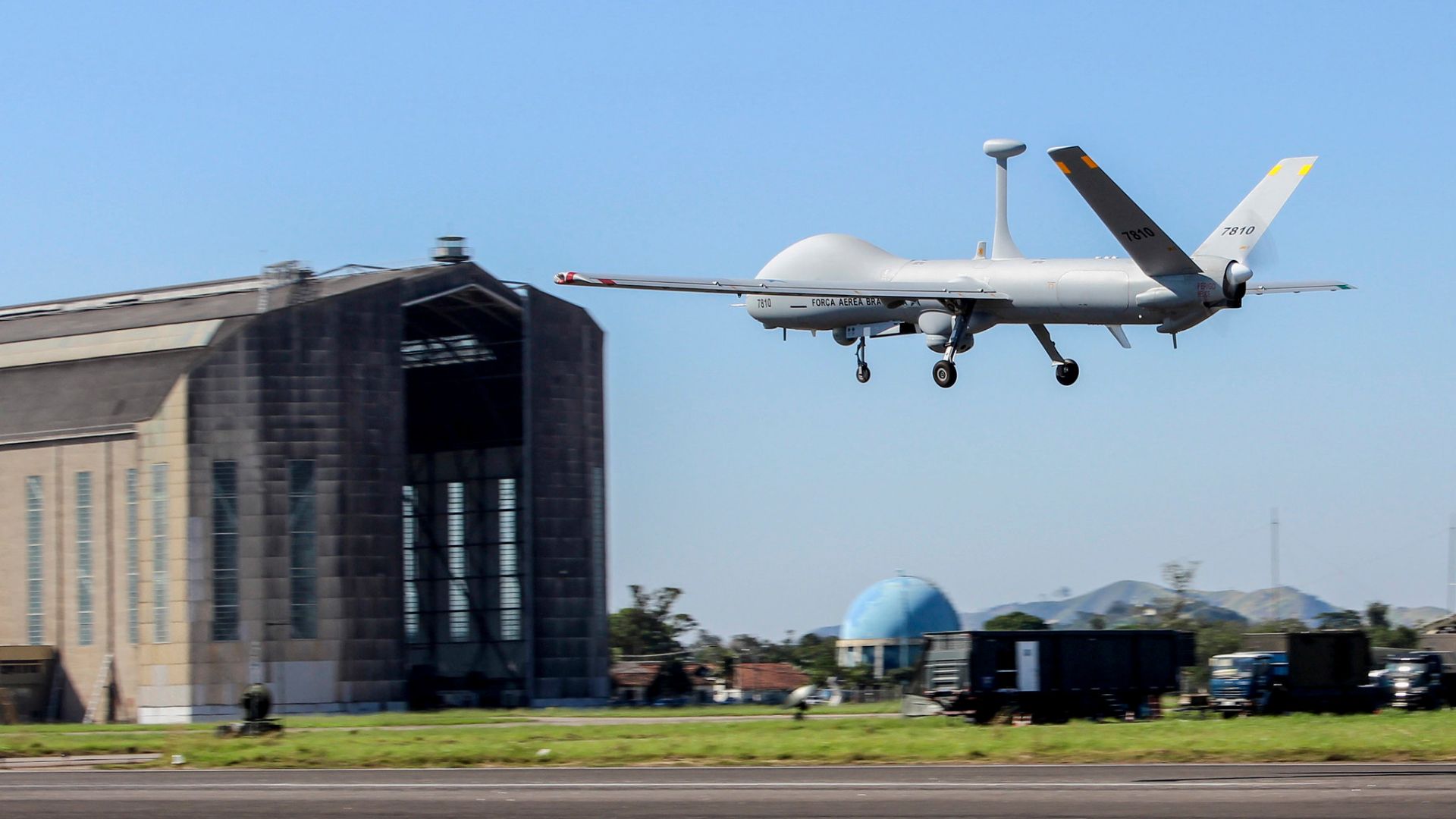
FAB loses Hermes 900 drone during multinational exercise in Mato Grosso do Sul and is left with only one active aircraft, raising concerns about operational fragility and strategic response capability.
-
The U.S. Army bets on the multifunctional MV 75 aircraft with cutting-edge technology that promises to revolutionize modern warfare by combining extreme speed, greater range, and unprecedented operational efficiency.

-
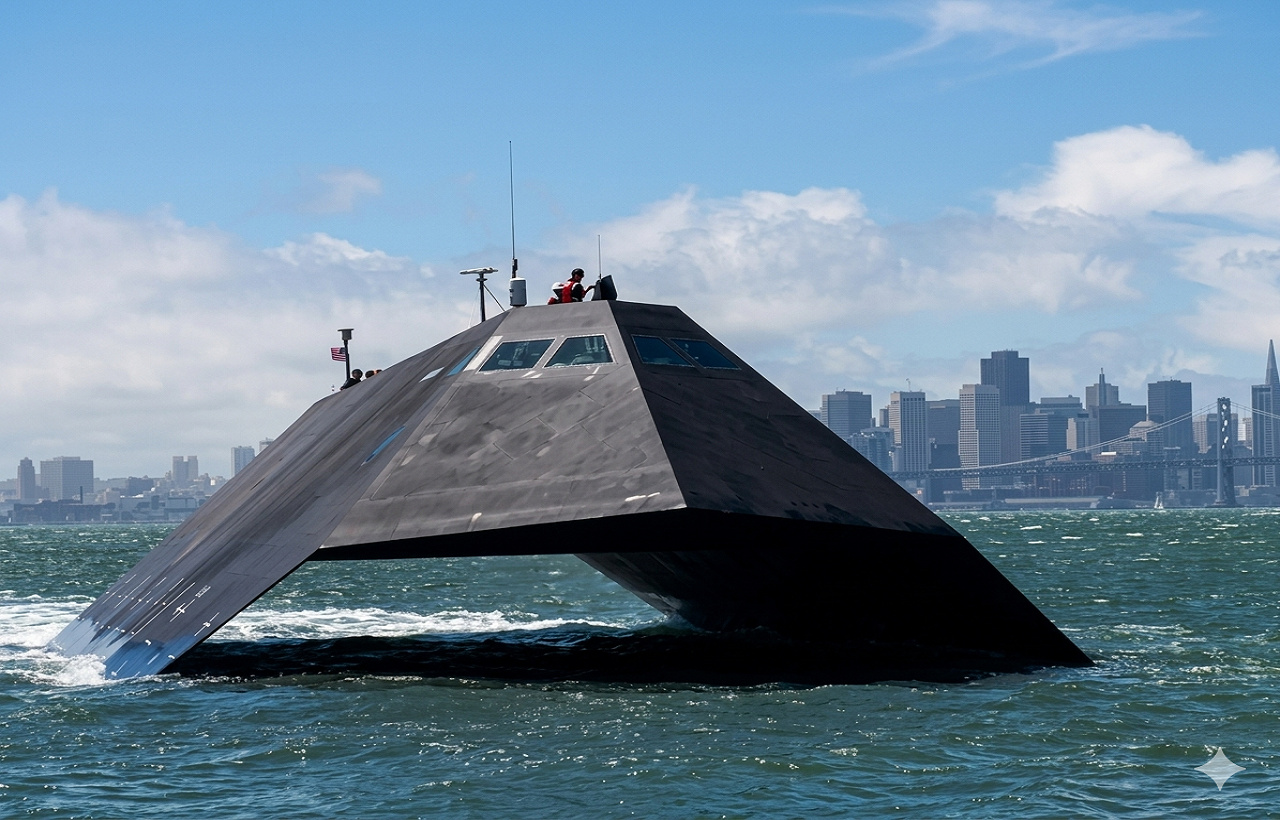
Built in secret inside a barge with a satellite-proof roof, the 49-meter, 560-ton ship with stealth technology deflected radar waves like an F-117 fighter, sailed invisibly for nearly 10 years at night, and, despite costing 170 million dollars, ended up being dismantled and sold as scrap for only 2.5 million.


Mounted on Tectran trucks, the system operates with rockets of different calibers, ranging from 127 mm to 300 mm, capable of hitting targets tens of kilometers away. Its doctrine is based on the shoot-and-scoot concept, where the vehicle fires quickly and changes position before being located.
This operational concept, validated in real conflicts, has established the ASTROS as one of the most efficient artillery systems in its category on the international scene.
MTC-300 cruise missile: 300 km range and 9-meter accuracy changes Brazil’s capability
The most significant evolution of the program is the MTC-300, Brazil’s tactical cruise missile with a range of up to 300 kilometers and a circular error of less than 9 meters.
Unlike traditional ballistic rockets, the MTC-300 operates at low altitude, with guided navigation and the ability to circumvent obstacles. This allows it to hit strategic targets such as bridges, command centers, and ammunition depots with high precision.
This capability transforms the system from an area saturation platform into a long-range precision strike vector, positioning Brazil in a select group of countries with this technology.
Fort Santa Bárbara in Formosa: strategic base of Brazil’s missile artillery
To operationalize this new capability, the Brazilian Army established Fort Santa Bárbara in Formosa, Goiás, as the headquarters of the Missile and Rocket Artillery.
The location in the Central Plateau provides strategic coverage over large areas of national territory and proximity to Brasília. The complex was designed to house launchers, command systems, depots, and maintenance infrastructure.
This is the first Brazilian military unit dedicated exclusively to the operation of cruise missiles, representing a structural leap in the country’s deterrence capability.
Avibras crisis and impact on the ASTROS-FOGOS program
The development of the system faced significant challenges due to Avibras’s financial crisis, which entered judicial recovery. The situation compromised schedules and put the continuity of the program at risk.
This fragility exposed a structural limitation of the Brazilian Defense Industrial Base, dependent on a few companies for strategic projects. The restructuring of ASTROS into FOGOS also arises as a response to this vulnerability.
The centralization of the program seeks to reduce operational risks and ensure continuity even in the face of industrial instabilities.
ASTROS-FOGOS: three subprograms integrate artillery, missiles, and air defense
The new ASTROS-FOGOS program has been organized into three main axes:
- The first is Air Defense, with the acquisition of a system valued at up to R$ 3.4 billion, capable of intercepting drones and cruise missiles.
- The second is the Missile and Rocket Artillery System, which includes the ASTROS and the MTC-300.
- The third is conventional Field Artillery, with howitzers and cannons.
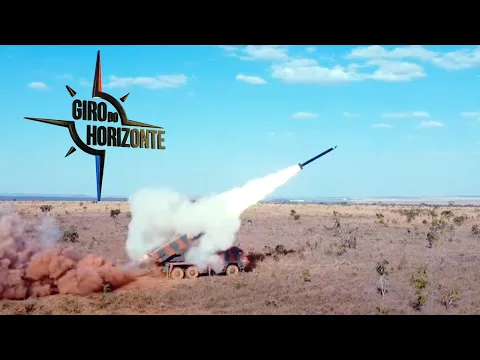
The integration allows centralized coordination, greater operational efficiency, and combined use of offensive and defensive capabilities, which is essential in modern conflicts.
Brazil’s air defense: R$ 3.4 billion investment against drones and missiles
The creation of an air defense layer represents a profound strategic change. Until then, Brazil did not have a system capable of intercepting cruise missiles and armed drones at medium altitude.
Recent conflicts have demonstrated that low-cost drones can destroy high-value military equipment. The planned investment aims to eliminate this vulnerability. The new capability places Brazil at a technological level that no other country in Latin America currently possesses.
New strategic portfolio of the Brazilian Army includes AI, drones, and cyber warfare
The restructuring of ASTROS-FOGOS is part of a broader redesign that created a portfolio with seven strategic programs:
Armored Forces, SISFRON, ASTROS-FOGOS, Sentinel, Army Aviation, AI and Cyber Defense, and Cyber Development.

The explicit inclusion of artificial intelligence and drones in the programs indicates a doctrinal shift. These technologies are now treated as central to modern military operations.
R$ 30 billion investment drives Brazil’s military modernization until 2031
The modernization is supported by a complementary law approved in 2025, which allows investments of up to R$ 30 billion outside the fiscal framework.
The annual budget of the Army has nearly doubled, reaching about R$ 3 billion per year between 2026 and 2031. The resources will finance projects such as SISFRON, Centauro II armored vehicles, Hermes drones, and modernization of Guarani vehicles.
This investment cycle is considered a strategic window for recovering historical delays in Brazilian defense.
Modern conflicts influence the evolution of ASTROS-FOGOS and military doctrine
The restructuring was strongly influenced by conflicts in Ukraine and the Middle East, which highlighted the importance of precision artillery, drones, and integrated air defense.
Systems like HIMARS have demonstrated the effectiveness of mobile launchers with guided munitions. The ASTROS-FOGOS operates on the same concept but with significantly greater range. The integration with AI and sensors positions the Brazilian system in an advanced category of modern warfare.
The shoot-and-scoot doctrine remains central. The system fires quickly and moves before being located. With the integration of artificial intelligence, route and position calculations can be automated, reducing exposure time.
This capability is essential in scenarios where drones and sensors make any fixed position highly vulnerable.
ASTROS exports prove reliability and international relevance
The ASTROS has been exported to countries such as Saudi Arabia and Malaysia, being used in real operations. This experience has consolidated its international reputation. Unlike many systems, it is not a prototype, but a field-tested piece of equipment. This history strengthens the credibility of the ASTROS-FOGOS program on the global stage.
The system has evolved from a saturation rocket launcher to a multi-domain platform that combines:
- Long-range precision strike
- Air defense
- Conventional artillery
- Integration with AI
- Coordination with drones
This transformation follows trends observed in systems like HIMARS and Iskander. If fully implemented, ASTROS-FOGOS could become the most advanced artillery platform in Latin America, consolidating Brazil as one of the few countries with integrated precision strike and air defense capabilities in the southern hemisphere.








Seja o primeiro a reagir!