





 English
  Francês
  Alemão
  Italiano
  Japonês
  Norueguês
  Portuguese
  Spanish
  3 min of reading
  0 comments


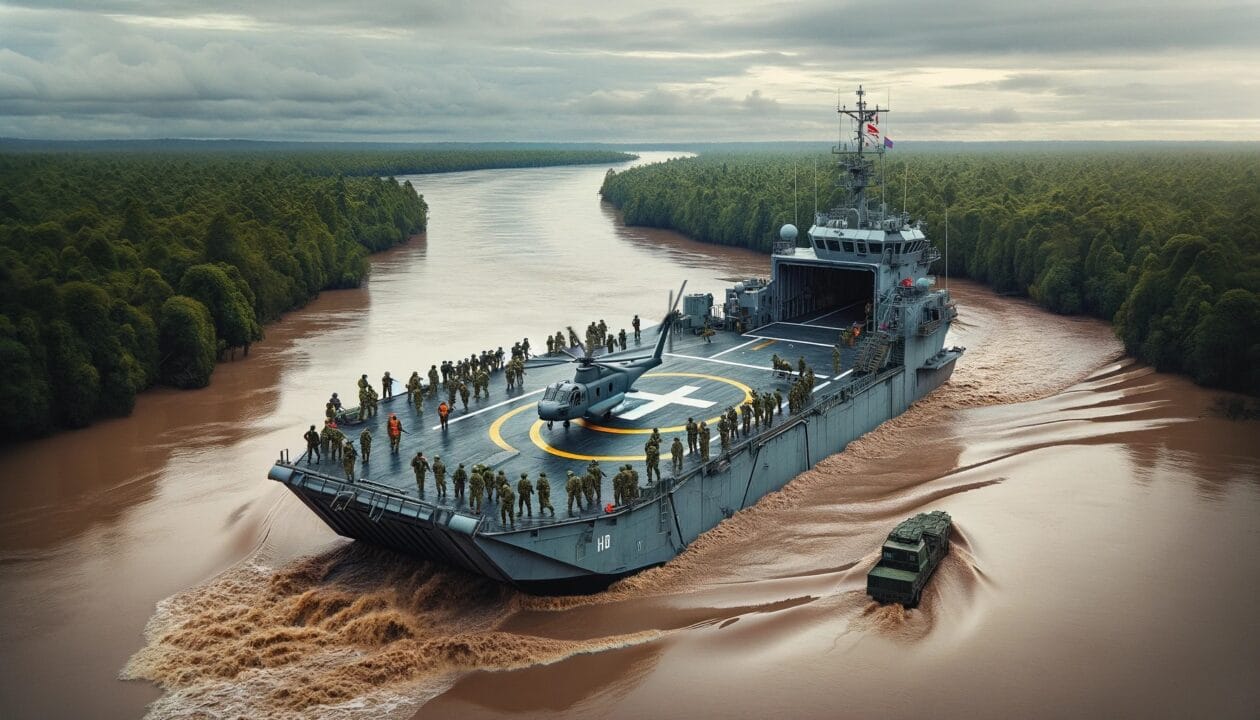
Know The Battleship Of The Brazilian Navy That Is Still Active Today. All The Details About The Parnaíba Ship That Fought Against Germans In World War II.
For many people, the information that, during World War II, more sailors lost their lives on the Brazilian coast than the heroic soldiers of the Brazilian Expeditionary Force (FEB) in Italy may come as a surprise. It is in this context that the epic Monitor Parnaíba makes its debut, affectionately nicknamed “Jaú of the Pantanal” and “Master Cave of the Fleet” – the oldest war ship still active in the Brazilian Navy.


The Parnaíba Ship is 86 years old and is a monitor-class war ship, designed to support naval patrols and operations. According to data, the U.S. has some older ships from World War II, but none are still active. The oldest active ship in the U.S., the USS Blue Ridge, was commissioned in 1970. All have become museum ships and serve as heritage.
Monitor Ship Parnaíba – U 17 Is One Of The Oldest Active In The Brazilian Navy
The Russians have a much older active ship, the Russian ship Kommuna, which was launched for the first time during the reign of Tsar Nicholas II in 1913 under the name Volkhov. However, it is a rescue ship and is unarmed.
-
Historic bankruptcy of Centauro shocks the market, and the century-old company puts more than 500,000 products, machines, and complete infrastructure up for online auction.
-
São Paulo surprises the world with a colossal railway network project that promises over 1,000 km of tracks, R$ 194 billion in investments, and 40 projects connecting the capital to the interior with fast and sustainable trains.

-
The world’s largest escalator, measuring 905 meters in China, reduces urban travel time from 1 hour to about 20 minutes and transforms mobility in mountainous regions with an engineering solution adapted to the terrain.

-
New shoe factory in Ceará is expected to create 400 jobs and strengthen the local economy.


Although it is part of the Russian Navy, Kommuna is a civilian ship, specialized in training divers and underwater searches, unlike the Parnaíba ship, which still serves as a war ship today. The Monitor Ship Parnaíba – U 17 from World War II bears this name in honor of the river in Piauí.
Parnaíba Ship Defended Brazilian Coast In World War II
The ship was built by the Arsenal of the Navy of Ilha das Cobras, now AMRJ. A homegrown production, unlike several in the Brazilian Navy. Its keel was laid on June 11, 1936, by then President Getúlio Vargas, it was launched and baptized on November 6, 1937, with the First Lady, Mrs. Darcy Sarmanho Vargas, as its sponsor.
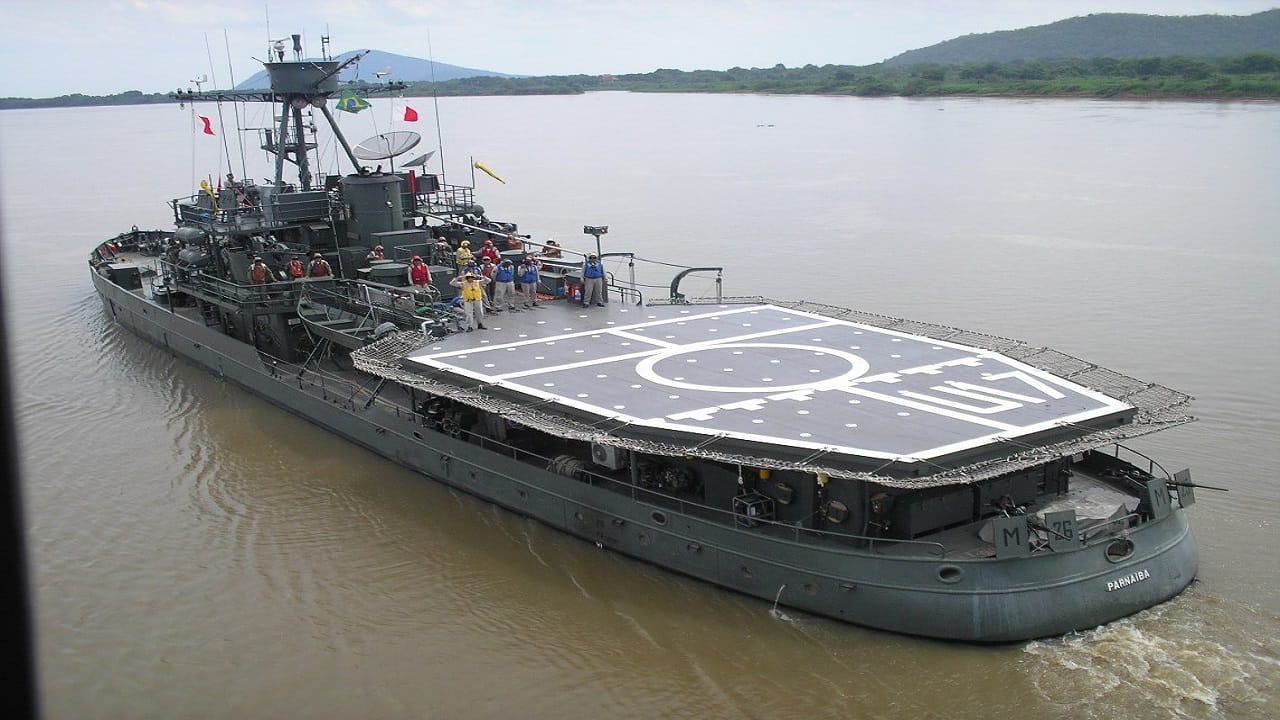
The Parnaíba ship from World War II was developed for river operations and still operates today in the waterways of Ladário, Mato Grosso do Sul, since its incorporation into the Flotilla of Mato Grosso on March 4, 1938. That year, it had already suffered a fire in its boiler room.
Incredibly, it carried out hundreds of missions during World War II with a steam engine, until its conversion to a diesel engine in 1999. The Parnaíba was called to fight in World War II and would have to go to sea, defying its river nature.
It faced its first test when German submarines invaded the Brazilian coast and were bombarding ships of the Brazilian Navy, hitting around 33 of them, some of which sank, killing hundreds of Brazilian sailors.
Updates Made To The Warship Of The Brazilian Navy
The main modifications made to the War Ship were the replacement of the heavy 152mm gun with a 120mm one similar to that of the Paraguassu, more suitable for engaging an enemy submarine on the surface and with more abundant ammunition. The two 47mm guns next to the bridge were retained, but the 87mm mortars on the aft superstructure were replaced with two 20mm anti-aircraft machine guns.
Another four were installed on a platform built in the area over the ship’s bridge. Finally, the Parnaíba ship from World War II was equipped with depth charge chutes at the stern, modifications that the Paraguassu also underwent.
Currently, the Parnaíba ship is participating in some new mission for the Brazilian Navy in the silent waters of the Pantanal for the sake of the border security of our homeland. This still makes it exactly like it was when facing the fierce German and Italian sharks during World War II.








Seja o primeiro a reagir!