





 Portuguese
  English
  Spanish
  2 min of reading
  0 comments


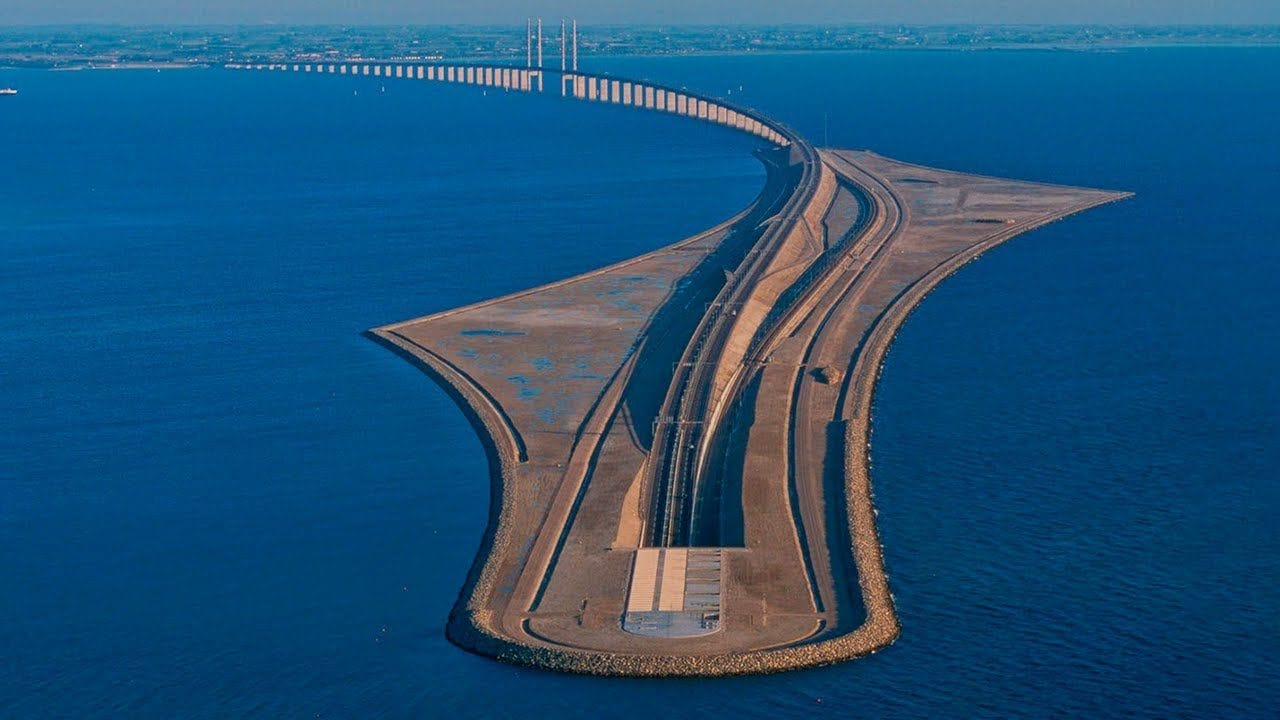
From Impossible Challenge to Impressive Reality, Discover the Story and Details of the Bridge-Tunnel That Revolutionized Europe
A megaproject that seems like something out of a Tarantino movie, but is pure reality: the Öresund Bridge, this engineering marvel that connects Denmark and Sweden. Denmark, known for its breathtaking landscapes and delicious chocolate, and Sweden, with its cold climate and rich culture, decided to unite in an audacious project.
And It Worked! The Öresund Bridge is One of the Most Innovative and Successful Constructions in Modern Engineering
This beauty has a 8 km length, including a roadway and railway that dives into a 3.5 km underwater tunnel. In total, there are 12 km connecting the two nations, and that’s not all: the bridge has one of the largest spans in the world, measuring 490 m, and a pillar height of 204 m. Is that easy or do you want more?
The idea of connecting Denmark and Sweden across the Øresund Strait had been studied for some time. In 1991, the governments of both countries hammered out the details and decided it was time to make this dream a reality, choosing Copenhagen and Malmö, the two largest cities in the region, as the connection points.
-
Florianópolis will receive a million-dollar BRT that will begin construction in 2026 with nearly 400 million in funding from the federal government and the Inter-American Development Bank, and the map already shows the routes for the exclusive bus corridors.

-
Without a blueprint, without an engineer, and using scrap from the dump, a father spends 15 years building an 18-room castle for his daughter, featuring tram tracks, 13 fireplaces, and over 700 m², which may now be demolished.

-
A megaproject worth R$ 89 billion is advancing in Iraq and promises to change the game in global trade by creating a new corridor between Asia and Europe, reducing traditional routes and repositioning the country as a logistics powerhouse.

-
Goodbye bedside table: floating shelves become a trend in 2026 by freeing up space in the bedroom, improving circulation, bringing visual lightness, and integrating technology without taking up floor space.


The Challenges of the Megaproject
Dubbed “the impossible bridge,” the construction began in 1995 and was a true puzzle. The engineers had to get creative to overcome the obstacles of this megaproject, such as the need for a structure that allowed large ships to pass and the proximity to Copenhagen Airport.
One of the big tricks was the creation of an artificial island, Peberholm, which served as the starting point for the tunnel. This island was built with dredged materials from the sea floor. Seriously, isn’t it an engineering masterpiece?


Before Deadline and Within Budget
The bridge was completed six months ahead of schedule and respected the budget of $4.5 billion. This shows that, with planning and teamwork, it’s possible to achieve wonders.
Today, the bridge not only makes life easier for those traveling between Copenhagen and Malmö, but it has also become a tourist attraction. Moreover, it is an example of how large projects can be successful with planning and cooperation.
Here in Brazil, we are keeping an eye on a similar megaproject to connect Santos and Guarujá. If all goes well, who knows, we might have our own “impossible bridge”?








Seja o primeiro a reagir!