





 Portuguese
  English
  Spanish
  9 min of reading
  0 comments


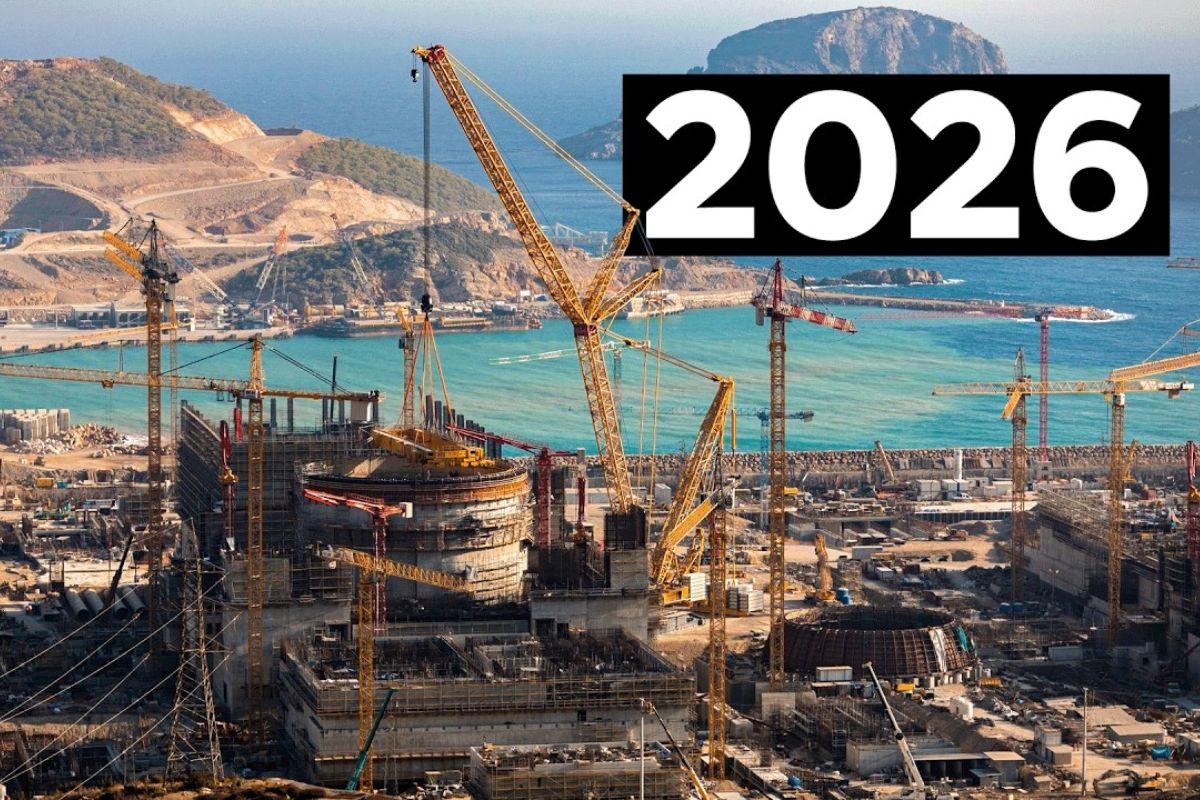
Colossal Megaprojects Listed For 2026 Include Danjiang Bridge In Taiwan, New Detroit Windsor Bridge, Long Tan Airport In Vietnam, Western Sydney Airport, Rupur Nuclear Power Plant In Bangladesh, Akkuyu Nuclear Power Plant In Turkey And ELT Telescope, Along With Subways, Stadiums, Museums And Offshore Wind Farms With Phases, Tests, Capacity And Timelines.
In 2026, the promise is not only to remember old models but to see colossal megaprojects crossing the finish line. The calendar includes bridges, airports, nuclear power plants, and telescopes in final stages, summing transportation, energy, and science at a scale that alters routes, supply chains, and urban life.
This overview also exposes the weight of the final stretch: some colossal megaprojects already carry date changes and depend on testing and integration, while others arrive with concrete milestones, such as final sections installed, runways completed, turbines in partial operation and railway lines with inauguration schedules announced for 2026.
Bridge In Asia And Border Bridge Carrying Records And Delays

In Taiwan, the Danjiang Bridge enters 2026 with an expected opening in May.
-
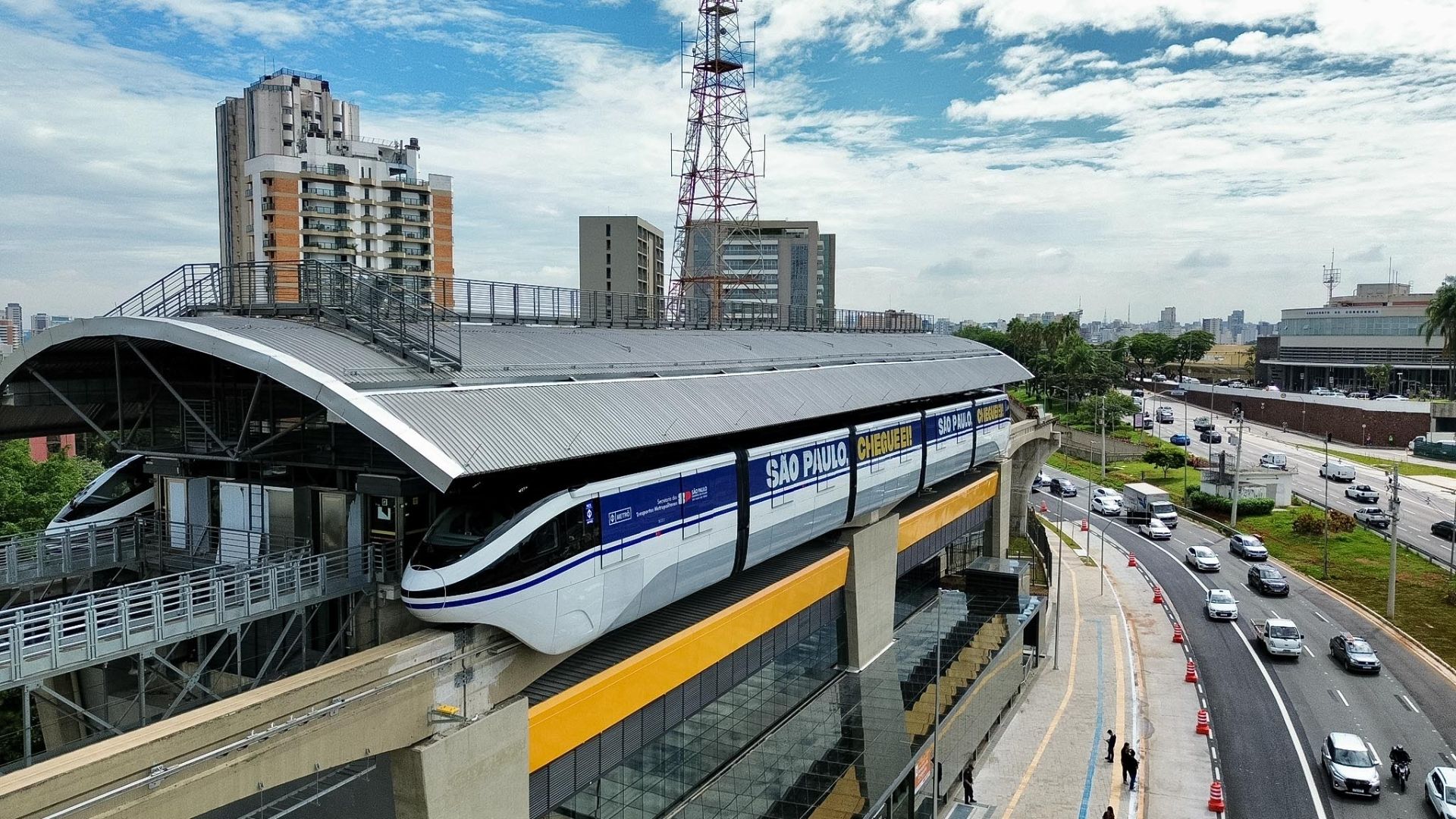
Congonhas receives the monorail promised for the 2014 World Cup after more than a decade of delays and becomes the first airport in Brazil with integrated subway.
-
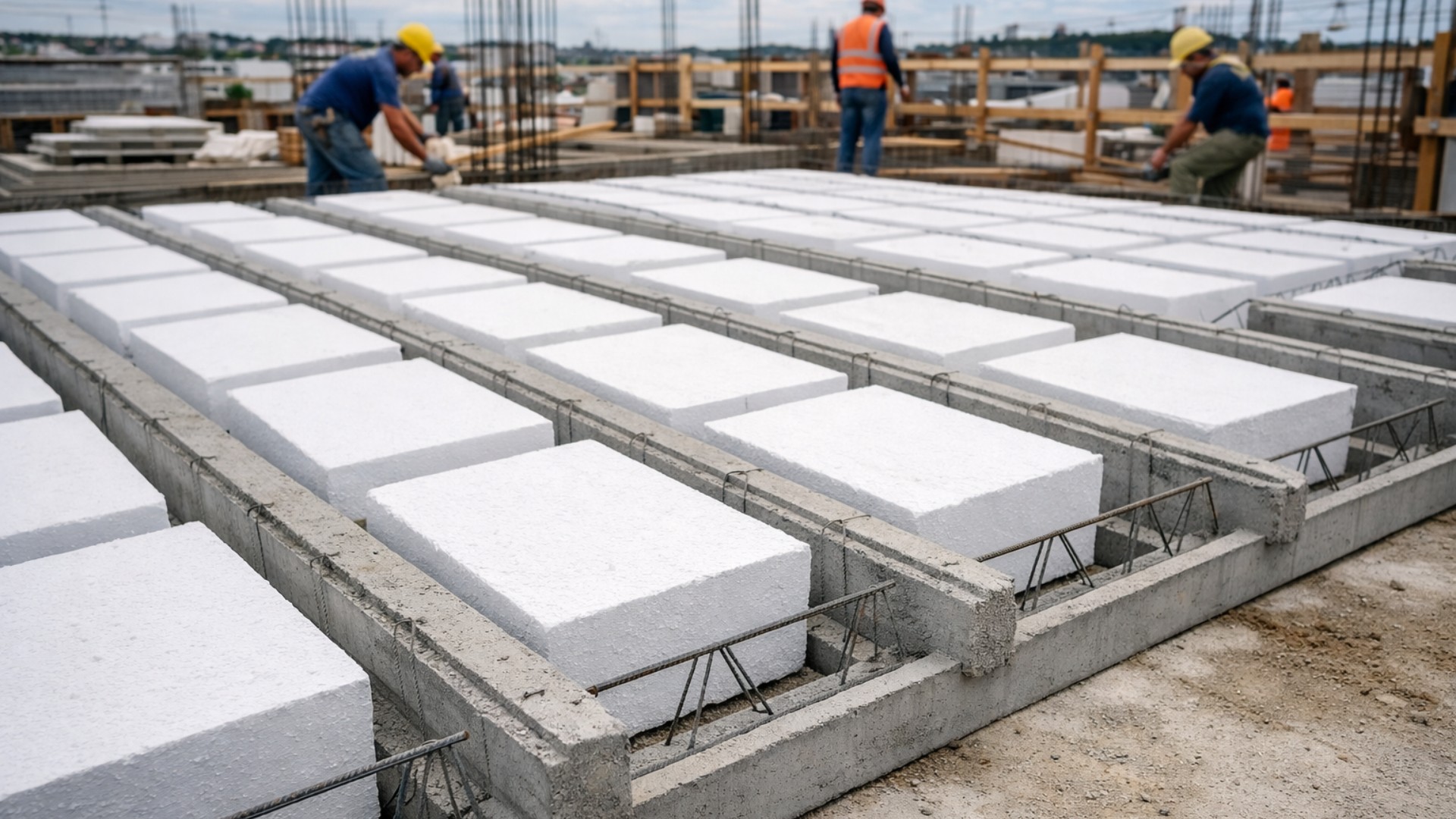
Goodbye, concrete: a new trend in civil construction reduces the weight of the structure by up to 30%, accelerates projects by up to 40%, cuts costs on steel and labor, and improves thermal insulation with EPS.
-
Russian engineers create an innovative propeller blade for aircraft that could completely change the way airplanes and helicopters operate.

-
Couple finishes building PVC chalet on the beach on the last day, with air conditioning and curtains, but discovers the bathroom drain is inverted: water escapes from the drain, risking breaking the floor, and the rush continues before the trip.


The design, attributed to architect Zaha Hadid, combines 920 meters long with a single 200-meter pylon, making it the longest single-tower cable-stayed bridge in the world.
The final section was already installed in September 2025, and the bridge is set to connect Bali and Tamsui in New Taipei, creating a direct axis between areas that currently rely on longer routes.
Between Detroit and Windsor, the international bridge named after Gordy Howe is set for early 2026 after successive revisions.
The crossing spans 2.5 km and has been described as poised to become the longest cable-stayed bridge in all of North America.
The two towers were designed to resemble hockey sticks in motion, and the overall structure enhances a corridor that already hosts an almost century-old bridge, deemed narrow and less accessible.
Construction began in 2018, the main deck has been completed since 2024, and the opening has shifted from 2024 to 2025, eventually being rescheduled for early 2026.
Airport As An Expansion Piece: Vietnam, Australia, And India

In Vietnam, Long Tan Airport appears as a new aviation hub with an expected opening in 2026.
The project has been under construction since 2021, the main terminal is nearing completion of its structure, and the first runway has already been finished.
Teams have begun calibration flights to check instruments, runway, and taxiways, with a goal to open with 25 million passengers annually and to alleviate Tansson Nut International, described as Ho Chi Minh’s main airport.
Future phases expand the ambition to 100 million passengers per year, with four terminals and four runways, positioning the airport as a candidate to be one of the largest in the world.
In Australia, Western Sydney International Airport has been presented as infrastructure capable of reorganizing the city itself.
The construction of the main terminal was completed by mid-2025, and the project has entered the internal finishing phase.
The design is attributed to Zaha Hadid Architects and the office of Cox Architecture, featuring a wood-inspired covering to give the terminal a more welcoming appearance.
The stated strategy is to use the airport to pull new business districts, transportation links, and planned communities around it for many years.
In India, Noida International Airport is progressing towards full implementation in 2026 with phase 1 described as nearly completed.
Passenger and cargo terminals and one runway have been noted as operational, with limited domestic flights used to test systems.
When phase 1 is fully opened, the estimated capacity is 12 million passengers per year.
The final plans scale up to five runways and up to 300 million passengers per year in its full form.
Energy: Nuclear Power, Offshore Wind, Dam And Green Hydrogen

In Bangladesh, the Rupur Nuclear Power Plant in Pabna is expected to start operations at some point in 2026 as the country’s first.
The declared total capacity is 2.4 gigawatts, described as sufficient to power millions of homes and reduce reliance on fossil fuels.
The progress has been associated with system tests, with mention of reactor function tests cited as recent.
In Turkey, the Auyu Nuclear Power Plant also aims for 2026 and has been described as using the same Russian-manufactured reactors mentioned for Rupur.
The difference is scale: four reactors, 4.8 GW of total capacity, and an estimate to generate about 10% of the country’s annual energy consumption.
The report includes participation from nearly 2,000 Turkish companies in the construction and the forecast for the first reactor to begin operations in 2026.
In the North Sea, the Dogger Bank offshore wind farm has been introduced as poised to become the largest in the world, with 8.1 GW of combined capacity.
Monopiles for the first phases have already been installed, some turbines have started generating electricity for the grid, and the total planned reaches 377 turbines in a relatively shallow area.
The installation has been described as dependent on a ship built to transport components and lift structures with cranes onboard.
The completion has been associated with 2026. The same overview also mentions the Sophia wind farm as a project expected to conclude in 2026.
In East Africa, the Great Ethiopian Renaissance Dam reaches 2026 as the announced year for full operations, with all turbines in operation.
By 2025, seven of the 13 turbines had already been installed, and the indicated annual estimate is up to 15.7 terawatt-hours of electricity.
The stated ambition is to export surpluses and turn the project into a piece of engineering and regional dispute.
In the context of industry and decarbonization, the Green Hydrogen Project of Neom, located in Oxagon, has been presented with a value of US$ 8.4 million and 80% construction completed.
Once operational, the declared goal is to produce up to 600 tons of green hydrogen per day, with energy from a mix of 4 gigawatts of solar and wind being deployed on site, integrated into an industrial ecosystem with a state-of-the-art port and floating structures.
Telescope And Observatory: The Engineering That Measures The Invisible
The Extremely Large Telescope, identified as ELT, has a completion date set for 2026 as an engineering landmark to create the largest optical telescope in the world.
The structure must reconcile resistance to wind and earthquakes with enough precision for extremely sharp observations, even bearing the mass of the mirrors.
The telescope includes an infrared sensor to see ranges that the human eye cannot capture and has been associated with studies of exoplanets, primitive galaxies, and dark matter.
The cited expectation is that the telescope will make its first test observations in 2029.
The CTAO, described as the Cherenkov Telescope Array Observatory, scales up by operating as a network of over 60 telescopes between La Palma, Spain, and the Atacama Desert in Chile.
The goal is to detect high-energy gamma rays associated with explosions and extreme cosmic events.
In 2026, the expectation is to execute intermediate array configurations, with partial versions already operational that have been described as superior to current gamma-ray observatories.
Height, Culture, And Mobility: Towers, Museums, Subway, And Railway
In Austin, the Waterline has been described as the tallest skyscraper in Texas, with 74 stories and a height exceeding 300 meters.
The structure reached its top in August, and total completion is expected for 2026, promising luxury apartments, large office areas, and a luxury hotel at the base.
In Ivory Coast, the Tour F was presented at 421 meters and as a candidate to dethrone the tower in Egypt as the tallest in Africa.
The local contrast cited is with the Tour D, at 120 meters, and the project appears as the most recent step in a modernization program for the administrative capital launched in the late 1970s, which has already raised Towers A, B, C, D, and E.
In Abu Dhabi, the Guggenheim Abu Dhabi has been rescheduled for 2026 after being mentioned as planned for 2025 and suffering budget constraints.
The museum has been described as a $1 billion project, featuring a collection of contemporary Arab, Islamic, and Middle Eastern art, on an island a few minutes from downtown, within a cultural district alongside institutions like the National Museum Zad, the Louvre, and the British Museum.
In Paris, the Grand Paris Express is advancing as a massive subway expansion, with four new lines and extensions of two existing ones.
Line 18, which has already begun testing, is expected to open partially in 2026, including the section from Massive Palzo by Christmas, with the remainder expected to open gradually between 2027 and 2030.
Lines 15, 16, and 17 have been associated with operation before 2031.
The construction site has been described with over 20 tunnel-boring machines operating simultaneously to open hundreds of kilometers of new tunnels.
In southern Germany, the Stoodka 21 rail project has been described as controversial and aims for a December 2026 inauguration of a new central station with testing throughout the year.
The intervention repositions the station by 90 degrees, changing the arrival logic of tracks and opening the way for new approaches, as well as creating over 50 km of tunnels under busy areas.
The report highlights massive concrete columns that support a curved ceiling, allowing natural light into the platforms below.
Stadiums And Public Works: Tight Schedule And Partial Opening
In Orchard Park, New York, the Buffalo Bills are building a new stadium in front of the old one, with an open location, natural grass, and capacity for about 62,000 spectators.
The work began in 2023, the roof has already been described as completed, and the plan is to open in 2026.
In Barcelona, Camp Nou is undergoing reconstruction and system updates, with renovations to the third level, changes in viewing angles, an expansion of parking, and improvements in VIP services.
The projected capacity rises to 105,000 spectators, above the original 99,000. The report includes thousands of workers in 2025, a new field installed, partial reopening in November 2025, and the intention to reopen the stadium by 2026.
Civil Aircraft And Military Aircraft: Deliveries Between 2026 And 2027
In commercial aviation, the Boeing 777X appears with first deliveries expected between 2026 and 2027.
The project includes foldable wing tips to fit standard gates and hangars and uses the GE9X engine, cited as one of the largest commercial jet engines in the world, with a promise of up to 10% more fuel efficiency compared to its predecessor.
In military aviation, the B-21 Raider has been described as a next-generation bomber, with initial low-rate production and deliveries expected to start in 2026.
The modular design has been presented as key to facilitating upgrades, allowing the aircraft to receive new technologies and systems over time.
What Separates Delivery From New Delay In Colossal Megaprojects
Signs of maturity appear in objective milestones: bridge deck completed, final section installed, airport terminal completed in structure, runway ready with calibration, turbines generating power, and subway lines in testing.
In colossal megaprojects, these indicators are often the point at which the work moves from heavy construction into the realm of integration and assisted operation.
But the recent history weighs heavily.
The international bridge between Detroit and Windsor was mentioned as planned for 2024, then 2025, and now early 2026.
The Stoodka 21 carries rumors of yet another delay. The 777X still has an open window between 2026 and 2027, and part of the CTAO is working with intermediate configuration in 2026, not with a full network.
The final stretch is where testing, certification, and compatibility can take months.
The 2026 snapshot shows why colossal megaprojects become a barometer of engineering: a record bridge, an airport in phases, a nuclear power plant in first operation, and a telescope that requires millimeter-precision compete for the same calendar.
To keep track seriously, it is worthwhile to monitor milestones such as testing, calibration, turbine installation, and partial openings, and compare what was announced with what is effectively on the ground.
Comment on which schedule you consider more solid and which project should be on the radar for potential delays.
Which of these colossal megaprojects do you believe is most at risk of slipping beyond 2026: bridge, airport, nuclear power plant, or telescope?









Seja o primeiro a reagir!