





 Portuguese
  English
  Spanish
  3 min of reading
  3 comments


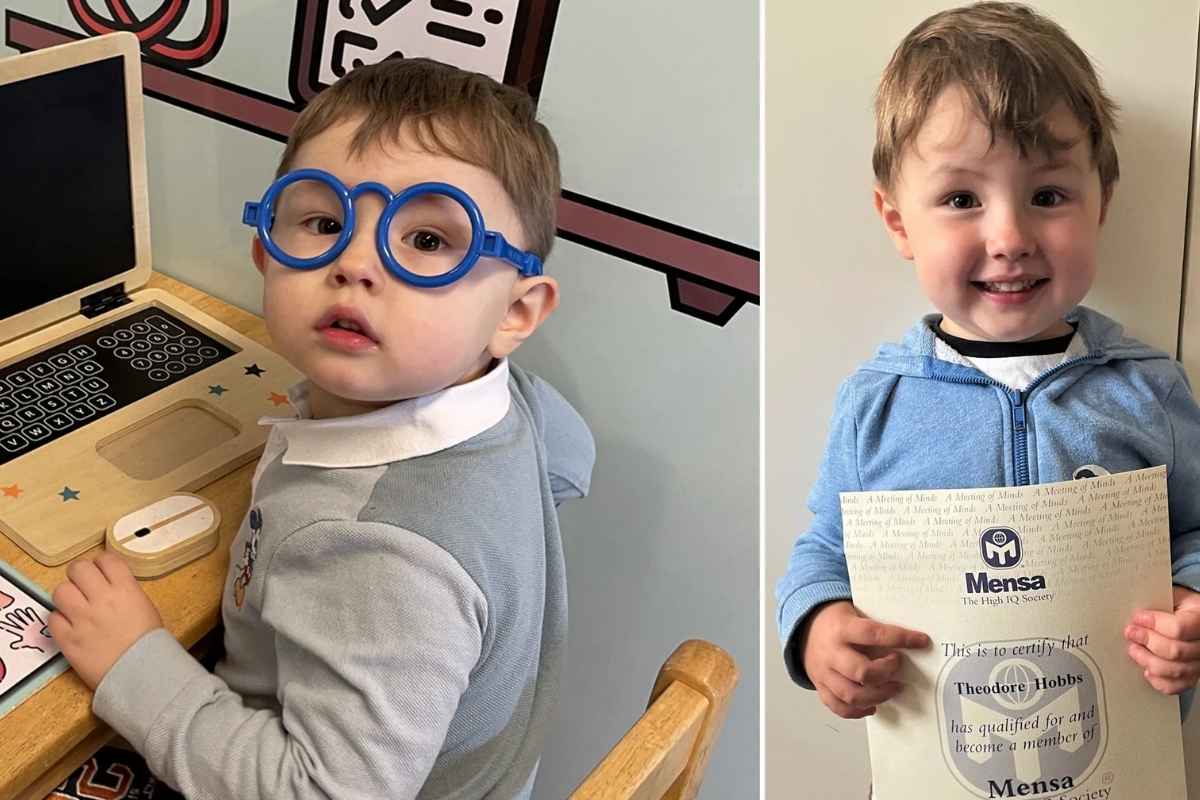


The British Gifted Boy Teddy Hobbs, Who Learned to Read on His Own at Two and Counts to 100 in Seven Languages, Became the Youngest Member of Mensa in the United Kingdom After Achieving an IQ of 139 and Demonstrating Cognitive Abilities Equivalent to Those of an Eight-Year-Old.
At just three years old, the gifted boy Teddy Hobbs caught international attention by being accepted into Mensa, a global society that brings together people with high IQs. The British prodigy learned to read on his own at the age of two and, before turning five, was already able to count to 100 in seven different languages, including Mandarin, Welsh, and Korean.
The feat, which surprised even experts, was confirmed after an evaluation using the Stanford-Binet test, in which Teddy achieved a 139 IQ, a result that places him in the 99.5th percentile for his age. The case has reignited the debate about the early development of cognitive and emotional skills in gifted children.
The Early Beginning of Genius
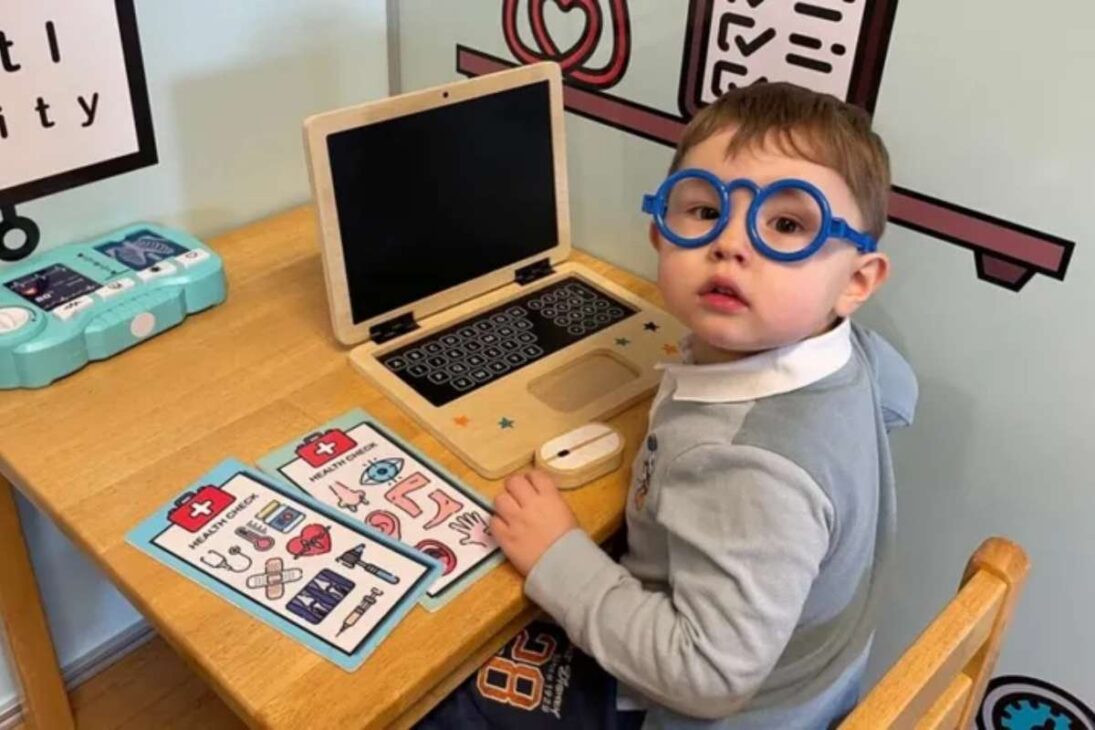
At 26 months, Teddy was already recognizing letters and complete words, a skill he learned in a self-taught manner, watching educational programs and repeating sounds and letters seen on television.
-
A scientist proved with a thermal camera that the fan does not cool the environment but reduces the temperature of your skin by up to 6 degrees thanks to a natural mechanism of the human body that almost no one understands how it really works.

-
Scientists find a new explanation for the origin of Earth, which may have formed solely from material close to the Sun, changing an old theory and indicating that Jupiter may have been the cause of it all.

-
Brazilian beaches are among the most contaminated in the world by cigarette butts, with levels up to 40 times above the global average and areas where this waste already represents the majority of all the trash found.

-
2,000-Year-Old Machine Gun: Roman weapon found in Pompeii fires arrows at 109 m/s with an automatic gear mechanism, leaving perfect geometric patterns on the walls and proving its real use in the siege of 89 B.C.


His parents, Beth and Will Hobbs, noticed their son’s talent when he started reading children’s books on his own without help.
As the months passed, his curiosity expanded to linguistics.
Teddy began counting in different languages, something his parents only discovered by chance when they heard him reciting numbers in Mandarin while playing with a tablet.
In addition to English, he masters counting in French, Spanish, German, Welsh, Mandarin, and Korean.
The Path to Mensa
During the isolation period caused by the pandemic, the parents decided to seek a formal evaluation after noticing that their son’s learning pace was far above what was expected for his age.
The test conducted by Mensa revealed that his reading and word recognition skills were equivalent to those of an 8-year-and-10-month-old child.
As a result, Teddy became the youngest member of Mensa in the United Kingdom, at the age of 3 years and 9 months.
The organization only accepts individuals who are among the 2% most intelligent in the population, and Teddy’s results far exceeded this threshold.
Education, Curiosity, and Emotional Balance
Despite his extraordinary intelligence, the parents state that they strive to maintain a balanced and pressure-free childhood.
They emphasize that Teddy has typical interests for children his age; he enjoys building blocks, watching cartoons, and playing outdoors, but displays a voracious curiosity for reading and learning.
Beth Hobbs shares that her son prefers to receive books instead of sweets or toys, and he spends hours reading stories and exploring new topics.
“We want him to know that having gifts doesn’t make him better than anyone else. Other children have different talents, like running faster or drawing better,” she stated.
A New Look at Gifted Children
Experts highlight that cases like Teddy Hobbs reinforce the importance of identifying and nurturing early talents without overburdening the child emotionally.
The line between encouragement and excessive demand is thin, and families of gifted children need guidance to balance intellectual and social development.
Studies indicate that, in many cases, children with high cognitive abilities also face emotional challenges, such as anxiety, perfectionism, and socialization difficulties.
Therefore, appropriate educational support is essential to transform potential into healthy and lasting learning.
A Promising Future Still Under Construction
Now just a few years older, Teddy continues to surprise his parents and teachers with his accelerated learning pace.
There are still no plans to accelerate his formal education, but the family assures that the most important thing is to preserve the joy of learning, without turning talent into pressure.
Do you think gifted children should have specialized education from an early age, or is it better to preserve the pace of childhood? Leave your opinion in the comments; we want to know how you view the balance between genius and childhood.










A infância passa rápido…o melhor é deixar ele sentir o prazer desse momento infantil.
Um novo Einstin se a família souber explorar, precisa usar essas mentes para resolver os problemas da sociedade como a cura de doenças auto imune, baterias com carregamento instantâneo…
mais um pedreiro em formação