





 Portuguese
  English
  Spanish
  3 min of reading
  0 comments


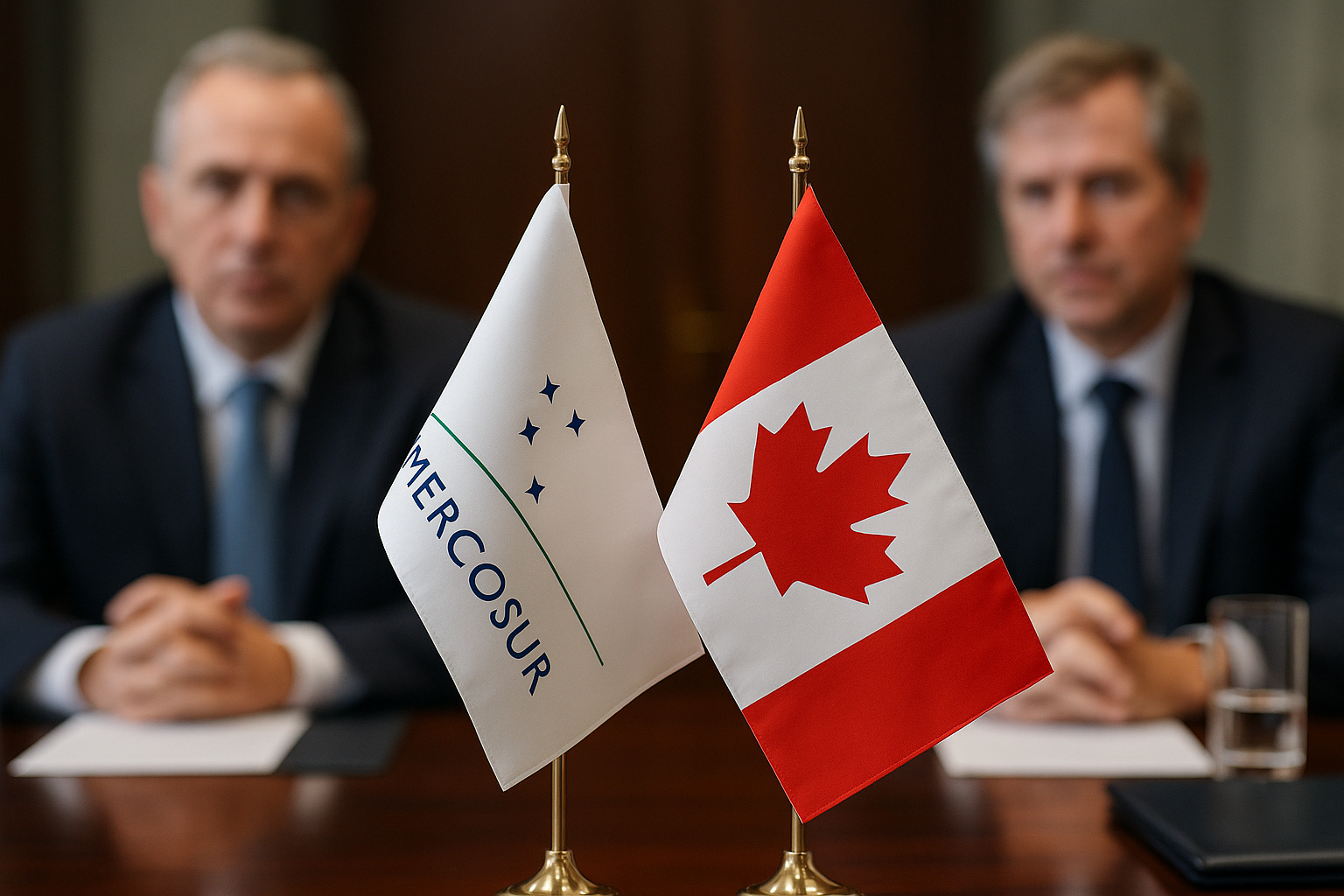
Dialogue Rounds Progress Between Economic Blocks Focused on Unlocking the Agreement and Expanding Trade Relations
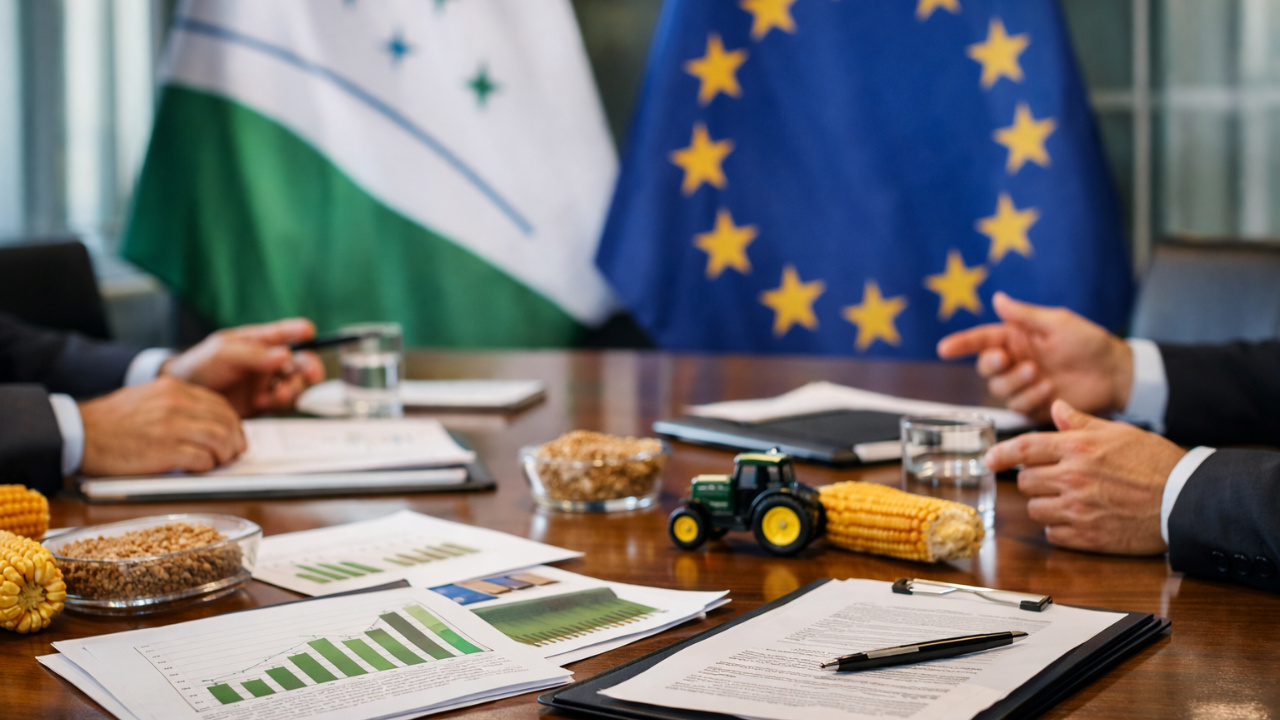
The Mercosur and Canada intensified, on Thursday (October 9, 2025), negotiations to conclude a free trade agreement.
The talks will continue until Friday (October 10), aiming to update commitments and strengthen relations between the South American bloc and the North American country.
Additionally, negotiators and technical teams from the four member countries of Mercosur — Argentina, Brazil, Paraguay, and Uruguay — are participating alongside Canadian representatives to assess progress, pending issues, and priorities.
The meeting is being coordinated by the Ministry of Development, Industry, Trade, and Services (MDIC).
It also includes direct participation from the government of Luiz Inácio Lula da Silva (PT).
Among the main agenda points are:
-
Middle East War Hits Fertilizers and Transportation and May Strain Brazilian Wallets
-
Russia Considers Suspending Gas to Europe After Surge in Energy Prices
-
How A War Thousands of Miles From Brazil Started Disrupting Global Shipping Routes, Raising Container Costs, and Putting Up to 40% of Brazilian Beef Exports at Risk
-
Iran-U.S. War Drives Up Oil Prices and Pressures Global Financial Markets

- Market Access and Rules of Origin;
- Trade Facilitation;
- Technical Barriers;
- Sanitary and Phytosanitary Measures;
- Services and Investments;
- Government Procurement, Intellectual Property, and the Environment;
- Competition;
- Support for Micro and Small Enterprises;
- Labor, Trade, Gender, and Indigenous Peoples.
These topics reflect the search for modern and balanced agreements, similar to those signed with Singapore, the European Union, and EFTA.
The EFTA is a bloc that includes Norway, Switzerland, Iceland, and Liechtenstein.
As highlighted by the Secretariat of Foreign Trade, these results serve as a reference for new rounds of updates.
They also reinforce Mercosur’s role as a relevant player in international trade.
Alternative to US Sanctions
Meanwhile, the Brazilian government seeks to diversify its external markets in light of the tariffs imposed by the United States in August 2025.
On August 6, an additional 40% tax was applied on Brazilian products.
This mainly affected fish, fruits, footwear, and meat, which now have additional taxes of up to 50%.
Thus, the dialogue with Canada became an alternative strategy to reduce the impacts of the American barriers.
In September, between October 10 and 12, ApexBrasil and the Ministries of Industry and Foreign Affairs led a business mission in Toronto.
The purpose was to increase bilateral trade and strengthen strategic partnerships.
According to the MDIC, Brazilian exports to Canada reached US$ 6.3 billion in 2024.
They were boosted by gold, aluminum, steel, machinery, aircraft, equipment, and coffee.
These products continue to be among the main items of interest in the new round of negotiations.
Continuity and Active Diplomacy
The Lula government emphasizes that the current dialogue is a result of the visit by the Canadian Minister of International Trade, Maninder Sidhu, to Brazil in August 2025.
On that occasion, he met with the Vice President and Minister of Industry and Trade, Geraldo Alckmin (PSB).
The meeting reinforced the mutual commitment to deepen economic relations.
Thus, this week’s meeting marks another decisive diplomatic step towards a comprehensive trade agreement.
This agreement could strengthen Mercosur on the global stage.
Amid tariff tensions and the search for new markets, the understanding between Mercosur and Canada emerges as a solid alternative to diversify exports.
It also aims to generate competitiveness and reinforce Brazil’s role in multilateral negotiations.
After all, the world is watching: will this be the step that consolidates the new axis of American trade?







-

Uma pessoa reagiu a isso.