





 Portuguese
  English
  Spanish
  5 min of reading
  0 comments


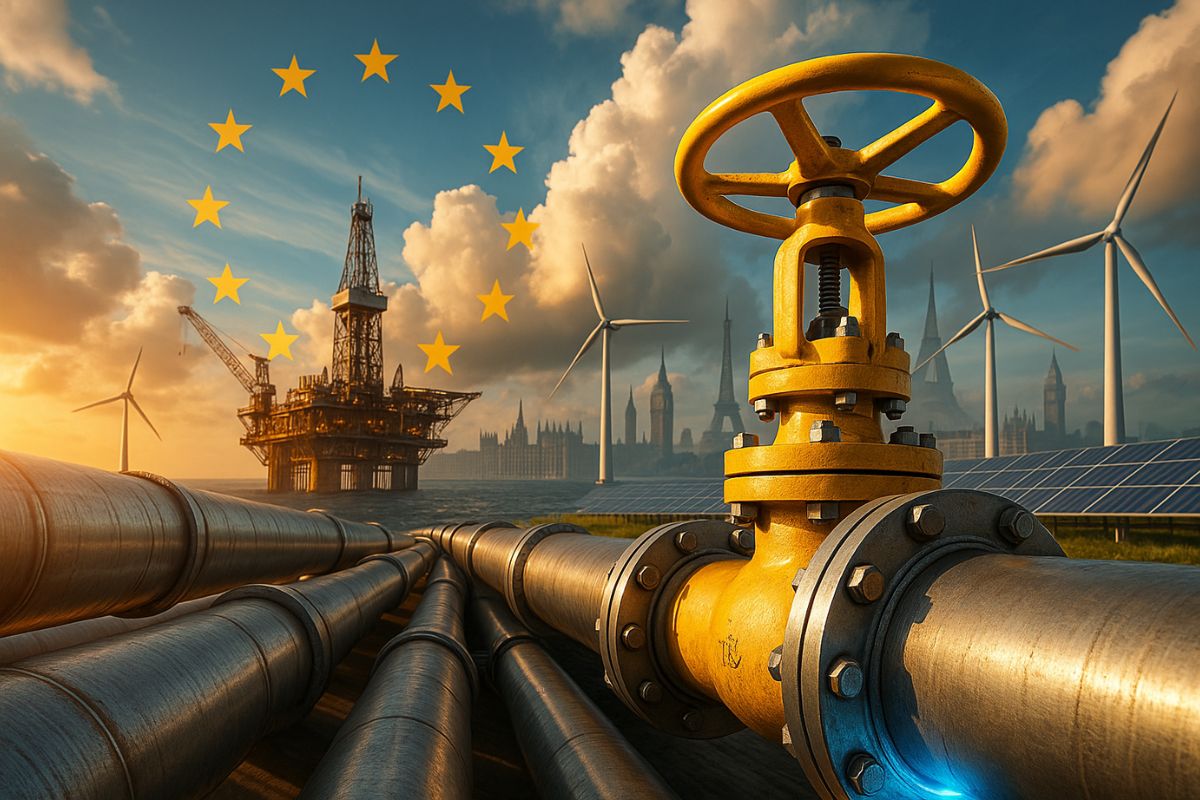
Energy Giants Resume Bet On Natural Gas And Push Climate Goals Further Away
With climate goals increasingly distant and pressure for firm electricity supply, energy giants are betting on natural gas as a central piece of the matrix, reversing part of the plans announced shortly after the Paris Agreement. The movement is particularly visible in Europe, where governments and companies face the combination of rising demand, geopolitical crisis, and structural limitations of renewables to ensure system stability.
In this new arrangement, natural gas is being treated as a strategic supporting fuel, not just a temporary bridge. Billion-dollar projects in thermal power plants, liquefied natural gas contracts, and relaxing exploration restrictions demonstrate that, in practice, the energy transition is entering a more pragmatic phase. Instead of leading the end of fossil fuels, part of the sector is focusing on supply security and financial returns.
TotalEnergies Reorders Portfolio With Gas-Fired Power Plants In Europe
One of the clearest signs of this shift is TotalEnergies’ new movement.
-
The rise in oil prices could ensure an extra revenue of R$ 100 billion for the Federal Government, indicates a recent economic study.

-
Naturgy begins an investment of R$ 1.6 million to expand the gas network in Niterói and benefit thousands of new residences and businesses.

-
A major turn in the Justice system suspends tax increases and directly impacts oil and gas companies in Brazil by affecting costs, contracts, and financial planning, leaving uncertain what could happen to the sector if these costs had increased.

-
Brava Energia begins drilling in Papa-Terra and Atlanta and could change the game by reducing costs in oil while increasing production and strengthening competitiveness in the offshore market.
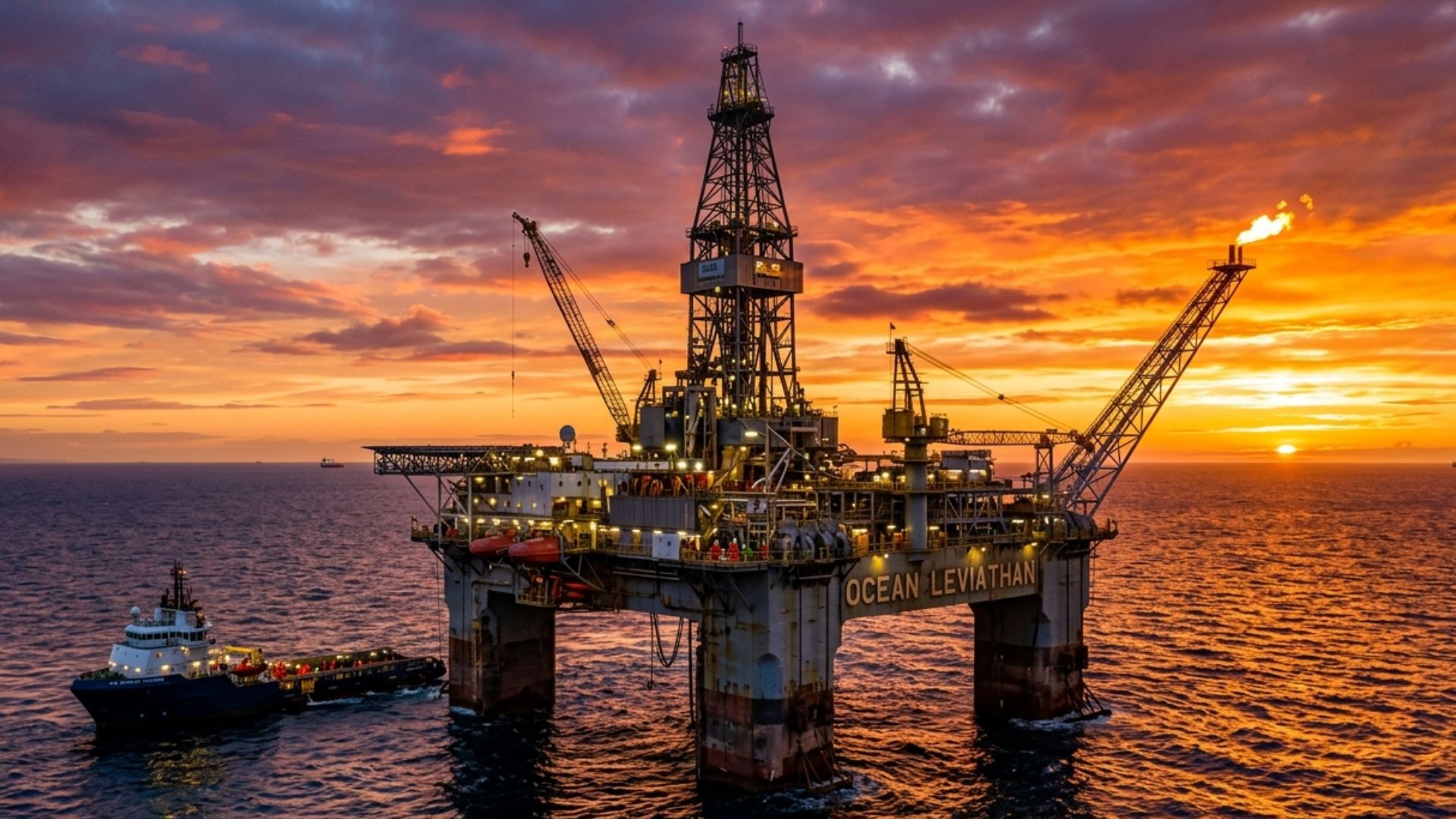

The French company announced an investment of 5.1 billion euros to acquire a 50 percent stake in power generation plants, mostly powered by natural gas, in five European countries: the United Kingdom, Italy, the Netherlands, Ireland, and France.
Although it has established itself as a major investor in solar and wind energy, TotalEnergies concluded that simply adding renewable assets does not solve the economic equation nor guarantee continuous supply.
Gas-fired power plants will be used to balance the portfolio of wind and solar parks, providing energy when the wind decreases or the sun disappears.
In the company’s view, the outcome is likely to be a system divided “between gas and renewables,” with thermal plants ensuring the reliability that data centers and large consumers require.
Natural Gas As An Answer To Renewable Limitations
One decade after the Paris Agreement, it has become evident for governments and companies that global emission reduction targets are not on track to be met.
The temporary exit of the United States from the agreement worsened the situation, but it is not the only factor.
The technical, economic, and political difficulties of fully replacing fossil fuels have become clearer as the transition has advanced.
Executives and consultants point out that large energy companies have “abandoned the idea of leading the world” towards a path compatible with higher ambitious goals.
Instead, they are reorienting strategies to what they see as feasible in the short to medium term.
In this context, natural gas appears as an intermediate solution: it emits less than coal and oil and, at the same time, offers a quick and predictable response to fluctuations in renewables.
Germany And The Construction Of New Gas-Fired Plants
Even countries that have placed themselves at the forefront of the energy transition are adjusting course.
Germany, a reference in solar and wind energy in Europe, is building natural gas plants with a capacity to generate about 10 gigawatts.
The goal is to maintain system reliability as the country reduces the share of other fossil sources and deactivates nuclear plants.
In practice, Berlin admits that it is not possible to rely solely on wind and sun in a large-scale system, especially in the face of extreme events and an energy-intensive industry.
Gas enters as an operational “insurance,” even amid criticism from environmentalists who see a risk of prolonging high emissions.
Shell Backtracks On Wind Projects And Reassesses Return Risk
Shell, the largest energy company in Europe, is also repositioning its bets.
The company decided to abandon two floating wind farm projects in British waters and an offshore wind venture in the United States.
The justification is straightforward: part of these investments, evaluated by current criteria, does not deliver sufficient returns.
Instead of increasing risk in projects with greater uncertainty, the company wants to focus more on electricity marketing and businesses that combine market with cash flow predictability.
The implicit message is that, without support mechanisms or firm long-term prices, some renewable projects cease to be competitive against existing natural gas assets or new thermal plants.
War In Ukraine, Energy Security, And A New Cycle For Gas
The invasion of Ukraine by Russia has profoundly altered the map of natural gas in Europe.
The sharp reduction of Russian supply triggered a race for alternatives, including liquefied natural gas imported from the United States and other producers, in addition to attempts to increase local production.
Producers like Energean, with operations in offshore fields in Europe, are participating in new drilling agreements in countries heavily dependent on imported energy, such as Greece.
Italy, in turn, has begun to relax exploration restrictions and is discussing laws to accelerate gas projects aimed at industry.
Governments that previously avoided granting licenses are now reinforcing the argument that they need domestic hydrocarbon production to reduce geopolitical vulnerabilities.
Europe Adopts Pragmatism Without Abandoning The Climate Agenda
Despite the adjustments, analysts believe that Europe is unlikely to repeat the more abrupt course changes seen in other countries.
Climate goals remain in effect, but the way to pursue them is changing: instead of a sudden cut, the strategy now combines renewable expansion, energy efficiency, and a more realistic use of natural gas as a supporting fuel.
Companies are adapting to this new design.
TotalEnergies is reinforcing its position as a major supplier of liquefied natural gas to the continent, while operating wind and solar parks.
Other companies are calibrating their portfolios, shutting down renewable projects considered unprofitable, and prioritizing assets that combine emission reductions, supply security, and profitability.
The transition ceases to be a linear movement and begins to resemble a series of successive adjustments influenced by crises, prices, and political pressures.
A System Divided Between Natural Gas And Renewables
In the near horizon, the prevailing view is of a European electricity system divided between natural gas and renewables, with gas-fired plants ensuring the base and flexibility necessary to integrate large volumes of intermittent generation.
Companies, investors, and governments are redesigning plans to accommodate this reality, even if that means temporarily distancing themselves from the more ambitious scenarios of rapid decarbonization.
For the energy industry, it is about preserving competitiveness and supply security. For the climate debate, it is a signal that past promises face material and political limits more rigid than previously imagined.
The question is whether this pragmatism will be a controlled transitional stage or if it will end up consolidating a prolonged dependence on natural gas, with a direct impact on future emissions.
Given this scenario, in your opinion, is this return to natural gas a temporary necessity to ensure stable energy or does it represent a dangerous setback in the climate goals that the world has committed to achieving?






Seja o primeiro a reagir!