





 Portuguese
  English
  Spanish
  4 min of reading
  0 comments


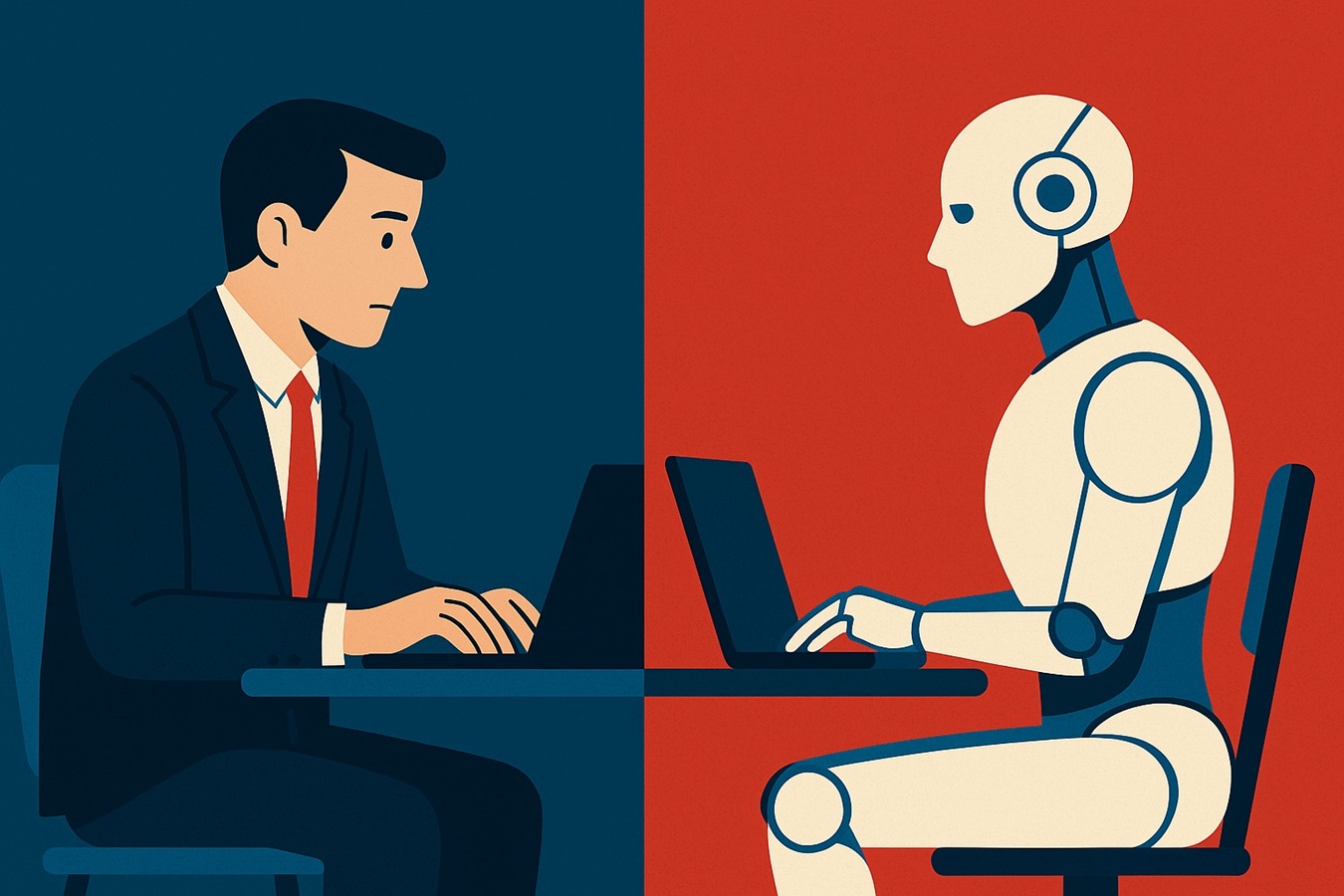

Artificial Intelligence Advances Rapidly And Is Already Starting To Transform The Job Market. A New Study From Microsoft Analyzes Which Professions Are Most At Risk Of Being Affected By The Technology — And The Results Are Surprising.
Researchers from Microsoft released a study that attempts to predict which professions are most vulnerable to replacement by generative artificial intelligence.
The analysis was based on 200,000 anonymous user conversations with Bing Copilot, the company’s own AI tool.
The main conclusion of the study indicates that office professions, focusing on communication and knowledge, are at greater risk than lower-paid manual jobs. This raises new concerns about the future of work and the direction of automation.
-
They were brilliant! Scientists discover that our ancestors in China were already making super advanced tools 160,000 years ago, changing everything we knew.
-
Scientists unveil 3 million years of climate secrets hidden in the ice of Antarctica.

-
Ancient farmers created “aggressive plants” that changed nature forever.

-
Astronomers find a “backward” solar system that ignores all the rules of space and leaves scientists scratching their heads!


Occupations At Risk
The Microsoft team created an “AI applicability score” to assess the exposure of each profession.
This score considers both the frequency with which AI is used in the job and the success of those applications.
The most affected positions, according to the study, are those involving providing information, writing texts, teaching, or giving advice.
The list includes translators, historians, sales representatives, writers, authors, and customer support agents.
This is because these functions directly handle tasks that language models, such as Bing Copilot, can already perform.
For example, answering questions, generating content, and providing explanations — activities that previously required a human team.
Safer Professions
On the other hand, jobs with lower risk of being replaced are those that require manual skills or physical presence.
This group includes heavy machine operators, dishwashers, janitors, massage therapists, and bricklayers.
The explanation lies in the difficulty of applying AI to physical and contextual tasks. Moreover, these jobs typically do not fit well within the functions that AI currently performs.
Most importantly, according to researchers, AI proves to be effective in areas involving reading, writing, and data analysis.
Meanwhile, manual activities require interaction with the physical environment, which limits the use of technology.
Limits Of Automation
Despite the warnings, the authors of the study acknowledge that AI cannot fully replace any profession. Instead, it tends to change the way certain tasks are performed.
“Our study explores which categories of work can use AI chatbots productively,” explained Kiran Tomlinson, a senior researcher at Microsoft. “This Is Not About Eliminating Or Replacing Jobs, But About Transforming The Way We Work.”
She also emphasizes that the research only measures the overlap between human tasks and the current capabilities of AI. This means there are limits, especially in areas requiring judgment, creativity, or human sensitivity.
Risks Of Exaggeration
Another issue raised involves potential exaggerations in the results. As Microsoft invests billions in AI, its own researchers may be inclined to present the technology’s performance in a more optimistic light.
Moreover, the analyzed data reflect only a part of reality. Not all professions are well represented in interactions with Bing Copilot. This could have distorted the results in some cases.
One example is historians and authors. Even though they score high on applicability, these professions depend on intuition and critical analysis. AI, while powerful, still makes factual errors and can hallucinate information.
The Case Of ATMs
The study also provides a classic example of how automation can have unexpected effects: ATMs. When they emerged, many believed that jobs in banks would disappear. However, the opposite happened.
Automation reduced costs and allowed for the opening of more branches. Human tellers began to focus on customer service and relationships. In other words, technology transformed the function but did not eliminate it.
This scenario could repeat with generative AI. Repetitive tasks may be automated, but human touch will still be necessary to solve complex problems or make strategic decisions.
Discrepancies In The Sector
Still, not everyone agrees with this more balanced view. The CEO of OpenAI, Sam Altman, has already warned that entire categories of jobs may disappear. For him, areas such as customer support face a real risk of extinction.
Entrepreneur Elijah Clark also shared a straightforward opinion. “As a CEO, I can say that I am extremely excited about this. I have personally laid off employees because of AI,” he stated.
This statement reinforces the idea that many business leaders see AI as an opportunity to cut costs, which may accelerate the replacement of workers in some areas.
Impacts Still Uncertain
Despite the enthusiasm of some executives, Microsoft researchers emphasize that the impacts of AI on employment are still hard to predict.
“Exactly which new jobs emerge and how the old ones are reconstituted is an important direction for future research in the era of AI”, they wrote.
They acknowledge that their analysis represents only a snapshot in time.
The technology will continue to evolve, and new roles may arise as companies adapt.
Therefore, the debate about AI and work is far from a definitive conclusion.
The study reveals relevant trends but also uncovers uncertainties that require constant monitoring. The way people work is already changing — and this is just the beginning.









Your writing has a way of resonating with me on a deep level. I appreciate the honesty and authenticity you bring to every post. Thank you for sharing your journey with us.