





 Portuguese
  English
  Spanish
  3 min of reading
  0 comments


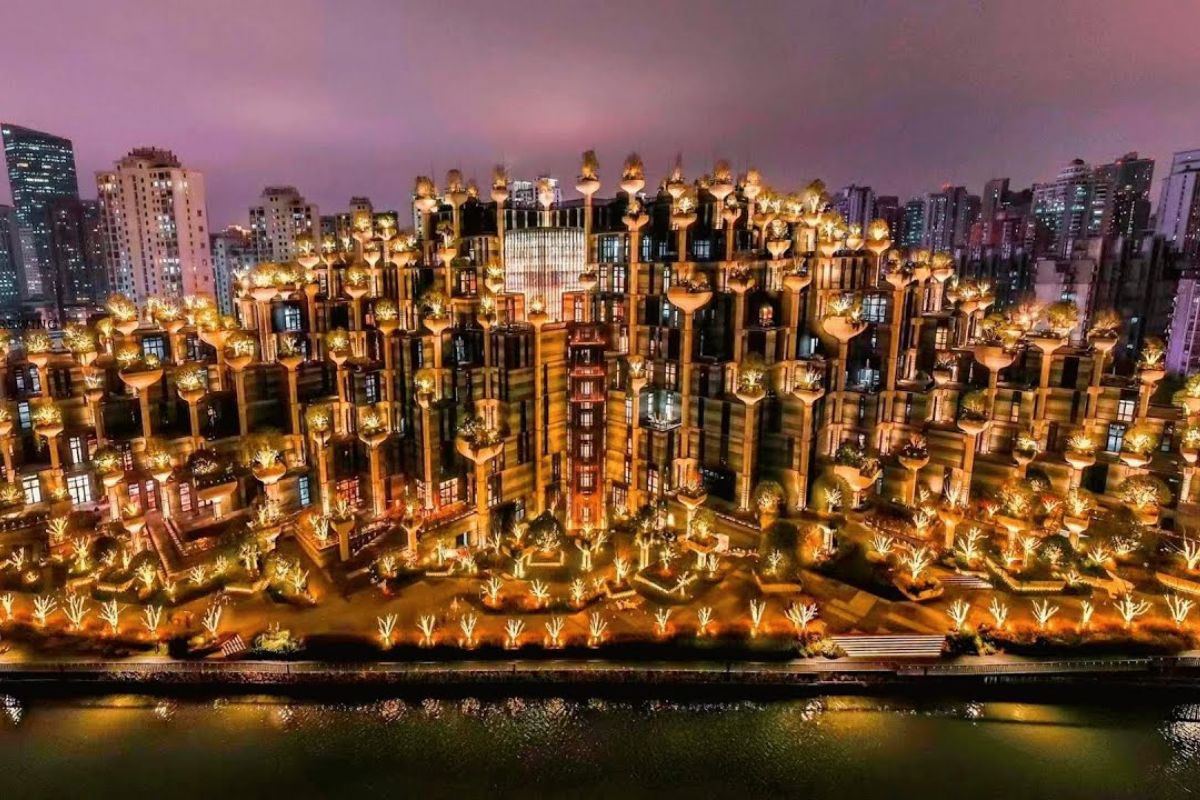
With Over A Thousand Trees And 300 Thousand Square Meters Of Built Area, China’s ‘Sky Garden’ Transforms An Old Industrial District In Shanghai Into A Living Mountain And Redefines The Balance Between Nature, Architecture, And Sustainable Urbanism.
Designed by British architect Thomas Heatherwick, the Tian’an Qianshu Shopping Mall, known as China’s ‘Sky Garden’, breaks the boundaries of traditional architecture by integrating vegetation and structure into a single organism. Located in the Putuo district of Shanghai, the 300,000 m² building was conceived as an artificial hill covered with plants and trees that grow on hundreds of structural columns.
Each of these columns acts as a large planter with built-in irrigation and drainage systems. The result is a building that literally breathes, filtering the air, reducing heat, and creating a functional urban ecosystem. The concept arose from the desire to create a building that behaves like a living landscape, where visitors not only consume but experience the environment as part of a vertical forest.
The Engineering That Sustains The Green
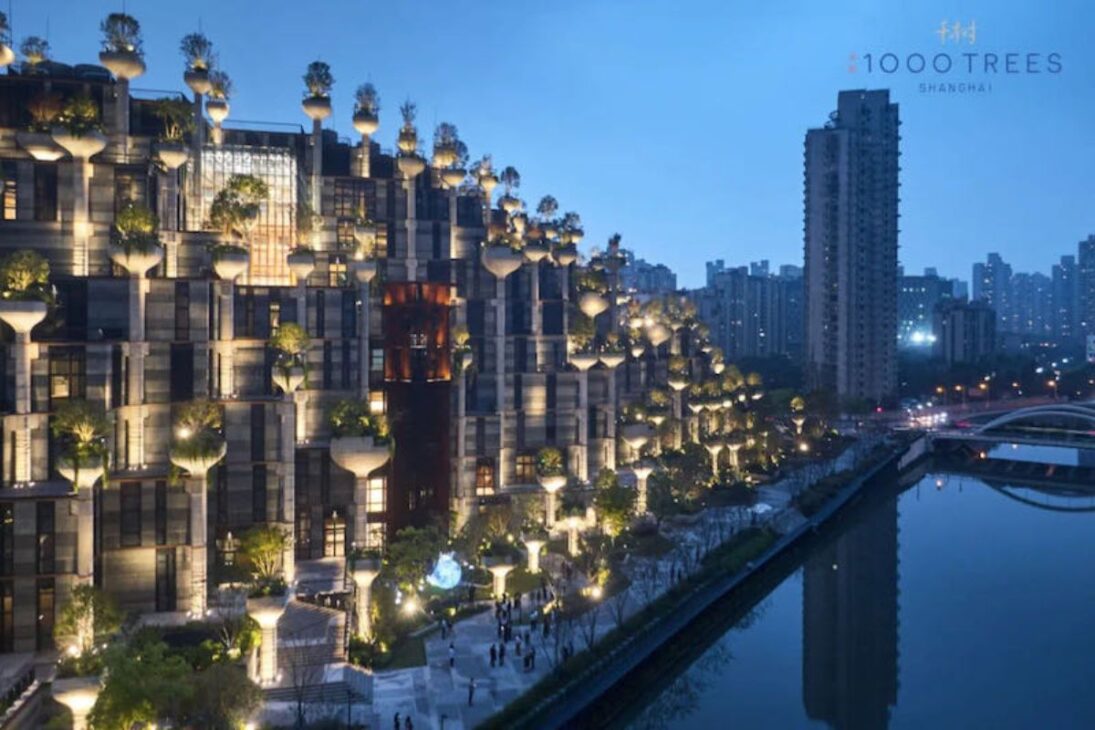
The project occupies a plot of almost 59 thousand square meters, with a total built area of 300 thousand square meters.
-
The Brazilian colonial city that stopped in time and shares territory with a rocket launch base.

-
79-year-old woman challenges limits, visits 193 countries in the world after 56 years of planning and reveals the behind-the-scenes of a global journey that few have managed to accomplish.

-
These are the drivers who may stop paying tolls on highways in a project that promises to reduce costs for those who live from transportation in Brazil.

-
(Video): Italian pilot lands plane on moving train at 120 km/h and achieves unprecedented feat in aviation, even with a narrow runway and without direct visual contact.


The complex includes over 90 stores, 63 restaurants, and spacious common areas distributed among basements, retail floors, and panoramic terraces.
The green infrastructure incorporates more than 1,000 trees and 250 thousand smaller plants of 46 different species, strategically positioned to create shading and biodiversity.
The facade acts as an active ecological system. The plants reduce urban noise, balance humidity, and absorb some of the carbon emissions.
The ‘Sky Garden’ operates as an integrated microclimate, with natural ventilation and automated maintenance, highlighting how environmental engineering and aesthetics can coexist precisely and functionally.
Urban Revitalization And Social Transformation
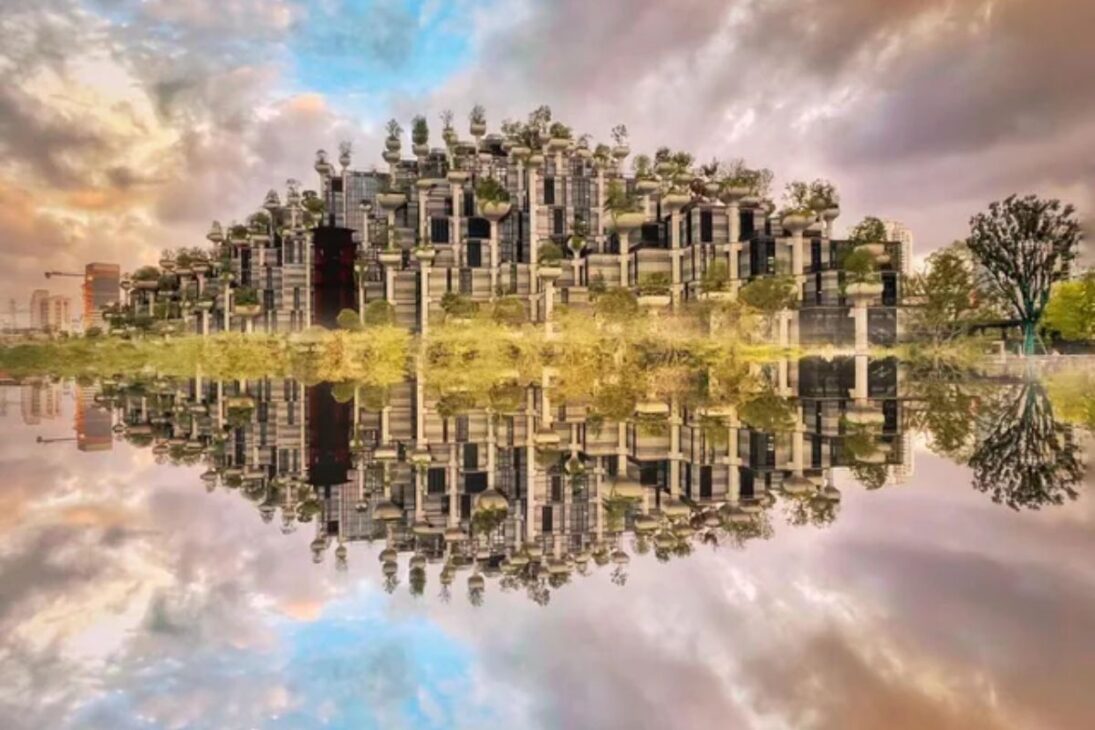
The ‘Sky Garden’ was born out of a project to revitalize the area around Suzhou Creek, an area previously occupied by disused factories.
The proposal was to transform an abandoned industrial zone into a new hub of culture, commerce, and leisure.
The architecture converted the space into an icon of urban regeneration, promoting coexistence between nature and population density.
A visit to the complex is a sensory experience.
There are 400 steps that lead the public through suspended gardens, panoramic balconies, and green walkways, with a view of the Shanghai skyline.
The space has become a tourist attraction and a symbol of the city’s ability to adapt to the 21st century without losing its visual and environmental identity.
The Second Phase And The Future Of The Project
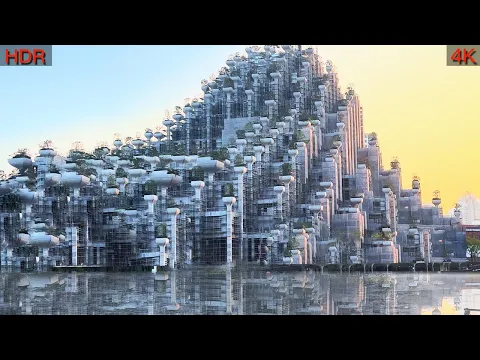

The second phase of the development is underway and plans to include a new tower with 19 floors, which will house a hotel, offices, and residential areas.
The expansion will consolidate the complex as one of the largest green complexes in Asia, combining high-density architecture and applied sustainability.
Thomas Heatherwick, also responsible for urban landmarks in London and Singapore, argues that the ‘Sky Garden’ represents a new model of global urbanism.
For the architect, the city of the future should not only house people but also cultivate life.
The project demonstrates that it is possible to incorporate green spaces without sacrificing functionality, economy, or urban scale.
The ‘Sky Garden’ is more than a cutting-edge shopping mall.
It is a manifesto of bioclimatic architecture, an example of how major metropolises can grow intelligently while preserving air quality, beauty, and human interaction with nature.
Do you believe that projects like China’s ‘Sky Garden’ can redefine the way we live in future cities?







-

-

-

-

-

-

46 pessoas reagiram a isso.