





 Portuguese
  English
  Spanish
  5 min of reading
  0 comments


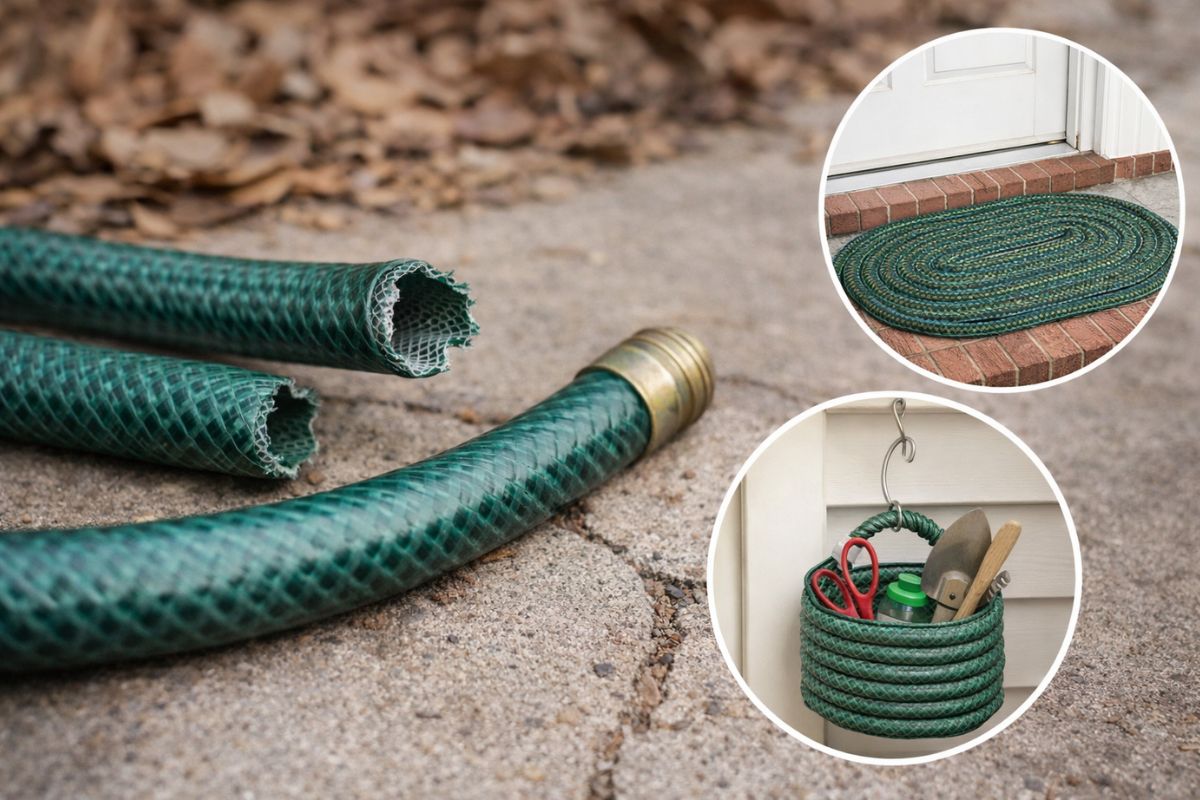
Broken hoses are discarded every day, but this water and dirt-resistant material can be transformed into a durable rug for outdoor areas and an original decorative mural without having to buy practically anything other than glue and clamps.
A broken hose is often a forgotten nuisance in some corner of the yard until someone decides to throw it away. But these hoses that seem useless are made of a flexible, water and dirt-resistant material that has a potential most people are unaware of. With a little creativity and no complicated tools, it’s possible to transform old hoses into two completely different items: a durable rug for outdoor areas and a decorative mural with texture and volume that would be hard to achieve with traditional materials.
The most interesting part is that neither of the two transformations requires technical knowledge or significant investment. Just change the perspective: instead of seeing hoses as trash, view them as versatile raw material. The material that for years carried water through the garden retains its properties even after being broken. It remains waterproof, flexible, and wear-resistant, characteristics that make it perfect for uses that no conventional fabric can fulfill in outdoor environments. It’s practical recycling with visible results.
How to transform old hoses into a durable rug for outdoor areas

The first idea is to transform the hoses into a rug for patios, balconies, or doorways. The water and dirt resistance makes hoses an ideal material for areas where fabric rugs deteriorate quickly due to rain, mud, and constant foot traffic.
-
Do dogs “sing” along with music? A study reveals that some pets adjust their howling to the sound of music.
-
Bill Gates revealed that he prefers to hire lazy people for difficult tasks because they always find the easiest way, and this philosophy explains Microsoft’s success to this day.

-
Archaeologists discovered on Elephantine Island in Egypt the first direct evidence that metallurgists 4,000 years ago mastered an advanced technique for producing bronze centuries before the rest of the ancient world.

-
Get rid of rust for free: lemon, vinegar, and baking soda can save metal items with simple tricks at home.
The result is a durable and easy-to-clean rug, perfect for high-traffic areas.
The process begins by removing the metal connectors from the hoses and folding one end, securing it with a nylon clamp. From there, the hose is rolled over itself to form a circle or an oval, with each turn secured tightly to prevent it from unrolling.
If a single hose is not enough for the desired size, several can be joined using a small piece of PVC pipe that fits into both ends, ensuring continuity. After tightening each joint well and cutting off the excess clamps, the rug is ready.
The materials needed to make the rug with hoses
The list is short and cheap. To assemble the rug, you only need old hoses, nylon clamps, strong glue, and small pieces of wood or thin PVC pipe to connect different hoses if the rug needs to be larger.
Anyone with a yard full of old hoses probably already has everything they need without spending a dime.
The advantage of this rug compared to purchased options is its extreme durability. Hoses are designed to withstand water pressure, sun exposure, and constant contact with the ground. Transformed into a rug, these properties remain intact.
While a natural fiber mat needs to be replaced every few months in exposed areas, the hose rug can last for years without losing its shape or functionality. It’s an economical alternative that reduces waste and solves a practical problem.
The second idea: a decorative mural made with recycled hoses
The second transformation is completely different and aims for aesthetics. It is possible to use hoses cut into segments to create a decorative mural on the wall, with continuous lines, abstract shapes, or nature-inspired designs.
The result has texture and volume that traditional decorative materials hardly offer, and the cost is practically none.
The first step is to define the design and lightly sketch it on the wall with a pencil to have a clear guide. The hoses are cut into segments according to the design and painted with neutral or natural tones, such as terracotta, sage green, or beige, to integrate with the room’s decor.
Once dry, the pieces are fixed to the wall with strong glue following the marked lines. Additional details like color splashes or circular shapes behind the design can create visual depth and transform a simple composition into a striking piece of art.
Why hoses are better than other materials for these projects
The combination of characteristics of hoses is hard to find in other discarded materials. They are waterproof, flexible enough to be shaped into any form, rigid enough to hold their shape once positioned, and durable enough to last for years exposed to the elements.
No fabric, cardboard, or common plastic offers all these properties at the same time.
For the outdoor rug, waterproofing is the decisive advantage. Rainwater, mud from shoes, and garden debris pass through the rug or are easily washed away with a simple hose down.
For the decorative mural, the rigidity of the material creates defined lines and three-dimensional volume that paper or fabric cannot maintain when fixed to the wall. Hoses that would go to waste transform into superior solutions to alternatives that cost money.
What else can be done with old hoses at home
The two ideas presented are just the beginning. The material from hoses can be reused to protect cables and wires that pass through outdoor areas, preventing wear from sun and rain exposure.
Short pieces of hose serve as protection for garden tool blades during storage. Thin strips can be used as flexible ties to secure plants to stakes without damaging the stems.
The logic is always the same: before discarding hoses, assess whether their properties serve any existing need at home. Water resistance, flexibility, durability, and tubular shape are characteristics that solve dozens of small household problems.
Transforming trash into solutions does not require special skills. It only requires the habit of looking at what would be discarded and asking: “Does this serve any other purpose?”
Have you ever reused old hoses for something creative at home? Which of the two ideas, the rug or the mural, would you try first? Share in the comments. Reuse tips that really work deserve to be shared with those who also want to avoid waste without complication.






Seja o primeiro a reagir!