






 Portuguese
  Spanish
  3 min of reading
  0 comments


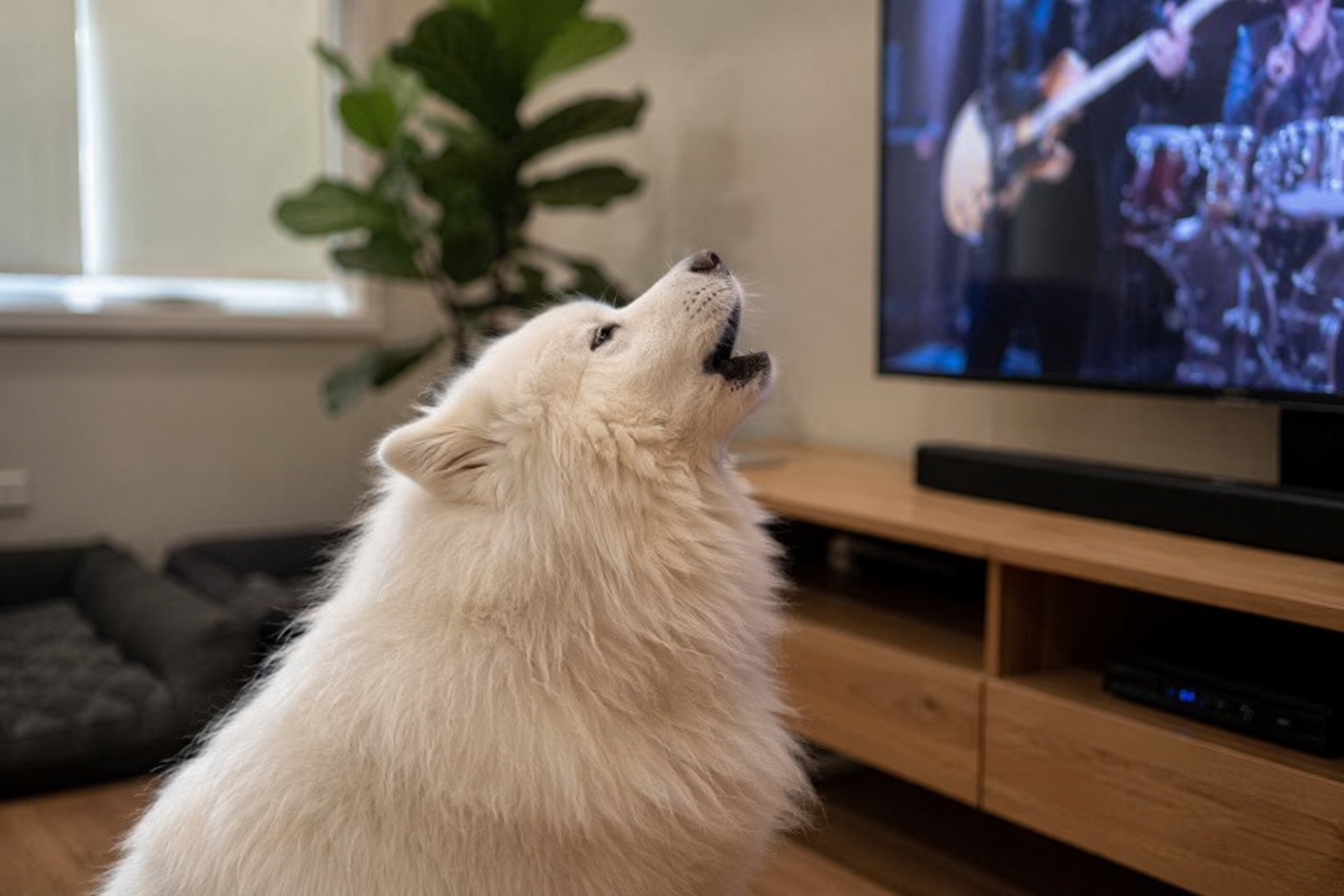
Research shows that dogs can modulate their howls according to music and maintain ancestral vocal traits linked to wolves
A study published in the scientific journal Current Biology revealed that some dogs can adjust the tone of their howls to the sound of music, which expands the understanding of animal vocal communication.animal.
The discovery indicates that certain vocal abilities of dogs may be more sophisticated than previously thought, especially in lineages with greater genetic proximity to wolves.
The researchers investigated this behavior by selecting animals that already had the habit of howling in response to sound stimuli, which allowed for consistent response patterns.
The experiment was conducted in a controlled environment, which ensured greater accuracy in the analysis of the collected data.
This scenario reinforces the hypothesis that vocal modulation may have been preserved throughout the domestication process.
Methodology applied in the study
The guardians played music with variations in tone, both above and below the original version, while the dogs were filmed during the experiment.
Participation was spontaneous, as the animals could move away at any time, which avoided interference with their natural behavior.
This format allowed for the recording of authentic responses to sound stimuli, which increases the reliability of the results.
The analysis focused on the dogs’ ability to adjust the tone of their howls in relation to the music played.
The data were organized to identify patterns of vocal modulation among different breeds.
Differences between breeds stand out
Among the six dogs evaluated, the results were more pronounced among the Samoyed breed, which demonstrated a greater capacity for sound adaptation.
Three of the four animals were able to adjust the tone of their howls according to the music used in the experiment.
The tracks included “Believer” by Imagine Dragons and “Shallow” performed by Lady Gaga and Bradley Cooper, which helped test different frequencies.
One of the dogs, named Alfie, showed superior performance by modifying not only the tone but also more complex acoustic characteristics.
The Shiba Inu dogs, on the other hand, showed more limited responses, failing to match the pitch of the music.
One of them demonstrated subtle changes in the sound structure of the howls, although the duration of the vocalizations remained unchanged in all cases.
-
Survivor of 1966 SS Daniel J. Morrell Shipwreck in Lake Huron Recounts 38-Hour Ordeal in Extreme Cold

-
The Greatest Hoax in World Cup History? The Film That Denied Brazil’s 1958 Victory and Exposed How Fake Evidence Can Seem Convincing on TV
-
Fake South Korean Online Stores Offer Shopping Thrill Without Spending Money or Receiving Products
-
The War of Jenkins’ Ear: How a Severed Ear Sparked One of the 18th Century’s Most Unusual Conflicts



Scientific interpretation of behavior
The authors of the study emphasize that this ability is not associated with complex vocal imitation, but rather with a basic control of pitch.
This type of control is also observed in humans, even in the absence of formal musical training, indicating a simpler mechanism.
The vocal modulation observed suggests that dogs can flexibly adjust sounds in response to auditory stimuli.
This behavior expands the understanding of vocal communication in domestic animals.
The results indicate that new research could deepen the analysis of this phenomenon.
Relation to ancestral wolf behavior
The researchers associate the discovery with behaviors observed in wolves in the wild, especially in group communication.
Wolves modulate their howls to coordinate actions and also to appear more numerous in the face of potential threats.
This sound strategy increases the efficiency of communication and reinforces the social organization of the species.
The fact that domestic dogs exhibit similar traits suggests that this characteristic may have been preserved throughout evolution.
This evidence reinforces the link between dogs and their wild ancestors.
What the discovery reveals about dogs
The study indicates that some lineages still retain vocal abilities inherited from their ancestors.
The ability to adjust the tone of the howl demonstrates a level of vocal control more developed than expected.
This behavior suggests that domestication did not completely eliminate certain natural traits.
The presence of these characteristics expands the understanding of the evolution of dogs.





Be the first to react!