





 Portuguese
  English
  Spanish
 3 min of reading


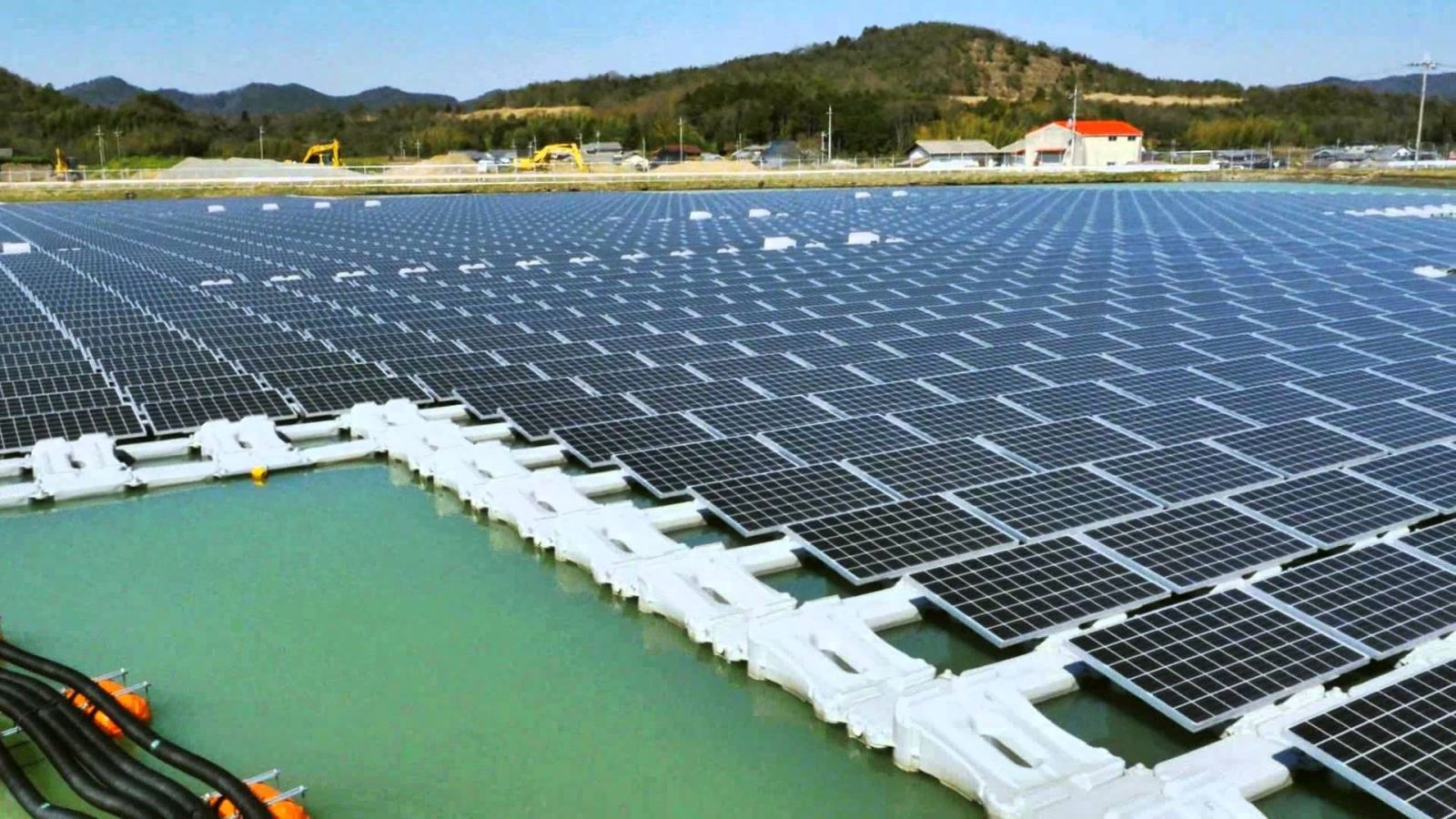
The Project for Building Floating Solar Power Plants Plans to Install a Structure in Each State. Companies from Minas Gerais and Pernambuco Join Forces for a Consortium to Develop the Energy Production Enterprise.
The Brazilian solar energy market continues to bear fruit for the national states this week. The states of Minas Gerais and Pernambuco are united in partnership to develop a project for installing floating solar power plants. The resource production will take place in the municipality of Grão Mogol, Minas Gerais, and on Fernando de Noronha Island, Pernambuco, aiming to contribute to the energy security of the states.
The Floating Solar Power Plant Project Promises Good Results for the States of Minas Gerais and Pernambuco in the Coming Years
Minas Gerais and Pernambuco are now preparing for the development of the floating solar power plant installation project in their territories.
The states have joined forces to take advantage of the good moment in the national renewable energy market, thereby aiming to become even more relevant hubs in the solar energy segment.
-
A Canadian retiree creates a hydroelectric system on a real river, generating energy continuously throughout the day and demonstrating how the power of water can supply a house with stability even in a simple structure.

-
Solar Pyramid draws attention by converting solar energy into million-dollar savings and repositioning the City Hall of Curitiba as an example of innovation, sustainability, and intelligent use of public resources.
-
Petrobras reaffirms its commitment to the market and ensures that it will carry out the energy transition safely to maintain national sovereignty.

-
Researchers discover a possible hydrogen deposit of up to 46 million tons beneath an ancient coal basin, and the volume could exceed half of the entire global production.


The project is already underway, and in Minas Gerais, the companies Creral, an energy cooperative based in Erechim, and Mil Engenharia, based in Tapejara, are already working on the construction of the installation.
They promise that the first of the floating power plants in the project will be the largest in the entire country, to be installed in the Grão Mogol region.
In Pernambuco, Fernando de Noronha Island will have its first floating solar power plant, contributing to the state’s sustainability and energy security.
For the development of the project on the island, a total investment of R$ 10 million will be applied, sourced from Neoenergia Pernambuco’s Energy Efficiency Program, regulated by ANEEL (National Electric Energy Agency).
A Consortium of Companies from Minas Gerais Was Created for the Development of the Floating Power Plants Project in the State
The companies from the state of Minas Gerais have united to develop a consortium, aiming to ensure more efficiency in the plans for the floating power plants, specifically to carry out the works of the UFV Veredas Sol and Lares, which will have an installed capacity of 1.2 MWp.
Meanwhile, the assembly of the solar energy production structure is being carried out over the water surface of the Santa Marta PCH lake, owned by Cemig.
The plant will be the largest undertaking of its kind in the country and will feature unique characteristics to bring more efficiency to solar energy production.
It will have a total of 14 inverters, 60 thousand meters of cables, as well as 3,050 monocrystalline photovoltaic panels (dual glass and thin film) supported on 7,600 floaters, in addition to having an impressive area of 11 thousand m².
With the start of solar energy production at the plant, the state of Minas Gerais expects to meet the needs of 1,250 families in the semi-arid region, across 21 municipalities in the Jequitinhonha and Rio Pardo valleys.
The Fernando de Noronha Plant Should Have Its Works Initiated by the End of 2022
The Fernando de Noronha unit of the floating solar power plant project will bring improvements to the water supply on the island.
The forecast is that construction will begin by the end of this year, so that the structure can be delivered by July 2023.
The structure will include 949 solar panels to be installed, the system will have a capacity of approximately 630 kWp and an estimated generation of 1,238 MWh/year, thus also ensuring greater energy security for the island.









Seja o primeiro a reagir!