





 Portuguese
  English
  Spanish
  5 min of reading
  0 comments


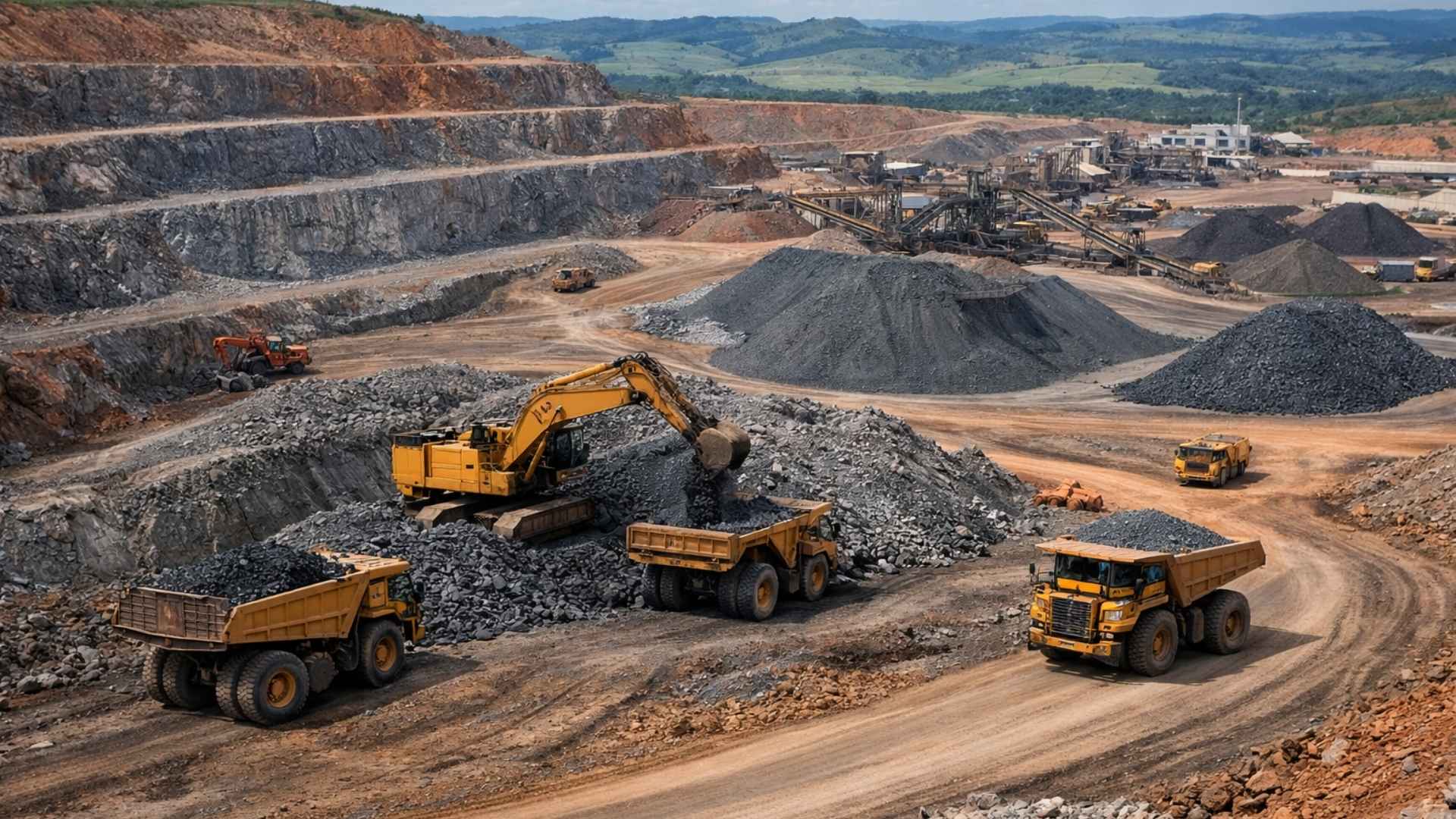
Billion-Dollar Revenue, Record Exports, and Royalties Spark Debate on Real Returns in Mining Regions, With Official 2024 Figures Comparing Sector Revenue, Trade Balance Impact, and CFEM Collections That Reach States and Municipalities.
The Brazilian mineral sector closed 2024 with a revenue of R$ 270.8 billion and mineral exports of approximately 400 million tons, which generated US$ 43.4 billion in revenue, according to data consolidated by the Brazilian Mining Institute (IBRAM) based on official information from the federal government.
In the same period, CFEM (Financial Compensation for Mineral Exploration) collections, a royalty paid for the exploration of mineral resources, totaled about R$ 7.5 billion.
The comparison between the figures reveals a disconnect between the wealth generated by mining and the amount shared with states and municipalities through the main instrument of direct participation in mineral income.
-
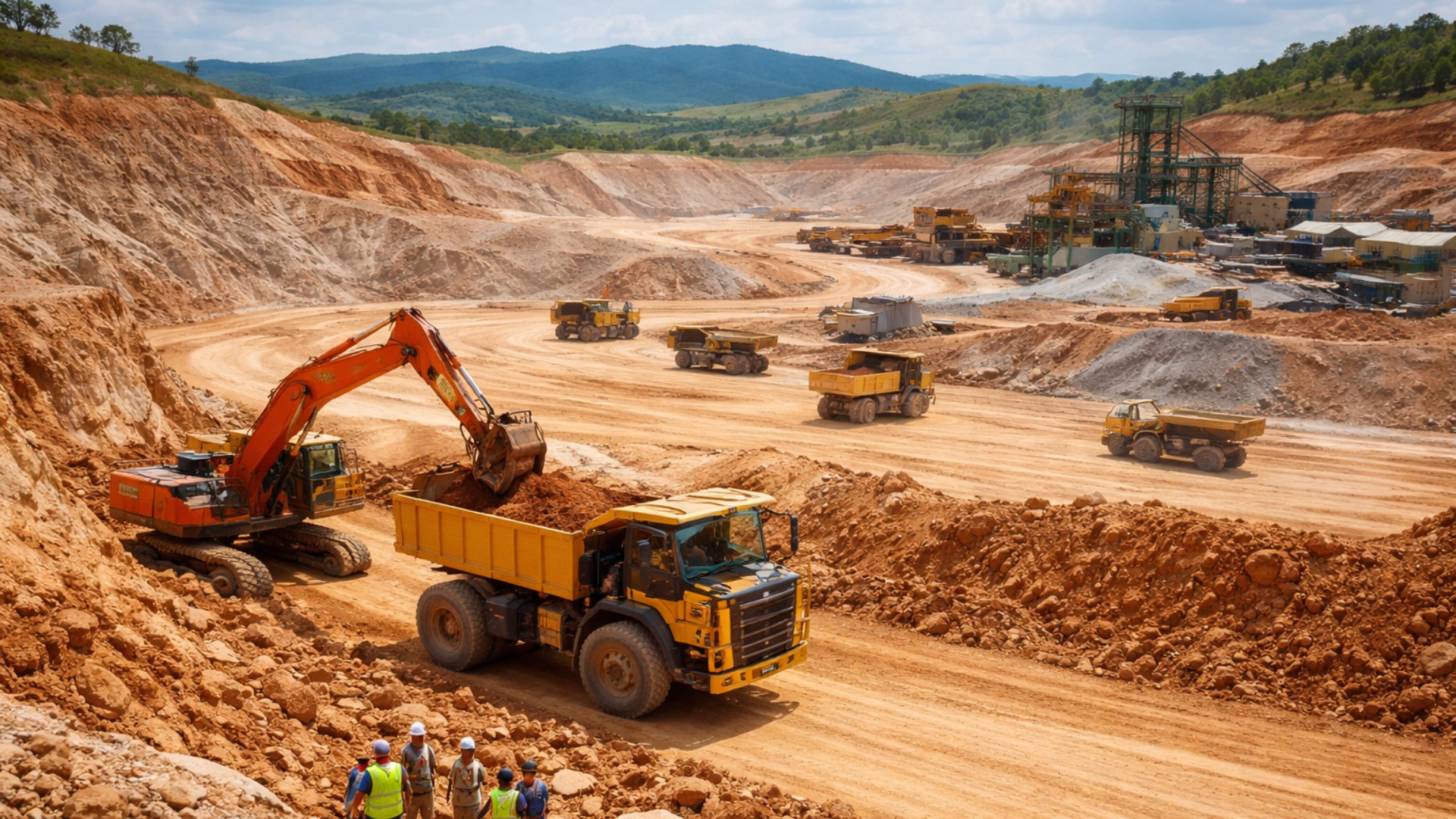
After China, it’s now the turn of the USA to ‘secure’ a share of Brazil’s natural resources: the country buys critical rare earths for R$ 3 billion and enters the center of the global technology dispute.
-
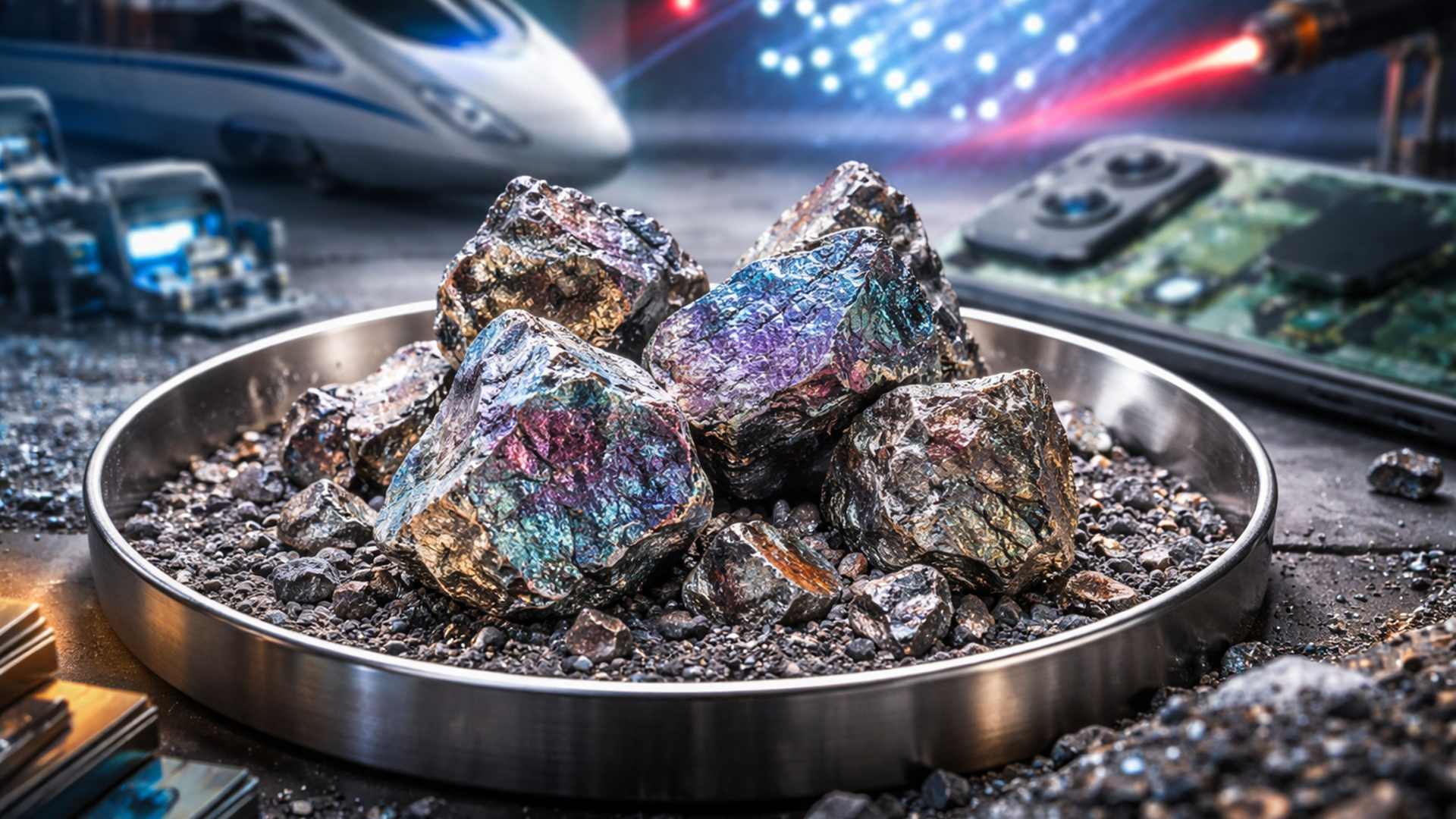
Rare earths are in everything, from cell phones to bullet trains, and what almost no one realizes is why they have become the target of such a delicate global war.
-
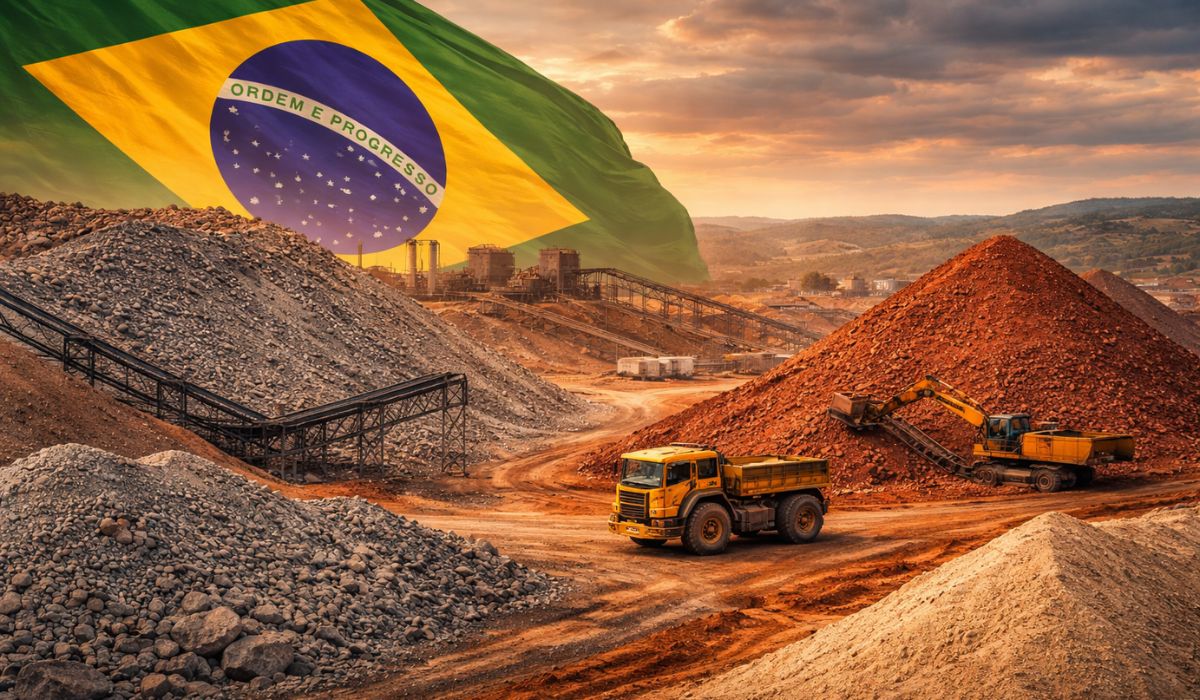
Brazil extracts 26.3 million tons of ore from what was previously treated as waste, transforming residues into wealth, producing over 3 million tons of sand, and demonstrating how national mining is relearning to generate value.
-
A $3.5 billion megaproject in Latin America pumps desalinated seawater at 1,050 liters per second over 194 km to keep a copper supermine in the Andes operational for another 20 years.
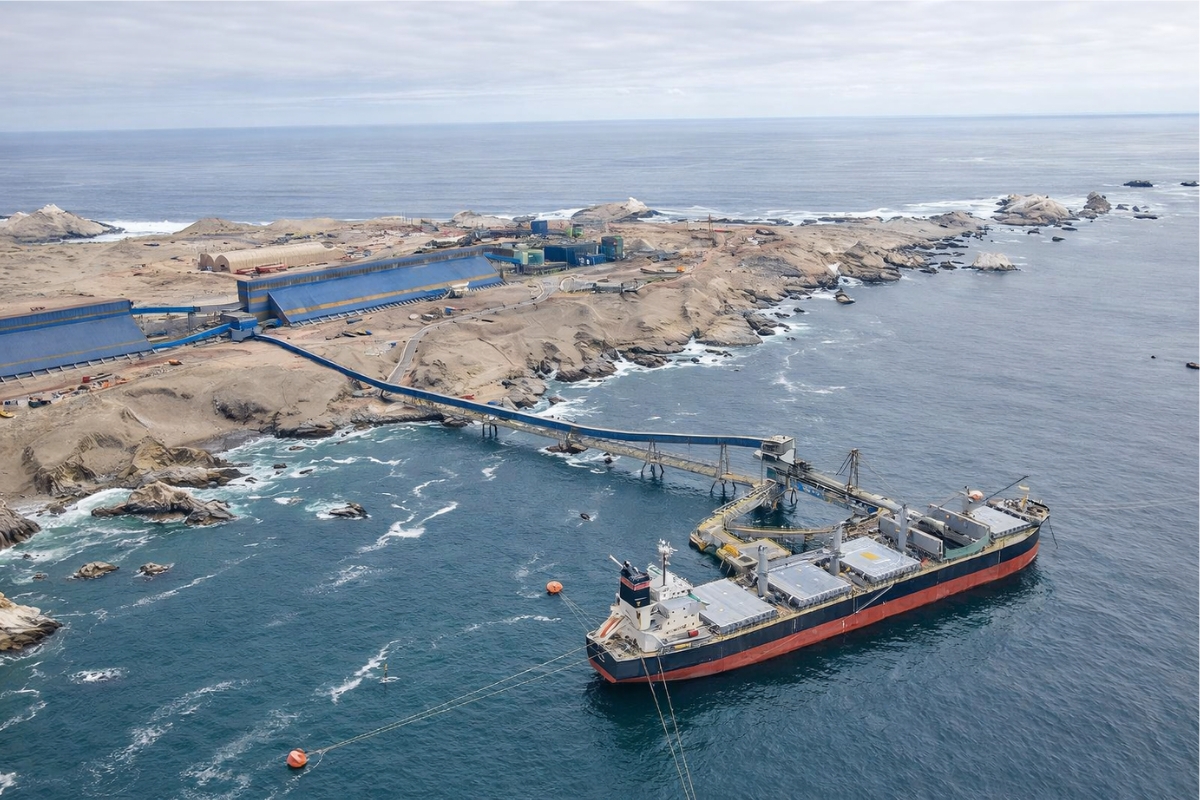

The data presented by IBRAM show that, in 2024, the sector’s revenue grew by 9.1% compared to 2023, mainly driven by iron ore, which accounted for about 59.4% of the total value produced.
According to the report, mining played a central role in the trade balance: the mineral trade surplus of US$ 34.9 billion represented 47% of Brazil’s total surplus for the year, highlighting the sector’s weight in generating foreign currency.
Mineral Exports: Iron Ore Leads, and Copper, Gold, and Niobium Grow

Mineral exports in 2024 were primarily driven by iron ore, which accounted for 68.7% of the mining sector’s external revenue.
Sales of copper, gold, and niobium also recorded value growth, particularly copper, which reached about US$ 4.2 billion, and gold, with revenue close to US$ 3.96 billion, according to details released by IBRAM.
China remained the main destination for Brazilian mineral exports, accounting for a majority share of purchases in terms of tons.
CFEM: How Mining Royalties Work and What’s Changed in the Law
In the tax field, the survey indicates that mining collected R$ 93.4 billion in taxes and levies in 2024, including federal, state, and municipal charges.
Of this total, CFEM accounted for approximately R$ 7.5 billion, a figure that grew by 8.6% compared to the previous year but still represents a fraction of the total collected.
CFEM is the only revenue explicitly tied to compensation for the exploration of a non-renewable mineral resource, which distinguishes it from general taxes such as ICMS, PIS/Cofins, and Income Tax.
Established by the 1988 Constitution and regulated by specific laws, CFEM is defined as a financial compensation due for the economic utilization of mineral resources within Brazilian territory.
After the approval of Law 13.540/2017, the calculation base became the gross revenue from the sale of the mineral product, subtracting only taxes imposed on sales, and the rates now generally vary from 1% to 3.5%, depending on the substance.
Regulations from the National Mining Agency (ANM) detail, for example, that iron ore pays 3.5% CFEM, while niobium and bauxite pay 3%, diamond and most substances 2%, and gold 1.5%.
Distribution of CFEM Among Municipalities, States, and the Union

The way these resources are distributed is also defined by law.
According to current legislation and technical notes from public agencies, 60% of all CFEM collected is allocated to producing municipalities, 15% to municipalities affected by mining activities, 15% to producing states, and 10% to the Union, including ANM itself and other federal agencies.
Therefore, the majority of the money should go directly to cities that host mines or are impacted by mining and transportation of minerals.
Which States Collect the Most CFEM and Why Distribution is Concentrated
However, consolidated data from ANM and state departments show that CFEM distribution is highly concentrated.
In 2024, Minas Gerais was the state with the highest collection, with R$ 3.362 billion, equivalent to 43.48% of the national total.
Pará followed closely, with R$ 3.332 billion, or 43.10% of the collection.
Goiás ranked third, with R$ 183 million, which corresponds to 2.38% of the total.
Together, these three states accounted for nearly 90% of all CFEM paid in the country that year, according to an official report based on ANM data.
The concentration is also repeated within the states.
Periodic reports from ANM indicate that in different quarters, a few mining municipalities accounted for more than half of all CFEM collected, particularly cities linked to major iron ore projects, such as Parauapebas and Canaã dos Carajás in Pará, and Conceição do Mato Dentro and Congonhas in Minas Gerais.

Even within federal units that lead collection, most resources are concentrated in a few large mining hubs.
Delinquency and Underreporting: Billion-Dollar Losses in CFEM Collection
At the same time, a significant portion of the potential revenue does not reach public coffers.
A recent study presented at an event by the Court of Accounts of the State of Minas Gerais and released by the Brazilian Association of Mining Municipalities (AMIG Brasil) shows that between 2017 and 2024, accumulated losses in CFEM reached about R$ 20 billion, due to delinquency and underreporting.
According to the ANM’s Revenue Collection and Inspection Superintendent, cited at the same meeting, audits by the Federal Court of Accounts identified that approximately 70% of companies with authorized mining operations do not pay CFEM, and among those that do, 40% collect less than they should.
Tax Reform and the Debate on Mining Returns to the Territories
The combination of high revenue, low royalty participation in total collections, and billion-dollar losses due to oversight failures has led regulatory entities and municipal managers to question the real return of mining for producing regions.

At the same event, representatives from AMIG, TCU, and TCE-MG classified CFEM as still insufficient to compensate for the social and environmental impacts of mining activities, highlighting that even municipalities leading in collection, such as Canaã dos Carajás (PA), face difficulties in mitigating damages and diversifying their economies.
The debate over the low returns from mining acquired new elements in 2024 with discussions on tax reform.
The approval of the so-called selective tax on mineral exports, later resumed after presidential veto, was criticized by IBRAM and sector entities, which argue that the measure may reduce the international competitiveness of Brazilian mining and, at the same time, does not address the central issue of royalty distribution with states and municipalities.
For these organizations, the key issue is to ensure better oversight, greater transparency, and planning in the application of the R$ 7.5 billion already collected, rather than just creating new taxes on the mineral chain.






-

-

-

-

12 pessoas reagiram a isso.