





 Portuguese
  English
  Spanish
  5 min of reading
  8 comments


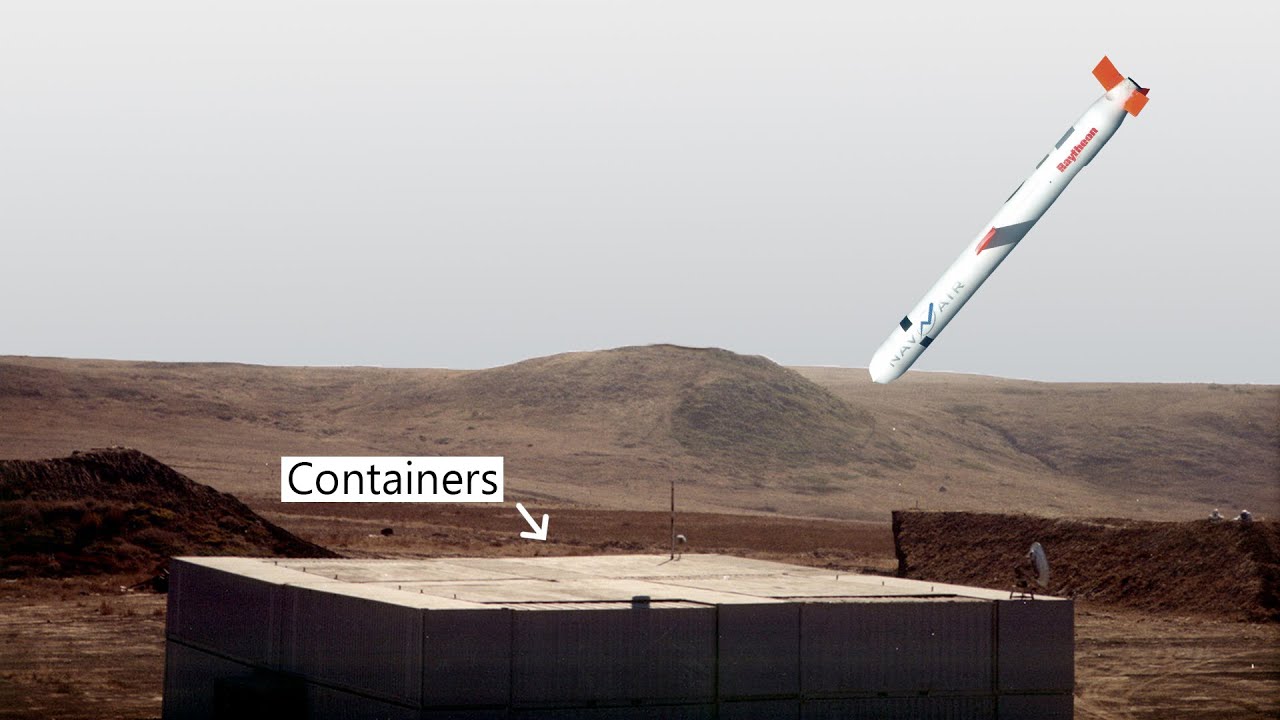


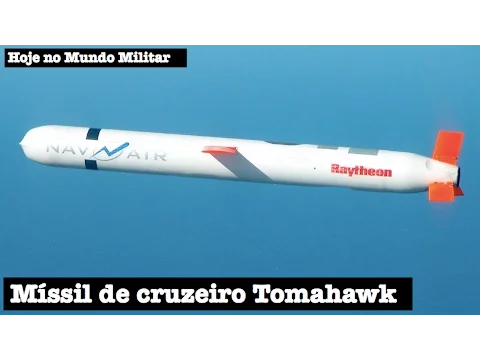
With a range of up to 2,500 km, low-altitude flight, and high precision, the Tomahawk missile transformed US ships and submarines into global strategic attack platforms in the 21st century.
When a United States Navy destroyer fires a Tomahawk missile, it is not just launching a weapon. It is activating a strategic capability that allows it to hit targets thousands of kilometers away without crossing borders, exposing pilots, or giving advance warning to conventional defense systems. The BGM-109 Tomahawk has, for more than three decades, been the silent cornerstone of American naval power projection and continues to evolve.
With a maximum estimated range of up to 2,500 km in long-range variants, extremely low flight profile, constant subsonic speed, and a guidance system that combines GPS, inertial navigation, TERCOM, and DSMAC, the Tomahawk has redefined the role of ships and submarines in the 21st century.
BGM-109 Tomahawk: From Tactical Missile to Strategic Instrument
Originally conceived during the Cold War, the Tomahawk was born to allow deep strikes against fortified targets without resorting to manned bombers.
-
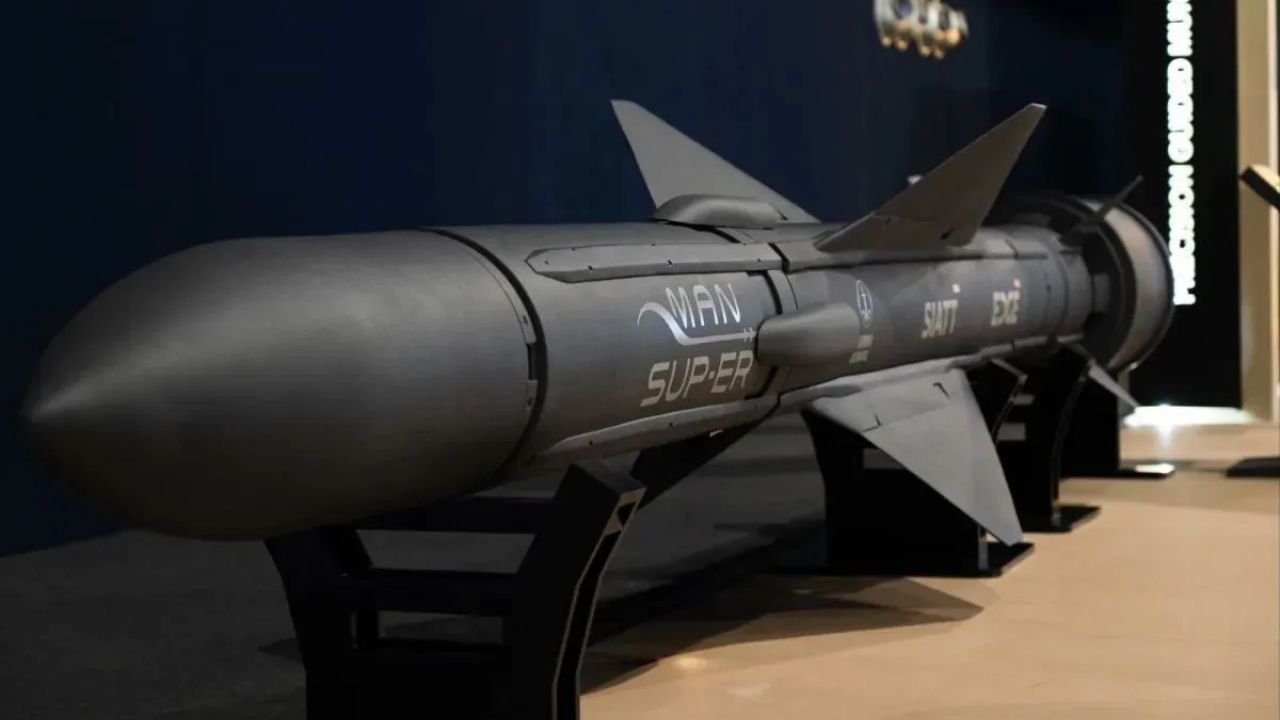
Brazil accelerates the evolution of the MANSUP missile, designing an air-surface version with a range exceeding 200 km, advanced guidance, and precision strike capability against land and naval targets, paving the way for a new generation of national armaments with global potential.
-
South Korea signs a $922 million deal with Norway, bringing Chunmoo launchers capable of firing guided missiles up to 290 km with an accuracy of 15 meters to Europe and turning the system into a key component of the new global race for precision artillery.
-
Brazil advances with decisive tests until June, the 6×6 Guarani armored vehicle with engineering equipment enters the most important phase and can enhance the operational capability of the Army.
-
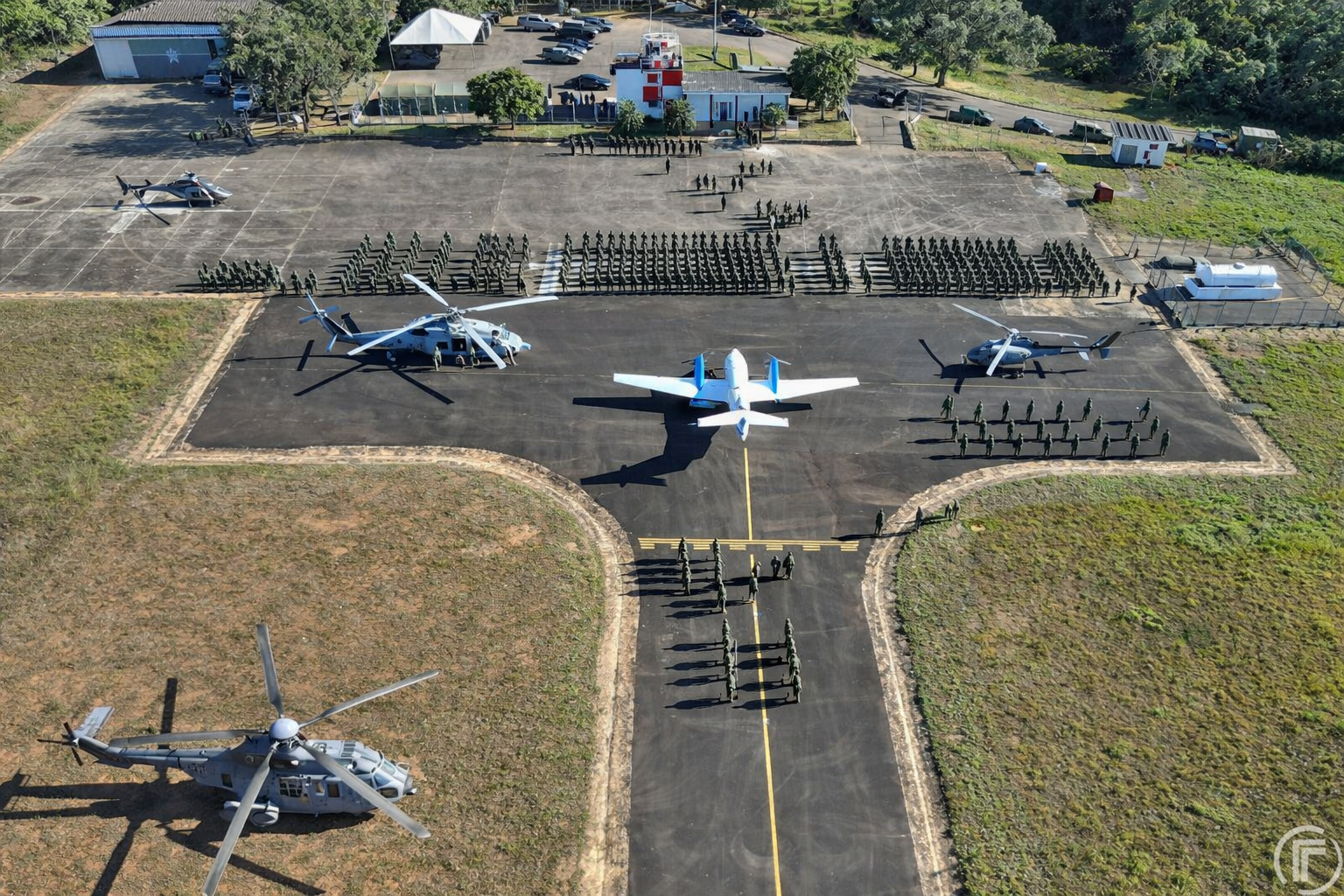
Furnas Airport is handed over to the Navy and becomes a strategic base with complete military operations, attack drones, and international mobilization at Furnas Lake.


Over time, it transformed from being just a cruise missile to a distributed strategic attack system, capable of operating from dozens of platforms around the world.
Today, Arleigh Burke-class destroyers and nuclear attack submarines carry dozens of these weapons, transforming each vessel into a long-range strike vector.
Range That Changes the Logic of Naval Combat
The most striking data is the range. While classic versions operate around 1,600 km, technical sources indicate that modern variants and mission configurations can reach up to about 2,500 km, depending on the flight profile and payload.
In practice, this means:
- attacking targets deep inland from open sea
- keeping ships out of reach of coastal defenses
- conducting simultaneous strikes from multiple directions
The result is a saturation and surprise capability that is difficult to neutralize.
Low-Altitude Flight: Invisible Until the Last Moment
Unlike ballistic missiles, the Tomahawk flies a few meters above the ground or sea surface, following the terrain with precision. This profile drastically reduces radar detection, especially at long distances.
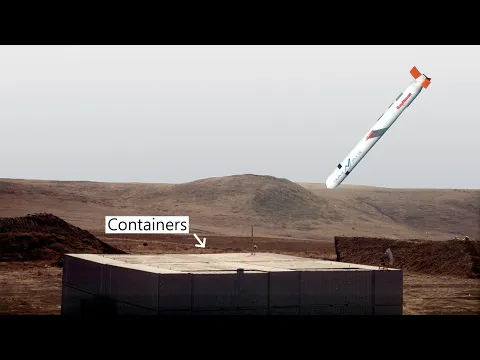
The missile uses digital terrain maps (TERCOM) to adjust its route, bypassing natural and artificial obstacles. In the final phases, the DSMAC system compares images of the target with stored references, ensuring surgical precision.
This combination allows the Tomahawk to penetrate densely defended areas with a higher chance of survival.
Precision Measured in Meters
One of the factors that made the Tomahawk dominant is its precision. The circular error probable (CEP) is estimated to be within a few meters, sufficient to neutralize:
- command centers
- bunkers
- runways
- radars and air defense systems
This precision reduces the need for larger warheads and limits collateral damage, a central aspect of modern precision warfare doctrines.
Constant and Predictable Speed — By Choice
The Tomahawk is neither hypersonic nor supersonic. It flies at about Mach 0.7–0.75, approximately 880 km/h. This choice is not a technological limitation but a strategic decision. The constant speed:
- maximizes range
- reduces fuel consumption
- facilitates in-flight course corrections
- allows synchronization of multiple strikes
In real conflicts, the weapon is often fired in coordinated salvos, striking targets almost simultaneously after hours of programmed flight.
Datalink and Re-targeting In Flight
More recent versions introduced bidirectional communication, allowing:
- updating targets during flight
- redirecting to new objectives
- canceling the mission
This transforms the Tomahawk into a flexible weapon, not just a pre-programmed projectile. In dynamic environments, this capability is decisive.
Submarines: The Invisible Factor
When launched from submarines, the Tomahawk adds an extra level of unpredictability. A submarine can remain hidden for weeks, move silently, and fire missiles without revealing its position.
This makes the Tomahawk a deterrent instrument, not just an attack weapon. Adversaries know that the threat can come from any point in the ocean. The Tomahawk family is not static. The Block IV and Block V versions introduced:
- greater reliability
- integration with modern combat networks
- enhanced anti-ship capability
- greater resistance to electronic countermeasures
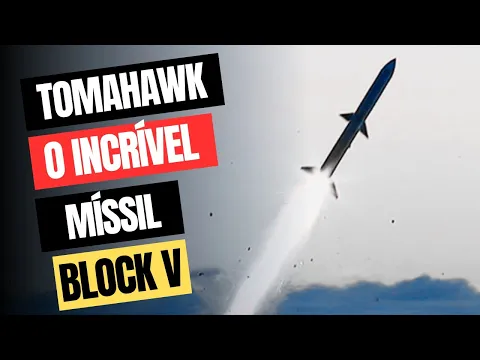
The Block V, in particular, expands the missile’s role in naval combat, bringing it closer to dedicated surface ship attack systems.
Comparison With Other Cruise Missiles
While systems like the Russian Kalibr or the Chinese YJ-18 combine subsonic and supersonic profiles, the Tomahawk focuses on maximum range, precision, and network integration. It does not rely on terminal speed spikes to survive but on:
- mission planning
- prolonged low-altitude flight
- saturation of defenses
- coordinated strikes
This philosophy reflects the American doctrine of precision warfare and informational dominance.
Real Use In Conflicts
Since 1991, the Tomahawk has been employed in virtually all major conflicts involving the US, including the Middle East and pinpoint retaliation operations. In many cases, it was the first weapon fired, paving the way by neutralizing air defenses and command centers.
This solidified its reputation as the “first strike” of modern operations.
By allowing attacks of up to 2,500 km from the sea, the Tomahawk diluted traditional boundaries between naval and air forces. Today, a ship does not need to approach the coast to influence events on land. This capability:
- reduces political risks
- decreases crew exposure
- expands strategic options
In a great power competition scenario, this flexibility is a critical asset.
Even with the emergence of hypersonic missiles and new technologies, the Tomahawk remains central. Its value lies less in technological spectacle and more in its proven reliability, integration with command systems, and capacity to operate at scale.
As long as there is a need for precise, long-range, sea-launched attacks, the Tomahawk will continue to be one of the most influential weapons in modern warfare.







Es un cacharro obsoleto actualmente.
Muchos cayeron en la guerra del golfo sin alcanzar objetivos.
Lentos y de vuelo predecible.
Chatarra obsoleta, los rusos ya mostraron algunos de sus misiles hipersónicos muchísimo más rápidos y potentes.
La tecnología de EEUU solo sirve para amedrentar a los países vasallos.
Cada loco es erudito en su manicomio. Los americanos guardan los secretos que hacen la diferencia, no copian y henerañmentebson disruptivos.