





 Portuguese
  English
  Spanish
  5 min of reading
  4 comments





In Hubei Province, the Three Gorges Dam holds 40 cubic kilometers of water and strengthens a scientific debate: by redistributing mass on a colossal scale, the project may slightly slow the rotation of the Earth, lengthen the day by 0.06 microseconds, and shift the pole by 2 centimeters according to estimates.
The discussion about Earth’s rotation gained new weight when NASA associated the filling of the Three Gorges Dam with a measurable, albeit minimal, effect on the planet’s time. The hypothesis does not arise from loose speculation, but from classical physics applied to an extreme case of mass redistribution on the Earth’s surface.
In Hubei, on the Yangtze River, the largest hydroelectric power plant in the world brings together numbers that explain the scale of the debate: 2,335 meters long, 185 meters high, almost 18 years of construction, completed in 2012, and a capacity of 40 cubic kilometers of water, equivalent to 40 trillion liters.
When A Regional Project Enters The Discussion About Planetary Balance

The Three Gorges Dam was designed as a landmark for energy infrastructure, water control, and large-scale engineering. The point that shifted the topic beyond energy was the volume stored at altitude and how this liquid mass is distributed in the Earth’s system. It is not the dam “spinning the Earth”, but rather the rearrangement of mass that alters, albeit in an extremely subtle way, the rotational dynamics of the planet.
-
Giant structures 14 meters beneath Egypt are revealed by satellites and expose a millennia-old secret buried in Buto.

-
Children have been making clay pieces for 15,000 years in Southwest Asia, and fingerprints preserved on 142 ornaments helped archaeologists prove this.

-
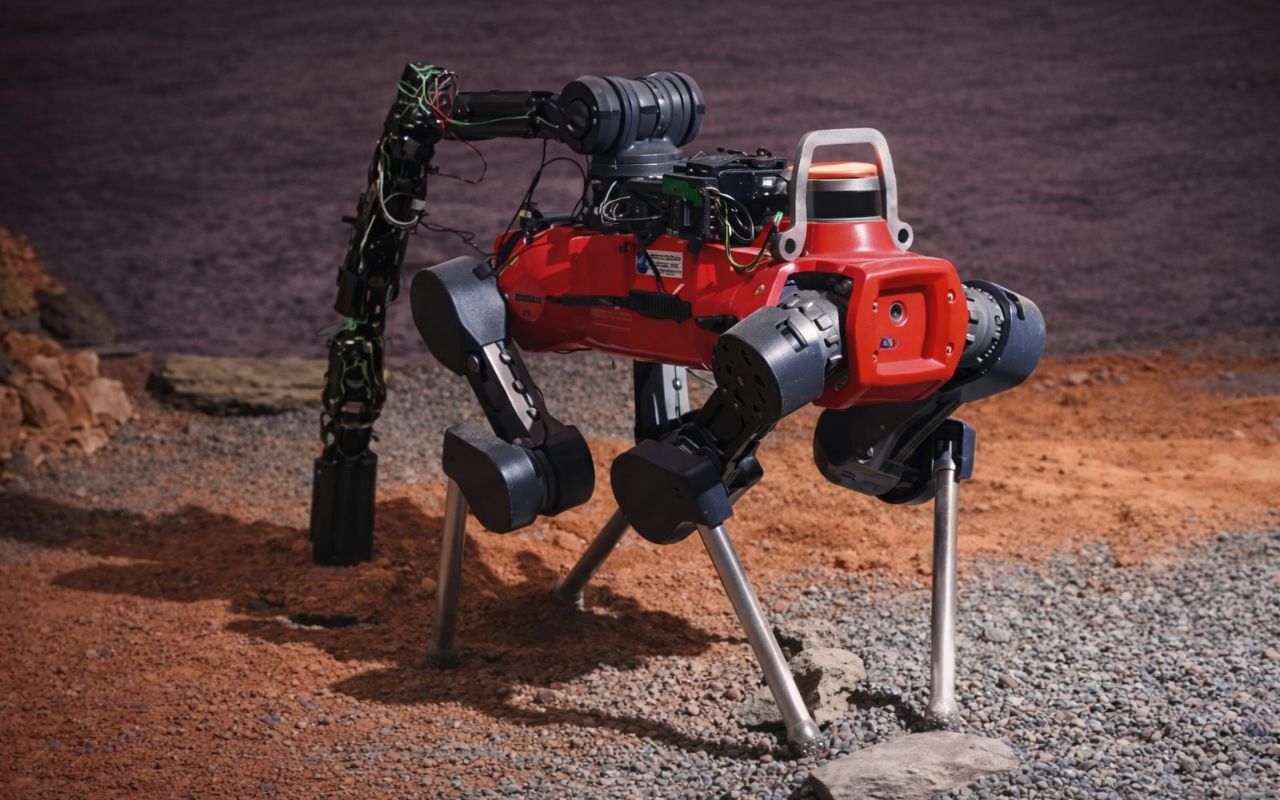
New semi-autonomous legged robot technology challenges the limitations of space exploration by operating almost without human intervention on the Moon.
-
Super toxic red mineral found in the double burial of two women aged 1,900 years near the banks of the Dnieper River in Ukraine.


This reasoning became clearer when the debate began to be framed in geophysical language, not in sensational headlines. Instead of an immediate catastrophic event, what is observed is a precision phenomenon: a microscopic variation in rotation time, too small for everyday life but relevant for measuring how human interventions add to natural processes.
The Physical Mechanism Behind Earth’s Rotation
The key to understanding the topic is the moment of inertia, a quantity that expresses a body’s resistance to changes in its rotation. When the mass distribution changes, the angular velocity can adjust. The classic image of the figure skater helps: by pulling in their arms, they reduce the distribution of mass around the axis and spin faster; by extending their arms, they spin slower.
On a planetary scale, the logic is the same, with much greater complexity. When trillions of liters of water are displaced and stored under specific conditions, the Earth’s mass distribution changes slightly. This adjustment, according to the analysis cited by NASA, has the potential to reduce the Earth’s rotation speed by a tiny fraction, lengthening the day by microseconds.
What NASA Measured Before And What It Projected For Three Gorges
The scientific background came from studies published in 2005, when researchers assessed the effects of the 2004 Indian Ocean earthquake and tsunami. In that case, the tectonic movement abruptly altered the mass distribution and shortened the day’s duration by 2.68 microseconds. This data was crucial to show that Earth’s clock responds to real physical changes.
In the theoretical extrapolation applied to the Three Gorges Dam, geophysicist Dr. Benjamin Fong Chao from the Goddard Space Flight Center indicated two microscopic-scale effects: a shift in the Earth’s pole by about 2 centimeters and an increase in the day’s duration by 0.06 microseconds. The contrast between 2.68 and 0.06 also organizes the discussion: one is the result of a sudden large tectonic event; the other, from a mega-structure with a much smaller but detectable impact in the scientific field.
Who Influences More: Nature, Moon, Or Human Infrastructure?
The Earth’s rotation had already been slowing down before the completion of the Three Gorges Dam, primarily due to natural factors, especially the gravitational interaction with the Moon. This prevents simplistic readings of a single cause. The dam does not replace natural factors; it enters as an additional component in an equation that is already multifactorial.
At the same time, neglecting the human component would also be an analytical mistake. When researchers point out that human activity can produce measurable effects, even microscopic, the message is methodological: the Earth system responds to accumulated changes. Dams, climate changes, redistribution of water and ice, all contribute to a physical mosaic that requires long-term monitoring.
Climate Change, Polar Ice, And The Same Logic Of Mass
The melting of polar ice is another example of mass redistribution with an effect on the Earth’s rotation. When there is mass transfer from the poles to regions closer to the equator, the physical trend is to slow down the planet’s spin. Here again, it is worth separating scale and perception: the effects are minute in everyday life but important for geodesy, chronometry, and Earth system science.
The main convergence between dams and climate lies in the shared physical principle. In both cases, the Earth responds to “where” the mass is concentrated. This integrated reading avoids two extremes: alarmism, which exaggerates immediate consequences, and technical denialism, which dismisses evidence because it is too small for the human eye.
Official Time And The Debate About Negative Leap Seconds
With rotation varying by minimal fractions, the debate about adjustments to official time grows, especially to keep atomic clocks and astronomical time synchronized. Among the hypotheses discussed is the “negative leap second,” in which one minute would have 59 seconds to compensate for the accumulated difference in the opposite direction of the traditional adjustment.
The proposal is not a bureaucratic detail without impact: it affects international measurement standards, telecommunications, navigation, and high-precision systems. When the difference is in microseconds, the average citizen may not notice, but technical sectors feel it immediately. Therefore, the discussion about the Earth’s rotation goes beyond scientific curiosity and enters the global governance of time.
Three Gorges As A Symbol Of Scale, Not An Isolated Exception
The Chinese dam has gained prominence due to its size, but the topic does not end with a single project. Countries like the United States, Brazil, and India have also built large hydroelectric plants. Individually, the effects may be very small; together, the discussion becomes cumulative and strategic, especially on a planet already pressured by climate change and transformation of water use.
This is the most relevant point for public policy: to assess local impacts without losing the systemic view. The construction of infrastructure will continue to be necessary in many contexts, but the decision-making standard tends to evolve when science shows that even fundamental phenomena, such as the Earth’s rotation, register a human signature, even at a microscopic scale.
The story of the Three Gorges does not prove an imminent collapse, nor does it authorize indifference. It shows that scientific precision and long-term planning need to walk together.
If a local project can alter the day by 0.06 microseconds, what criterion do you consider more important for approving mega-projects going forward: immediate energy generation, global cumulative impact, or a balance between the two?







Sou leiga nesse assunto mas é assustador a ganancia humana.
Então por que se mete
A NASA continua a dizer coisas engraçadas… Mas, eu acho que deveria se preocupar com uma possivel mudança no tempo não literal mas figural quando os chineses trocarem o meridiano de Greenwich por Pequim, com um agravante: se são 6 horas da manhã em Pequim, vão se espantar ou estranhar que em todos os continentes será 6 horas, não importa se em lugar x o sol é meio dia ou de noite, mas pelas regras de Pequim serão 6 horas em todo o planeta. Vai vendo
Se todas as nações se consientizassem e seguissem o exemplo da China, acredito que teríamos um pouco mais de esperança na recuperação do nosso planeta. Sendo assim, não precisaríamos tentar explorar e danificar outros planetas, como fazem os poderosos.