





 Portuguese
  English
  Spanish
  4 min of reading
  0 comments


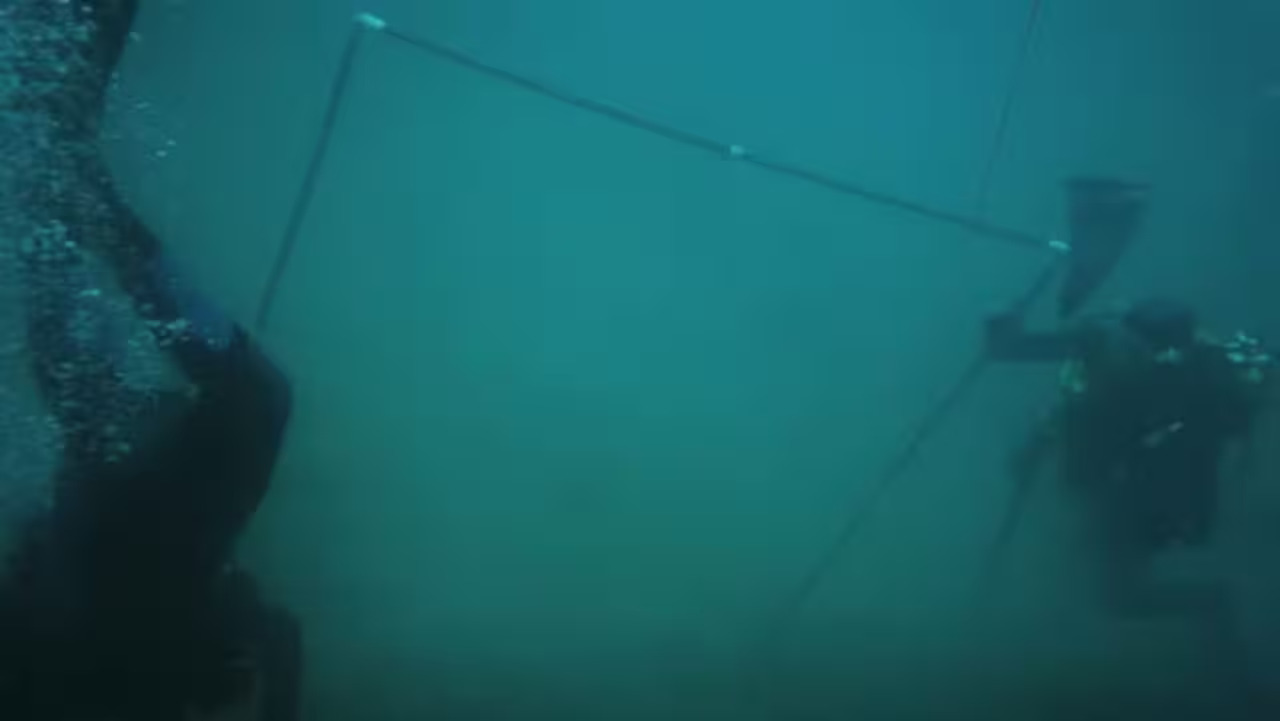
Discovery of Wreckage on Madagascar Island Confirms Shipwreck of Portuguese Vessel Nossa Senhora do Cabo, Lost in 1721 After Pirate Attack
An archaeological discovery in 2025 revealed an important chapter in Portuguese naval history. Researchers announced the probable location of the ancient warship Nossa Senhora do Cabo, lost over three centuries ago.
The vessel was identified near Nosy Boraha, a small island off the east coast of Madagascar, shedding light on a tragedy that occurred in 1721.
The finding was conducted by the Center for Historic Shipwreck Preservation, based in Massachusetts, United States.
-
Comet C/2025 R3 (PanSTARRS) is starting to shine brighter each night and may become visible to the naked eye in April; this rare phenomenon promises to transform the sky into one of the biggest astronomical spectacles of the year.

-
After a devastating fire that left 3 injured and 200 intoxicated by smoke in the Red Sea, the most expensive warship ever built — $13.3 billion — returns to the front in Iran after quick repairs in Croatia.
-
In the Saudi Arabian desert, the world’s largest green hydrogen plant is 80% complete and will use 4 gigawatts of solar and wind energy to produce 600 tons of clean fuel per day when it opens in 2027.

-
Sixteen years after the largest environmental disaster in oil history, BP has just received approval to open its first new field in the Gulf of Mexico, and the 10 billion barrels are 10 kilometers below sea level.
To reach the identification, specialists analyzed historical documents, hull structures, and artifacts found at the wreck site.
The discovery drew attention not only for the value of the cargo carried but also for the context of navigation and the actions of pirates in the region.
Mission and Valuable Cargo of Portuguese Vessel
The Nossa Senhora do Cabo departed from Goa, an old Portuguese colony in India, in early 1721. Its destination was Lisbon.
The vessel was carrying a large amount of wealth, including bars of gold and silver, jewelry, textiles, and religious objects.
Additionally, important figures were onboard, such as the Portuguese viceroy of Goa, the archbishop of the city, and about two hundred enslaved people from Mozambique.
The estimated value of the cargo in today’s terms is €138 million. These goods represented the commercial interests between East and West.
They were also part of the Portuguese strategy to maintain colonial power and supply the court amidst maritime disputes and the constant risk of piracy.
Pirate Attack After Storm
On April 8, 1721, the ship was struck by a severe storm near Réunion Island. To avoid shipwreck, part of the cannons had to be thrown overboard, drastically reducing its defense capacity. In this moment of vulnerability, pirates attacked the vessel.
The area of Nosy Boraha, then known as Île Sainte-Marie, was known to harbor European pirates.
The absence of oversight and the strategic position made the location a point of interest for looters.
After the invasion, the pirates stole some of the goods, and according to reports, intentionally sank the ship to erase the traces of their crime.
Archaeological Finds at the Wreck Site
More than 3,300 items have been removed from the site since the beginning of the excavations. Among the recovered objects are gold coins with Arabic inscriptions, porcelain, religious icons, and an ivory plaque with golden details. It reads “INRI,” a reference to the Latin inscription attributed to Jesus of Nazareth.
A large part of the wreckage is covered by sand and sediment, which may hinder further excavations.
Nevertheless, the recovered items already provide important clues about commerce, religion, and customs of that time.
Uncertain Fate of the Crew and Stolen Goods
It is still not clear what happened to all the crew members. The viceroy was freed after a ransom was paid.
However, the fate of the enslaved people and the archbishop remains unknown. Some of the treasures remained on the seabed and nowadays make up the collection of artifacts recovered by archaeologists.
There are also indications that other ships looted by pirates sank near the same area of Nosy Boraha.
This possibility has kept the interest of the scientific and archaeological community for future expeditions in the Indian Ocean.
Impact of the Discovery on Historical Maritime Routes
The location of the wreckage of the Nossa Senhora do Cabo helped confirm ancient accounts about the routes chosen by Portuguese navigators.
The presence of the ship near Madagascar reinforces the thesis that the Mozambique Channel was a strategic passageway.
Factors such as winds, ocean currents, and pirate attacks directly influenced commanders’ decisions.
As a result, researchers are reviewing old nautical maps and updating studies on trade between Europe, Africa, and Asia in the 18th century. The role of regions like Île Sainte-Marie gains new importance in this context.
Advanced Technology in Wreck Investigation
Archaeologists used various modern technologies to examine the wreckage. Among them are side-scan sonar, remotely operated vehicles (ROVs), and carbon dating methods.
These tools allowed for the identification of hull fragments, personal items, and parts of the deck structure in deep and sediment-covered areas.
The combination of these tools with historical records made it possible to achieve one of the most complete reconstructions of a colonial shipwreck in the Indian Ocean.
The data obtained also help understand shipbuilding techniques and maritime transport habits of the 18th century.
A Discovery That Reinforces the Value of Historical Research
The location of the Nossa Senhora do Cabo represents a significant advancement in maritime archaeology. In addition to providing answers about a little-documented shipwreck, it sheds light on aspects of trade routes, colonial conflicts, and social practices of that period.
Even with many questions still unanswered, the recovery of artifacts and the confirmation of the wreck site contribute to expanding knowledge about the Portuguese presence in the Indian Ocean and the role of pirates in 18th-century naval history.
With information from Portal Uai.





Seja o primeiro a reagir!