





 Portuguese
  English
  Spanish
  4 min of reading
  4 comments


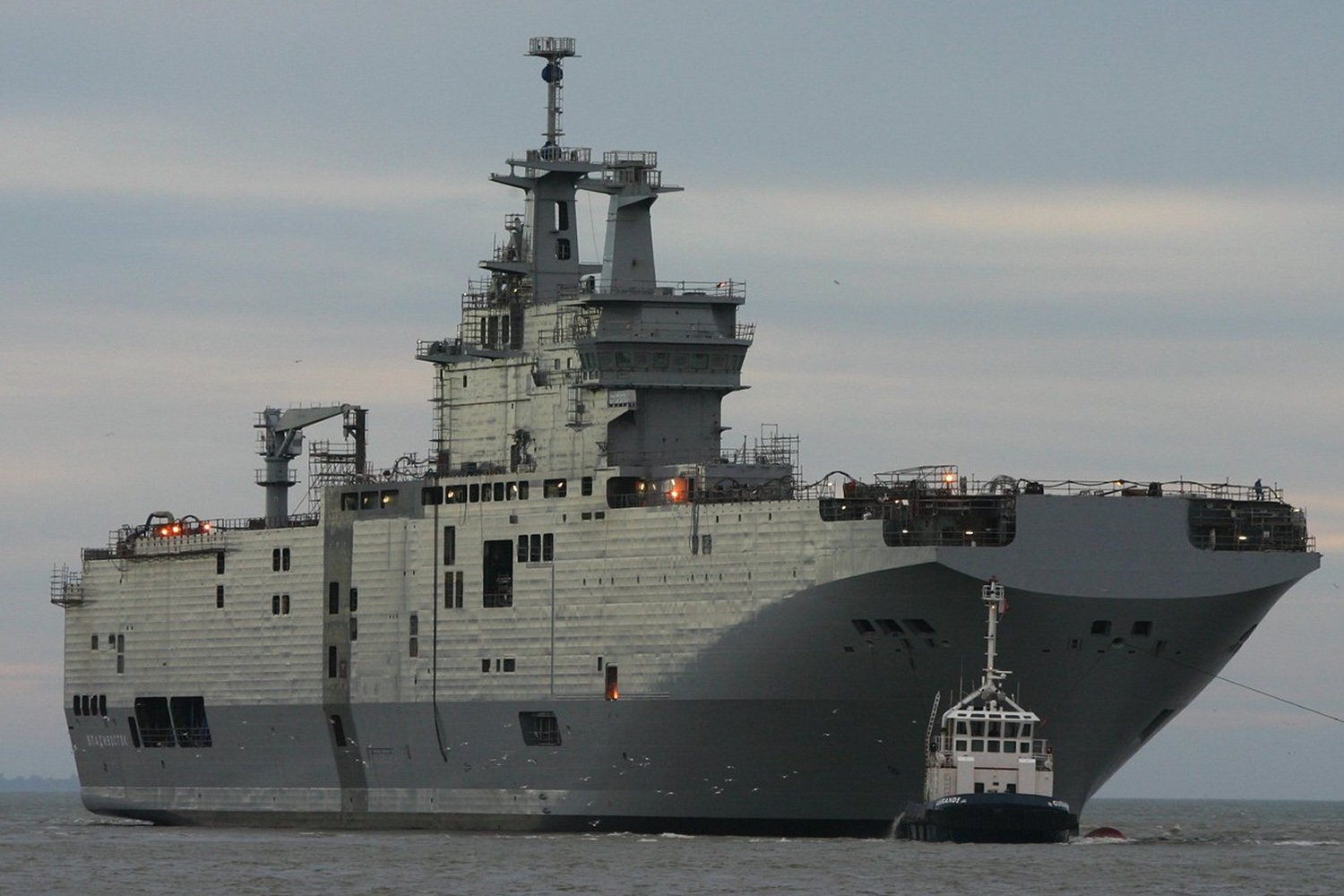


Amphibious Ships Of The Mistral Class Combine Helicopter Carrier, Troop Transport, Embarked Hospital And Command Center, Making Them One Of The Most Versatile Military Platforms Of The French Navy.
The amphibious ships of the Mistral class are among the most versatile military platforms ever built by the European shipbuilding industry. Designed by France in the early 21st century, these giants were conceived to fulfill multiple functions: transport troops, operate combat helicopters, launch armored vehicles, and serve as a command center for complex military operations.
Instead of merely acting as traditional combat ships, these vessels function as true floating military bases capable of supporting land, air, and maritime operations simultaneously. With a large transport capacity and advanced infrastructure, Mistral class ships have taken on a strategic role in military, humanitarian, and international operations.
Origin Of The Mistral Class And The Modernization Of The French Navy
In the late 1990s, the French Navy began studies to develop a new generation of amphibious ships capable of replacing older vessels. The idea was to create a modern platform that combined a large transport capacity with advanced command and control technologies.
-
FAB loses Hermes 900 drone during multinational exercise in Mato Grosso do Sul and is left with only one active aircraft, raising concerns about operational fragility and strategic response capability.
-
The U.S. Army bets on the multifunctional MV 75 aircraft with cutting-edge technology that promises to revolutionize modern warfare by combining extreme speed, greater range, and unprecedented operational efficiency.
-
Built in secret inside a barge with a satellite-proof roof, the 49-meter, 560-ton ship with stealth technology deflected radar waves like an F-117 fighter, sailed invisibly for nearly 10 years at night, and, despite costing 170 million dollars, ended up being dismantled and sold as scrap for only 2.5 million.
-
North Korea tests intercontinental range rocket with a 2,500 kN solid fuel engine supervised by Kim Jong Un and advances in a five-year strategic plan.




The project was developed by the French shipbuilding industry and resulted in the creation of the Mistral class, officially classified as Landing Helicopter Dock (LHD). This type of ship is designed to transport helicopters, troops, and vehicles, allowing for the rapid disembarkation of military forces in coastal regions.
The first ship of the class, the Mistral (L9013), entered service in 2006. It was followed by other units of the same class:
- Tonnerre (L9014)
- Dixmude (L9015)
These ships represent a significant leap compared to previous generations of amphibious vessels.
Dimensions And Characteristics Of The Amphibious Giant
The Mistral class ships are large vessels designed for expeditionary operations. Among their main features are:
- approximately 21,000 tons displacement
- length of about 199 meters
- width of approximately 32 meters
These dimensions allow for a huge amount of military equipment and troops to be accommodated. The flight deck occupies a large part of the ship’s upper side and has six helicopter landing spots. Inside the ship, there is a hangar capable of storing up to 16 rotary-wing aircraft, depending on the mission configuration.
These helicopters can perform various functions, including troop transport, reconnaissance, attack, and medical evacuation.
Capacity To Transport Troops And Vehicles
In addition to air operations, the Mistral class ships also have a great capacity for land transport. A single vessel can transport approximately:
- 450 soldiers on regular missions
- up to 900 military personnel in short-term operations
The internal space also allows for heavy military vehicles to be boarded. Depending on the configuration, the ship can carry about 60 vehicles, including tanks and armored vehicles.
This capacity transforms the ship into an ideal platform for amphibious operations, where troops need to be rapidly landed in coastal regions.
The Amphibious Disembarkation System
One of the most important elements of the design is the so-called well deck, located at the rear of the ship. The internal compartment can be flooded with seawater, allowing landing craft to enter and exit the ship.
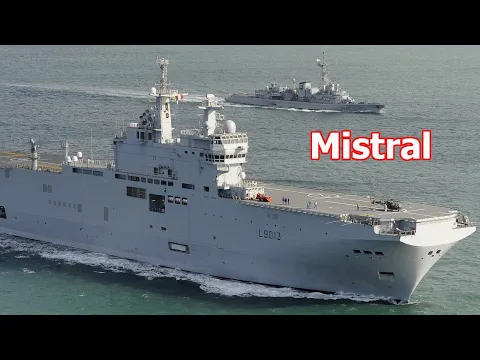
Through this system, the Mistral can launch amphibious landing crafts that transport troops, vehicles, and equipment directly to the shore. This method allows military landings to occur even in areas without ports or infrastructure.
The combination of helicopters and amphibious vessels creates great flexibility in military operations.
A Floating Command Center
Another important aspect of the Mistral class is its ability to act as a command center. The ships have advanced communication and control infrastructure that allows for the coordination of large-scale military operations.
These systems allow for the integration of:
- naval units
- aircraft
- ground troops
- allied forces
For this reason, Mistral class ships often serve as command ships in international operations.
Embarked Hospital And Humanitarian Missions
In addition to military functions, Mistral class ships also have advanced medical facilities. The ship can operate as a floating hospital, equipped with:
- surgery rooms
- hospital beds
- intensive care units
- diagnostic facilities
This capability allows the ship to participate in humanitarian missions and disaster relief operations.
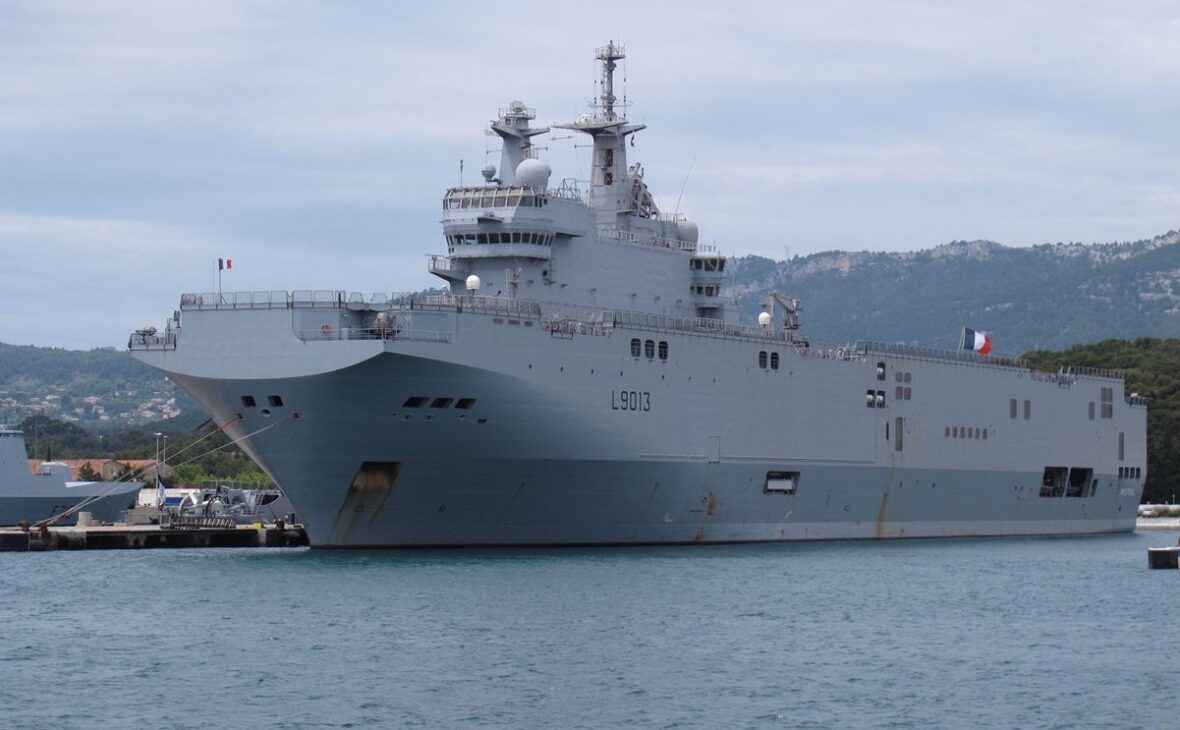
On different occasions, ships of this class have been used for medical and logistical support following earthquakes, humanitarian crises, and civilian evacuations. This versatility expands the ship’s role beyond traditional military use.
Export Of Technology And International Interest
The success of the project has drawn attention from other navies around the world. Russia even ordered two ships based on the Mistral class design, although delivery was later canceled for political reasons.
Other countries have also expressed interest in large amphibious ships inspired by the concept developed by France.
The popularization of this type of vessel reflects the growing importance of platforms capable of carrying out rapid expeditionary operations.
A New Way To Project Military Power
Ships like those of the Mistral class represent a significant change in modern naval strategy. Instead of relying solely on large aircraft carriers or traditional combat ships, many navies have begun to invest in multifunctional vessels capable of operating helicopters, transporting troops, and coordinating complex operations.
This concept allows military forces to be rapidly mobilized in any coastal region of the planet.
By combining transport, command, and embarked aviation on a single platform, Mistral class ships have redefined how amphibious operations can be conducted in the 21st century.






Hola este barco como va pesar 21 toneladas serán unas 2100 toneladas.
Esse era um dos dois navios que a Rússia encomendou da França e que não foram entregues por causa do início da guerra com a Ucrânia?
No, the ships ordered by Russia we later sold to marrocco instead.
yeah the Annexation of Crimea
Egypt then bought the ships from france and and the helicopters Russia was originally going to operate from the ship’s from Russia