





 Portuguese
  English
  Spanish
 5 min of reading
  0 comments


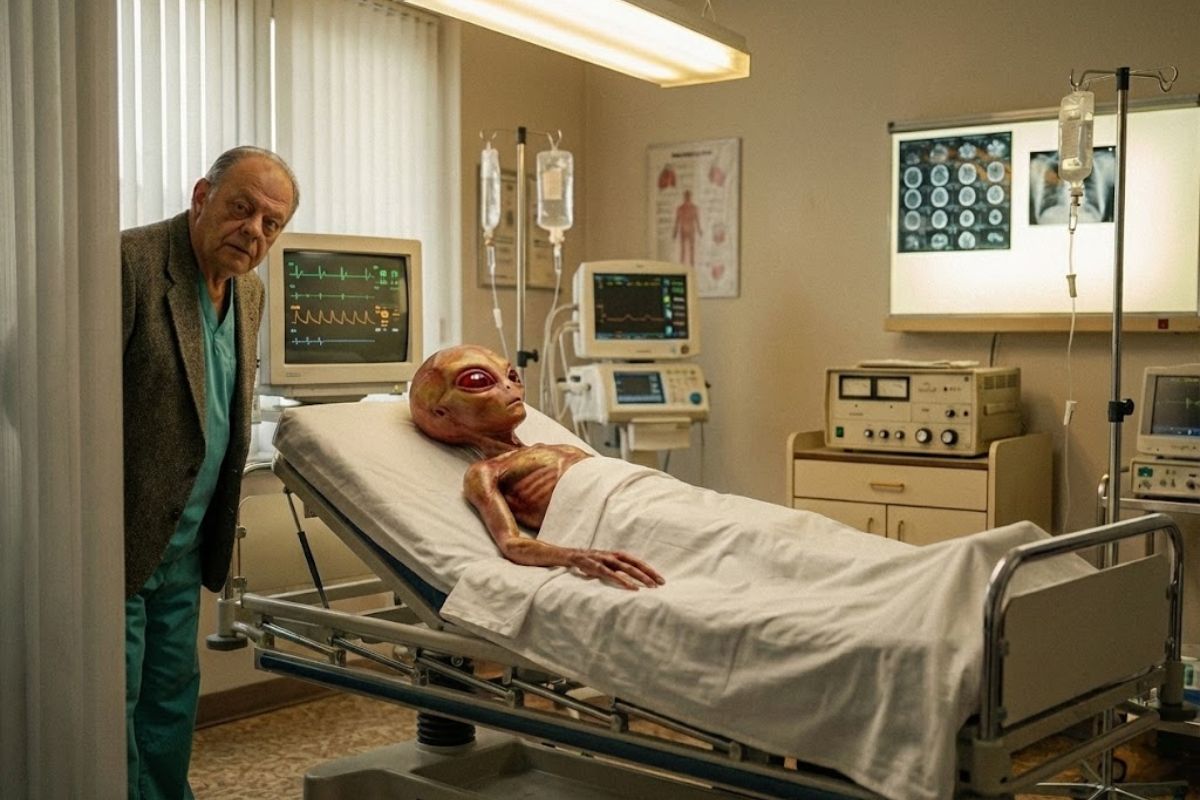
Thirty Years After The Fantástico Of 1996, The Varginha ET Returns To The Center Of The Debate With The Mystery Of Varginha, Globo’s Documentary In Three Episodes: Premieres Tuesday (6) At 11pm, After O Auto Da Compadecida 2, And Continues Wednesday (7) And Thursday (8), On Globoplay With Unpublished Testimony
The Varginha ET, a label that transformed the city of Varginha in Minas Gerais into an immediate reference when it comes to ufology in Brazil, returns to provoke discussion with a documentary from Globo. This time the focus is on a neurologist from the town itself, associated with a hospital, and a testimony that has allegedly remained hidden for 30 years.
The story became nationally known after a piece on Fantástico aired in 1996, when the supposed appearance of an alien, attributed to three young people, was joined by reports from residents about “mysterious flying objects.” Three decades later, the documentary revisits the case, mentions a supposed military rescue in the background and adds an unpublished piece to the debate.
What The Globo Documentary Airs And On Which Dates
Globo produced The Mystery Of Varginha, a documentary divided into three episodes.
-
A 2,400-year-old iron foundry has been discovered in Senegal with 100 tons of slag, 35 furnace bases, and signs of nearly eight centuries of continuous metallurgical activity.
-
Four humans are flying towards the Moon inside the Orion capsule launched by the SLS rocket, and on April 6, Artemis II will disappear behind the far side of the Moon without communication with Earth for nearly an hour.

-
Worlds covered by water, atmospheres filled with hydrogen, and the possibility of life beyond Earth: ocean planets are rewriting the map of cosmic search and forcing scientists to rethink where to look.

-
Argentina achieves the unimaginable after more than 110 years and reintroduces the largest native herbivore of South America to the Chaco to restore a lost link in nature.


The premiere of the first episode is scheduled for Tuesday (6) at around 11pm, after the film O Auto Da Compadecida 2 (2024).
The second episode is planned for Wednesday (7) and the third for Thursday (8). In addition to airing on TV, the documentary will also be available on Globoplay.
The choice for three consecutive episodes concentrates the subject within a single week and increases the visibility of a case that has crossed generations since 1996.
The documentary, as described, does not promise to solve the mystery but exposes a new testimony and reorganizes the public chronology of the Varginha ET from the perspective of a neurologist.
Why The Varginha ET Became A National Nickname And Returned To Prime Time
Talking about Varginha, Minas Gerais, still usually generates an automatic response in many places across the country: “the city of the ET.”
This association is attributed to the impact of Fantástico in 1996, which brought the narrative to a wider audience.
The case took shape by combining the account of three young people about a supposed alien with testimonies from residents who reported “mysterious flying objects” around the same time.
The Globo documentary revisits this context by stating that there is a “new piece” of the puzzle.
By doing this in 2026, exactly 30 years after the 1996 television milestone, the network reopens the debate at a time when the case has already crystallized as a cultural symbol.
The return does not depend on new numbers or new images: it depends on the weight of a testimony.
The Neurologist Ítalo Venturelli And The Call To The Hospital
The testimony presented as unpublished is from neurologist Ítalo Venturelli. The neurologist claims he kept the secret for 30 years.
According to him, he was called to the main hospital in the city to see something “different,” a phrase that the documentary uses as a hook to showcase the turning point of the account.
The centrality of the hospital is strategic in the documentary’s narrative.
A hospital, by definition, is an institutional space, controlled, with its own circulation and routines.
When a neurologist says he was called to this hospital to observe something out of the ordinary, the debate shifts from just the “what” to also contesting the “where” and “how” of the Varginha ET.
How The Neurologist Describes The Being Seen Inside The Hospital
In the account, the neurologist describes a being with a skull and eyes shaped like droplets. He says that the being was “whitish,” had a small mouth and lilac-colored eyes.
The description is not presented in clinical language, but rather as a visual memory, which gives the testimony a narrative quality.
The documentary emphasizes that this account would have remained hidden for 30 years, and thus gains value as a novelty in the discussion.
The hospital reappears as a central element, because the neurologist’s description only gains impact by being made in an environment that, in theory, operates with access control and protocols.
What exists, however, is the neurologist’s testimony, not the confirmation of a record.
The Weight Of The Testimony In The Documentary, According To Paulo Gonçalves
Paulo Gonçalves, director and creator of the documentary, states that Ítalo Venturelli’s testimony is one of the strongest in the production.
He argues based on local reputation and the impact of the account:
“It’s a very compelling account. It’s a recognized person in the city. Why would he lie?”
The phrase is used to indicate why the documentary bets on this segment as a central piece.
This choice helps explain why the Globo documentary reignites the Varginha ET without presenting new material data.
The documentary seeks to have the audience measure credibility based on a specific narrator, a neurologist, associated with a hospital, rather than just folklore that has been marked since the 1996 Fantástico.
What Changes With The Return Of The Case And What Remains Unanswered
The re-airing of the theme in 2026 changes the entry point for the public into the story. The Fantástico of 1996 opened the narrative for the country;
The Mystery Of Varginha proposes an update based on a testimony that has allegedly remained outside the debate for 30 years.
The presence of the hospital as a narrated setting and the figure of the neurologist as a central character shift the focus to institutionality.
Even so, what is described remains in the realm of the account: the documentary presents a memory, not a document.
The very question posed by the director, “why would he lie?” shows that the center of the debate continues to be the trust in the narrator, not the elimination of gaps.
That’s why the Varginha ET continues to fuel versions, disputes, and doubts.
The premiere of Globo’s documentary in three episodes, aired on Tuesday (6), Wednesday (7), and Thursday (8), offers a new perspective on the Varginha ET by prioritizing the testimony of a neurologist and situating the account within a hospital.
By recovering a secret supposedly kept for 30 years, the production reignites a case that captured the nation’s attention on the Fantástico of 1996 and again divides opinions.
If you watched Fantástico in 1996 or saw the documentary now, it’s worth noting what caught your attention and what still seems unexplained, as the public debate about the Varginha ET continues to unfold piece by piece.
In your assessment, does the neurologist’s testimony inside the hospital change anything about the mystery of the Varginha ET or merely reinforce the doubts that have existed since 1996?








-

-

-

-

-

9 pessoas reagiram a isso.