





 Portuguese
  English
  Spanish
  5 min of reading
  0 comments


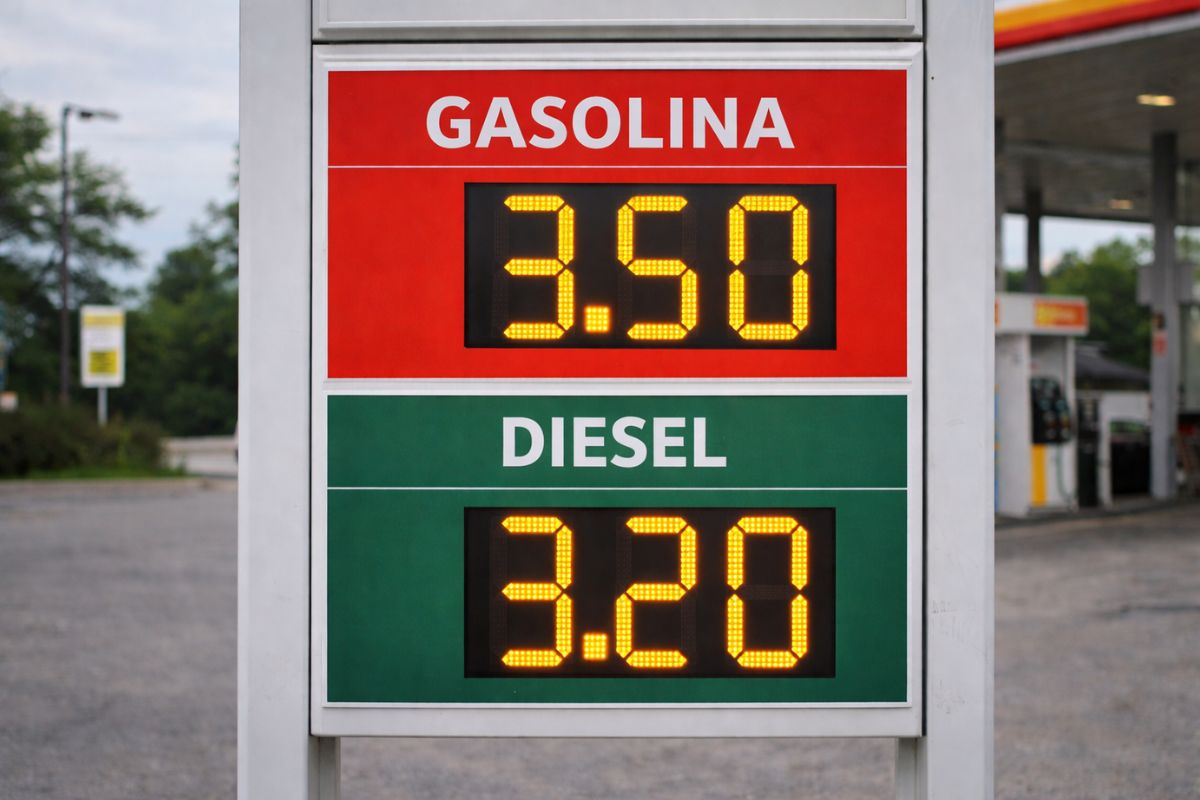
The new fuel prices show gasoline at R$ 6.78 per liter, diesel at R$ 7.45, and ethanol at R$ 4.70 after government measures that include tax exemptions and subsidies, but experts estimate that the real drop in diesel should be between R$ 0.25 and R$ 0.40 per liter.
The new fuel prices remain on the radar of millions of Brazilians who were hoping for significant relief after the measures announced by the federal government. Gasoline continues to be sold at an average of R$ 6.78 per liter, diesel hovers around R$ 7.45, and ethanol has seen a slight drop to around R$ 4.70. Despite recent interventions that include tax exemptions and subsidies focused on diesel, average prices remain high across the country. For those who refuel every week, the new fuel prices have brought more frustration than relief.
The global scenario explains much of the pressure that keeps fuel prices at this level. The appreciation of the barrel of oil, which has already risen more than 50% since the escalation of tensions in the Middle East, directly impacts costs in Brazil. Diesel is especially affected because it is essential for freight transport, and any increase in this fuel cascades through to the price of food, freight, and practically everything that depends on road logistics. Fuel prices in Brazil are, ultimately, hostages to what happens thousands of kilometers away.
What the government did to try to reduce fuel prices
To curb the rise, the government announced a package of measures that includes tax reductions and subsidies mainly focused on diesel. In theory, the set of actions could represent a savings of more than R$ 1.50 per liter, which would be a significant relief for truck drivers and carriers that depend on diesel to operate.
-
Global trade hit a record and surpassed $35 trillion in 2025, but one-third of the growth came from a single sector that did not exist on a large scale five years ago, and the countries that profited the most were not the United States or China, but Taiwan, South Korea, and Southeast Asia, which have become the heart of the AI revolution supply chain.

-
Retirees receive double after error that left employees without salary.

-
It may seem like an exaggeration, but it’s not: your financial life can remain weak even with a high income if you don’t cut expensive debts, invest half of the increase for 12 months, and turn R$ 2,000 or R$ 3,000 monthly into assets.

-
Toyota confirms the end of an era with the closure of a historic factory after nearly 30 years, transfers Corolla production, maintains 1,500 jobs, opens 500 positions, and announces an investment of R$ 11 billion by 2030 in a new phase in Brazil.
The tax exemption is the main tool used by the government to intervene in fuel prices without altering Petrobras’ pricing policy.
In practice, however, the expected impact is considerably smaller than announced. Experts estimate that the real drop in the price of diesel to consumers should be between R$ 0.25 and R$ 0.40 per liter.
The difference between the theoretical discount and the real discount is explained by factors such as logistical costs, the mandatory mixing of biodiesel, and the profit margins of the distribution chain that goes from the refinery to the gas station. Fuel prices do not depend solely on taxes. They depend on an entire chain that absorbs part of any reduction before it reaches the pump.
Why gasoline did not fall even with the intervention in fuel prices
Gasoline did not receive direct subsidies in the package announced by the government. The measures were concentrated on diesel, which has a broader impact on the economy as it is the fuel for freight transport, and gasoline was left out of the main tax reduction actions.
The result is that the average price of R$ 6.78 per liter has remained practically stable, without the drop that many consumers expected.
Prices of petroleum-derived fuels, such as gasoline, are directly linked to the value of the barrel in the international market and to the exchange rate between the real and the dollar. As long as the barrel continues to rise due to the conflict in the Middle East and the dollar remains strong, Brazilian gasoline will continue to be pressured.
The most realistic possibility for the coming days is stability with slight variations, not a significant drop. Those who refuel with regular gasoline should not notice a relevant change in the amount paid at the gas station.
The behavior of ethanol and whether it is a viable alternative to current fuel prices
Ethanol has seen a slight drop and is being sold at around R$ 4.70 per liter. For those with flex-fuel cars, the practical rule remains the same: if ethanol costs up to 70% of the price of gasoline, it is more advantageous.
With gasoline at R$ 6.78 and ethanol at R$ 4.70, the ratio is around 69%, which makes ethanol marginally more economical in most states. However, the advantage is small and varies by region.
Ethanol tends to follow the behavior of gasoline in fuel prices, potentially registering small additional drops in the coming weeks if the sugarcane harvest maintains good production.
In producing states like São Paulo, Goiás, and Minas Gerais, ethanol tends to be more competitive. In states farther from the mills, freight increases the product’s cost and can reverse the equation. The decision between gasoline and ethanol depends on local prices, not on the national average of fuel prices.
The impact of fuel prices on the cost of living for Brazilians
Expensive fuel does not only affect those who own cars. Diesel at R$ 7.45 increases the freight costs of everything that circulates on Brazilian highways, from food that reaches supermarkets to inputs that supply the industry.
When the price of diesel rises, the cost of transportation is passed on to the final price of products, generating inflation that affects even those who do not drive. Fuel prices function as a gear that moves the entire price chain of the country.
Even with the government’s package, fuel prices have accumulated significant increases in recent months. The combination of high oil prices, conflict in the Middle East, and unfavorable exchange rates has created a scenario where government measures can mitigate the impact but not reverse it.
Experts expect that fuel prices will remain at elevated levels in the short term and that any more significant reduction will depend on a change in the international scenario, something over which the Brazilian government has little control.
What to expect from fuel prices in the coming weeks
The most likely scenario is stability with occasional adjustments. Diesel may see slight reductions as government measures are absorbed by the distribution chain, but the drop should be far from the theoretical R$ 1.50 and closer to the R$ 0.25 to R$ 0.40 that experts project.
Gasoline is likely to remain at the current level, and ethanol may have slight downward fluctuations depending on the harvest.
For consumers seeking real savings in light of current fuel prices, options are limited but exist. Comparing prices between gas stations using apps, considering switching to ethanol in states where it is competitive, and planning trips to reduce consumption are practical measures that make a difference at the end of the month.
The government has done its part with the package of measures. Whether it was sufficient or not, each Brazilian’s wallet will respond in the coming visits to the gas station.
What do you think of the new fuel prices after the government’s intervention? Did you notice a difference at the pump, or do the prices still weigh the same? Share in the comments. Fuel is the type of expense that affects everyone, and every cent makes a difference.









Seja o primeiro a reagir!