





 Portuguese
  English
  Spanish
  7 min of reading
  1 comment


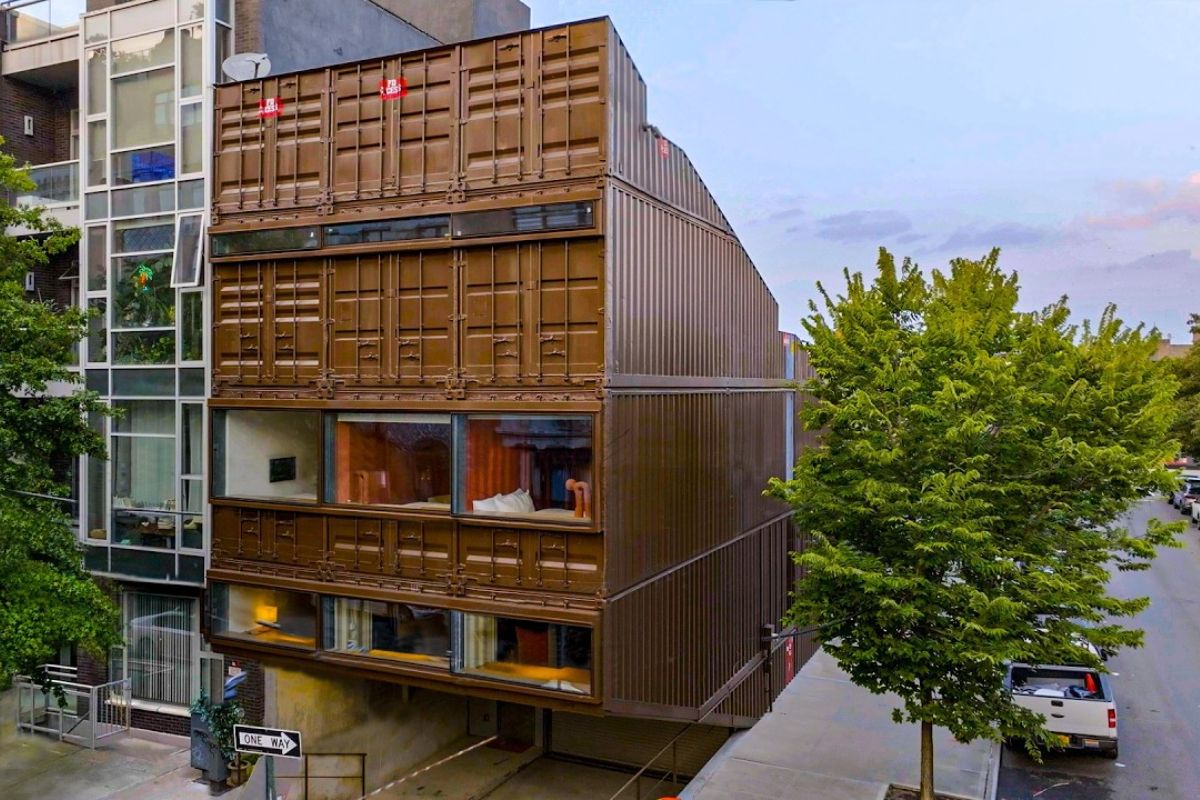


At The Heart Of New York, A Residential Project Reused Rejected Shipping Containers To Create A Multistory Semi-Detached House With Uncommon Structural Solutions, Robust Insulation, Integrated Social Areas, And Solar Energy, Uniting Material Reuse, High Spatial Performance, And A New Take On Sustainable Luxury In A Contemporary Brooklyn.
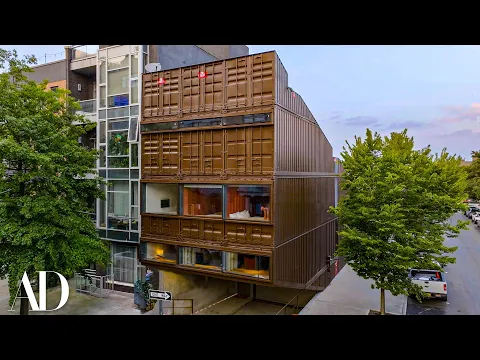
In Brooklyn, shipping containers have ceased to be just transportation modules and have become the foundation of a semi-detached house that combines residential scale, industrial aesthetics, and environmental strategy. The transformation of 18 rejected units into a single address shows how reuse can move from discourse to everyday engineering.
The project, developed by Giuseppe Lignano and Ada Tolla, founders of LOT-EK, was prefabricated offsite and assembled in just three days at a busy corner. With an internal cinema, large fireplace, connected terraces and a view of Manhattan, the house conveys a central point: sustainable luxury is also a constructive decision.
From Stigma To Method: Who Designed It And Why They Persisted With Containers

The choice of shipping containers did not emerge as a recent trend but as a continuation of research that started about 30 years ago. For the architects, sustainability is not limited to energy consumption after the construction is completed; it primarily concerns how the building is born, what materials enter the process, and what type of waste is avoided.
-
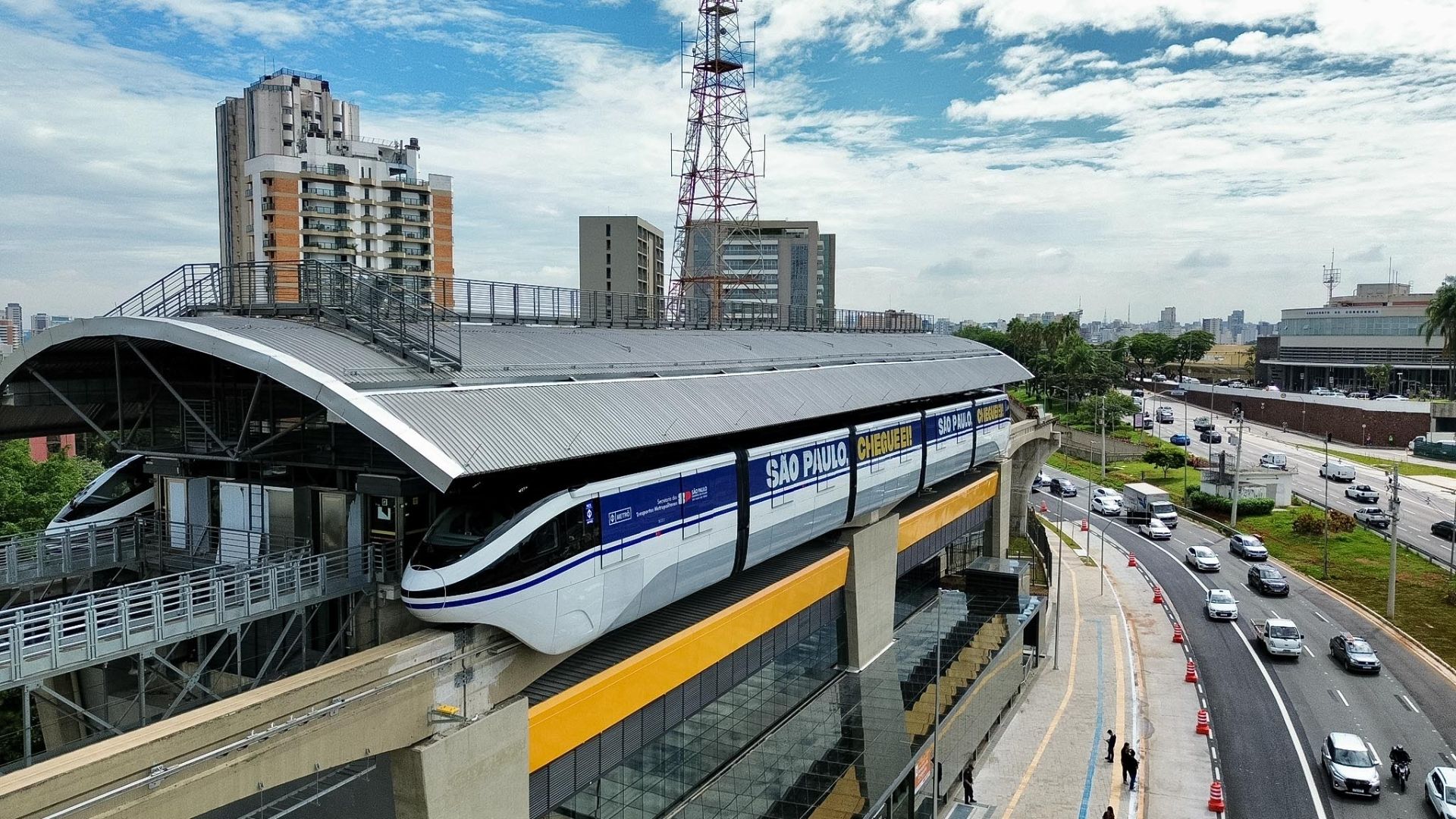
Congonhas receives the monorail promised for the 2014 World Cup after more than a decade of delays and becomes the first airport in Brazil with integrated subway.
-
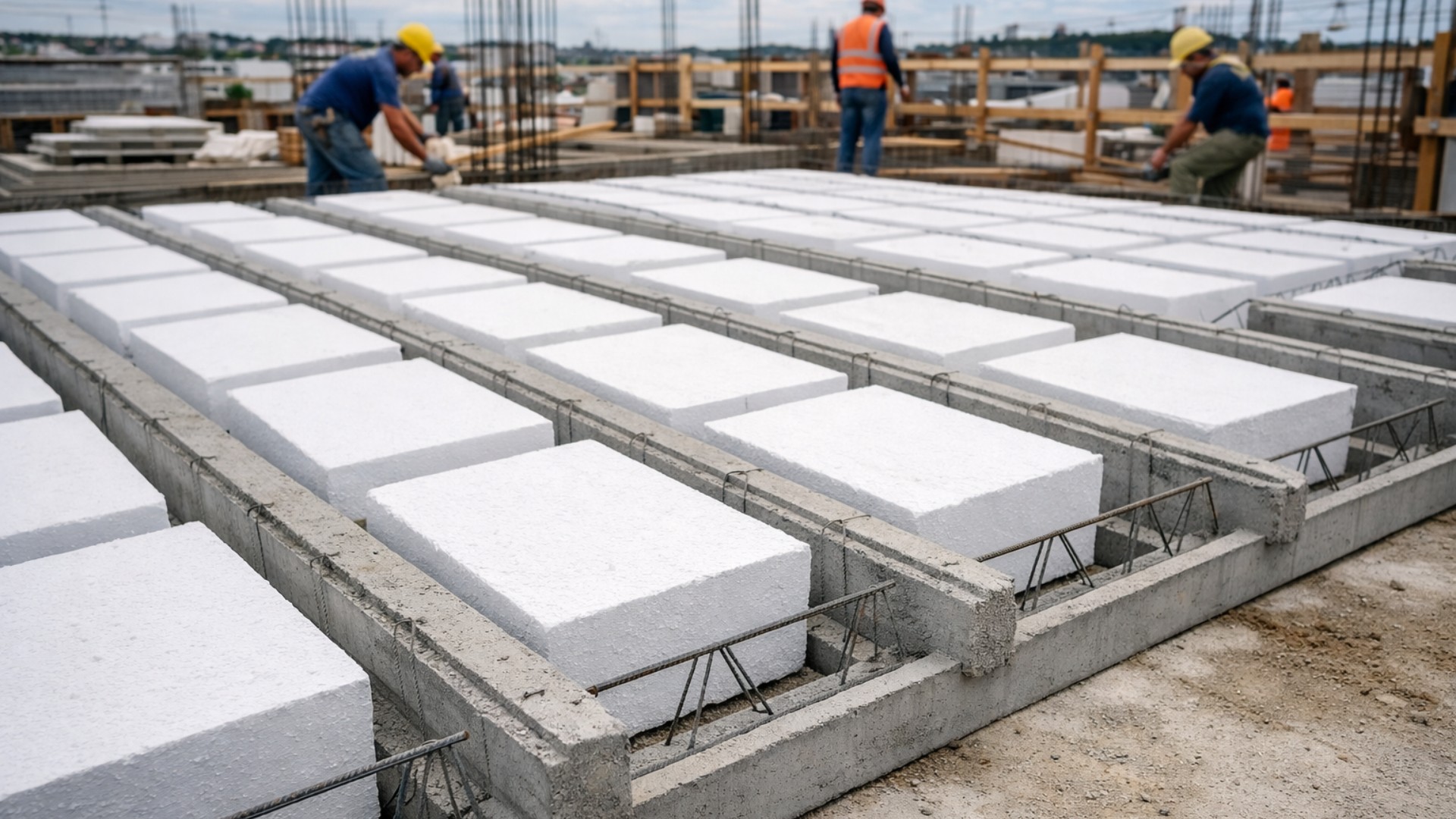
Goodbye, concrete: a new trend in civil construction reduces the weight of the structure by up to 30%, accelerates projects by up to 40%, cuts costs on steel and labor, and improves thermal insulation with EPS.
-
Russian engineers create an innovative propeller blade for aircraft that could completely change the way airplanes and helicopters operate.

-
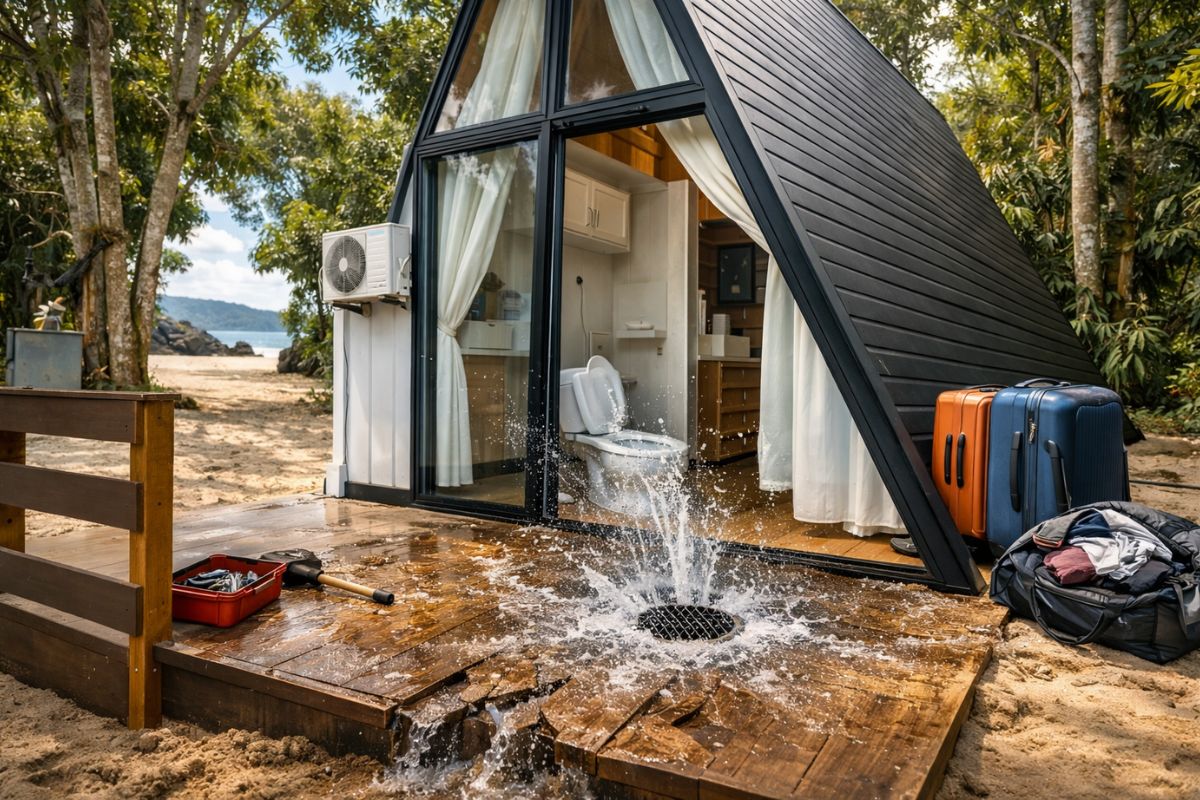
Couple finishes building PVC chalet on the beach on the last day, with air conditioning and curtains, but discovers the bathroom drain is inverted: water escapes from the drain, risking breaking the floor, and the rush continues before the trip.
This technical stance also includes a cultural component. For a long time, architecture with shipping containers carried the stigma of a temporary, cheap, or limited solution. The project in Brooklyn confronts this prejudice by raising the standards of execution and comfort, demonstrating that reuse can coexist with spatial sophistication. The logic is clear: creatively responding to what the city rejects.
Assembly Engineering: 18 Containers, External Cuts, And Construction In Three Days

The speed of the construction is impressive, but it did not occur due to improvisation. The 18 shipping containers were cut and prepared off-site, with planning for fittings, transportation logistics, and lifting sequences. When they arrived at the site, the assembly functioned like an industrial system: each piece already had a defined position and function, minimizing disruptions on the street and in the immediate surroundings.

The diagonal composition was decisive. By cutting the stack of shipping containers, the team reused the removed parts to form decks and continuity between external levels. Instead of generating waste, the cut became a formal and functional resource. The result was a dynamic volumetry, with a quarter of the house cantilevering over the entrance, enhancing the sense of movement and an urban object in transformation.

The facade also explores the original materiality. In several places, the side of the shipping containers doors was kept visible, including bars and locks, creating a vibrant and technically honest surface. There is no attempt to hide the origin of the module; there is an effort to transform industrial language into architectural identity.

How Containers Became Truly Livable Space

Living in shipping containers requires significant interventions, and the house demonstrates this precisely. On the main social floor, the modules were combined to create a layout with a width of three containers and a length of two, totaling six units on a single expanded floor. The remaining corrugated wall acts as a structural component, while the joints between modules were treated as seals for connection and stability.

The original Apitong wood floors were preserved, maintaining the material memory of maritime transport. The metal fittings in the floor, previously used for coupling in trucks, remained as a technical mark of the system. This decision produces two effects simultaneously: reducing unnecessary material replacement and conferring authenticity to the interior.

The thermal performance received a robust treatment. The perimeter walls were insulated between the external corrugated sheet and the internal closures, with a thickness of approximately six to seven inches. On the ceiling, Lauan acts as a finish and separation layer between floors, creating a set that seeks comfort without erasing the original structure of the shipping containers.
Internal Program: Steel Kitchen, Monumental Fireplace, And Home Cinema

The internal organization combines utility and theatricality. The kitchen, entirely made of stainless steel and produced by a company accustomed to professional kitchens, reinforces the technical vocation of the house and dialogues with the industrial origin of the shipping containers. At the same time, the finish was integrated into the social space to function as an open scene for interaction, rather than as an isolated service area.
In the living room, the large-scale fireplace became a central element due to its design and function. The ample sizing, considered from conception, responds to a specific use and deviates from common decorative standards. Here, architecture works with real requirements, not with a generic image of comfort: the form arises from a concrete demand.
The internal cinema emerged directly from the geometry of the house. The space resulting from the inclined cut of the shipping containers was interpreted as an ideal area for projection, with closure panels and light control. Instead of adapting a conventional room for media, the project created a room whose spatial configuration already enhances the immersive experience.
Flexibility Of Use: From Original Family To New Resident

The house was designed for a family of four, including a smart strategy for children’s rooms. On the intermediate floor, the spaces could operate as a single room or be divided into two, with two doors planned from the beginning. This flexibility shows that architecture with shipping containers does not have to be rigid; it can adapt to life cycles and routine changes.

About three years after the sale to a new owner, the architectural base remained intact, while finishes and colors were updated. This point is relevant: when the spatial structure is well resolved, it supports reinterpretations without losing performance. In other words, the value of the project lies less in transient decoration and more in the intelligence of the building system.

The intermediate floor was also absorbed as a studio, and the guest rooms maintained the modular logic. The repetition of the shipping containers dimensions facilitates maintenance, but the final result does not sound repetitive because the voids, diagonals, and vertical connections break the typical monotony of series modules.
Connected Terraces, Solar Panels, And The Scale Of The City
The external strategy reinforces the idea of an integrated vertical house. Each floor has a terrace, and all can be connected by stairs, allowing continuous circulation between levels. The concept is not merely aesthetic: it expands social uses, distributes outdoor permanence, and transforms the shipping containers into a multi-scale gathering platform.
On the upper diagonal surfaces, solar panels occupy the area most exposed to the sun, taking advantage of the project’s geometry. It is a choice consistent with the proposal for reuse because it combines the second life of materials with local energy generation. The ensemble synthesizes a broader understanding of sustainability: it’s not enough to operate well after completion, it is necessary to build with a logic of reduced impact.
At the top, the view reaches the greenery of Williamsburg and the Manhattan skyline, including landmarks of the financial center. This urban framing helps explain why the house became a reference: it is not an isolated object but an intervention that engages with Brooklyn’s density and the New York imaginary.
Sustainable Luxury Without Makeup: What This Case Really Redefines

The main disruption of this project lies in repositioning what is understood by luxury. Instead of only associating sophistication with rare materials or staged solutions, the house demonstrates that the differentiator can be found in precise engineering, qualified reuse, and spatial performance.
The 18 shipping containers cease to be a symbol of emergency economy and come to represent a project of high complexity.
At the same time, the case does not romanticize ease. Transforming shipping containers into comfortable residences requires structural calculation, insulation planning, circulation design, and strict assembly control.
The final result works only because there is a method. This is the least visible part but also the most decisive for those evaluating replication in other urban contexts.
When the debate moves from “industrial visual” to technical quality, the discussion matures. It is precisely here that this house in Brooklyn redefines the theme: it proves that sustainability can be ambitious, urban, and desirable without sacrificing constructive coherence.
The conversion of 18 shipping containers into a semi-detached house in Brooklyn condenses four responses into a single project: the agents of change are architects with decades of research; how much is reused is measurable in modules and components; where this happens matters for urban impact; and why it works lies in the integration of technique, real use, and long-term vision.
If such a solution were applied in your city, which criterion would weigh most in your decision to live in such a project: thermal comfort, speed of construction, aesthetics, possibility of customization over the years, or reduction of waste in construction? I want to hear your experience and what, in practice, would make you trust (or not) in a shipping container house.









Achei linda, charmosa, elegante e muito aconchegante, eu tenho muita vontade de ter uma casa de contêineres na verdade é um sonho que eu queria realizar!