





 Portuguese
  English
  Spanish
  5 min of reading
  0 comments


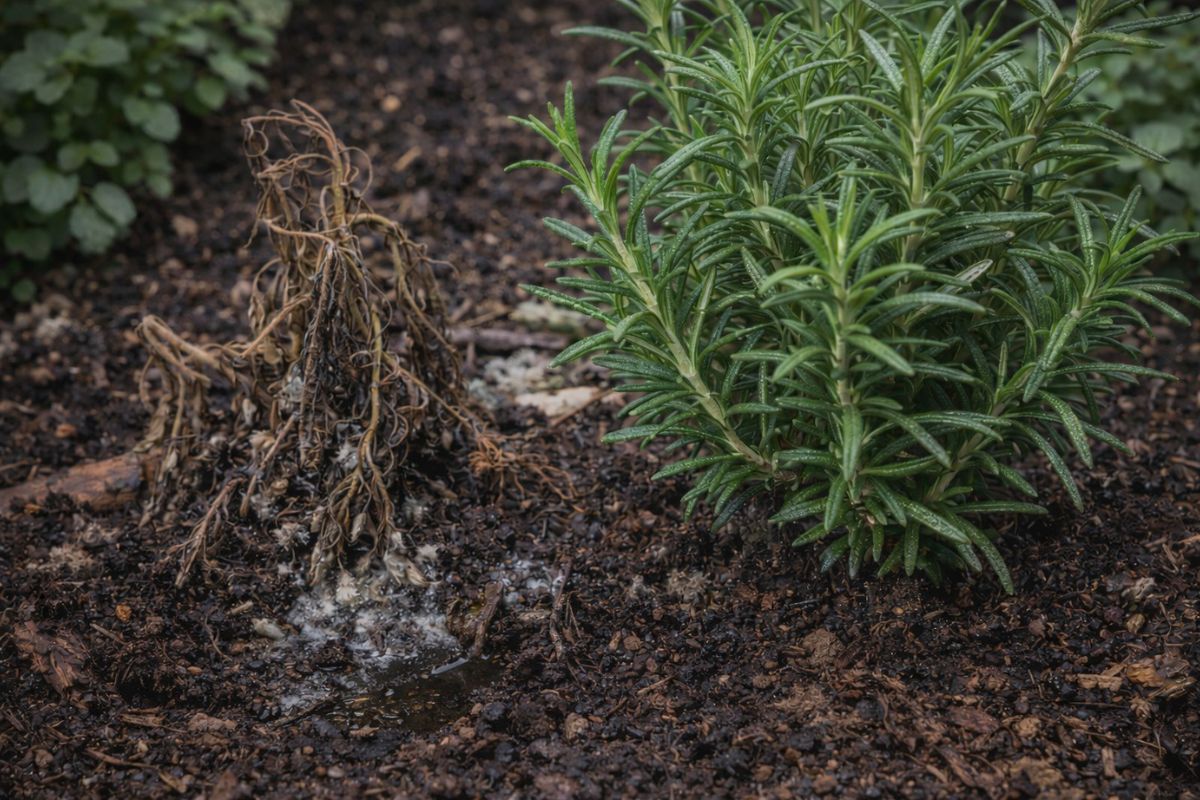
Rosemary is resistant to almost everything, but plants like pumpkins and Swiss chard create moisture around them that silently rots their roots, and the planting location, soil type, and watering frequency determine whether it will thrive or wither in your garden.
Rosemary has a reputation as an unbreakable plant. It withstands heat, survives with little water, and scents the garden without requiring constant attention. But this reputation hides a problem that catches many people by surprise: rosemary can have its development seriously compromised if it is next to incompatible species. Plants that need a lot of water create a humid microclimate around them that favors the appearance of fungi and waterlogging of the soil, exactly the scenario that rots the roots of rosemary without the owner realizing it until it is too late.
Understanding which plants do not pair well with rosemary, where to position it in the garden, and how to care for it properly is what separates a vigorous shrub from an herb that dwindles for no apparent reason. Rosemary is native to the Mediterranean and thrives best in warm, dry climates, with full sun and well-drained soil. When these conditions are respected, a single plant can last for years and supply the kitchen for months without needing replanting. When they are not, the result is frustration and the feeling that rosemary “did not take off,” when in fact the problem was the neighboring plant.
The plants that rot rosemary’s roots without you noticing

Rosemary needs dry soil, good drainage, and direct sunlight to thrive. Pumpkins and Swiss chard are two of the worst neighbors it can have in the garden, because both require frequent and abundant watering, creating a constantly humid environment around them that is fatal for rosemary’s roots.
-
The largest swamp on the planet has lost 57% of its water in less than 12 months, rivers have reached their lowest levels since records began, and NASA satellites have documented in real time the most extreme transformation ever recorded in the Pantanal: the biome, which should be flooded, has turned into a cracked savanna for the first time in 50 years.

-
An abandoned villa for over 80 years with underground mines, a 130-meter zip line, historical ruins, and challenging trails makes Cwmorthin, in Wales, an unusual destination.

-
This wind turbine fits in a water bottle, weighs only 1.4 kilograms, charges cell phones and laptops with any breeze above 13 kilometers per hour, and works day or night, in rain or shine.

-
It is 95% water, controls blood sugar, strengthens bones, and almost no one eats it: maxixe is the most forgotten vegetable in Brazil and one of the most powerful you could put on your plate today.
Waterlogging favors rotting and the establishment of fungi that silently spread at the base of the plant.
But the problem is not limited to these two species. Plants from the brassica family, such as cabbage, cauliflower, and broccoli, compete for the same soil nutrients and are susceptible to diseases that can migrate to neighboring rosemary. Carrots and onions attract aphids and other pests that easily move to surrounding plants.
Geraniums and high-water ornamental flowers can serve as hosts for harmful insects. For rosemary to survive healthily, it needs neighbors that share its preference for dry soil and little watering.
Where to plant rosemary in the garden to ensure it thrives

The ideal location for rosemary is one that receives full sun for most of the day. Positioning rosemary in shaded, stuffy areas, or near plants that create shade directly compromises its growth and the intensity of its aroma.
If the garden has beds with different sun exposures, the brightest space should be reserved for it. It is a plant that literally needs light to produce the essential oils that give it its characteristic scent.
The type of soil is also crucial for rosemary. Sandy or gravelly soils, which facilitate water drainage and prevent the roots from being submerged, are the most suitable. If the garden soil is too clayey or compact, it is worth mixing coarse sand or gravel to improve permeability before planting.
An effective strategy is to dedicate a bed exclusively to rosemary, separated from species that require frequent watering, ensuring that it is never exposed to a humid environment for prolonged periods.
How to water rosemary without making the mistake that kills this plant the most
Excess water is rosemary’s main enemy and also the most common mistake made by those who start cultivating it. The basic rule is clear: wait for the soil to dry completely before watering again. Only in the spring and summer months, when the plant is in a phase of more intense growth, can the frequency be slightly increased.
Still, the soil should never be waterlogged, as moisture accumulation in the roots leads to rotting and the establishment of fungi.
Wilting branches even with proper watering are a classic sign that rosemary’s roots are rotting due to excess water and lack of drainage. Dark or yellowish spots on the leaves may indicate the presence of fungi or attacks by sucking insects.
Sticky or whitish-looking leaves are usually caused by mealybugs residing on the underside of the leaves. And fine webs between the branches indicate an infestation of mites. Identifying these signs early is crucial to save the plant before the damage becomes irreversible.
The pruning that keeps rosemary compact, healthy, and productive for years
Regular pruning is essential to keep rosemary healthy and productive. In addition to controlling the size of the shrub, pruning helps remove dry, damaged branches or those showing signs of pests, which is especially useful in pots or small garden spaces.
The ideal is to do light pruning throughout the year, cutting the tips of the branches to stimulate lateral growth and keep the plant compact in shape.
This practice also improves air circulation among rosemary’s branches, reducing the risk of fungal diseases that settle precisely where ventilation is insufficient. A well-pruned plant produces more aromatic leaves, maintains vigor for longer, and better withstands climatic variations.
Rosemary is generous when it receives the minimum attention at the right time: sun, drained soil, little water, and regular pruning are all it asks for in return with aroma and flavor for years.
What rosemary offers beyond the garden: from the kitchen to health
Rosemary is much more than a decorative plant. In the kitchen, it is a versatile seasoning that pairs well with roasted meats, artisanal breads, potatoes, flavored oils, and even teas.
Its intense aroma transforms simple dishes and is one of the most valued ingredients in Mediterranean cuisine, used both fresh and dried. A well-cared-for plant in the garden provides fresh leaves for months without the need for replanting.
In health, rosemary contains vitamins A, B1, B2, B3, B6, C, E, and K, as well as minerals like calcium, iron, magnesium, and zinc. In natural medicine, it is recognized for aiding blood circulation, facilitating digestion, and helping combat inflammation.
The essential oil extracted from the branches is used in aromatherapy, massages, and hair treatments to stimulate hair growth. Cultivating rosemary in the garden ensures a complete ally for the table and well-being, as long as it is planted in the right place and away from species that compromise its development.
Have you ever lost a rosemary plant without understanding why? Did you know that the neighboring plant could be the culprit? And what is your favorite recipe using fresh rosemary? Share in the comments. Anyone who grows herbs at home always has a good story to share.








Seja o primeiro a reagir!