





 Portuguese
  English
  Spanish
  5 min of reading
  0 comments


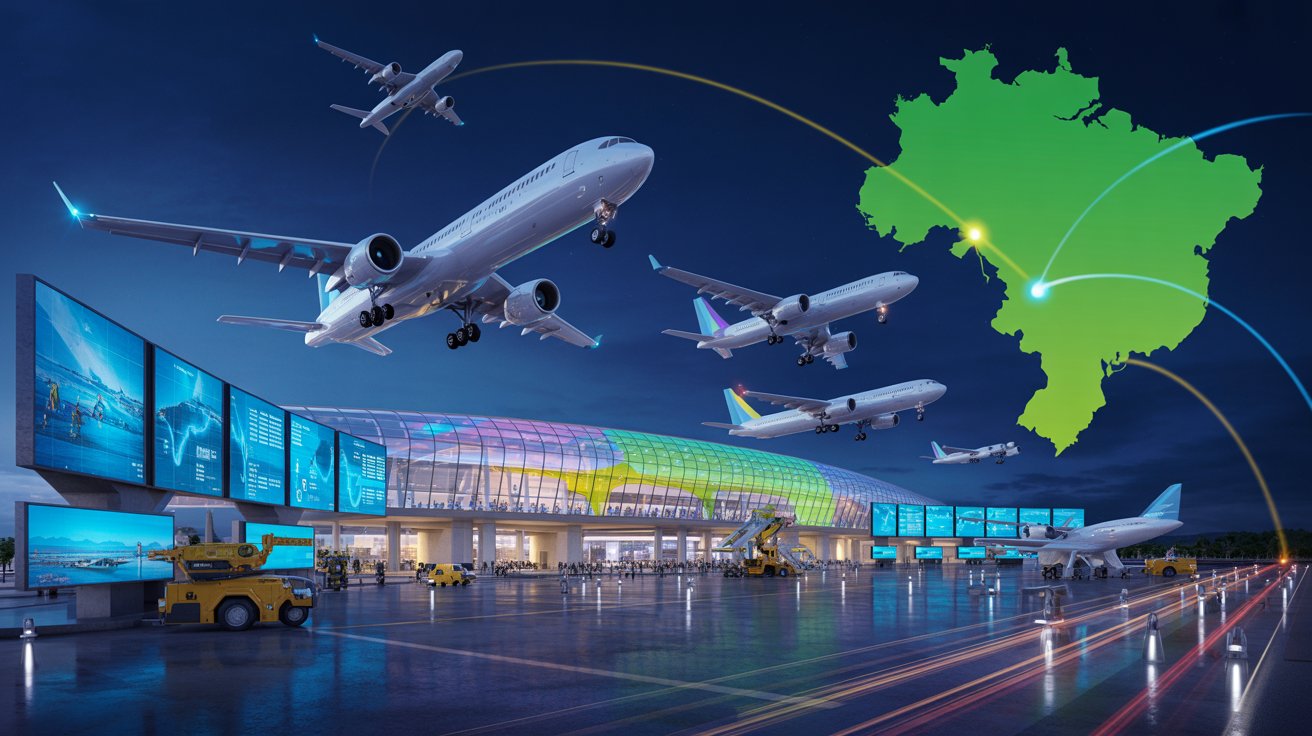
Project Envisions High-Tech Airport in the Northeast, with Automation by Robots, International Support, and a Focus on Expanding Global Tourism, While States Compete for the Location and Await Definitions on Regulation and Investment Model.
A project to build a large high-tech international airport in the Northeast has come back on the radar after being presented to investors at the Tourism and Investment Forum | Brazil 360°, in São Paulo.
The initiative has the Development Bank of Latin America and the Caribbean (CAF) as the financial broker and envisions a terminal with partially automated operations by robots, designed to be a hub of high connectivity focused on global tourism.
Meanwhile, discussions are advancing in Congress about allowing foreign companies to engage in cabotage in the country — a regulatory change seen by industry members as a condition to expand routes and competitiveness.
-
Inflation in March reaches 0.88% according to IBGE and pressures the Brazilian economy, impacting family budgets and requiring more strategic decisions to maintain financial control.

-
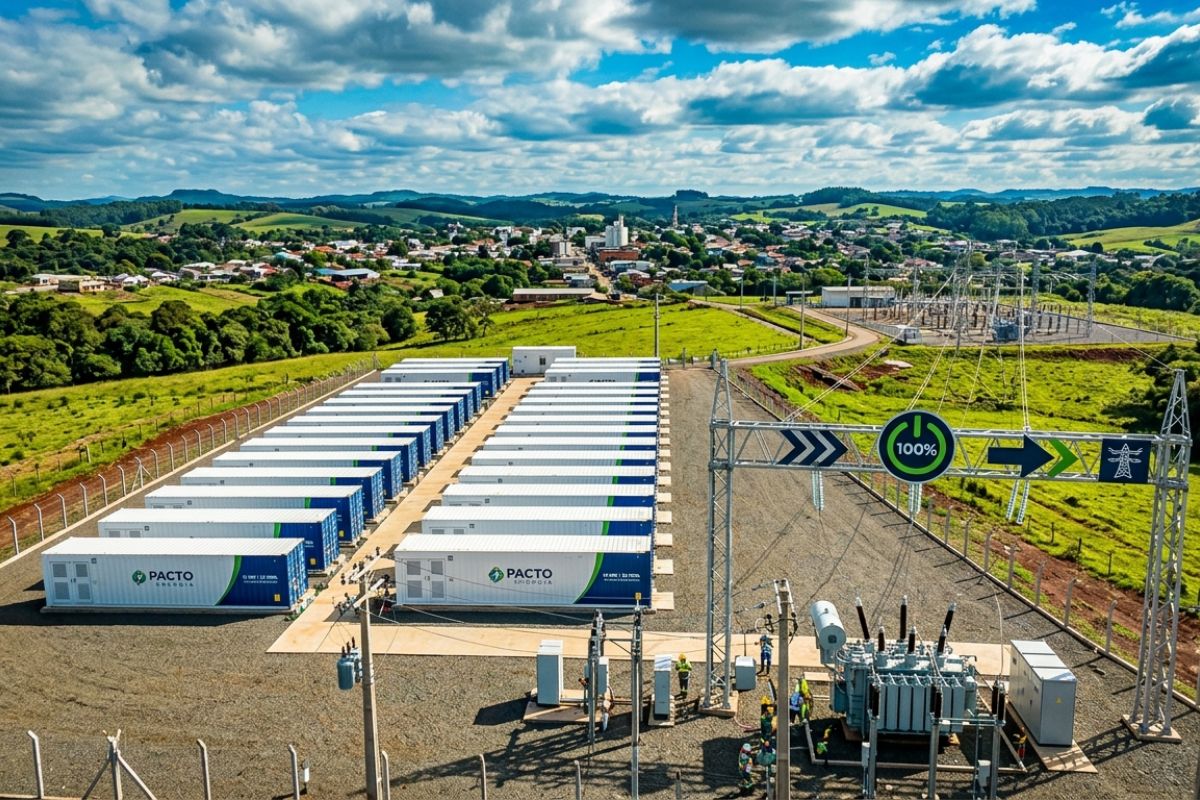
In Paraná, distributor Pacto connects 100% of the load in Coronel Vivida to batteries: a BES of 10 MW and 20 MWh costs just over R$ 30 million and lowers the local tariff now.
-
With a dependence of up to 80% on gas imported from the United States, Mexico is responding with a robust energy strategy, betting on shale gas, creating a scientific committee, and preparing to expand natural gas production to reduce vulnerability and strengthen its energy security in the coming years.

-
The United States proposes to Brazil a critical minerals agreement with a minimum price to combat Chinese dumping and priority for investment, but the Planalto is blocking the signing out of fear of upsetting China and due to electoral calculations in a year of competition.

Regulation in Debate and Its Impact on Connectivity
In Congress, PL 4.392/2023 aims to authorize domestic transportation by foreign companies in the Legal Amazon, under specific circumstances.
Although it is not a broad authorization for the entire territory, the processing of this and other texts on cabotage has been cited by market agents as a relevant step to unlock new operational models and encourage the arrival of international routes that feed domestic flights.
The behind-the-scenes reading is that a clearer regulatory framework could encourage investments in infrastructure and expedite hub projects, although practical application depends on subsequent regulations and decisions from sectoral agencies.
Announcement in São Paulo and the Role of the CAF
The airport project gained visibility when it was announced at the Brazil 360° Forum, a meeting that brought together government, multilateral organizations, and private investors.
The CAF presented the proposal as part of a package of initiatives aimed at tourism infrastructure and logistics, emphasizing operational efficiency, sustainability, and embedded technology.
The design of the hub envisions international and domestic connections designed to reduce connection times, diversify networks, and enhance system resilience, benefiting foreign visitors and the regional economy.
States Enter the Game: Paraíba in the Competition
The movement has sparked interest from state governments.
João Azevêdo, governor of Paraíba, stated that the state intends to compete to host the terminal, assessing that there are economic and fiscal conditions to attract investment.
“Paraíba will compete to have this terminal aimed at Tourism and can offer good economic and fiscal conditions,” said the governor during the event.
This statement echoes a local strategy to strengthen tourism, with flagship projects and areas aimed at entertainment and hospitality, in an attempt to consolidate international flows currently concentrated in a few airports in the country.
UN Tourism Guidelines: Innovation and Sustainability
The proposal also received institutional support from UN Tourism in shaping guidelines.
The Secretary-General, Zurab Pololikashvili, advocated that the venture go beyond a traditional terminal and incorporate environmental standards and automation.
“We want to support an airport that is sustainable and innovative, not just a space for flights. Part will be automated by robots. It’s something new for the world, not just for Brazil,” he stated.
The emphasis on energy efficiency, waste management, surrounding mobility, and passenger experience integrates the set of requirements for a facility designed to compete on a global scale.
PATI and Stimulating International Tourism
On the demand front, the International Tourism Acceleration Program (PATI), from the federal government, could serve as a leverage for routes and promotional campaigns.
The model envisions partnerships with airlines and airports to launch new flights and fund marketing actions in sending markets, focusing on increasing the number of seats and diversifying origins.
For a hub in the Northeast, this public policy is likely to be complementary: by stimulating supply and promotion, it creates conditions for a state-of-the-art airport to emerge with critical mass of connections and international visibility.
What the Project Promises to Deliver
The presented design combines smart infrastructure, digital processes, and automation in key stages of the journey.
From check-in to baggage dispatch and retrieval, passing through inspection and flow guidance, there will be technological integration to reduce queues and errors.
The forecast of yard management systems and dynamic resource allocation seeks to minimize delays and optimize the use of boarding positions.
From the passenger’s perspective, the promise includes a seamless experience, multilingual signage, high-capacity connectivity, and integration with ground transportation to facilitate regional travel.
All of this anchored in low-carbon practices and the adoption of renewable energies as operational pillars.
Bottlenecks and Pending Stages
Despite the political interest and conceptual design, central decisions have still not been made.
The host city has not been defined, there is no public implementation schedule, nor is there a detailed investment value.
The legal structure of the venture — concession, PPP, or another arrangement — is still under evaluation, as are the mechanisms for risk mitigation to attract operators and airlines.
On the regulatory side, cabotage remains under discussion and its territorial scope is a sensitive issue.
Changes in this area could influence everything from the business model to the mix of routes that will make the hub viable.
What to Observe Going Forward
In the coming stages, the market will monitor three fronts.
The first is the location definition, which involves runway capacity, available area for expansion, road/rail access, and synergy with the existing air network.
Concurrently, the financial structure will be decisive, with participation from the CAF and other actors to balance risk, return, and performance goals.
Finally, the governance of the project must establish clear sustainability, service quality, and connectivity indicators, ensuring that the terminal serves its function as a regional hub and catalyzes new international flows to the Northeast.
With the competition open and the regulatory agenda underway, the lingering question is: which northeastern capital has the best set of infrastructure, access, and potential demand to lead this hub and why?









-

-

-

-

-

-

27 pessoas reagiram a isso.